
Peak Oil is You

Donate Bitcoins ;-) or Paypal :-)


Page added on September 17, 2018

Plastic Pollution: The Age of Unsolvable Problems
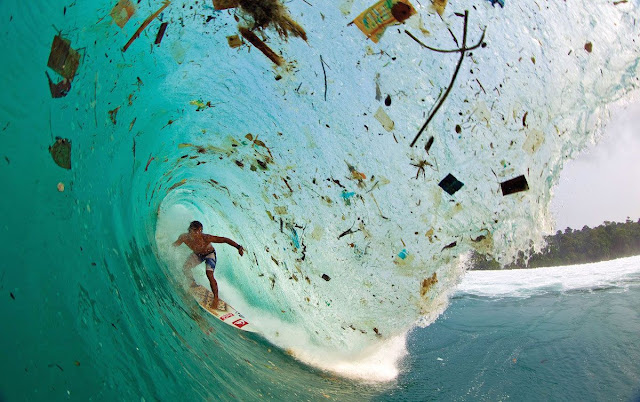
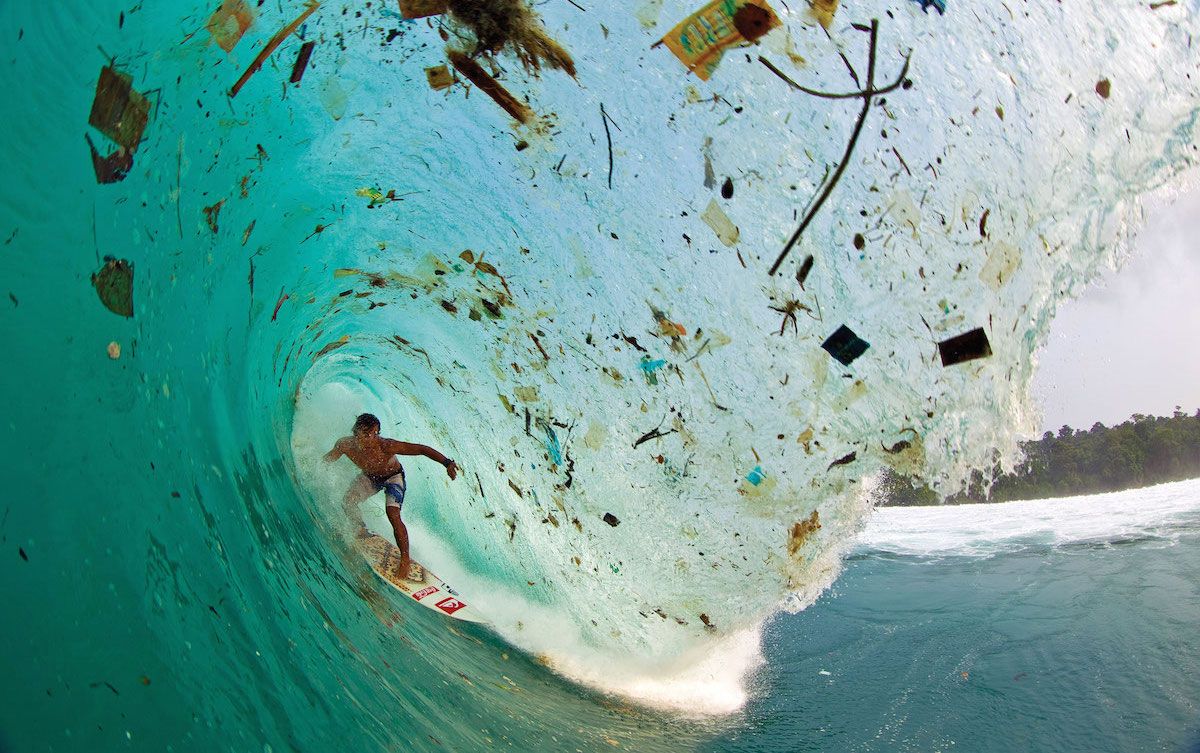
How bad is the situation with plastic pollution? Rather bad, by all means. Citing from a recent paper by Geyer et al., more than 8 billion tons of plastic have been produced since the 1950s. Of this plastic, 9% percent was recycled, 12% was incinerated, the rest is in part still in use, in part dispersed in the ecosystem. It is this mass of plastics, billions of tons, which form the pollution we see today. It is almost one ton of plastic waste for every human being living today. Imagine if it were magically to appear in your living room: one ton for every member of your family.
Still following Geyer et al., in 2015 the world produced 380 million tons of plastics from fossil hydrocarbons. To get some idea of how polluting this mass is, we can compare it to the total carbon emissions produced by hydrocarbon combustion, which today can be estimated to be around 9 billion tons of carbon per year. Plastic is mainly carbon, but we should take into account that the process of creating it cannot be 100% efficient. Anyway, we are interested here only in an order of magnitude comparison so we can say that about 4% of the fossil hydrocarbons we extract become plastics.
4% doesn’t seem to be a large amount, but it is not negligible, either. Apart from the horrible state of some beaches, the islands of plastics in the oceans, it is a lot of carbon pumped into the ecosystems and its effects are scarcely known, especially on humans: we are all eating microplastic particles, today. What will that do to our health, nobody knows — we are all guinea pigs in a great experiment. The long-run problem is that all this plastic is made from fossil hydrocarbons, it is going to be gradually oxidized and turned into gaseous CO2. Then, it will contribute to global warming.
So, we have a problem and not a small one. Then, how do we deal with it? The Greens in their various shades will respond with the magic words “recycle!” or “reuse!” but there is a little problem with this idea: you can’t recycle or reuse anything for more than a limited amount of times. Recycling plastics is just a way to procrastinate the unavoidable: you may know the quote (attributed to Christopher Parker) that says “Procrastination is like a credit card; it’s a lot of fun until you get the bill.” Eventually, even recycled/reused plastics must become waste and at that point, we get the pollution bill to pay.
A different brand of problem solvers, maybe we could call them the “anti-Greens,” will come up with a completely different strategy: “let’s burn it!” Yes, sure, after it is burned, we don’t see it anymore — which means it has disappeared, right? And, in the process, we magically create energy! Isn’t that a good idea? Maybe, but if there ever was a perfect illustration of the concept of “sweeping the problem under the carpet” this would be it. When burned, the stuff plastic is made of doesn’t disappear — it is simply turned into CO2 which goes into the atmosphere to create more global warming. And the energy we can get from incineration is just a trifle and it is obtained in a dirty and inefficient manner.
There is a third brand of people whom I could call the “bring me a problem and I’ll show you an opportunity” brand. They take notice that there exists something called “bioplastics” which doesn’t generate extra greenhouse gases (at least in principle) and is bio-degradable, at least in principle. So, it could solve the problem while keeping everything the way it is in the best of possible worlds. They will notice that, nowadays, weight for weight, bioplastics cost 2-3 times more than ordinary plastics made from fossil fuels but, hey, higher prices mean higher profits! After all, the fraction of the budget that an ordinary family can’t be but small, so they can surely afford to pay a little more. Besides, technological progress will surely bring costs down. And when they discover that bioplastic production today is only about 4 million tons (1% of the total production of plastics), wow! Think of the possibilities of growth!!
But is bioplastic the solution to the problem? As it often happens, quantification makes short work of ideas that seemed to be good in theory. Today, bioplastics are made mainly from cereals (corn) or directly from sugar. According to the data from Statista, the world’s production of sugar was about 170 million tons in 2017, less than half the amount needed to make the currently produced amounts of plastics even in the wildly optimistic assumption of a 100% efficient process. About grain, the data tell us that in crop year 2016/2017, a total of approximately 2.62 billion metric tons of grain were produced worldwide. Again in the wildly optimistic assumption of a 100% efficient production process, it means we should set aside about 15% of the world’s grain production – more realistically about 20%-25%. Of course, someone will say at this point that we could use other sources, why not cellulose, as it is said for “2nd generation” biofuels? Sure, except that how to do that is already known: it is called “paper.”
Think for a moment of what losing 25% of the food production would mean for a world where billions of people live on the edge of starvation and you see that we have a little problem, here — similar to the one that would come if we were to try to switch from fossil fuels to biofuels. And I am not saying anything about the fact that agriculture is far from being fossil-free, not at all: think of fertilizers, pesticides, transportation, refrigeration, processing, and more. Think also that, the way it is performed nowadays, agriculture is an unsustainable process that destroys the fertile soil that it needs to produce food. There is just so much that agriculture can do: it can’t feed more than 7 billion people and, at the same time, provide chemicals and fuel for everybody.
Does that mean that the problem of plastic pollution unsolvable? No. It is, actually, a minor problem in comparison to other, much more difficult problems we face. We need to phase out fossil fuels from the world’s economy but, if we were to do that very rapidly, the world’s economy would cease to function. But we could phase out fossil-based plastics tomorrow. It would be uncomfortable and complicated, but nobody would die and we would rapidly adapt to new ways to do everything we do today, just using something else: metals, paper, ceramic, tissue, or whatever at hand — even nothing in some cases. And we don’t even need to phase-out plastics completely: in some areas, plastic materials are really indispensable, think of one-use medical equipment or rubber tires for road vehicles. But, in that case, we can use bioplastics: if we use it in limited amounts, it is possible. What we have to do is just to eliminate the wasteful and frankly stupid one-use plastic items: plastic bottles, for instance.
It is, in the end, not a technological problem: it is a problem of governance: we (intended as humankind) have been able to manage reasonably well the elimination of some harmful substance from industrial production. Think of lead as a component of paints or in gasoline. Think of mercury in thermometers, beryllium in some alloys, CFCs in refrigerators, DDT as an insecticide, and many more cases. International agreements were discussed, approved, and implemented. Then, these and many more substances were banned and removed from industrial use. It is possible and it has been done.
So, it would be perfectly possible to develop and implement international agreements that would curb the use of plastics made from fossil fuels and eventually ban it completely. That implies changing something in our everyday life: the “overpackaged” products that today are so common in supermarket aisles would have to disappear. But packaging is not evil: it is a way to store food more efficiently. We need to learn how to be much more efficient with it.
So theoretically, it should be possible — even reasonably easy — to eliminate plastics pollution by means of international legislative action but, in practice, it looks difficult. Over the years, efficient technologies of anti-governance (aka good old disinformation) have been developed and honed to near perfection — we saw them applied to the issue of global warming. These technologies can be used by industrial lobbies to stop all legislative changes that would reduce their profits. That has suddenly made every problem impossible to solve.
Right now, the fossil fuel industry is desperately fighting to survive. It has been able to successfully stop many attempts to do something against climate change. It is at least unlikely that it will stay silent while it loses a market worth some 600 billion dollars per year. So, expect soon a loud campaign in favor of plastics: some hints are already starting to appear (*). And they will blame you for not differentiating your waste well enough!
If the campaign to keep fossil plastics will work, then the only way to get rid of the stuff will be a full-fledged Seneca Collapse — that, too, has happened in the past to take care of the things that humans were unable to care for by themselves. It can surely happen again. Even in the age of unsolvable problems, collapse is a feature, not a bug.
Cassandra’s legacy by Ugo Bardi
10 Comments on "Plastic Pollution: The Age of Unsolvable Problems"
Cloggie on Mon, 17th Sep 2018 3:04 pm
They are working on it…
https://www.theoceancleanup.com
https://en.wikipedia.org/wiki/The_Ocean_Cleanup
https://www.nbcnews.com/news/world/young-dutch-inventor-wants-clean-plastic-ocean-can-he-do-n882486
Go Speed Racer on Mon, 17th Sep 2018 4:18 pm
Come on Clogster,
The above link is the dumbest idea
I ever saw in my whole life.
The solution to plastic garbage is
simple
(A) garbage incinerators in all
cities, all countries, no exceptions
(B) very heavy “make an example”
fines and jail-time for individuals who
get caught littering into the ocean,
That way the garbage actually goes
to the incinerators.
However,
The dumb stupid lefty liberal
Hillary Clinton mentally-ill lunatics,
are highly opposed to both A and B
above.
As such, it is the wicked evil pathological so
liberals who have caused the oceans to
be littered with garbage.
And this is why Trump hates all the
liberals and shoves
knitting needles into voodoo dolls of
liberals every morning when he gets up.
Your liberal young ditch inventor found
himself a socialist welfare-check proposing
dumb stupid crap that will never work
and in fact he is actually building
a giant piece of plastic garbage that will
float in the ocean,
what a joke.
The Libby libby liberals, old ugly
bitch women like Clinton Merkel
Feinstein,
Nancy Pelosi, Elizabeth Warren,
THEY filled the ocean with crap by
their opposition to obvious solution
(A) and (B)
and make note,
Their isn’t any other solution.
Latest is Seattle implemented a dumb
stupid law outlawing drinking straws.
Stupid dumb liberals in a circle jerk,
Making each other feel good while
the problem gets
Worse.
Same scumbags, who are hassling
Kavanaugh, ugly old bitch dyke women
who are out of power for
Good reasons and can go straight
the phuck to hell.
Vote republican,
Vote Kavanaugh,
Vote Trump.
Give heavily to Trump 2020.
Vote out the Knobs on Mon, 17th Sep 2018 6:19 pm
How about we just stop with disposables made of plastics and start making products with their full life cycle in mind, ie. design for longer useful life and so they separate easily into their constituent bits for recycling.
peakyeast on Mon, 17th Sep 2018 7:28 pm
The real problem remains the same no matter how much people try to point at derivatives: Population.
The pressure is mounting and for the unintelligent species with no real self-control it always go to overshoot and then comes undershoot. Just like now.
Theedrich on Tue, 18th Sep 2018 5:18 am
Plastics are sterilizing males and dooming all. Not just humans, but all males of sexually reproducing animal life. As explained at https://www.gq.com/story/sperm-count-zero, the hydrocarbonic endocrine disruptors in plastic (which were originally generated by algae countless millions of years ago) are in utero distorting and disabling the testosterone which makes it possible for males to be developed from the genotypic base, which is female. The result: males who are infertile, and males who are less male and more female. (This also means more male homosexuals, which amount to a kind of crossbreed between the female base and the male “superstructure.”)
In short, we have committed ourselves and the rest of animal life to cessation of reproduction: the end of higher life on this planet.
deadly on Tue, 18th Sep 2018 5:36 am
Coyotes are out in my farmyard this morning. Sent my dog out to give them the what for. The coyotes scramble for an exit.
They’re after the plastic in the bin. I’ve got about two ton of the stuff around the place. It’s in my vehicles, all of it.
Who cares about the plastic in the oceans? It will all wash ashore in and around Wilmington.
When all is said and done, the marshes and coastal wetlands can take care of it.
Really is no problem. Anaerobic organisms will eat it all. It’ll be like ice cream for them.
Oceans will absorb it all. I don’t know what the big deal is, why should I be concerned about it? I’m not, I can’t, it is not my problem. I don’t live anywhere near an ocean. Somebody else can clean up the mess.
Sailboats washed ashore is a bigger problem, imo.
Florence Aftermath
It’s after 5, so it is beer time.
Here we go again on Tue, 18th Sep 2018 8:18 am
Yep, I’m working non it….I recycle as much as I can….really I do….yes I really do recycle….that should solve it…
rqew on Tue, 18th Sep 2018 2:36 pm
spray it with acetone or create gmo plastic eating mushrooms
ducksRyou on Tue, 18th Sep 2018 2:40 pm
There are 2 kinds of fags. female and male. Femifags could be caused by xenoestrogens. But mascufags are high testosterone, bi/tri/sexual psychopaths.
Cloggie on Thu, 20th Sep 2018 2:45 am
How the ocean clean up could work:
https://cleantechnica.com/2018/09/18/ocean-plastic-cleanup-project-is-better-news-than-you-might-think/