
Peak Oil is You

Donate Bitcoins ;-) or Paypal :-)


Page added on July 10, 2016

Peak Water: What Happens When the Wells Go Dry?
Peak oil has generated headlines in recent years, but the real threat to our future is peak water. There are substitutes for oil, but not for water. We can produce food without oil, but not without water.
We drink on average four liters of water per day, in one form or another, but the food we eat each day requires 2,000 liters of water to produce, or 500 times as much. Getting enough water to drink is relatively easy, but finding enough to produce the ever-growing quantities of grain the world consumes is another matter.
Grain consumed directly supplies nearly half of our calories. That consumed indirectly as meat, milk and eggs supplies a large part of the remainder. Today, roughly 40 percent of the world grain harvest comes from irrigated land. It thus comes as no surprise that irrigation expansion has played a central role in tripling the world grain harvest over the last six decades.
During the last half of the twentieth century, the world’s irrigated area expanded from close to 250 million acres (100 million hectares) in 1950 to roughly 700 million in 2000. This near tripling of world irrigation within 50 years was historically unique. But since then the growth in irrigation has come to a near standstill, expanding only 10 percent between 2000 and 2010.
In looking at water and our future, we face many questions and few answers. Could the world be facing peak water? Or has it already peaked?
Farmers get their irrigation water either from rivers or from underground aquifers. Historically, beginning with the Sumerians some 6,000 years ago, irrigation water came from building dams across rivers, creating reservoirs that then enabled them to divert the water onto the land through a network of gravity-fed canals. This method of irrigation prevailed until the second half of the twentieth century, where with few sites remaining for building dams, the prospects for expanding surface irrigation faded. Farmers then turned to drilling wells to tap underground water resources.
In doing so, they learned that there are two types of aquifers: those that are replenishable through rainfall, which are in the majority, and those that consist of water laid down eons ago, and thus do not recharge. The latter, known as fossil aquifers, include two strategically important ones, the deep aquifer under the North China Plain and the Ogallala aquifer under the U.S. Great Plains.
Tapping underground water resources helped expand world food production, but as the demand for grain continued climbing, so too did the amount of water pumped. Eventually the extraction of water began to exceed the recharge of aquifers from precipitation, and water tables began to fall. And then wells begin to go dry. In effect, overpumping creates a water-based food bubble, one that will burst when the aquifer is depleted and the rate of pumping is necessarily reduced to the rate of recharge.
Today some 18 countries, containing half the world’s people, are overpumping their aquifers. Among these are the big three grain producers—China, India and the U.S.—and several other populous countries, including Iran, Pakistan and Mexico.
During the last couple of decades, several of these countries have overpumped to the point that aquifers are being depleted and wells are going dry. They have passed not only peak water, but also peak grain production. Among the countries whose use of water has peaked and begun to decline are Saudi Arabia, Syria, Iraq and Yemen. In these countries peak grain has followed peak water.
Nowhere are falling water tables and the shrinkage of irrigated agriculture more dramatic than in Saudi Arabia, a country as water-poor as it is oil-rich. After the Arab oil export embargo in 1973, the Saudis realized they were vulnerable to a counter-embargo on grain. To become self-sufficient in wheat, they developed a heavily subsidized irrigated agriculture based heavily on pumping water from fossil aquifers.
After being self-sufficient in wheat for over 20 years, the Saudis announced in early 2008 that, with their aquifers largely depleted, they would reduce wheat planting by one eighth each year until 2016, when production would end. By then Saudi Arabia projects it will be importing some 15 million tons of wheat, rice, corn and barley to feed its 30 million people. It is the first country to publicly project how aquifer depletion will shrink its grain harvest.
Syria, a country of 22 million people riddled by civil war, is also overpumping its underground water. Its grain production peaked in 2001 and during the years since has dropped 32 percent. It, too, is becoming heavily dependent on imported grain.
In neighboring Iraq, grain production has plateaued over the last decade. In 2012 it was dependent on the world market for two thirds of its consumption. In addition to aquifer depletion, both Syria and Iraq are also suffering from a reduced flow in the Tigris and Euphrates rivers as upstream Turkey claims more water for its own use.
In Yemen, a nation of 24 million people that shares a long border with Saudi Arabia, the water table is falling by roughly six feet a year as water use outstrips aquifer recharge. With one of the world’s fastest-growing populations and with water tables falling throughout the country, Yemen is fast becoming a hydrological basket case. Grain production has fallen by nearly half over the last 40 years. By 2015, irrigated fields will be a rarity and the country will be importing virtually all of its grain. Living on borrowed water and borrowed time, Yemen could disintegrate into a group of tribal fiefdoms warring over water.
Thus in the Arab Middle East the world is seeing the collision between population growth and water supply at the regional level. For the first time in history, grain production is dropping in a geographic region with nothing in sight to arrest the decline. Because of the failure of governments in the region to mesh population and water policies, each day now brings 9,000 more people to feed and less irrigation water with which to feed them.
Other countries with much larger populations are also near or beyond peak water. In Iran, a country with 77 million people, grain production dropped 10 percent between 2007 and 2012 as irrigation wells started to go dry. One-quarter of its current grain harvest is based on overpumping. With its population growing by a million people per year, it, too, faces a day of reckoning.
Pakistan, with a population of 182 million that is growing by 3 million per year, is also mining its underground water. Most of its irrigation water comes from the Indus river system, but in the Pakistani part of the fertile Punjab plain, the drop in water tables appears to be similar to the better-known fall that is occurring in India.
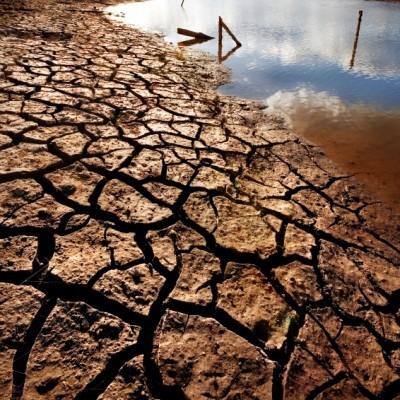
Observation wells near the twin cities of Islamabad and Rawalpindi showed a fall in the water table between 1982 and 2000 that ranged from three to six feet a year. In the Pakistani province of Balochistan, which borders Afghanistan, water tables around the capital, Quetta, are falling by 3.5 meters (11.5 feet) per year—pointing to the day when the city will run out of water. Sardar Riaz A. Khan, former director of Pakistan’s Arid Zone Research Institute in Quetta, reports that six of Balochistan’s seven basins have exhausted their groundwater supplies, leaving their irrigated lands barren.
In a World Bank study, water expert John Briscoe says: “Pakistan is already one of the most water-stressed countries in the world, a situation which is going to degrade into outright water scarcity due to high population growth.” He then notes that “the survival of a modern and growing Pakistan is threatened by water.”
In Mexico—home to a population of 122 million that is projected to reach 156 million by 2050—the demand for water is outstripping supply. Mexico City’s water problems are well known. Rural areas are also suffering. In the agricultural state of Guanajuato, the water table is falling by six feet or more a year. In the northwestern wheat-growing state of Sonora, farmers once pumped water from the Hermosillo aquifer at a depth of 40 feet. Today they pump from over 400 feet. Mexico may be near peak water use. Peak grain may be imminent.
In addition to these small and midsize countries, aquifer depletion now also threatens harvests in the big three grain producers—China, India and the U.S.—that together produce half of the world’s grain. The question is not whether water shortages will affect future harvests in these countries, but rather when they will do so.
Among the big three, dependence on irrigation varies widely. Some four fifths of China’s grain harvest comes from irrigated land, most of it drawing on surface water, principally the Yellow and Yangtze rivers. For India, three fifths of its grain is irrigated, mostly with groundwater. For the U.S., only one-fifth of the harvest is from irrigated land. The bulk of the grain crop is rain-fed, produced in the highly productive Midwestern Corn Belt where there is little or no irrigation.
Falling water tables are already adversely affecting harvest prospects in China, which rivals the U.S. as the world’s largest grain producer. A groundwater survey released in Beijing in 2001 indicated that the water table under the North China Plain, an area that produces half of the country’s wheat and a third of its corn, was falling fast. Overpumping has largely depleted the shallow aquifer, forcing well-drillers to turn to the region’s deep aquifer, which is not replenishable.
The survey reported that under Hebei Province in the heart of the North China Plain, the average level of the deep aquifer was dropping nearly 10 feet per year. Around some cities in the province, it was falling twice as fast. He Qingcheng, head of the groundwater monitoring team, notes that as the deep aquifer is depleted, the region is losing its last water reserve—its only safety cushion.
In 2010, He Qingcheng reported that Beijing was drilling down 1,000 feet to reach an aquifer, five times deeper than 20 years ago. His concerns are mirrored in the unusually strong language of a World Bank report on China’s water situation that foresees “catastrophic consequences for future generations” unless water use and supply can quickly be brought back into balance.
As serious as water shortages are in China, they are even more alarming in India, where the margin between food consumption and survival is so precarious. In India, whose population is growing by 15 million per year, irrigation depends heavily on underground water. And since there are no restrictions on well drilling, farmers have drilled more than 27 million irrigation wells and are pumping vast amounts of underground water.
In this global epicenter of well drilling, pumps powered by heavily subsidized electricity are dropping water tables at an alarming rate. Among the states most affected are Punjab, Haryana, Rajasthan and Gujarat in the north and Tamil Nadu in the south. In North Gujarat the water table is falling by 20 feet per year. In Tamil Nadu, a state of 72 million people, water tables are falling everywhere. Kuppannan Palanisami of Tamil Nadu Agricultural University noted in 2004 that 95 percent of the wells owned by small farmers have dried up, reducing the irrigated area in the state by half over the preceding decade.
India’s grain harvest has been expanding rapidly in recent years, but in part for the wrong reason, namely massive overpumping. A World Bank study estimates that 15 percent of India’s food supply is produced by mining groundwater. Stated otherwise, 175 million Indians are now fed with grain produced with the unsustainable use of water. As early as 2004, Fred Pearce reported in New Scientist that “half of India’s traditional hand-dug wells and millions of shallower tube wells have already dried up, bringing a spate of suicides among those who rely on them. Electricity blackouts are reaching epidemic proportions in states where half of the electricity is used to pump water from depths of up to a kilometer.”
As India’s water tables fall, larger farmers are using modified oil-drilling technology to reach water, going as deep as 1,000 feet in some locations. In communities where underground water sources have dried up entirely, all agriculture is now rain-fed and drinking water must be trucked in. Tushaar Shah of the International Water Management Institute says of India’s water situation: “When the balloon bursts, untold anarchy will be the lot of rural India.”
In the U.S., farmers are over-pumping in the Great Plains, including in several leading grain-producing states such as Texas, Oklahoma, Kansas, and Nebraska. In these states, irrigation has not only raised wheat yields but it has also enabled a shift from wheat to corn, a much higher-yielding crop. Kansas, for example, long known as the leading wheat state, now produces more corn than wheat.
Irrigated agriculture has thrived in these states, but the water is drawn from the Ogallala aquifer, a huge underground water body that stretches from Nebraska southwards to the Texas Panhandle. It is, unfortunately, a fossil aquifer, one that does not recharge. Once it is depleted, the wells go dry and farmers either go back to dryland farming or abandon farming altogether, depending on local conditions.
In Texas, a large grain and cattle state, whose northern part overlies the shallow end of the Ogallala, irrigated grain area peaked in 1975. Since then it has shrunk by two-thirds, with the most precipitous drop in recent years. In Kansas the peak came in 1982 and irrigated grain area has since fallen 41 percent. Nebraska, now also a leading corn-producing state, saw its irrigated area peak most recently, in 2007. Even though aquifer depletion is reducing grain output in several key states, it is not yet sufficient to reduce the overall U.S. grain harvest, the bulk of which is produced in the rain-fed Midwestern Corn Belt.
At the international level, water conflicts, such as the one in the Nile river basin between Egypt and the upstream countries, make the news. But within countries it is the competition for water between cities and farms that preoccupies political leaders. Indeed, in many countries farmers now face not only a shrinking water supply as aquifers are pumped dry, but also a shrinking share of that shrinking supply.
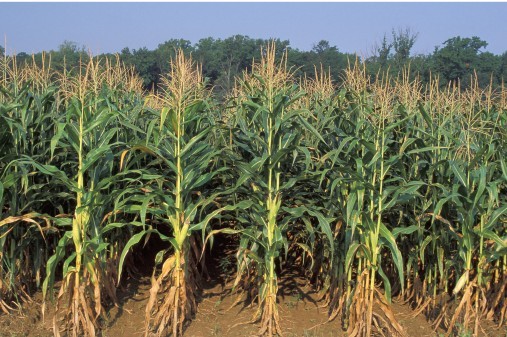
In large areas of the U.S., such as the southern Great Plains and the Southwest, virtually all water is now spoken for. The growing water needs of major cities and thousands of small towns often can be satisfied only by taking water from agriculture. As the value of water rises, more farmers are selling their irrigation rights to cities, letting their land dry up. Hardly a day goes by without the announcement of a new sale. Half or more of all sales are by individual farmers or their irrigation districts to cities and municipalities.
In the largest farm-to-city water transfer in U.S. history, farmers in California’s highly productive Imperial Valley agreed in 2003 to send San Diego County enough water to meet the household needs of close to one million people each year. The agreement spans 45 years. This could reduce food production in the Imperial Valley, a huge vegetable garden not only for California, but for countless other markets as well. Writing from the area in the New York Times, Felicity Barringer notes that many fear that “a century after Colorado River water allowed this land to be a cornucopia, unfettered urban water transfers could turn it back into a desert.”
Colorado, with a fast-growing population, has one of the world’s most active water markets. Cities and towns of all sizes are buying irrigation water rights from farmers and ranchers. In the Arkansas river basin, which occupies the southeastern quarter of the state, Colorado Springs and Aurora (a suburb of Denver) have already bought water rights to one-third of the basin’s farmland. Aurora has purchased rights to water that was once used to irrigate 19,000 acres of cropland in the Arkansas valley. The U.S. Geological Survey estimates that 400,000 acres of farmland dried up statewide between 2000 and 2005.
Colorado is not alone in losing irrigation water. Farmers in rural India are also losing their irrigation water to cities. This is strikingly evident in Chennai (formerly Madras), a city of 9 million on the east coast. As a result of the city government’s inability to supply water to many of its people, a thriving tank-truck industry has emerged that buys water from nearby farmers and hauls it to the city’s thirsty residents.
For farmers near cities, the market price of water typically far exceeds the value of the crops they can produce with it. Unfortunately the 13,000 privately owned tank trucks hauling water to Chennai are mining the region’s underground water resources. As water tables fall, eventually even the deeper wells will go dry, depriving rural communities of both their food supply and their livelihood.
In the competition for water between farmers on the one hand and cities and industries on the other, farmers always lose. The economics do not favor agriculture. In countries such as China, where industrial development and the jobs associated with it are an overriding national economic goal, agriculture is becoming the residual claimant on the water supply.
Where virtually all water has been claimed, cities can typically get more water only by taking it from irrigation. Countries then import grain to offset the loss of irrigated grain production. Since it takes 1,000 tons of water to produce one ton of grain, importing grain is the most efficient way to import water. Thus trading in grain futures is, in a sense, trading in water futures. To the extent that there is a world water market, it is embodied in the world grain market.
We can now see how overpumping, whether in the Middle East or the U.S. Great Plains, can lead to aquifer depletion and shrinking grain harvests. In short, peak water can lead to peak grain. For some countries this is no longer merely a theoretical possibility. It is a reality.
Thus far, aquifer depletion has translated into shrinking harvests only in smaller countries in the Middle East. When we look at middle-sized countries such as Iran, Mexico and Pakistan, with tightening water supplies, we see that Iran is already in deep trouble. It is feeling the effects of shrinking water supplies from overpumping. Pakistan may also have reached peak water. If so, peak grain may not be far behind. In Mexico, the water supply may have already peaked. With less water for irrigation, Mexico may be on the verge of a downturn in its grain harvest.
In summarizing prospects for the three big grain producers—the U.S., China and India—we see sharp contrasts. In the U.S., the irrigated grainland is starting to shrink largely as a result of depletion of the Ogallala aquifer, making it more difficult to rapidly increase overall grain production.
China, with four-fifths of its grain harvest coming from irrigated land, relies heavily on irrigation, but it is largely river water. A notable exception to this is the all-important North China Plain which relies heavily on underground water. With tight water supplies in northern China and with cities claiming more irrigation water, the shrinking water supply will likely reduce the harvest in some local situations. And before long it could more than offset production gains, leading to an absolute decline in China’s grain harvest.
Of the big three countries, the one most vulnerable to overpumping is India. Three-fifths of its grain harvest comes from irrigated land. And since only a minor share of its irrigation water comes from rivers, India is overwhelmingly dependent on underground water. Its millions of wells, each powered with a diesel engine or electric motor, are dropping water tables at an alarming rate. Accurate data are hard to come by, but India may have already passed peak water. The question is, will peak water be followed by peak grain or is there enough unrealized technological potential remaining to raise yields enough to offset any imminent losses from wells going dry?
The world has quietly transitioned into a situation where water, not land, has emerged as the principal constraint on expanding food supplies. There is a large area of land that could produce food if water were available.
Water scarcity is not our only challenge. Just as harvests are shrinking in some countries because of aquifer depletion, they are shrinking in other countries because of soil erosion. Among the more dramatic examples are Mongolia and Lesotho, which have each seen their grain area shrink as a result of soil erosion. And as a result of overplowing and overgrazing, two huge new dust bowls are forming in the world today, one in northwest China and the other in the Sahelian region of Africa. These giant dust bowls dwarf the U.S. Dust Bowl of the 1930s.
The bottom line is that water constraints—augmented by soil erosion, the loss of cropland to nonfarm uses, a plateauing of yields in major producing areas and climate change—are making it more difficult to expand world food production. The question raised is this: is it conceivable that the negative influences on future food production could one day offset the positive ones, leading to a cessation in the world grain harvest?
11 Comments on "Peak Water: What Happens When the Wells Go Dry?"
Harquebus on Sun, 10th Jul 2016 8:22 pm
Actually, without oil, we will never produce the amount of food that we produce today.
“Modern agriculture is the use of land to convert petroleum into food.” — Prof. Albert Bartlett.
Sissyfuss on Sun, 10th Jul 2016 10:02 pm
With the population continuing it’s mad race upwards, the only thing we won’t run out of is cadavers.
Boat on Sun, 10th Jul 2016 10:44 pm
Harquebus on Sun, 10th Jul 2016 8:22 pm
“Actually, without oil, we will never produce the amount of food that we produce today”.
You need some oil? I live near Houston. We have oil from around the world. If you want it refined we can do that for you.
Harquebus on Mon, 11th Jul 2016 12:42 am
Boat
For how long?
“Any social system based on the use of non-renewable resources is by definition unsustainable. Non-renewable means it will eventually run out. If you hyper-exploit your non-renewable surroundings, you will deplete them and die.”
http://dgrnewsservice.org/civilization/reasoning-to-resistance/
“As long as we have an economic system that allows private capital to accumulate without limit on a finite planet, and externalize the costs, in a system that requires endless growth, there is no real prospect of making the drastic changes necessary to head off a very painful future.”
http://energyskeptic.com/2016/limits-to-growth-is-on-schedule-collapse-likely-around-2020/
Go Speed Racer on Mon, 11th Jul 2016 3:27 am
Fortunately with Hillary in the white house, she will apply infinite wisdom and
establish new sources of water, LOL.
Anyway there is no problem.
Just water the fields with Gatorade.
And it has electrolytes.
Captain Kirk (William Shatner) wants to run a 4 foot pipe down I-5 to import water to California from Washington.
Beam me up Scotty?
Go Speed Racer on Mon, 11th Jul 2016 3:29 am
My cat catches a lot of mice. If we can convert the mice into oil, it looks like a pretty good energy source.
JuanP on Mon, 11th Jul 2016 5:45 am
Boat will never run out of Hillary’s urine, his favorite drink, Hillary’s farts, his favorite source of renewable energy, or Hillary’s shit, his favorite food! LOL!
Davy on Mon, 11th Jul 2016 5:45 am
The above energyskeptic.com reference is true but without a plan B. A plan B that would be without collapse and large loss of life. Can we consider that a plan B? No, collapse is just a result not a managed response. The current system is not an either or system it is all or nothing. The “all” is a painful solution and the “nothing” is a painful solution. You can’t get out of jail free and there is no such thing as cake you can have and eat.
Our choices are make the best of what we have as long as we have and then experience a huge systematic collapse of a global world where everywhere locals have been delocalized. These delocalized locals are naked in dependence on this unsustainable global where all will perish together. The other option is only theory and unlikely to work. We could begin a managed collapse. The global world could do some preparations and make some managed decisions on how this collapse would start but once started it would be a controlled uncontrolled event. The meaning here is you would make arrangements to enter an uncontrollable situation.
This macro managed collapse would likely not be possible because of the level of education required and the inability to sustain confidence and trust in such a circumstance. People would panic and any managed effort would quickly fail in a rush to the door by a herd of spooked people. Many people are going to die so people would naturally take selfish actions to save themselves. Many would not believe a collapse is coming anyway. A majority of people are not capable of understanding at this level. They are too old, too young, crazy, uneducated, or fanatical believers in other fantasies. We are talking embracing reality and that takes intelligence and maturity. It is plain to see a managed response to a painful future of a status quo running out is very unlikely. The above is the best option for all but it can only be done locally.
So your only option is a combination of living in the unreformable status quo and your individual controlled actions in an uncontrollable situation. It is the default option and the one that is most likely. The status quo will continue and decay and destruct in deflation, decline, and disenfranchisement. This will happen at the sometime population pressures continue to attempt to grow. Consumption pressures will continue. Extend and pretend policies that mortgage our future by poor decisions and destructive behavior will continue. We will continue to make more people and build more things without a future. We will continue to have a group of green tech minded people that will believe we can have a future with prosperity that is based on renewables. We will continue to have the status quo brown people that believe we can continue what we have with fossil fuels and more technology. They have faith in new tech that will come on at some point to cover any problem. Climate change will be dealt with by markets and human innovation and we will make money fixing it. Some will just deny climate change exists. Then we have the sheeples which don’t understand any of it or if they understand some of it, it is mixed with superstition, denial, and false beliefs.
All there is left is for you at your local if able to make your changes and educate yourself. You can leverage up your local and if you are lucky a small community. You can buy yourself some time now and you can live with a clear heart that you are embracing truth however painful and bleak. You can be heroic and stoic at the same time. Since you are not in denial and motivated by a cause of realistic survival you can help others and receive the blessings that come with this higher form of human caring.
Collapse in place in a “more” survivable local. No local is going to survive intact. Some of the more survivable locals may survive partially but many will not. It is possible none survive but at the beginning of the process they have a chance to survive. You are buying precious time. Life can be delicious to the very end. Which local do you want to be in, one with no chance or one with a chance? Having a chance does require luck but it also requires a condition of having a chance. Having a chance requires effort.
Downsize with dignity and practice relative sacrifice. This involves recognizing we must downsized our consumption and expectations. We must do this within a status quo BAU life. We must use BAU to exit BAU. You can do this with relative sacrifice. There is no need to completely jettison your current life for something new. This is not practical. Continue to live as you are making gradual changes. On the discretionary side stop unhealthy lifestyles and attitudes. Quit activity without a future. Stop destructive actions that further damage the already horrible situation of human ecological degradation.
Go under the radar screen. This global world will be self-destructing and the last thing you will want to do is protest this. Protestors think they are going to get something out of their protesting but there is nothing to gain. We have only loss ahead. TPTB are in control and will remain in control. No amount of protest will end this until it is ending anyway. Your energies would better be spent adapting and mitigating a coming collapse. You may have nothing now with nothing ahead and in that case protest may give you that last bit of enjoyment and motivation before you crash and burn. In that case knock yourself out.
There is nothing ahead but decay. You can manage how this decay affects you. There are better or worse ways. The worst way is doing nothing at all. Just the realization with the exit of denial is doing something. Acceptance is the first step to the activity of healing. The healing in this case is meaning. This meaning is of a painful future ahead for all or in other words a bottleneck of a die off. Meaning in this case is acceptance of death which is coming anyway to all of us. Leaving the denial of death is a liberation and full of meaning. Acceptance of death is embracing our real self and our real existential condition. This sounds bleak but it is not because here in lies the truth.
Kenz300 on Mon, 11th Jul 2016 7:41 am
Too many people……….create too much pollution and demand too many resources…. we are using up the water we have or polluting it so we can not use it……
China made great progress in moving its people out of poverty…….one reason was slowing population growth…..
If you can not provide for yourself you can not provide for a child.
CLIMATE CHANGE, declining fish stocks, droughts, floods, air water and land pollution, poverty, WATER and food shortages all stem from the worlds worst environmental problem……. OVER POPULATION.
Yet the world adds 80 million more mouths to feed, clothe, house and provide energy and water for every year… this is unsustainable… and is a big part of the Climate Change problem
Birth Control Permanent Methods: Learn About Effectiveness
http://www.emedicinehealth.com/birth_control_permanent_methods/article_em.htm
HARM on Mon, 11th Jul 2016 12:17 pm
Water tables over-stressed due to overpopulation? Clearly MORE PEOPLE is the solution. By increasing the supply of people, you increase the level of human INGENUITY, thereby making a solution ever more likely! At least that’s what all the birth-dearther cornucopians say. So get out there and BREED, people!
Kylon on Tue, 12th Jul 2016 2:28 pm
HARM, that only works if you increase the number of educated, creative individuals.
Most people aren’t given the proper education to be technically capable of inventing things, or having the creativity to do so.
It requires both technical/scientific education, and the creativity to exploit that education in order to invent technologies.
So if you add more people who aren’t educated, and aren’t creative, and in no way are supporting those who are, then you use up carrying capacity, rather than add to it.