
Peak Oil is You

Donate Bitcoins ;-) or Paypal :-)


Page added on August 3, 2015

Peak oil is dead – long live clean air
Achieving a decarbonised economy is not only possible, it’s vital to escape the worst effects of climate change.
Oil surely now has one foot in the grave. Collectively, governments currently spend around US$1t a year subsidising fossil fuels, but the irony is that if they do as they say, and limit climate change to below two degrees Celsius by reducing CO2 emissions, around 80% of current reserves will need to stay in the ground. According to a report by the International Energy Agency, this US$1t a year in subsidies is equivalent to the investment needed in clean energy in order to mitigate climate change.
But what does the decarbonisation of our energy supply look like?
In his acclaimed TED talk, ‘A 40-year plan for energy’, pioneering scientist Amory Lovins shows how to get the United States off oil and coal by 2050, saving US$5tn, with no Act of Congress, led by business – for profit.
Widely considered among the world’s leading authorities on energy, and nominated in 2009 by Time Magazine as one of the World’s 100 most influential people, Lovins explains that the key to success is integrating all four energy-using sectors; transportation, buildings, industry and electricity, and four kinds of innovation; technology, policy, design and business strategy.
So in reinventing fire, those combinations create deeply disruptive business opportunities.
As Lovins explains it, almost half of the United States electricity comes from coal. Three-quarters of the electricity powers buildings, and the rest runs factories. Three-quarters of oil fuel is transportation. Thus electric vehicles and sustainably designed buildings and factories save oil and coal, and also natural gas that can displace both of them.
According to a paper released this month by the New Climate Economy (NCE), Seizing the Global Opportunity Partnerships for Better Growth and a Better Climate, evidence from countries around the world shows that growth and climate action are not mutually exclusive, but mutually dependent.
Actions such as accelerating low-carbon developments in global cities, restoring and protecting agricultural and forest landscapes, pricing carbon, supporting clean energy and energy efficiency will drive economic growth and development, all the while reducing as much as 96% of the greenhouse gas emissions targeted for 2030 to keep global warming under two degrees Celsius.
The C40 Cities Climate Leadership Group connects more than 75 cities, representing 550+ million people and one quarter of the global economy. City-level partnerships such as these can help drive low-carbon urban development. Investment in public transport, building efficiency, and better waste management could save around US$17 trillion globally by 2050.
Companies representing 90% of the global trade in palm oil have committed to deforestation-free supply chains by 2020, with commitments now beginning to be extended to other commodities that include soy, beef, pulp and paper.
The push for a meaningful global deal on climate change at the critical Paris summit in December has been gaining rapid momentum in recent weeks with China, the US and Brazil leading the pack with ambitious plans.
Dr Shannon Page of Lincoln University argues that it’s not just about what we replace, but also what we take out, such as removing the need for the car in the first place, and that is where he sees huge potential for New Zealand.
“Transport is almost half of our CO2 emissions. Considering that both the fuel and the cars are imported, the economic and health benefits from a shift to public and active transport are huge.”
Dr Page cites the increase in public transport, and yet he says the New Zealand government is overwhelmingly trying to keep people in cars by putting the lion’s share of funding towards roads.
“There are a few positive signs in the right direction,” he continues. “Such as funding for expanded cycle ways, but we could be doing so much more, and tinkering around the edges won’t cut it.”
Earlier this month the New Zealand government announced a post 2020 target of 11% emission reductions from 1990 levels by 2050. This is even less than what was pledged in Copenhagen in 2009.
“Their justification of the low target is that it is difficult for our economy to adjust. That may be true for half of the emissions – agriculture is challenging,” argues Dr Page. “But the other half of our emissions can be tackled with substantial GDP and social wellbeing benefits. Sadly, we are becoming that dirty little country who does not pull its weight when it comes to tough global challenges.”
If a surge of lawyers around the world take on the greatest challenge facing humanity we may not have to wait for the politicians to do the right thing. In the first successful case of its kind, last month a Hague District Court found in favour of 886 Dutch individuals who had filed suit against their government, demanding that officials do more to prevent climate change. The court has ordered the Netherlands government to take action to cut greenhouse gas emissions by a 25% within five years.
Many are hopeful that this precedent will trigger similar cases around the world. Some 8000 citizens in Belgium are preparing to take their government to court, and it looks like Norway may follow suit, while in the Philippines citizens are demanding legal action on fossil fuel companies.
The groundbreaking court ruling is a boost for the environmental movement on the brink of suffering fatigue from 23 years of international climate change negotiations. Finally, “the future we want” may actually become a reality.
Global challenge – de-carbonising energy
Renewable energy continues to get cheaper: solar and wind energy are now cost competitive with fossil fuels in many places. Annual investment in clean power now exceeds investment in fossil fuels. The global market for low-carbon goods and services is worth more than US$5.5 trillion and is growing at more than 3% per year.
Around 40 countries have adopted or are planning carbon pricing, and 28 countries are undertaking energy subsidy reforms, aided by lower oil prices. Over 1000 major companies and investors have signalled their support for carbon pricing.
Issuances of green bonds (Qualified Green Building and Sustainable Design Project Bonds) for sustainable infrastructure have tripled in the last year to US$37 billion.
More than half of the Fortune 100 companies are together saving around US$1.1 billion per year from energy efficiency, renewable energy, and other emission reduction initiatives.
The G20 has the potential to ramp up energy efficiency standards in the world’s leading economies to global best practice for goods such as appliances, lighting, and vehicles. Investment in energy efficiency could boost cumulative economic output globally by US$18 trillion by 2035, increasing growth by as much as 1.1% per year.
Action under the international aviation and maritime treaties and the Montreal Protocol on hydrofluorocarbons (HFCs) could reduce emissions by as much as 2.6 Gt in 2030. In shipping alone, higher efficiency standards are expected to save an average of US$200bn in annual fuel costs by 2030.
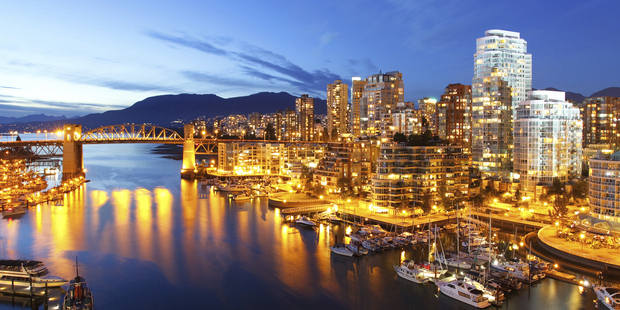
Cities around the world are signing up to be 100% renewable, with many already having reached that target. Vancouver has become one of the most recent cities to commit. The city of 600,000 on Canada’s west coast aims to use only green energy sources for electricity, and also for heating, cooling and transportation.
The Caribbean nation of Belize is now aiming to go to 100% renewable, and they want its transportation sector to fully embrace electric vehicles. The announcement follows the country’s decision to join the Carbon War Room’s high profile Ten Island Challenge.
The first big energy company has flipped its business model. E.On, Germany’s biggest utility, is redirecting all its growth effort on clean and green energy from now on. Its board has concluded that the old model no longer works.
The 2010 retrofit of the Empire State Building is saving over two-fifths of the energy by remanufacturing the building’s six and a half thousand windows on site into super windows that pass light, but reflect heat. Installation and manufacturing savings: $14.95 million. Estimated annual energy savings: $410 000. Estimated CO2 savings over 15 years: 105 000 metric tons of carbon dioxide.
Kenya has great untapped solar potential and their renewable energy sector is set for a boost in September when a solar micro grid company, Powerhive East Africa, begins to sell power to the public, ending a half-century monopoly by the state electricity firm.
On an windy day this month, Denmark found itself producing 116% of its national electricity needs from wind turbines. By 3am, when electricity demand dropped, that figure had risen to 140%. Interconnectors allowed 80% of the power surplus to be shared equally between Germany and Norway, which can store it in hydropower systems for use later.
This global challenge series has been made possible with support from Lincoln University. Lincoln University is among our more progressive on these issues, with three overarching organisational goals; to feed the world; protect the future; and live well. It’s with these three goals in mind that every Lincoln course is now designed, and first and second-year students are required to undertake courses in understanding global challenges and the opportunities that lie in solving them.
27 Comments on "Peak oil is dead – long live clean air"
davey thompsony on Mon, 3rd Aug 2015 9:33 am
Year over year even with the advent and use of “clean” energy, carbon emissions continue to rise.
Kenz300 on Mon, 3rd Aug 2015 10:48 am
“Renewable energy continues to get cheaper: solar and wind energy are now cost competitive with fossil fuels in many places. Annual investment in clean power now exceeds investment in fossil fuels. The global market for low-carbon goods and services is worth more than US$5.5 trillion and is growing at more than 3% per year.
Around 40 countries have adopted or are planning carbon pricing, and 28 countries are undertaking energy subsidy reforms, aided by lower oil prices. Over 1000 major companies and investors have signalled their support for carbon pricing.”
World Moves Toward 100 Percent Renewable Energy – First Electricity, Then Heating/Cooling, and Finally Transportation – Renewable Energy World
http://www.renewableenergyworld.com/articles/2015/07/world-moves-toward-100-percent-renewable-energy-first-electricity-then-heating-cooling-and-finally-transportation.html
Kenz300 on Mon, 3rd Aug 2015 10:52 am
“Transport is almost half of our CO2 emissions. Considering that both the fuel and the cars are imported, the economic and health benefits from a shift to public and active transport are huge.”
“Dr Page cites the increase in public transport, and yet he says the New Zealand government is overwhelmingly trying to keep people in cars by putting the lion’s share of funding towards roads.
“There are a few positive signs in the right direction,” he continues. “Such as funding for expanded cycle ways, but we could be doing so much more, and tinkering around the edges won’t cut it.”
There needs to be more global emphasis in getting people out of cars and on to bicycles and using better mass transit. Cities and states need to develop more safe walking and bicycle paths that connect work, homes businesses and schools.
Bike to work day should be everyday….. employers need to provide places to park and lock bicycles and encourage employees to ride a bicycle to work.
Every school should encourage children to walk to school or ride a bicycle by providing safe places to lock and store bicycles and by supporting safe walking and biking paths that connect schools, homes and businesses. Kids would be healthier and get more exercise if parents stop driving them to school and bought them a bicycle.
davey thompsony on Mon, 3rd Aug 2015 11:18 am
Good points Kenz, however none of it means a damn thing until the overall world emissions drop. How much carbon is dumped into the atmosphere with the build out of renewable alt energy? Building a bicycle requires steel,rubber, all sorts of synth plastics and alloy metals. Where does this magically come from, without burning FF?
ennui2 on Mon, 3rd Aug 2015 11:37 am
How many bikes already exist? How many new ones really need to be made to get people out of cars? Not as many as you’d think if people didn’t feel they had to have new shiny things.
tahoe1780 on Mon, 3rd Aug 2015 12:02 pm
How many kids live close enough to schools now to bike? Likewise, how many of us live close enough to work? As to Davey’s comment – how much carbon is needed to build those clean buildings and other infrastructure?
Plantagenet on Mon, 3rd Aug 2015 12:51 pm
ennui2’s attack on people buying new bicycles is bizarre.
If you’d ever get out of your car and ride a bicycle, ennui2, you’d discover that bicycles wear out, frames bend and break when you ride over curbs or through potholes, bearings seize up, and seats and gear systems wear out.
Of COURSE people should go out and buy bicycles and get out of their cars and decarbonize their travel as much as possible.
I personally own three bicycles….a road bike, a mountain bike, and a folding bike I sometimes take along on my travels. Riding bikes is one of the greatest pleasures on this green earth.
CHEERS!
Jerry McManus on Mon, 3rd Aug 2015 1:32 pm
Wow, this article just reeks of hopium. Techno-fixes and lawyers will solve all our problems!
Setting aside for a moment that we are already seeing climate chaos at 1degC above baseline.
Setting aside for a moment that we are not yet feeling the full effects of CO2 already in the atmosphere due to the massive inertia of oceans
Setting aside for a moment the notoriously exponential diminishing returns of “efficiency”
Setting aside for a moment that even the more gloomy IPCC projections require not only zero emissions starting now, but that we also REMOVE carbon from the atmosphere as fast as possible
Setting aside for a moment the 80 million people we are adding to the population every year, and the billions more who aspire to western lifestyles.
Setting aside for a moment that all those millions of tons of steel, concrete, electrical components, ,and other exotic techno-materials required for so-called “clean” energy will not appear out of thin air with a wave of the magic wand
Setting aside for a moment the painfully obvious political realities, which the article itself briefly glosses over, of trillions of dollars in FF subsidies combined with a totally ineffective and co-opted “environmental” movement.
Setting aside for a moment all of the other political, economic, and thermodynamic realities that are not even mentioned
Setting all of that aside for a moment, then really the solution to reducing carbon emissions is blindingly simple:
– Stop driving cars
– Stop heating buildings
– Stop heating water
– Stop heating food
– Stop using electricity
– And don’t even think about burning wood or garbage instead
There, problem solved! Well, give or take a few thousand years of climate chaos and rising sea levels due to the carbon already spewed into that giant sewer in the sky we call the atmosphere.
Oh, well. Can’t win them all.
Davy on Mon, 3rd Aug 2015 2:40 pm
If we acknowledge there are no solutions to a predicament of overpopulation and overconsumption we can begin a new cultural meme. This would be religious in nature because this new societal orientation must have meaning to motivate people into sacrifice. We must practice less with less. We must practice relative sacrifice. We must downsize with some kind of collective dignity.
This is not possible until a crisis and maybe not even then. Yet, there is no other way to reduce pain and suffering except through collective sacrifice and adaptive organization.
The consequences of this kind of change would be highly disruptive and likely initiate a collapse process. De growth is a radically different direction from our current growth based system in almost every way.
It is unlikely society has what it takes to organize such a transition. The reality of a transition into collapse is randomness of decay with uncertain outcomes. We will be in uncharted waters most people will be unwilling to enter. The key for some kind of success is preplanning an exit. A map is needed to follow. Is there a way for society to do this while it lives business as usual? I am not optimistic.
This leaves the individual and small group to prepare physically and mentally. We can be the maps when society begins to unravel. There must be some kind of meaning for a dazed and confused population to embrace. None of their traditional structures will have answers because these structures are business as usual oriented.
This is a jump into the abyss for us all. Life will unravel and we really have few ideas how but we can have something ready to reference. We can be the soldiers leading the way in body and spirit. Call that corny I admit but bottlenecks are epic events. You must start thinking epic. Be prepared to be heroic and in strength of mind and body.
steve on Mon, 3rd Aug 2015 3:42 pm
climate change is the least of our worries…collapsing economies will take care of a lot of emissions probably 50 percent less….in the first year alone…
Davy on Mon, 3rd Aug 2015 4:00 pm
Steve, I think it will depend on how and how fast economies collapse. In the short term dirty and easy could take off from clean and efficient emissions. Think of the forests that will be felled. That can’t be good for the overall carbon budget.
If we have a hard and quick collapse with large loss of life emissions would likely drop considerably. I am not so sure about anything less.
I think this is a very important discussion point because it could be a source of big misunderstandings among collpasniks. I know many here are for collapse for climate AGW reasons and maybe they should not be thinking that way.
MrNoItAll on Mon, 3rd Aug 2015 4:21 pm
Need advice on solar install offer.
I took a week off to get some much needed work done in my backyard ultra-mini farm. I stopped by Home Depot today to pick up some supplies, and they have a sales rep there from Solar City. He stops me, and explains the offer.
* I pay $0 upfront install costs/fees.
* They install enough solar panels on my roof to far exceed my average monthly usage.
* What electricity I use from the solar panels, I pay $0.11 per kilowatt, where I’m already paying $0.18 per kilowatt with the power company.
* What electricity I don’t use, they sell back to the power company.
* I never pay anything other than the electricity I use.
Has anybody else heard of any offers like this? What’s the catch? It has to be government subsidized, heavily. What would deep thinking and slightly paranoid minds suspect is the motivation behind a seeming “give-away” offer like this? What — are they setting up future command posts and troop accommodations for the future collapse? Or just sincerely trying to switch people over to solar?
Any advice or insights would be greatly appreciated.
MrNoItAll on Mon, 3rd Aug 2015 4:28 pm
Here’s the website for SolarCity, in case anyone is interested.
http://www.solarcity.com/residential
MrNoItAll on Mon, 3rd Aug 2015 4:37 pm
Hey, never mind. It turns out that it IS too good to be true. This looks like an Elon Musk company, and the reviews are NOT good:
http://www.consumeraffairs.com/solar-energy/solarcity.html
eugene on Mon, 3rd Aug 2015 7:50 pm
One thing for sure, there’s no shortest of bullshit.
Makati1 on Mon, 3rd Aug 2015 9:22 pm
“Peak oil is dead – long live clean air”
Too little…too late.
If we could turn off every pollution source today, it would still take ~40 years for the effects of past pollution to catch up. Most of us will be dead by then. But, we seem to have triggered feedback systems that will not stop no matter what we do or don’t do. Methane release, permafrost melting, climate change, etc. All are on the path to a world wide extinction event.
I think that our only option is to try to reduce the pain for ourselves as much as possible and enjoy the rare climatological event to our end. Every party must be paid for. We are just the unlucky generations that gets the bill.
rockman on Mon, 3rd Aug 2015 10:07 pm
Mak – Good point. And as far as “Oil surely now has one foot in the grave.”. Of course it is: that’s why the world is currently burning as much or more then ever in history.
Boat on Mon, 3rd Aug 2015 10:30 pm
California leads the way as usual.
http://www.greentechmedia.com/articles/read/California-Wants-All-New-Homes-to-be-Net-Zero-in-2020
Energy Investor on Mon, 3rd Aug 2015 10:49 pm
If you live in New Zealand you will understand the background to this nonsense.
1. 80% of electric power is from renewables.
2. The biggest contributor to gas emissions(34%) is the flatulence of dairy cows. That will not change.
3. The highest court in the land is the parliament.
4. NZ Governments have a huge road uiser tax and a petrol tax of something like a dollar a litre that makes me wonder where this global trillion dollars of subsidies exists.
5. No push-bikes pay road user charges.
6. NZ’s biggest industries are farming based where distance from markets and transport play a major role – perhaps we can build a cycle way through the Pacific to get our goods to market.
So when these “wet-behind-the-ears” academicians plan to overthrow the government by legal action and start more people dying on roads from riding bicycles the long distances from home to work, there will be a revolution?
Don’t make me laugh!
This article is just pie-in-the-sky.
When the USA and China charge people a $1 per litre tax for petrol, to reduce use, then folk overseas can complain.
In NZ we are better to try for a change from ICE engines to PHEVs wherever we can.
Makati1 on Tue, 4th Aug 2015 12:51 am
Oil use per 1,000 people:
US: 61 bbls/day
NZ: 35 ”
Russia:15 ”
China: 7 ”
Phil.: 3 ”
http://www.indexmundi.com/map/?v=91000
OR: KWh/year per capita…
US: 9,540
NZ: 5,550
Russia: 6,580
China: 2,405
Phil.: 580
https://en.wikipedia.org/wiki/List_of_countries_by_energy_consumption_per_capita
All things ae NOT as told in the USMSM.
Nony on Tue, 4th Aug 2015 2:06 am
Brent is under 50 and WTI is nibbling at 45. Is that because people are turning away from petroleum and doing greenie shit instead? Or is that from OPEC cartel cracking and pumping full out after US LTO production built up?
At least in the US, the answer is consumption is up. Best summer driving season in a long time.
Banjo on Tue, 4th Aug 2015 2:39 am
Meanwhile billions of people still looking forward to the western lifestyle. China Africa India Latin America. Look up primary energy production / consumption. The amount of energy required to keep this turd afloat is mind boggling. You think your gps app in your smartphone got its coordinates from an electric fired rocket. I save money on electricity i spend the rest on some other consumption that takes energy. Growth based paradigm based on yeast and cancer cells is was game over from the start. Looks like we are not that smart monkeys.
Dredd on Tue, 4th Aug 2015 5:56 am
Of all countries, the U.S. gets the worst of sea level rise (Sea Level Fall: The Forgotten Aspect of Sea Level Rise?).
Karma may be made of water.
Kenz300 on Tue, 4th Aug 2015 7:03 am
The world is making progress in its transition to safer, cleaner and cheaper alternative energy sources like wind and solar. The fossil fuel industry is using its vast wealth to fight the change. They would be better off if they woke up and smelled the roses. Change is in the air. The OLD fossils (MEN) running the fossil fuel industry are retiring or dying and they will be replaced with people that see alternative energy as the future.
Global Renewable Energy Is Status Positive – Renewable Energy World
http://www.renewableenergyworld.com/articles/2015/07/global-renewable-energy-is-status-positive.html
———————
Renewable Energy Responsible for First Ever Carbon Emissions Stabilization – Renewable Energy World
http://www.renewableenergyworld.com/articles/2015/06/renewable-energy-responsible-for-first-ever-carbon-emissions-stabilization.html
Kenz300 on Tue, 4th Aug 2015 7:05 am
Climate Change is real….. we need to deal with the cause (fossil fuels)
Investments in fossil fuels are dropping…… coal companies are declaring bankruptcy…… fossil fuels are bad for the environment, bad for the planet and a bad investment……
Alternative energy investments are soaring…….
Listen Up: Pope Calls for the Replacement of Fossil Fuels, Renewable Energy and Solar Subsidies – Renewable Energy World
http://www.renewableenergyworld.com/articles/2015/07/listen-up-pope-calls-for-the-replacement-of-fossil-fuels-renewable-energy-and-solar-subsidies.html
Apneaman on Tue, 4th Aug 2015 12:34 pm
6 million years of evolution, 200,000 years as homo sapien sapiens and over 5000 years of civilization – behold the height of ape ingenuity.
Canada’s tar sands landscape from the air – in pictures
http://www.theguardian.com/environment/gallery/2015/aug/03/canadas-tar-sands-landscape-from-the-air-in-pictures
Apneaman on Tue, 4th Aug 2015 12:58 pm
Meanwhile back in the Holy land and cradle of civilization part of the world, even more high temperature records are being broken. Me thinks Yahweh is pissed at his kids.
Sunday night hottest in Israel’s history
Nocturnal heat records were broken in many areas of the country; Monday set a new record for power consumption.
http://www.ynetnews.com/articles/0,7340,L-4687114,00.html