
Peak Oil is You

Donate Bitcoins ;-) or Paypal :-)


Page added on September 1, 2016

Japan Will Reactivate The Fukushima Nuclear Reactor
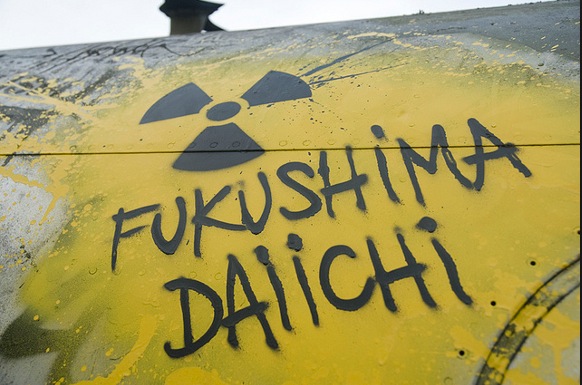
Plans to restart the Fukushima nuclear plant in Japan got a major boost Wednesday after a local politician who vehemently opposed the plan declined to run for reelection.
Japanese laws do not require utilities to obtain approval from local officials before reactivating power systems, but it is the expected practice. The shares of Tokyo Electric Power Co. Holdings Inc.’s (TEPCO), which owns the reactors, rose by a whopping 12 percent on the news Niigata prefecture Gov. Hirohiko Izumida was not seeking re-election.
TEPCO expects to boost profits by $97 million a month for each reactor it restarts.
“The next Niigata governor will likely not make as many relentless demands as Izumida,” Hidetoshi Shioda, a Japanese nuclear power analyst, told OilPrice.com.
In 2011, the Fukushima reactor melted down after being struck by an enormous earthquake and tsunami, causing radiation leaks. No deaths or cases of radiation sickness were caused by the incident, but 100,000 citizens were evacuated from the area, according to the World Nuclear Association. Prior to the disaster, the government planned to build enough reactors to provide 50 percent of the country’s electricity.
Plans to restart the reactor effectively end Japan’s previous pledge to abandon nuclear power by the 2030s. They promised to replace nuclear power with wind or solar power, but this caused the price of electricity to rise by 20 percent. Japan’s government aims to restart at least 32 of the 54 reactors it shut down following the Fukushima disaster, and wants nuclear power to account for 20 percent of the nation’s total electricity generated by 2030.
The New York Times reported Monday that the Japanese government has funded the construction of a 100 foot high $320 million block of man-made permafrost around the Fukushima reactor to prevent any potentially radioactive water from leaking into the Pacific Ocean.
Nuclear power provided 29 percent of Japan’s total electricity before 2011, but will decline to 13.6 percent by 2023 and 1.2 percent by 2040, according to the report. Japan got 24 percent of its electricity from coal in 2010 and the country plans to get more than a third of its power from coal by 2040. Japan previously shut down all of its nuclear reactors in the aftermath of the 2011 magnitude 9.0 earthquake, which triggered the Fukushima disaster. The country has since transitioned away from nuclear power.
The transition to green energy hasn’t gone well and the country likely won’t meet its goals, according to the report. Japan remains a top importer of oil, coal and natural gas and the government estimated that importing fuel costs the country more than $40 billion annually. Japan’s current government sees a revival of nuclear power as critical to supporting economic growth and slowing an exodus of Japanese manufacturing to lower-cost countries, but has faced incredible pushback.
Statistically, nuclear reactors are by far the safest power source in the world. According to a 2010 study by the World Health Organization, nuclear power is 1,889 times safer than coal and 1,133 times safer than wind.
| The Libertarian Republic |
17 Comments on "Japan Will Reactivate The Fukushima Nuclear Reactor"
HARM on Thu, 1st Sep 2016 8:05 pm
“Statistically, nuclear reactors are by far the safest power source in the world. According to a 2010 study by the World Health Organization, nuclear power is 1,889 times safer than coal and 1,133 times safer than wind.”
Thing is, when a wind turbine fails –even if it fails spectacularly, blades shooting in all directions– it’s unlikely to kill anyone or do much damage, and then the damage is done.
When a typical LWR loaded with U-235, Plutonium, Strontium 90, Cesium 137, etc. melts down, it poisons hundreds of square kilometers/miles of land, atmosphere and any adjacent sea/ocean for hundreds of thousands of years. So even one “accident” basically becomes a never-ending global catastrophe.
HARM on Thu, 1st Sep 2016 8:11 pm
About the only silver lining with fission is that human stupidity, ego and greed all but ensures that a meltdown event will happen at least once a generation. This creates radioactive “no-go” zones that people cannot inhabit for many thousands of years. These become unintentional nature preserves, providing a rare opportunity for wildlife to recover without human interference (aside from the deadly radioactivity of course).
So more nuke plants = more meltdowns = more radioactive nature “preserves”.
See, there’s a bright side to anything! 🙂
Dredd on Fri, 2nd Sep 2016 6:08 am
“nuclear reactors are by far the safest power source in the world”
Whoopie! Let’s restart Chernoble!
“There are lies, damned lies and statistics.” – Mark Twain
peakyeast on Fri, 2nd Sep 2016 6:14 am
@Harm: Not only that – the real estate value of the remaining “clean” areas will rise.
arkieguide on Fri, 2nd Sep 2016 7:27 am
There are ways to make nuke power safer.
However the cost to do so and the time to do so, is not acceptable. That said, I am not in favor of more nuke facilities until we have a safe storage for nuke waste, which we do not have now.When we create something, we cannot handle, throw away, store, are just throw in the trash, we are getting into serious trouble.
Wow talk about lack of fact checking. on Fri, 2nd Sep 2016 7:36 am
The “Fukushima reactor” is wrong. There were 6 reactors reactors at Fukushima Daiichi 4 of which were operating prior to the Fukushima earthquake and later melted their cores. This article is perhaps trying to reference the Fukushima Daini plants which were successfully shutdown after the accident. The bottom line, the author of this article needs to do some serious fact checking before putting anything out for public review. There are a raft of partial statements thrown together into an incoherent blurb.
Kenz300 on Fri, 2nd Sep 2016 9:34 am
Nuclear energy is too costly and too dangerous…….
Fukishima and Chernobyl will continue to poison the planet forever……………
Who will pay to store this nuclear waste and keep it safe forever……..
Wind and solar are safer, cleaner and cheaper options for generating electricity…………
Kenz300 on Fri, 2nd Sep 2016 9:49 am
Nuclear energy is too dangerous and too costly…..
Radiation Along Fukushima Rivers Up to 200 Times Higher Than Pacific Ocean Seabed
http://www.ecowatch.com/radiation-fukushima-rivers-200-times-higher-than-pacific-ocean-seabed-1937971722.html
PracticalMaina on Fri, 2nd Sep 2016 10:48 am
They need it to throw energy at the endless energy sink of trying to freeze ground in front of hot radioactive water.
Thomas on Fri, 2nd Sep 2016 3:22 pm
“According to a 2010 study by the World Health Organization, nuclear power is 1,889 times safer than coal and 1,133 times safer than wind.”
That is wrong: the study says that wind power is 1330 times safer than coal.
peakyeast on Fri, 2nd Sep 2016 3:40 pm
Nuclear power is safer than wind power?
I find that hard to believe.
Apneaman on Fri, 2nd Sep 2016 3:41 pm
Thomas ” wind power is 1330 times safer than coal”?
Not if you’re a bird.
https://www.youtube.com/watch?v=na6HxKQQsAM
Ouch!
Apneaman on Fri, 2nd Sep 2016 4:30 pm
Natural Gas Emissions Will Surpass Those from Coal in U.S.
Carbon dioxide emissions from natural gas-fired power plants will be 10 percent greater than emissions from coal-fired plants in 2016
http://www.scientificamerican.com/article/natural-gas-emissions-will-surpass-those-from-coal-in-u-s/
Like I said, a bridge to nowhere. This does not include the very significant leaking from the well to the customer and everywhere inbetween. Methane is about 25 times more effective as a greenhouse gas than CO2. At least the air will be less toxic which matters in a number of important ways. Ever see a little kid have an asthma attack? Not nice.
JuanP on Fri, 2nd Sep 2016 6:40 pm
I used to have a very high opinion of the Japanese and the Germans, but both countries have disappointed me as much as any other these last couple of decades.
Boat on Fri, 2nd Sep 2016 7:45 pm
Apneaman on Fri, 2nd Sep 2016 4:30 pm
Legislation in the US is on the way for leaks and flaring but definately a decade and counting to late.
Apneaman on Fri, 2nd Sep 2016 9:13 pm
Boat, I haven’t worked as a Boilermaker for a dozen years, but in my time I changed out hundreds of gaskets at refineries, pulp mills, petrochemical plants, etc – they all fail eventually. Maybe they have developed fail safe gaskets for all connections recently – I wouldn’t know. Like I said boat it’s system wide and some of the piping is very old and well past its due date. It’s not just the extraction end of it. It’s technically possible to stop a great deal of the leakage in the system, but it will not be cheap and I do not believe most of it will happen. Like so much of industrial civilization the scale is enormous and it’s been matched by the scale of neglect.
Boston’s natural gas infrastructure releases high levels of heat-trapping methane
Harvard-led study reveals aging natural gas distribution system short-changes customers, contributes to greenhouse gas buildup
“The Harvard-led team estimates that each year about 15 billion cubic feet of natural gas, worth some $90 million, escapes the Boston region’s delivery system. They calculated that figure by placing sophisticated air monitoring equipment in four locations: two atop buildings in the heart of Boston, and two at upwind locations well outside of the city. Then they analyzed a year’s worth of continuous methane measurements, used a high-resolution regional atmospheric transport model to calculate the amount of emissions, and concluded that:
Some 2.7 percent of the gas that is brought to the Boston region never makes it to customers; it escapes into the atmosphere. That is more than twice the loss rate that government regulators and utilities estimate;
Depending on the season, natural gas leaking from the local distribution system accounts for 60 percent to 100 percent of the region’s emissions of methane, one of the most insidious heat-trapping greenhouse gases.”
https://www.seas.harvard.edu/news/2015/01/boston-s-natural-gas-infrastructure-releases-high-levels-of-heat-trapping-methane
Researchers find nearly 6,000 natural gas leaks in District’s aging pipe system
https://www.washingtonpost.com/national/health-science/researchers-find-nearly-6000-natural-gas-leaks-in-districts-aging-pipe-system/2014/01/15/f6ee2204-7dff-11e3-9556-4a4bf7bcbd84_story.html
Then there is shit like this link below. There will always be industrial accidents and as Texas has found out (and tried to hide it) the new abnormal AGW jacked weather events regularly give the oil and gas infrastructure a shit kicking, thus making it even more polluting.
California gas leak was the worst man-made greenhouse-gas disaster in U.S. history, study says
“The 112-day leak at the Aliso Canyon facility released about 5 billion cubic feet of methane into the atmosphere, making it by far the biggest single emitter of the gas anywhere in the country, according to detailed assessment published in the peer-reviewed journal Science.
From a climate perspective, the accident was historic: One leak producing a heat-trapping effect equivalent to the annual exhaust emissions from nearly 600,000 cars.”
https://www.washingtonpost.com/news/energy-environment/wp/2016/02/25/california-gas-leak-was-the-worst-man-made-greenhouse-gas-disaster-in-u-s-history-study-says/?utm_term=.0401727e8748
Apneaman on Fri, 2nd Sep 2016 9:41 pm
Boat, you know how they used to say “dilution is the solution to pollution”? I think that was coined back when there were less than 3 billion people and way less consumer zombies per capita. It’s really hard to dilute past a certain point. We have saturated the and killed off much of nature’s dilution abilities. “Ecosystem Services” they call them. In addition to all that, the world is approaching peak corruption. None are more corrupt than the oil boys. Lying cheating mother fuckers. Stands to reason that the most profitable industry would attract that kind of people eh? It would be naive to think otherwise. Texas, like Alberta and many other oily locals is just another petro state. They rule y’all. Get in their way and they will roll right over you one way or another. They may not own you personally, but they own your lawmakers, so your freedom or lack of it compared to others is just a matter of degree. We’re on a highway to hell and they are in the drivers seat. The humans are never going to stop, so take it to it’s logical conclusion.
Texas Officials Have Photos of Flood-Related Oil Spills, but No Record of Any Response
Massive oil spills during Texas’ flooding in 2015 were captured by aerial photographs, but were not recorded, or treated, as spills by the state.
https://insideclimatenews.org/news/13062016/Texas-oil-spills-flooding-photographs-no-response-railroad-commission
“To scientists and environmentalists, the apparent lack of record keeping is unacceptable.
“If you’re making money off of a natural resource that I technically own part of, I want to know what you’re doing,” said Meredith Miller, senior program coordinator at the Meadows Center for Water and the Environment at Texas State University in San Marcos.
Massive Spills
Earlier this month, the El Paso Times published a story about the many photos taken of flood-related spills from oil wells and fracking sites since 2014 and the apparently ineffectual response by the agency responsible for mitigating them — the Texas Railroad Commission.
Photos taken almost exactly a year ago by the Civil Air Patrol along the Lower Trinity River are particularly harrowing.”
Flooding sweeps oil, chemicals into rivers
REGULATORS AND ENVIRONMENTALISTS DISAGREE OVER THE RISK FROM FLOOD-RELATED OIL AND CHEMICAL SPILLS IN TEXAS.
http://www.elpasotimes.com/story/news/2016/04/30/flooding-sweeps-oil-chemicals-into-rivers/83671348/
FLOODING FLUSHES OIL, CHEMICALS INTO TEXAS RIVERS
http://abc13.com/weather/flooding-flushes-oil-chemicals-into-texas-rivers/1317526/