
Peak Oil is You
Donate Bitcoins ;-) or Paypal :-)


Page added on May 1, 2016

Human Extinction Isn’t That Unlikely
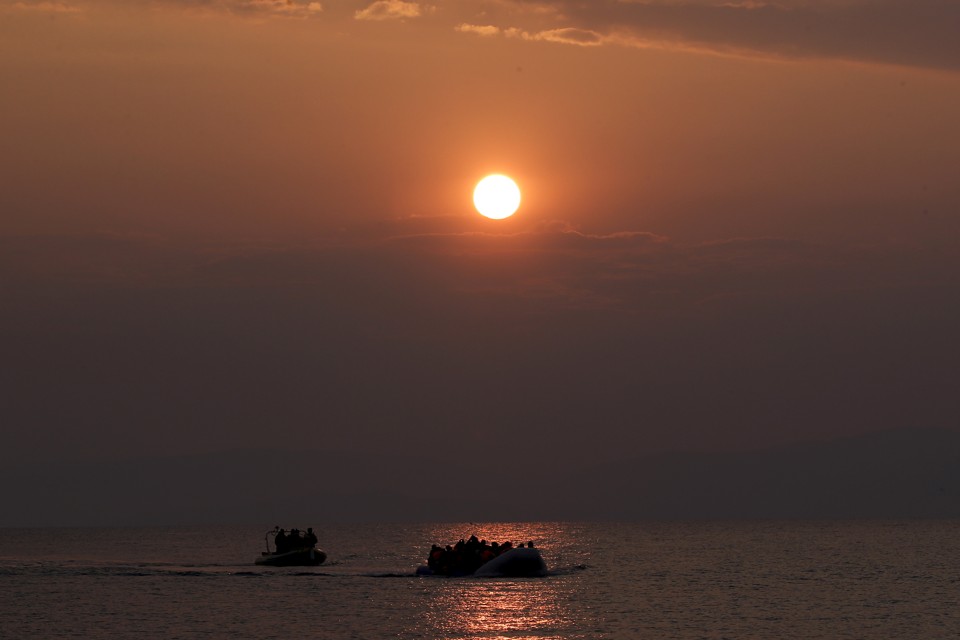
These are the most viable threats to globally organized civilization. They’re the stuff of nightmares and blockbusters—but unlike sea monsters or zombie viruses, they’re real, part of the calculus that political leaders consider everyday. And according to a new report from the U.K.-based Global Challenges Foundation, they’re much more likely than we might think.
In its annual report on “global catastrophic risk,” the nonprofit debuted a startling statistic: Across the span of their lives, the average American is more than five times likelier to die during a human-extinction event than in a car crash.
Partly that’s because the average person will probably not die in an automobile accident. Every year, one in 9,395 people die in a crash; that translates to about a 0.01 percent chance per year. But that chance compounds over the course of a lifetime. At life-long scales, one in 120 Americans die in an accident.
And that number probably underestimates the risk of dying in any global cataclysm. The Stern Review, whose math suggests the 9.5-percent number, only calculated the danger of species-wide extinction. The Global Challenges Foundation’s report is concerned with all events that would wipe out more than 10 percent of Earth’s human population.
“We don’t expect any of the events that we describe to happen in any 10-year period. They might—but, on balance, they probably won’t,” Sebastian Farquhar, the director of the Global Priorities Project, told me. “But there’s lots of events that we think are unlikely that we still prepare for.”
For instance, most people demand working airbags in their cars and they strap in their seat-belts whenever they go for a drive, he said. We may know that the risk of an accident on any individual car ride is low, but we still believe that it makes sense to reduce possible harm.
So what kind of human-level extinction events are these? The report holds catastrophic climate change and nuclear war far above the rest, and for good reason. On the latter front, it cites multiple occasions when the world stood on the brink of atomic annihilation. While most of these occurred during the Cold War, another took place during the 1990s, the most peaceful decade in recent memory:
In 1995, Russian systems mistook a Norwegian weather rocket for a potential nuclear attack. Russian President Boris Yeltsin retrieved launch codes and had the nuclear suitcase open in front of him. Thankfully, Russian leaders decided the incident was a false alarm.
Climate change also poses its own risks. As I’ve written about before, serious veterans of climate science now suggest that global warming will spawn continent-sized superstorms by the end of the century. Farquhar said that even more conservative estimates can be alarming: UN-approved climate models estimate that the risk of six to ten degrees Celsius of warming exceeds 3 percent, even if the world tamps down carbon emissions at a fast pace. “On a more plausible emissions scenario, we’re looking at a 10-percent risk,” Farquhar said. Few climate adaption scenarios account for swings in global temperature this enormous.
Yet natural pandemics may pose the most serious risks of all. In fact, in the past two millennia, the only two events that experts can certify as global catastrophes of this scale were plagues. The Black Death of the 1340s felled more than 10 percent of the world population. Eight centuries prior, another epidemic of the Yersinia pestis bacterium—the “Great Plague of Justinian” in 541 and 542—killed between 25 and 33 million people, or between 13 and 17 percent of the global population at that time.
No event approached these totals in the 20th century. The twin wars did not come close: About 1 percent of the global population perished in the Great War, about 3 percent in World War II. Only the Spanish flu epidemic of the late 1910s, which killed between 2.5 and 5 percent of the world’s people, approached the medieval plagues. Farquhar said there’s some evidence that the First World War and Spanish influenza were the same catastrophic global event—but even then, the death toll only came to about 6 percent of humanity.
The report briefly explores other possible risks: a genetically engineered pandemic, geo-engineering gone awry, an all-seeing artificial intelligence. Unlike nuclear war or global warming, though, the report clarifies that these remain mostly notional threats, even as it cautions:
[N]early all of the most threatening global catastrophic risks were unforeseeable a few decades before they became apparent. Forty years before the discovery of the nuclear bomb, few could have predicted that nuclear weapons would come to be one of the leading global catastrophic risks. Immediately after the Second World War, few could have known that catastrophic climate change, biotechnology, and artificial intelligence would come to pose such a significant threat.
So what’s the societal version of an airbag and seatbelt? Farquhar conceded that many existential risks were best handled by policies catered to the specific issue, like reducing stockpiles of warheads or cutting greenhouse-gas emissions. But civilization could generally increase its resilience if it developed technology to rapidly accelerate food production. If technical society had the power to ramp-up less sunlight-dependent food sources, especially, there would be a “lower chance that a particulate winter [from a volcano or nuclear war] would have catastrophic consequences.”
He also thought many problems could be helped if democratic institutions had some kind of ombudsman or committee to represent the interests of future generations. (This strikes me as a distinctly European proposal—in the United States, the national politics of a “representative of future generations” would be thrown off by the abortion debate and unborn personhood, I think.)
The report was a joint project of the Centre for Effective Altruism in London and the Future of Humanity Institute at the University of Oxford. It can be read online.
68 Comments on "Human Extinction Isn’t That Unlikely"
Sissyfuss on Mon, 2nd May 2016 3:41 pm
I personally have already shut it down. Buying essentials only, staying on my rewilded 5 acres commiserating with the raccoons and the skunks about what is happening to our majestic home, a non breeding tree loving hugger that sees no need for the masses to shut it down consciously for soon our Mother will end this mentally deranged construct far sooner than any and all realize.
Lawfish1964 on Mon, 2nd May 2016 3:58 pm
It’s long past time to thin the herd. We need a pandemic.
Davy on Mon, 2nd May 2016 4:07 pm
Sis, what part of this big country you from if I may ask. I love to put a place with a name. Nice to know you are back to the land too. I just now drank some warm goat milk fresh from the teet.
apneaman on Mon, 2nd May 2016 4:21 pm
Faster than previously expected indeed – sigh.
Arctic Sea Ice is Falling off a Cliff and it May Not Survive The Summer
“Near zero sea ice by the end of melt season. The dreaded Blue Ocean Event. Something that appears more and more likely to happen during 2016 with each passing day.
These are the kinds of climate-wrecking phase changes in the Arctic people have been worrying about since sea ice extent, area, and volume achieved gut-wrenching plunges during 2007 and 2012. Plunges that were far faster than sea ice melt rates predicted by model runs and by the then scientific consensus on how the Arctic Ocean ice would respond to human-forced warming this Century. For back during the first decade of the the 21st Century the mainstream scientific view was that Arctic sea ice would be about in the range that it is today by around 2070 or 2080. And that we wouldn’t be contemplating the possibility of zero or near zero sea ice until the end of this Century.”
https://robertscribbler.com/2016/05/02/arctic-sea-ice-is-falling-off-a-cliff-and-it-may-not-survive-the-summer/
apneaman on Mon, 2nd May 2016 4:29 pm
Well if there is anything this civilization craves, it’s more. So have another helping gluttons.
Scientists find more reasons that Greenland will melt faster
“The more we learn about this crucial yet inscrutable place, the more worrying it seems.
The latest exhibit: New research out of Greenland conducted by Dartmouth earth sciences Ph.D. student Kristin Schild and two university colleagues — work that has just been published in the Annals of Glaciology. The study examined the 5.5-kilometer-wide Rink Glacier of West Greenland, with particular focus on how meltwater on the ice sheet’s surface actually finds its way underneath Rink, pours out in the key undersea area described above and speeds up the glacier’s melt.
It’s a feedback process that, if it plays out across many other similarly situated glaciers, could greatly worsen Greenland’s overall ice loss. “These big tidewater outlet glaciers are the ones that are contributing these huge icebergs, they’re the ones that have rapidly, rapidly sped up in the last decade,” Schild said.”
https://www.washingtonpost.com/news/energy-environment/wp/2016/04/30/another-typical-day-for-greenland-scientists-find-more-reasons-it-will-melt-faster/?postshare=5281462046038385&tid=ss_tw
apneaman on Mon, 2nd May 2016 5:24 pm
Another planetary immune response to the human malignancy. It’s total war now. Its carpet bombing the living quarters of the cancer/tar sands extractors.
Fort McMurray wildfires force evacuations
Fort McMurray mayor declares ‘localized state of emergency’ for neighbourhood threatened by wildfire
http://www.cbc.ca/news/canada/edmonton/fort-mcmurray-wildfires-force-evacuations-1.3561750
Sissyfuss on Mon, 2nd May 2016 5:57 pm
Davy, I reside in the center of the mitten(Mi) but will soon retire to the western end of the UP where I can commiserate with the bears and the elk. Hopefully, Gitchee Goomie can keep things temperate a bit longer for my grandchildren when they are forced to flee the walking dead. I’m not going to tell them about the Article Methane Warming Veil. Sheesh, what a world!
Sissyfuss on Mon, 2nd May 2016 5:58 pm
Step grandchildren, said the non breeder.
bug on Mon, 2nd May 2016 6:03 pm
I am with sissyfus, non breeder and live on rewired 29 acres. Could care less what goes on outside my area.
Hopefully mother nature’s last at bat will fix plenty
apneaman on Mon, 2nd May 2016 6:24 pm
bug, that’s why I’m pro sodomy. Cause I care about humans and this planet that was specifically created to serve them.
If there was a politician that ran on a pro sodomy platform, I would vote for the first time in my life.
Even if there were only 500,000,000 million humans I would still be pro sodomy.
Because I’m proactive and I believe in practicing the precautionary principle with as many women as you can con into it.
Davy on Mon, 2nd May 2016 6:25 pm
Sis, wonderful country. I have spent a lot of time around Harbor Springs area in the past. People dont realize how awesome MI is because they think about the industrial south of the state.
apneaman on Mon, 2nd May 2016 7:08 pm
Dahr Jamail’s monthly ACD summary
http://www.truth-out.org/news/item/35860-as-climate-disruption-advances-un-warns-the-future-is-happening-now
bug on Mon, 2nd May 2016 7:34 pm
Pro sodomy, great sounding election position. I like it. Would be catchy on bumper stickers and hats.
Make sodomy great again
Trust sodomy
I am with sodomy
And
Feel the sodomy
Sissyfuss on Mon, 2nd May 2016 7:45 pm
You’re going apeshit on us,Apeman. Put down that wood and chill.
apneaman on Mon, 2nd May 2016 7:58 pm
bug, just don’t mention Hillary and sodomy in the same sentence. Don’t want to scare away any decent folk.
bug on Mon, 2nd May 2016 8:27 pm
There are no decent folk.
apneaman on Mon, 2nd May 2016 8:57 pm
Bug, there is still a small chance we can escape. Shhhhhh…don’t let the others know.
Trio of Earth-like planets found near ultra-cool star may have the right conditions for life
http://www.theverge.com/2016/5/2/11549830/three-planets-possible-life-extraterrestrial-water-dwarf-star
makati1 on Mon, 2nd May 2016 9:12 pm
LOL And only 40 light years away!
Or: 58,784,998,100,000 miles X 40 years.
At the speed of our fastest missile (~10,000 MPH) it would only take 5,878,499,810 X 40 hours or about 100 million years to get there.