
Peak Oil is You

Donate Bitcoins ;-) or Paypal :-)


Page added on May 12, 2012

How to Make Population Growth Reverse Itself

Most people seem to think that to reverse population you’d need violence, epidemics, or forced sterilization. Actually, you need literacy; read on. Many other people think technology will save us.
Probably the greatest technological advance ever implemented to ease the likelihood of population-induced starvation was the Green Revolution. Engineered to end hunger, the Green Revolution failed because most of the world allowed the increased food to grow more hungry people than ever. China, partly because of its one-child policy, has eased more hunger, faster, than anyplace ever has. Meanwhile, India’s population growth largely erased its food-production increases. Now, a record 1 billion people suffer malnutrition; 10 million more each year. A recent U.N. report titled “The State of Food Insecurity” came with a press release stating, “For millions of people, eating the minimum amount of food to live an active and healthy life is a distant dream.”

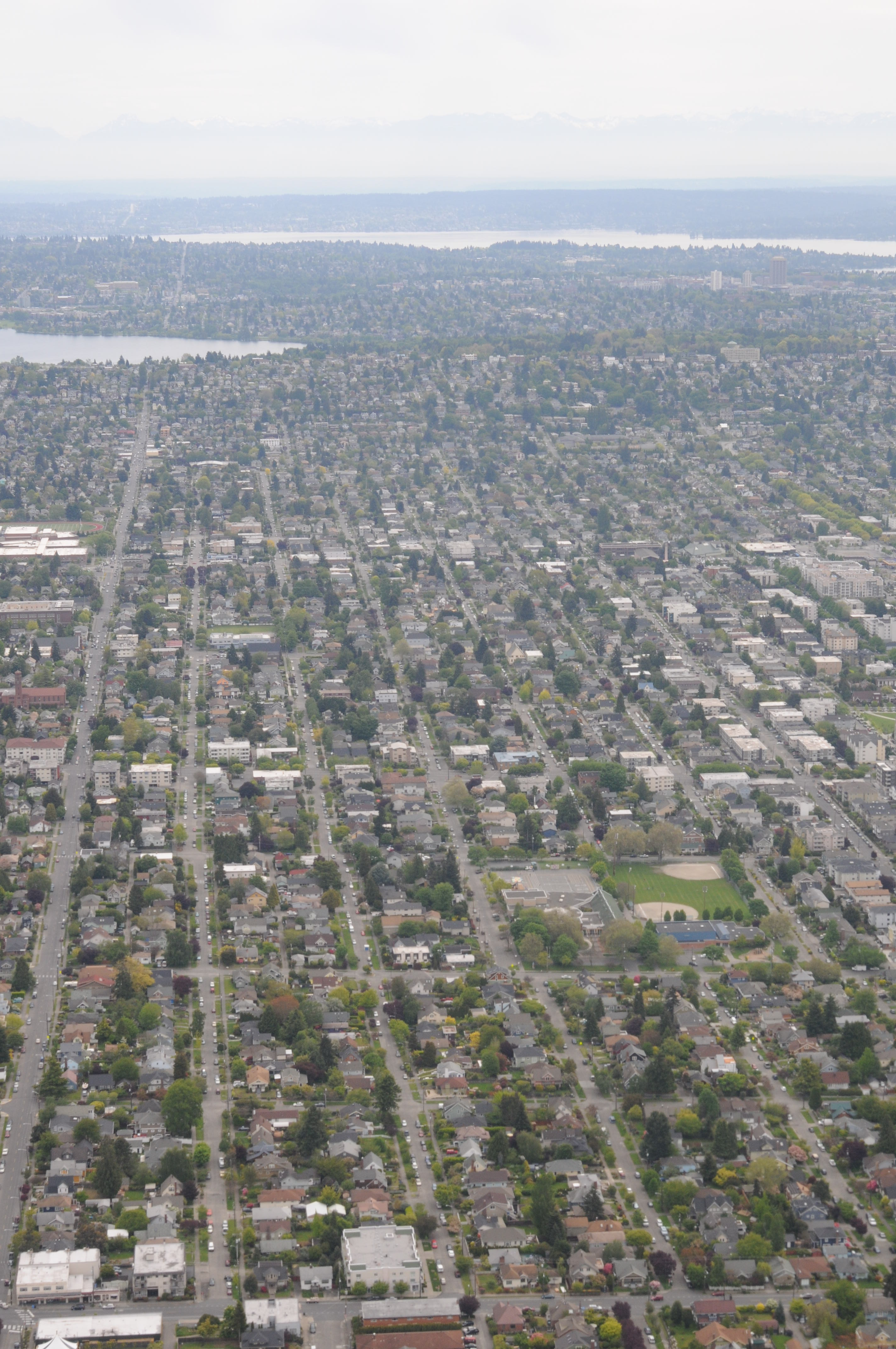
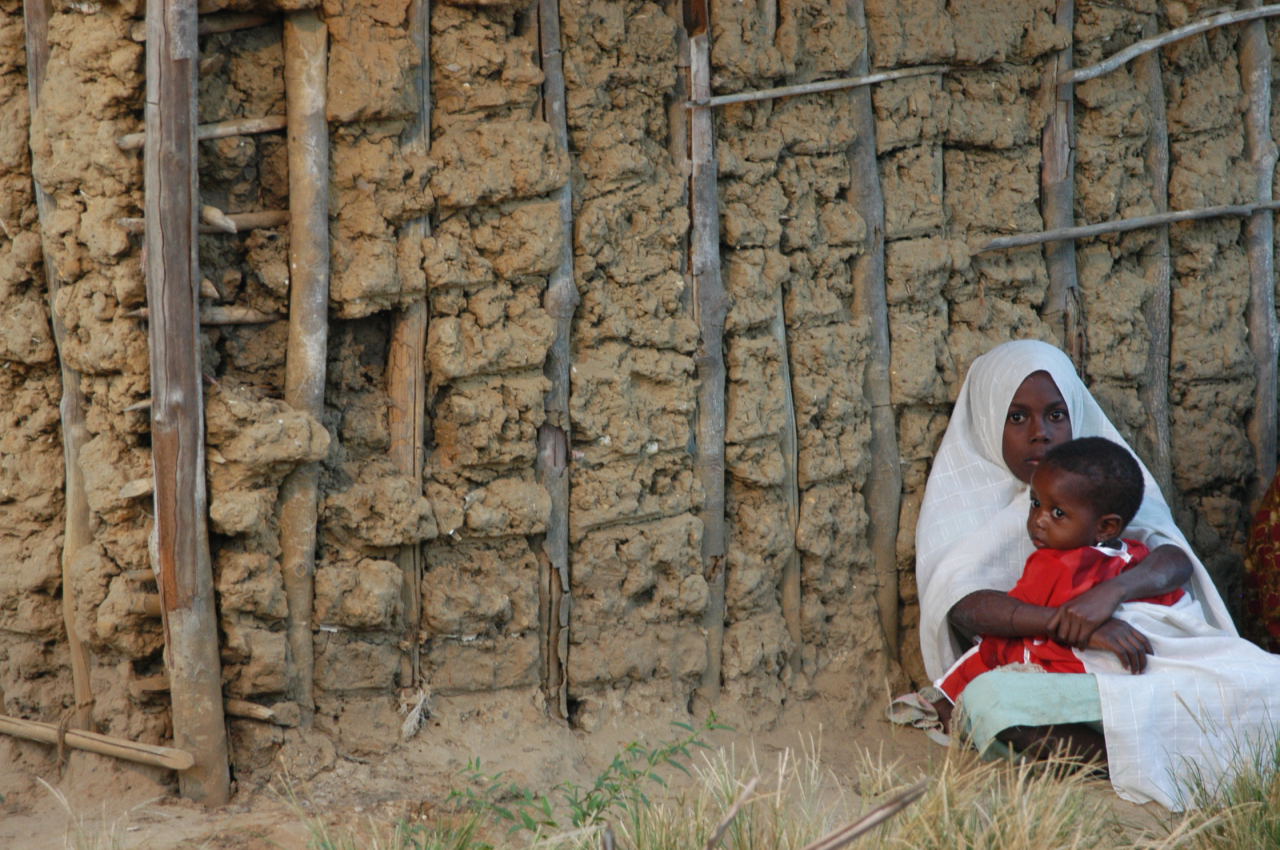
Poor people don’t want to stay poor. But there’s a misconception that it’s somehow “unfair” to poor people to let them in on the main secret of wealthy, educated, and successful people: smaller families mean larger lives.
Good news: Things are getting worse at a slower rate; the rate of population increase is easing. More than 40 countries now have populations that are stable or slowly declining, including Germany, Italy, Russia, and Japan. At present trends, the world population will likely peak around mid-century (at between 8 and 11 billion). By then, something like 50 countries will likely already have fewer people than today. People can live crowded and in fear. But real human beings will always need soil, water, food, wood, air, beauty, freedom from oppression, freedom of expression, room for compassion, the company of creatures, and a future.
When the ship Titanic set out to cross the ocean, its proprietors believed it indestructible. So they did not equip it with enough lifeboats for all the people on board. History is sometimes destiny. Believing ourselves too clever to sink our enterprise, we’re on another voyage where lifeboat room is limited. And we’re discovering there are more passengers than the mothership was built to handle. No known island exists, no opposite shore, no passing ships to call to for rescue. Just us. Just us, and the wish — perhaps too late — that we had steered a more careful course while the band gaily played.
As we bravely enter the new time of the Anthropocene and the uncertainties of a world with us at the helm, it’s worth reconsidering Thoreau’s declaration, “In wildness is the preservation of the world.” Wild places produced the living world and its inhabitants in abundance and resilience.
On the other hand, let’s not forget that for most of human history, natural things stood poised to recycle us at any moment. Weather, beasts, famine, enemies. We can live safer and better by enjoying those elements that have come under control — agriculture, medicine. I wouldn’t recommend a “return to nature.” I like books and science. I like music. I am willing to abandon the concept of Nature. I’m willing to abandon it — for any approach that works better.
Nature is moot, anyway, because we’ve so thoroughly changed the world. As oceans get depleted, water tables drop, sea levels rise, and forests fall, you begin to realize that the draw-down of “nature” is just one side of a coin on which hundreds of millions of people face a world wherein likelihood of dignity — always so elusive throughout history — now drains away with the fresh water; hope flies away like the birds that no longer return.
If, to paraphrase Aldo Leopold’s dictum, “a thing is right when it tends to preserve the integrity, stability, and beauty” of the living community, then we’ve passed “right” traveling in the opposite lane. If our values change, we might use science and technology to save us. If our failed values persist, science and technology will only press our accelerator.
Adapted from: The View From Lazy Point; A Natural Year In An Unnatural World, by Carl Safina, published by Henry Holt (Hard cover) and Picador (paperback, 2012); winner of the Orion Book Award.
14 Comments on "How to Make Population Growth Reverse Itself"
Rick on Sat, 12th May 2012 8:17 pm
“The thing that brings fertility down fastest happens to be the same thing that brings down poverty: educating girls. Turns out, illiterate women bear three times as many children as literate women, and their children tend to stay poor.”
Really, I know plenty of women in this country who can read, yet they have way too many kids. Let’s not forget religion, and it’s role.
Eventually, resource depletion will do the trick.
Kenz300 on Sat, 12th May 2012 8:51 pm
Quote — ” Engineered to end hunger, the Green Revolution failed because most of the world allowed the increased food to grow more hungry people than ever. China, partly because of its one-child policy, has eased more hunger, faster, than anyplace ever has. Meanwhile, India’s population growth largely erased its food-production increases. Now, a record 1 billion people suffer malnutrition; 10 million more each year.”
————————
Too many people and too few resources. If you can not provide for yourself you can not provide for a child. Access to family planning services needs to be available to all that want it. Endless population growth is not sustainable and leads to more poverty, suffering and despair.
Billyboy on Sat, 12th May 2012 10:22 pm
The unspoken assumption is that the higher education levels lead to a job outside the home, and cash to buy more products with. There already aren’t enough jobs due resource exhaustion.
The train has left the station.
Rick on Sat, 12th May 2012 11:27 pm
Peakoil.com, can you setup your info grab articles, so they don’t include uncompressed photos? I’m on a high-speed connection, but sometimes your pages low very slow. Thanks.
keith on Sun, 13th May 2012 3:29 am
Every species population has a threshold or peak if you like. This peak is ultimately determined by availability of food. Malthus gave a mathematical description in the 1700’s, as food doubles, population expands exponentially. Eventually, any given species hits the wall and a rapid decline in population occurs. Oil has allowed humans to move outside this model. Peak oil will slowly or quickly force us back inside the realm of Mother nature. I have no idea what will happen? Thinking about it scares me.
BillT on Sun, 13th May 2012 5:04 am
The Four Horsemen are saddling up for their ride. When it is over there will be far fewer of us alive on this ball of drying dirt we call Earth. It’s too late for education. The women are already born who will add another billion in the next 10 years. And men don’t want their women educated. They might demand equal rights.
BillT on Sun, 13th May 2012 5:22 am
BTW: If you compare countries by energy/resource use per person.
India has 1.3 billion people.
If we were to take their energy use per person and compare it to the energy use by the US…we find that the US is equal to 4.6 India’s or the equivalent of 6 billion people. So, which country is ‘over populated’? I would say the US is by our energy/resource consumption. Even compared to China ,we are still equal to 1.1 Chinas or 1.31 billion people in our energy/resources consumption. So, who is using most of the world’s energy/resources? The US Empire by a long distance.
NOW do you see how far we have to fall?
Lisa on Sun, 13th May 2012 7:01 am
How dare anyone put the guilt of the predicament of the world on the back of the people who are the least guilty? As another article in the Huff Post explains “Africa is No More “Overpopulated” Than Iraq Was a Haven for WOMD: Do the Math” (http://www.huffingtonpost.com/georgianne-nienaber/africa-is-no-more-overpop_b_107010.html
Overpopulation (for any species) exists when the resources of the habitat have been exhausted, so as far as I can see, the only way to determine whether a country or region is overpopulated is to look at amount of people versus arable land and then “do the math” (e.g. Saudia Arabia who have now stopped growing wheat in their own country for lack of water and have consequently bought up vast amounts of arable land in Ethiopia. Yet, we are much more likely to hear the mad men of the elite talk about Ethiopia and overpopulation than Saudi Arabia and overpopulation).
Personally, I am much more concerned with the rapid decline of the earth’s ability to be the habitat of anything; the pollution and overexlotation of the seas and our sweet water resources, the 4th reactor of Fukushima, the irrevokable damage of GMOs and repeated use of depleted Uranium in bombs. Ongoing and future wars. The list goes on and nowhere do I find the culprit in the picture of a group of sub-saharan women.
http://overpopulationisamyth.com/
http://www.vaclavsmil.com/wp-content/uploads/docs/smil-articles-science-energy-ethics-civilization.pdf
Arthur on Sun, 13th May 2012 8:37 am
The hard rule is that the number of people around is strongly correlated with the amount of food available. The only reason why the world’s population increased from 1 billion in 1850 to 7 billion now is the technological revolution based on fossil fuels. If the world runs out of fossil fuels, as it seems to be the case, at least for oil (the price of oil is now three times that of gas in calorie terms) AND there will be no replacement for fossil fuels, than inevitable the world population is going to decline… read mass starvation. And it will not be long before the humanitarian west, rather than pulling the starving thrird world masses into the boat, start using the paddles to hit on the hands that threaten to take the entire life boat down.
http://en.wikipedia.org/wiki/The_Camp_of_the_Saints
Arthur on Sun, 13th May 2012 9:10 am
The article is hopelessly idealistic lefty American. It is cheering the decline of nations like China, Russia, Germany and Japan as a ‘good start’. The rest no doubt will follow. BS. Although it is certainly a good thing for the nations mentioned, it is bad news for the rest of the world. Egypt for instance, gets 50% or more of its food from the US. If that stops, desaster for Egypt is inevitable. The nations of the north have populations with an IQ of 100. That is sufficient to have an industrial society and generate surplus food, on which the third world is dependent. And to have a strong enough centralized state to enforce one child policies like in China. Nothing of the sort is present in the third world. There will be no population control. The third world will be stuck in the mode of thinking that large families are an insurance for old age. Come to think of it, the decolonisation of Africa, enforced by the US on Europe, in hindsight, was a bad thing for Africa. Look what happened to Rhodesia. The Europeans were able to implement a productive infrastructure, that benefitted the local population, a population that is completely enable to do it themselves, in the past, now and in the future. But for marxist Americans, like Huffington, this kind of thinking amounts to ‘racism’ and is to be rejected out of hand, leaving the Africans the fate of a political correct death.
BillT on Sun, 13th May 2012 1:08 pm
All that has to happen is for the US to use 1/26th of the amount of energy/resources we currently consume and spread it over the other 6,700,000,000 people to level the playing field and feed everyone. But Americans are greedy and think that they have the right to take 30+% of the worlds resources for their 4% of the world’s people.
Bob Owens on Sun, 13th May 2012 3:18 pm
We had the Green Revolution and for the last 50 years have done nothing to get population under control. We threw away the best opportunity we will ever have to have set the world on a balanced course. We will not change our bad habits in the future about population. We are so stupid!
Kenz300 on Sun, 13th May 2012 3:41 pm
Every country needs to develop a plan to balance its population with its resources, food, water, energy and jobs. Resources are finite.
duane franke on Sun, 13th May 2012 10:08 pm
Man is smart enough to destroy the planet and just dumb enough not to save it