
Peak Oil is You
Donate Bitcoins ;-) or Paypal :-)


Page added on June 3, 2016

Let Nature be Nature
 |
| !Kung peoples managed their energy well – C.A.S. Hall |
After posting a pretty dour outlook last week we were amazed to watch it attract more page views more quickly than any of our previous 22 posts this year. No accounting for taste, we suppose.
At the risk of alienating our new audience right off the bat, we are posting something more upbeat this week.
We had two scientific papers shoved under our door, and both of are serious sources of hope for a world undergoing climate shock. They represent the two sides of the solution ledger, adaptation and mitigation.
The first is an open research white paper, The Sower’s Way: Quantifying the Narrowing Net-Energy Pathways to a Global Energy Transition, by Sgouris Sgouridis and Denes Csala of the Masdar Institute of Science and Technology, United Arab Emirates, and Ugo Bardi from the Department of Earth Sciences at the University of Florence, Italy.
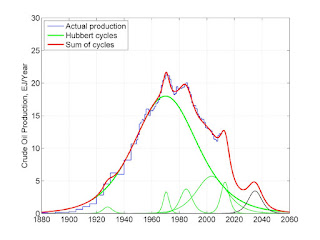
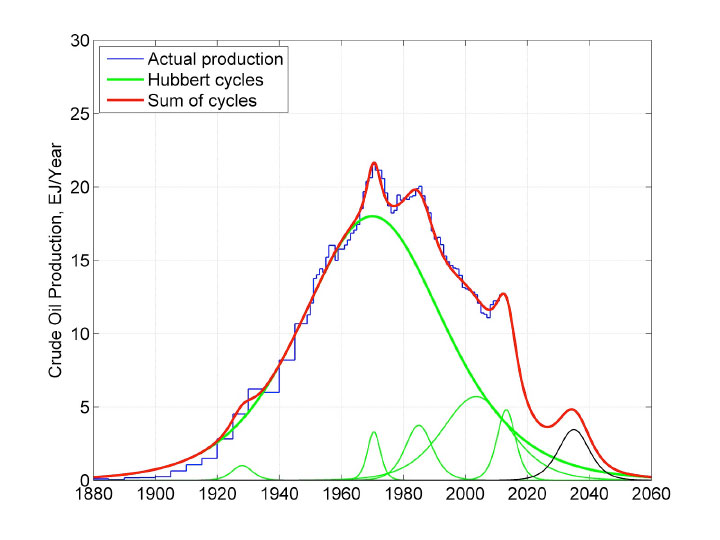 |
| Hubbard Linearization – Courtesy C.A.S. Hall |
The second is a journal article, published under a creative commons license in Science Advances 2016, entitled Carbon sequestration potential of second-growth forest regeneration in the Latin American tropics by 60 co-authors at 45 institutions in almost as many countries. The lead author is Robin L. Chazdon, a professor of Ecology and Evolutionary Biology at the University of Connecticut and a visiting professor at the International Institute for Sustainability in Rio de Janeiro.
In The Sower’s Way, Sqouridis’ group looks at the INDPs (national pledges) submitted at the Paris climate conference in December, sees that they are clearly inadequate to arrest runaway climate chaos and near term human extinction (NTHE)) and asks the pregnant question, suppose they weren’t?
Suppose the overarching goal set in Paris — to phase out fossil energy by 2050 or sooner — were actually committed to by all those who exchanged pens at the signing of the legally binding treaty last month at One UN Plaza?
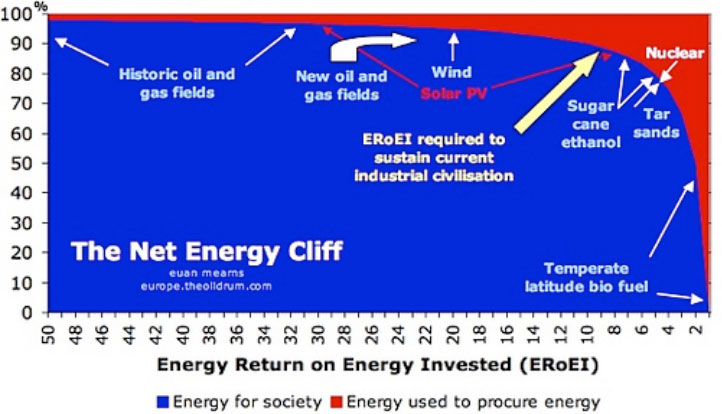 |
| The Energy Cliff – Courtesy C.A. Hall |
“Is it possible to satisfy the dual constraint of reducing emissions fast enough while achieving the desired energy availability?” the authors ask.
“… [I]mplicit in the COP21 agreement is that these reductions should be obtained while offering sufficient available energy for humankind, especially for developing countries that are ascending the energy availability ladder.”
After completing the study, one of the authors, Ugo Bardi, conducted a poll on the Doomstead Diner of how realistic most doomers thought the renewables revolution to be.
What is the possibility of a society not too different from ours (but 100% based on renewable energy sources, and on the possibility of obtaining it before it is too late to avoid the climate disaster. This said, what statement best describes your position?
Courtesy C.A.S. Hall It is impossible for technical reasons. (Renewables have too low EROEIs, need too large amounts of natural resources, we’ll run out of fossil fuels first, climate change will destroy us first, etc.)
- It is technically possible but so expensive to be unthinkable.
- It is technically possible and not so expensive to be beyond our means. However, it is still expensive enough that most likely people will not want to pay the costs of the transition before it will be too late to achieve it, unless we move to a global emergency status.
- It is technically possible and inexpensive enough that it can be done smoothly, by means of targeted government intervention, such as a carbon tax.
- It is technically possible and technological progress will soon make it so inexpensive that normal market mechanisms will bring us there nearly effortlessly.
Our own response, after returning from Paris, was: “option 6 – it will be faster than anyone expects.” Our reasoning was that once the curves cross — and solar is cheaper than oil — there will be a mad rush to dump oil stocks and buy solar, without any consideration of net energy. Simian neurobiology will then be buckled into the driver’s seat, chasing lost investments with fresh money until every last shekel is exhausted. In the end, there will be a lot of solar, wind, geothermal, and tidal energy to show for the effort but just not anything resembling the consumerist civilization most people now take for granted.
There will not be Space Cadet academies on Mars.
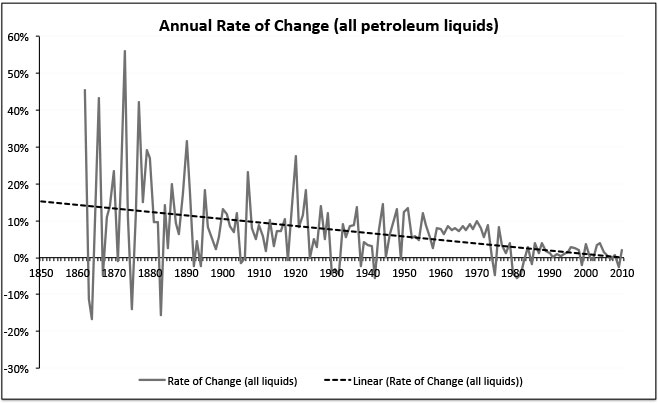
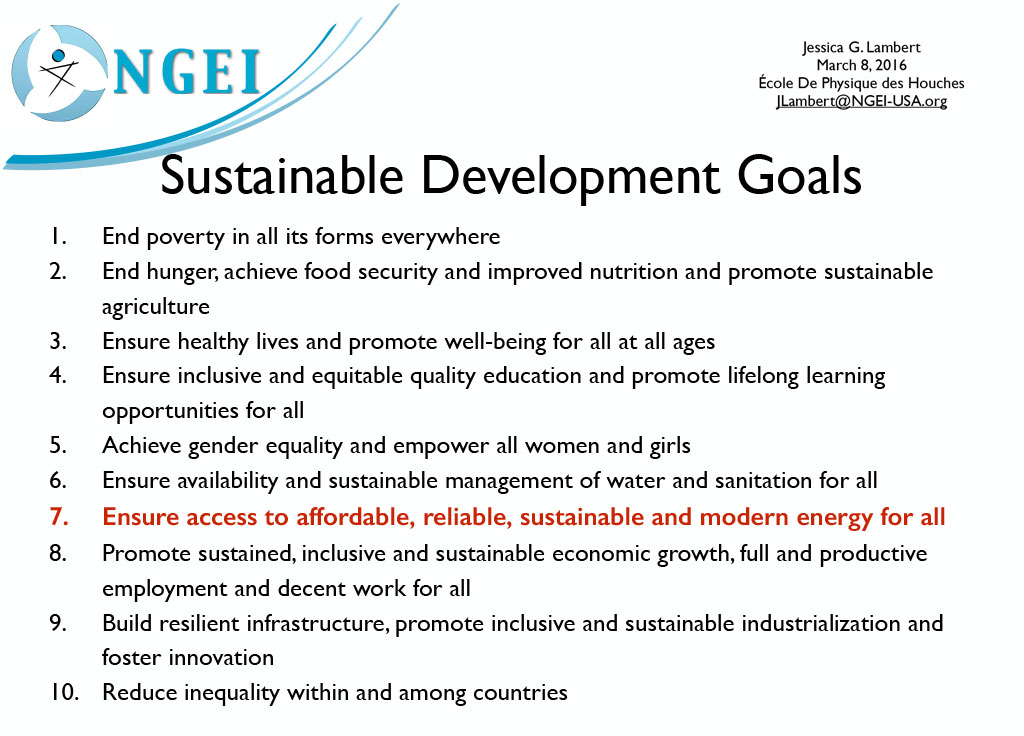
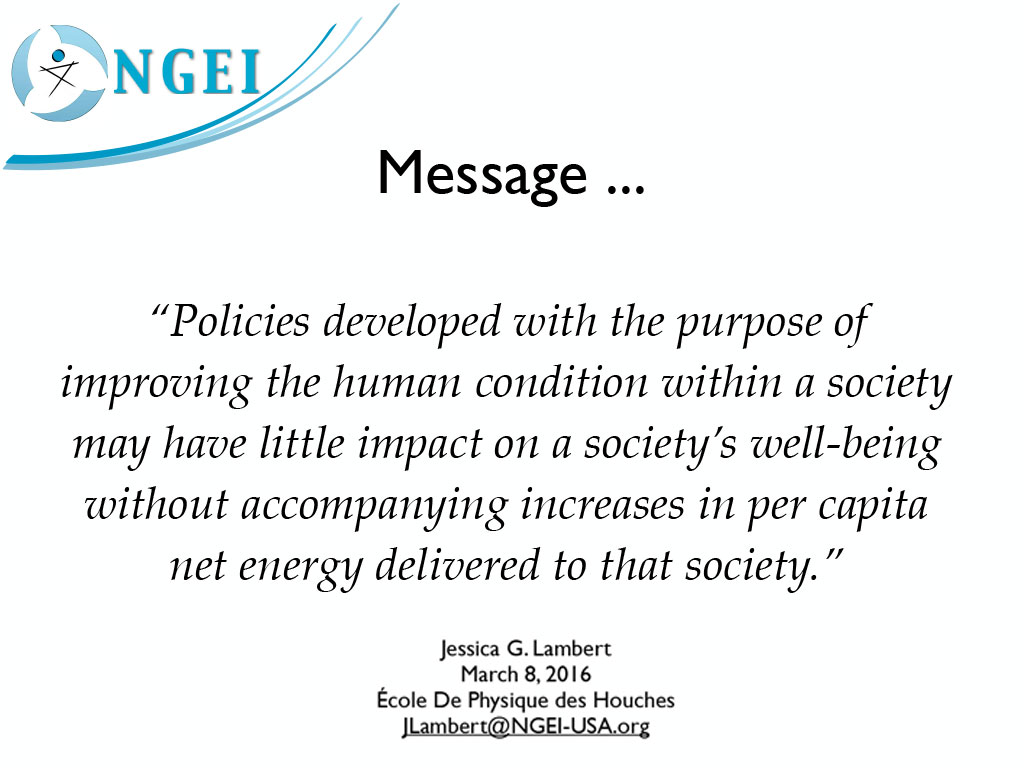
 The Sqouridis paper concludes that “renewable energy installation rates should accelerate and increase at least by a factor of 50 and perhaps more than 90 over current” in order to meet the UN sustainable development goals. They conclude that growth rate is entirely possible and may already be in process. The key, they say, is “the sower’s strategy”:
“… the long-established farming practice to save a fraction of the current year’s harvest as seeds for the next. Fossil fuels produce no “seed” of their own but we can “sow” what these fuels provide: energy and minerals to create the capital needed for the transition. Yet, withdrawing the “seed” energy reduces net available energy for society. The challenge therefore is to balance energy availability and emissions in order to complete a renewable transition before fossil fuel depletion makes it impossible without inflicting crippling damages on the climate.”
 |
| Courtesy J.G. Lambert |
Moreover, to be rated a success, the solar power transition has to meet three criteria:
- The impacts from energy use during the transition should not exceed the long-run ecosystem carrying and assimilation capacity;
- Per capita net available energy should remain above a level that satisfies societal needs at any point during transition and without disruptive discontinuities in its rate of change; and
- The rate of investment in building renewable energy harvesting and utilization capital stock should be sufficient to create a sustainable energy supply basis without exhausting the non-renewable safely recoverable resources.
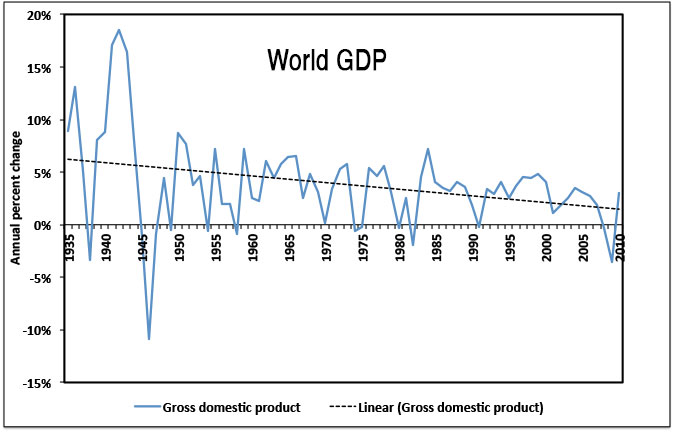
The group concluded:
In every case, a successful SET (sustainable energy transition) consists of a sustained acceleration in the rate of investment in renewable energy of more than one order of magnitude within the next three decades following a trajectory dictated by the chosen fossil-fuel phase-out. A peak in installation rates, but not cumulative capacity, forms at the point where the rate of energy demand growth starts to slow down.
In other words, the group concluded that Option 6 was the most likely: it will be faster than anyone expects. At least 50 times faster than it is right now.
 |
| Courtesy C.A.S. Hall |
Meanwhile the seminal bioeconomist Charles A. Hall reminded us:
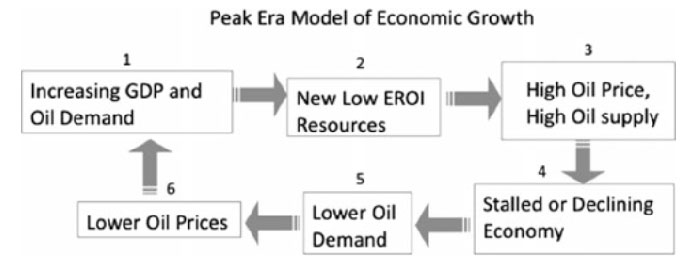
There are three good studies — Mohr et al.’s 2012 (Ward, J., S.H. Mohr, B. Meyers and W. Nel. 2012. High estimates of supply constrained emissions scenarios for long-term climate risk assessment. Energy Policy 51: 598-604); Maggio and Cacciola (Maggio, G., and G. Cacciola. 2012 “When will oil, natural gas, and coal peak?” Fuel 98: 111-123); Laherrere’s ASPO-France web page — that agree that there is likely to be a peak in ALL fossil fuels in +/- 2025 and then a sharp decline. It seems extremely unlikely that renewables will fill that gap. On the other hand the near cessation of economic growth in OECD countries and the slowdown for China might smooth out and slow down our approach to the peak.
 |
| Murphy and Hall, 2011 |
With that opening salvo, we can see Hall’s studies and raise a few more:
Leggetta, L.M.W. and D.A. Ball. 2012. The implication for climate change and peak fossil fuel of the continuation of the current trend in wind and solar energy production, Energy Policy 41: 610-617. doi:10.1016/j.enpol.2011.11.022:
Courtesy J.G. Lambert Climate change, and more recently, the risk of fossil fuel production being unable to keep pace with demand (peak fossil fuel) are both considered as risks to civilisation, or global risks. In an initial empirical analysis, this paper attempts to answer the following questions, which have often been posed but have not, to our knowledge, been answered empirically at global level. At which date, if unaddressed, will the risks become critical? Given that the substitution of fossil fuels by wind and solar energy is often proposed as a solution to these problems, what is its current aggregate growth rate and is there a plausible future growth rate which would substitute it for fossil fuels before the risks become critical? The study finds that the peak fossil fuel risk will start to be critical by 2020. If however the future growth rate of wind and solar energy production follows that already achieved for the world mobile phone system or the Chinese National Expressway Network the peak fossil fuel risk can be prevented completely. For global warming, the same growth rate provides significant mitigation by reducing carbon dioxide emissions from fossil fuels to zero by the early 2030s.
Mohr, S.H., J. Wang, G. Ellem, J. Ward, and D. Giurco. 2015. Projection of world fossil fuels by country. Fuel 141: 120-135. doi:10.1016/j.fuel.2014.10.030:
We model world fossil fuel production by country including unconventional sources. The Low and Best Guess (BG) scenarios suggest that world fossil fuel production may peak before 2025 and decline rapidly thereafter. The High scenario indicates that fossil fuels may have a strong growth till 2025 followed by a plateau lasting approximately 50 years before declining. All three scenarios suggest that world coal production may peak before 2025 due to peaking Chinese production.
 |
| Courtesy C.A.S. Hall |
Thus, whether lured by the carrot of a sun-powered future or frightened by the sound of the dip stick scraping the bottom of the oil pan, a Great Change is coming. But what is the shape of the curve? In comments to our last week’s post, reader Don Stewart wrote:
Harquebus, as quoted [on Ugo Bardi’s blog]:
“Whenever somebody with a decent grasp of maths and physics looks into the idea of a fully renewables-powered civilised future for the human race with a reasonably open mind, they normally come to the conclusion that it simply isn’t feasible.”
Stewart continues:
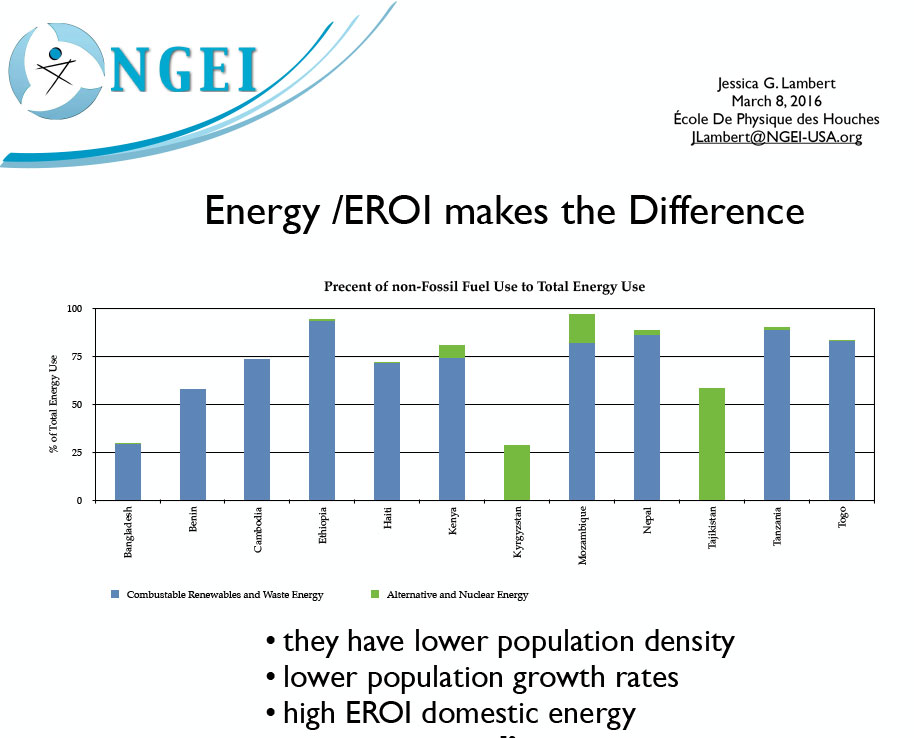
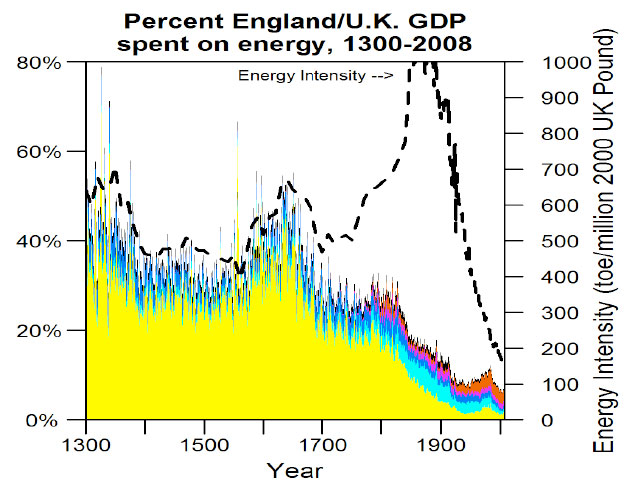
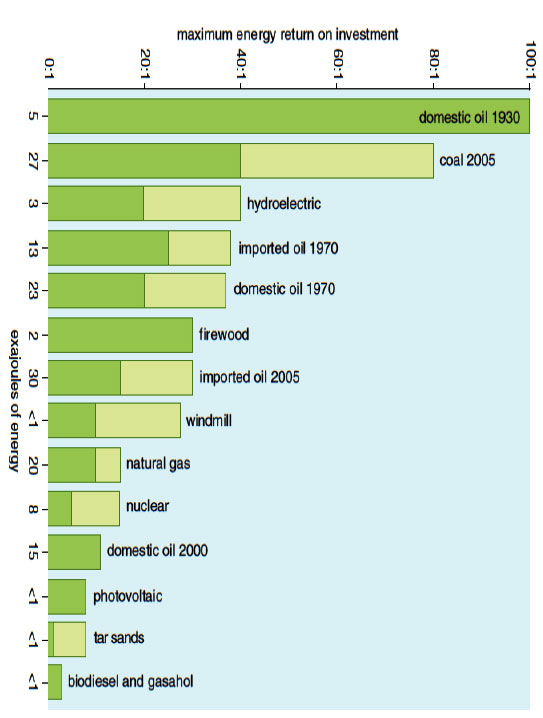
Courtesy C.A.S. Hall We are completely convinced that the above statement is true, but that does not mean that renewables cannot be of significant use to modern society. It is not that they can replace fossil fuels, but they could considerably extend their useful life span. That could be as much as a century. At the world’s present consumption rate the oil age will be ending in 13 years, and society will have to pay a very high price to get it there. We are now witnessing the bankruptcy of the Petro-States, and much of the Western world’s petroleum industry. Over the next five years it will become very apparent as to what is happening. Geothermal, wind, tidal power, small hydroelectric, and in some cases solar can replace much of the electricity production of the world — electricity that is now being supplied from our rapidly depleting fossil fuels.
 |
| Courtesy C.A.S. Hall |
Of course clean electricity is not a substitute for fossil energy; nor are biofuels; nor are both in combination. Professor Hall recommends Alice Freidemann’s new book When Trucks Stop Running for a fuller discussion of that issue. Friedemann blurbs:
Our era of abundance, and the freight transport system in particular, is predicated on the affordability and high energy density of a single fuel, oil. This book explores alternatives to this finite resource including other liquid fuels, truck and locomotive batteries and utility-scale energy storage technology, and various forms of renewable electricity to support electrified transport. Transportation also must adapt to other challenges: Threats from climate change, financial busts, supply-chain failure, and transportation infrastructure decay.
 Hall, Friedemann and Stewart all raise a common point: assuming renewable energy was rolled out with adequate speed and with all the boost the last hours of ancient sunlight and fossil energy era technology can supply, is it enough? The answer to that question lies in our civic willingness to face limits, both to the size of the human population and to how much it consumes. Can the extravagance of growth fanatics continue? Clearly not. Will President @realdonaldtrump keep the lemmings racing towards the cliff? Definitely so.
Chazon’s 60 scientists looked at something entirely different. They asked the question, what if we let nature be nature? Would she recover? Would she do so in time? The answer, which is really quite shocking given what we presented here last week, is yes. We have only to step aside.
 Chazon, et al, noticed that although deforestation in the world’s tropical regions, owing to expansion of cattle farming, urban sprawl and fire, continues to reduce overall forest cover, second-growth forests (SFs) are expanding in many deforested areas of Latin America. SFs emerge spontaneously in post-cultivation fallows, on abandoned farms and pastures, in the understory of ecological restoration plantings, and following assisted natural regeneration on private or communal lands. Given that there has been good satellite telemetry for more than 4 decades, Chazon’s group asked,
“What is the total predicted carbon storage potential of naturally regenerating forests over four decades across biomes and countries?”
 The answer was “a lot.”
Only about 28% of the millions of hectares studied was second growth forest, but looking carefully at that part, the researchers concluded that if second-growth forests were permitted to recover, unaided by tree planting or other interventions, 8.48 gigaton of carbon would be net sequestered over 40 years just in the aboveground biomass. Calculating below ground carbon they say would add another 25% (although we think that is too low). Their number corresponds to a total sequestration of 31.09 Gt CO2, equivalent to emissions from fossil fuel use and industrial processes in all of Latin America and the Caribbean from 1993 to 2014.
Just imagine what could be achieved with the addition of step-harvesting of forest products and biochar from woody wastes — or if we just left alone the other 90 percent of the planet that would naturally revert to second-growth forest if were allowed to. In either of those scenarios, so much carbon would be sucked out of the atmosphere that Earth’s atmosphere could quickly recover to pre-industrial greenhouse gas levels in a time far short of 40 years.
Suicide is not the only option, as the volunteer on the other end of the hot line will tell you.
There are still choices.
17 Comments on "Let Nature be Nature"
Apneaman on Fri, 3rd Jun 2016 6:18 pm
The lemmings are already toast.
Siberian Heatwave Wrecks Sea Ice as Greenland High Settles In
“We’ve never seen Arctic sea ice extents that are as low as they are now in early June. And with Arctic heatwaves, warm winds, warm storms, and a Greenland High all settling in, something had better change soon or otherwise the ice cap over the northern Polar Ocean is basically screwed.
On the shores of the Arctic Ocean’s East Siberian Sea (ESS), near the town of Logashinko, temperatures today are expected to rise to near 80 degrees Fahrenheit. Readings that are about 40 to 50 degrees (F) above normal for this near-polar region during this time of year.”
“This expansive ridge enabled extreme wildfires popping up all over the region even as it today drives 80 degree weather all the way to Arctic Ocean shores — enforcing a regime of rapid sea ice melt over the East Siberian Sea.”
https://robertscribbler.com/2016/06/03/siberian-heatwave-wrecks-sea-ice-as-greenland-high-settles-in/
Hmmmm East Siberian Sea, sounds familiar. Oh yeah, that the shallow sea with the loads of methane clathrates under it.
The East Siberian Arctic Shelf: towards further assessment of permafrost-related methane fluxes and role of sea ice
http://rsta.royalsocietypublishing.org/content/373/2052/20140451
makati1 on Fri, 3rd Jun 2016 6:50 pm
“LET NATURE BE NATURE”
First, there is no “let”. Nature WILL be nature. THAT is the real problem. The ‘intelligent ape’ seems to believe that it controls nature when it is the other way around, as we are discovering.
It must be terrible to have a chosen career with no future. We keep seeing these “what if” articles promising that “if” we only stop being what we are, we can … insert topic of the week. The Lemmings are NOT going to change. We cannot. Only the splat at the bottom will change us and that is too late.
We appear to be the last generations of homo sapiens to exist. Mother Nature is limbering up her big guns and we are in her cross hairs. What a wild ride we are in for. Buckle up!
theedrich on Sat, 4th Jun 2016 1:39 am
The anti-Trump tidbit at the top tells it all: elect Hotflash and she will show us the way to renewable bliss forever. Never mind that Trump wants to shrink America’s interference in the rest of the world, while the hag wants to increase it — including by military means. She will show us all how to live like the nobly savage !Kung of the Kalahari, as depicted below the gratuitous leftist statement. The underlying message: Trump bad, the bitch of Benghazi good.
The article is a patchwork of eco-babble prescribing the usual nostrums based on the usual imaginary hypotheses about changes in human behavior. The author does not seem to have a day job, but does seem to have had a frontal lobotomy.
Stuifzand on Sat, 4th Jun 2016 4:52 am
Charlie Hall is a complete fraud of the Olduvai Gorge school of doomer thinking:
http://dieoff.org/page125.htm
He cooks the books to the extent that there is no way out of our predicament (which is serious enough as it is), which is simply not true. Solar and to a lesser extent wind are still in its infancy but already now, the idea that solar has an EROI of ca. 2, as Hall claims, is pure BS.
What Charlie really wants is walk around in his naked b*** in the sun and throw the burden of civilization from his back.
Time to retire for good, Charlie and enjoy your fishing trip.
I have far more faith in a solid German institution like the Fraunhofer Institute than a loner like C. Hall.
Latest 2016 EPTB figures:
https://www.ise.fraunhofer.de/de/downloads/pdf-files/aktuelles/photovoltaics-report-in-englischer-sprache.pdf
“Depending on the technology and location of the PV system, the EPBT today ranges from 0.7 to 2 years.”
That translates to an EROI of up to 60 for solar panels in favorable territories like Spain or Italy.
That’s like oil in its best days.
There is no long-term energy problem, just a lack of vision to set course full steam towards renewables.
The shareholders of Shell, who want to convert the company in a 100% renewable energy company, already understand that, but not the CEO’s who want BAU and avoid risk-taking.
Davy on Sat, 4th Jun 2016 6:49 am
There is huge denial and ignorance of the whole spectrum of variables needed to deal with our long term energy problem. It does not matter only that a technology is viable and getting better. You have to understand the systematic implications of time scale, economics, and underlying social basis. You have to understand the macroeconomic hurdles to transition to a new technology. This is especially true when you already have a huge built out base fully invested in and a new technology that is less robust with an energy return.
You must take into account all those other factors affecting the population. In our case overpopulation and climate change issues are going to be increasingly dire. When you are talking the kind of energy transition needed then a population and economy must not be under stress. You must have a very healthy social basis to make the kind of transition being required of renewables. Other problems will bleed away investments.
The economic issues cannot be underestimated. We appear to be in a serious deflationary vortex of economic activity. China is the most pressing case in point. Demand growth is dropping causing deflation. Years of excess development and capacity is sitting idle but the investment part of that equation is not. Loans are going bad at a huge pace requiring massive central bank intervention. Deflation means many investments will not be bringing a return. Demand drops causing supply issues with supply base decay. The supply base cannot just be mothballed then fired back up. It must be maintained and invested in.
If we see an overt economic recession that even the current economic and political leadership admits to we will not need new electric generating capacity in the form of renewables. The rate we hear people talking about renewable capacity penetration for an energy transition to maintain the modern economy will be completely unachievable. We will already have unused capacity. Deflation will lower prices such that unused capacity will be turned to. You don’t build out expensive new capacity when you have cheap existing capacity already available.
Economics trumps policy so climate policy objectives will be put on hold to deal with the most pressing issues at hand. This has always been the case. We are already seeing excess capacity in multiple areas across the entire economy. The Investments environment is not as profitable in a deflationary period further lowering the new renewable capacity penetration.
Remember we need a huge increase in the current rate of renewable capacity penetration to achieve energy and climate goals. Time is a factor. This is not something that can happen over 100 years this has to happen fast. It is not adding up as something that can happen at the rate required to overcome climate thresholds and entropic decay of our current foundational energy system. Depletion and entropic decay in the form of peak oil dynamics does not sleep. In fact POD accelerates as its decay and destructive change builds on itself.
It is my hope the amount of renewables built out and installed increases significantly until it can’t. It is one of those really important additions to our effort to combat economic deflation and physical entropy. Our modern society is being ripped apart from within. We are going to get to a point where globalism will be dysfunctional. Economies of scale, minimum operating levels, and velocity of money will be such that normal financial transactions don’t work. This is a Minsky Moment type environment where normal economic exchange stops. http://www.investopedia.com/terms/m/minskymoment.asp Systematically and economically the math does not add up for a renewable transition.
penury on Sat, 4th Jun 2016 9:41 am
Lately reading the posts on this site has become am exercise in futility. I understand “publish or perish” this author made the wrong choice, Dreams are wonderful entertainment, but6 they will not replace reality. Reality is it is at least 100 years too late for hopium. Yhe best you can do nowe is take care and enjoy the carnage coming soon.
makati1 on Sat, 4th Jun 2016 9:52 am
penury, there are going to be a lot of people lost when their profession is no longer useful or pays a paycheck. But that is their problem. I often read the headline, skip to the bottom to see who is to blame and move on without reading. I like fiction, but not when it is presented as fact. If they began with “Once upon a time…” I might just read it out of curiosity, but…
onlooker on Sat, 4th Jun 2016 9:53 am
Yes we are just passengers on the Titanic chatting away while the boat is sinking. Misery loves company haha.
Rod McNeil on Sat, 4th Jun 2016 10:37 am
This comment is addressed to Stuifzand, whomever he might be. It has been my privilege to know Dr. Hall for some 30 years and while he is more than capable to defend himself and his scientific views, I have decided that enough is enough, and its time to step in. I have watched Dr. Hall struggle for decades to accumulate the data necessary to inform his observations.
Having studied solar engineering and its costs for some 30 years myself, any study which concludes that EPBT is less than 10 years is incorrect. The EROI for solar may be 1 or even 5, but sure as hell isn’t 60. I’m all for pursuing renewables but the total energy cost for production, installation and maintenance of PV’s has been grossly underestimated by most individuals.
My key point is that Dr. Hall is certainly not a loner. He has worked with hundreds of scientists and engineers, throughout the world, over decades, to gather data and analyze it. His writings are well informed and powerful. In reading all of his books and numerous articles and then attempting to verify the information referred to in making his conclusions, I have never found him to “cook the books” in any way. In fact, I am routinely amazed at the effort he goes to to incorporate all data in forming his conclusions. You would do well to respect his input. If you are a scientist, consider his inputs and incorporate them into your own work. Only a fool dismisses data or differing perspectives arbitrarily.
Stuifzand on Sat, 4th Jun 2016 1:02 pm
@Rod McNeil- I produced (MIS) solar cells end seventies in a laboratory as a student, so I know a little about the subject.
C. Hall is about the bleakest EROI study you can find.
Here are the results of a literature study. A mr Bhandari looked at 232 papers on solar EROI from 2000-2013.
Average EROI: 11.6
…based upon relatively old solar cells/panels. Modern thin film cells have much higher EROI.
http://rameznaam.com/2015/06/04/whats-the-eroi-of-solar/
Meanwhile the advance achieved in the field is substantial. Stress is no longer put so much on further enhancement of conversion efficiency, however spectacular that may be, but instead of cost cutting and improving production methods.
Furthermore, standard calculation practice is to assume an economic lifetime of 25 year. Although not much data is available, anecdotal evidence suggests that panels can keep producing at 80% of the original output after 40 years:
https://pureenergies.com/us/how-solar-works/how-long-do-solar-panels-last/
That significantly adds to EROI.
Flexible thin film solar:
https://www.youtube.com/watch?v=9xGQ1Ds5U8Q
Needs only 10% of the matter of conventional solid panels. It is obvious that embodied energy is far less per m2.
I could have formulated my initial post perhaps a little less robust, but the idea that an entire industry, employing tens if not hundreds of thousands of people world wide, adding hundreds of GW/year to the installed base, is simply fooling itself and its customers, that made me a little angry.
Mr Hall’s study is merely one in several hundreds. And like in IT, developments and improvements proceed really fast.
GregT on Sat, 4th Jun 2016 1:30 pm
“Furthermore, standard calculation practice is to assume an economic lifetime of 25 year.”
Well let’s just hope they have an economic lifetime of 25 years, because that’s about the same amount of time that my system requires to reach the break even point, not including battery, inverter, and charge controller replacements, of course.
energyskeptic on Sat, 4th Jun 2016 1:53 pm
This is a liquid fuel transportation crisis. If you can’t electrify trucks (since biofuels don’t scale up, coal and natural gas are finite, hydrogen fuel cells are totally ridiculous), then civilization ends.
Diesel is finite. Trucks are the bedrock of civilization. So where are the battery electric trucks?
http://energyskeptic.com/2016/diesel-finite-where-are-electric-trucks/
My book “When trucks stop running” explains why an 80 to 100% renewable electric grid isn’t likely (so do many of my posts at energyskeptic.com)
Also another recent post
Wanted: Math geniuses and power engineers to make a renewable grid possible
http://energyskeptic.com/2016/wanted-math-geniuses-and-power-engineers-to-make-a-renewable-grid-possible/
Sissyfuss on Sat, 4th Jun 2016 2:06 pm
Alrighty then! Let Nature be Nature by all means. That means a child mortality rate of 75%, average life span of 30 yrs, and the most advanced tools available being rocks and sticks. Party on, Doomville!
Davy on Sat, 4th Jun 2016 2:08 pm
The inconvient hurdle for the green alternative transition crowd is truck transport. This is true of all transport but most fully truck transport. Transport is not going to electrify at the scale needed in time nor size. Timing problems are obvious from current renewable capacity penetration into the grid let alone into transport. This falls even further away from reality when considering EV’s. It falls flat on its face when considering the powering of heavy trucks and construction equipment.
Sure we have electrified rail but we will never be able to electrify trucks with what is needed and the scale needed. Without trucks you don’t have a vital component to the distribution chain of globalism. Globalism cannot survive without truck transport. Without globalism there will be no renewable energy industry at least as we know it today.
Apneaman on Sun, 5th Jun 2016 10:33 am
It’s a water world. Heat it up just a little and you get more evaporation and more moisture in the atmosphere and thus you get bigger deluges. That just nature being nature (we call it physics).
Over 100 Inches of Rain Have Soaked Parts of the South Since Spring 2015
https://www.wunderground.com/news/over-100-inches-rain-since-spring-2015-texas-louisiana-oklahoma
How much water is there on, in, and above the Earth?
http://water.usgs.gov/edu/earthhowmuch.html
The Water Cycle and Climate Change
http://earthobservatory.nasa.gov/Features/Water/page3.php
Tom S on Sun, 5th Jun 2016 3:51 pm
Hi Rod Mcneill,
I’ve been following doomsday cults, doomsday groups, and other pseudoscientific groups of various kinds for years now. That’s how I ended up here. It’s a strange hobby of mine.
I also have a math background.
I’ve read many of Dr Hall’s books and papers. In my opinion, they are littered with obvious, severe mathematical and logical errors which invalidate their conclusions. His work would not survive critical scrutiny. His work is less sophisticated and less convincing than many other crackpot sources.
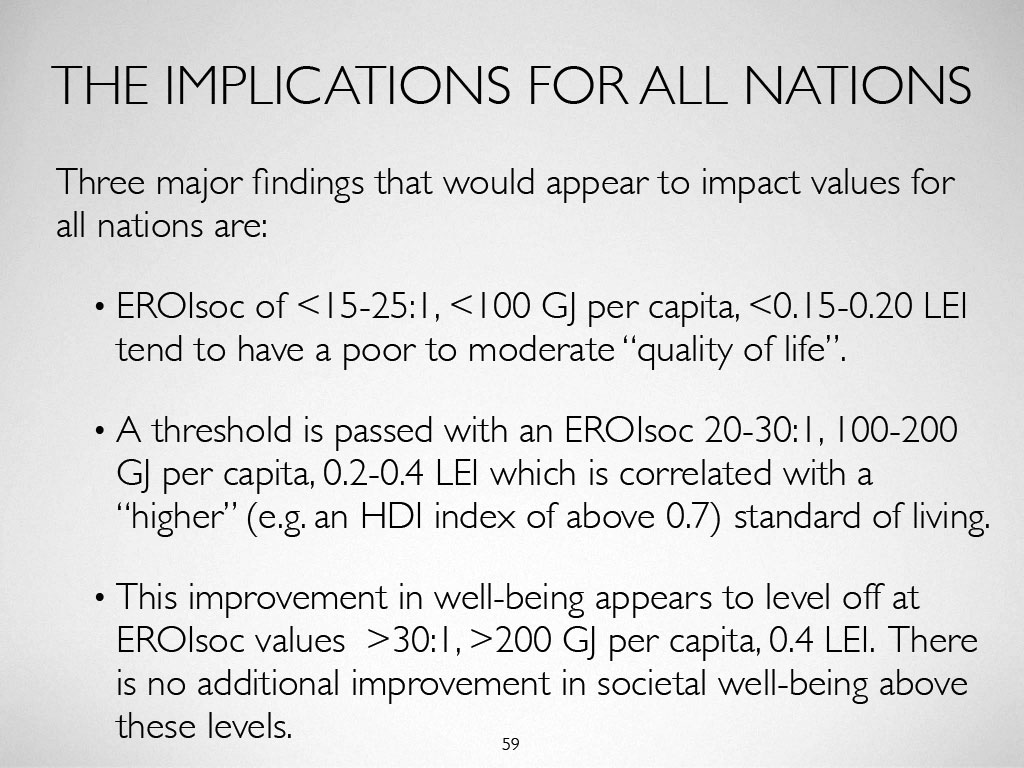
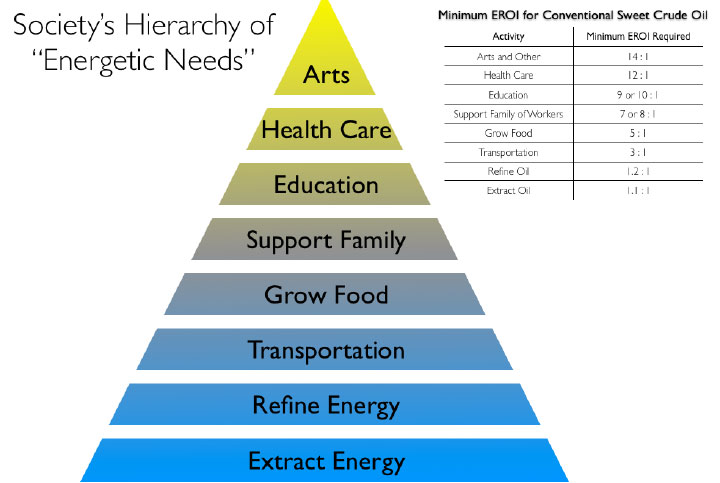
There needs to be more critical thinking when it comes to this stuff. For example, I found a paper (http://www.esf.edu/EFB/hall/pdfs/petroleum_drilling.pdf) by Charles Hall from 1981. Look at the graph on page 3 of that paper, which implies that net energy from all oil and gas would decline to 1 around the year 2000. Now compare that to the graph from the article above (the pyramid graph) showing it’s impossible to have any health care at all with an EROI of less than 12. What happened? Why doesn’t anyone even ask where the error was? Is it really careful, painstaking work, when blatant errors of prediction are just shoved under the rug and not discussed? For that matter, why are Hall’s figures of EROI so very different from those of other researchers who don’t have such a terrible track record? Why the discrepancy?
-Tom S
GregT on Sun, 5th Jun 2016 4:05 pm
What happened Tom S?
That would commonly be referred to as extend and pretend. In case you haven’t noticed, the world is now completely mired in exponentially growing, mountains of un-repayable debt. Also, Hall’s extrapolation points to around 2003, not bad for a 20 year prediction. He was only off by a couple of years.