
Peak Oil is You

Donate Bitcoins ;-) or Paypal :-)


Page added on June 5, 2016

5 of Your Favourite Foods Predicted to Go Extinct
World Environment Day (WED) is one of the greatest annual events celebrated across the globe on 5th June. The objective of the event is to raise awareness about the leading issue of the sustainability of our environment. It was initiated in 1973 by the United Nations General Assembly and United Nations Environment Programme (UNEP) to address colossal issues like global warming, deforestation and food shortages among many others.
On World Environment Day, let’s awaken our conscience. With every passing year, the environment is getting degraded and rumours are afloat that if this continues, we might not be able to devour our favourite foods in the foreseeable future. Scientists have estimated that over two-thirds of flora and fauna that once inhabited the Earth are now extinct. Studies are now suggesting that certain human-induced environmental changes caused their eradication.
This year’s theme for World Environment Day is ‘Join the race to make the world a better place’. Here are five foods that our future generations could be deprived of, because of changes in the climate and our environment.
1. Honey, where art thou?
Thinking of adding a spoonful of honey to your morning smoothie? Or how about your favourite honey chilli potatoes? Stock up on this liquid gold as a United Nations scientific report warns that 2 out of 5 honeybee populations are on the path to extinction. Simon Potts, Director of the Centre for Agri-Environmental Research in England remarked, “We are in a period of decline and there are going to be increasing consequences.”
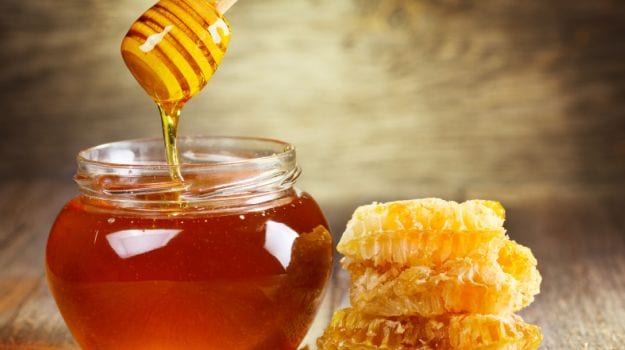
Bees are responsible for pollinating more than 250,000 species of plants, including more than 90 food crops. So, the decline in the population of bees could also affect the food supply. The possible cause of this is the high use of insecticides and pesticides in farming which are lethal for the bees and other pollinators. The use of herbicides also hinders the work of pollinators since it eliminates the wildflowers and weeds which are usually helpful in the process. Robert Watson, a British Ecological Scientist said that England has now started paying it’s farmers to plant wildflowers for bees in hedge rows.
A study published in the journal ‘Science’ shows that due to changing temperature and weather conditions, bees have failed to migrate and many populations have died. While some animals may have adjusted, the research on bees suggests that they don’t possess the ability to adjust easily to new environments.
2. Goodbye chocolate!
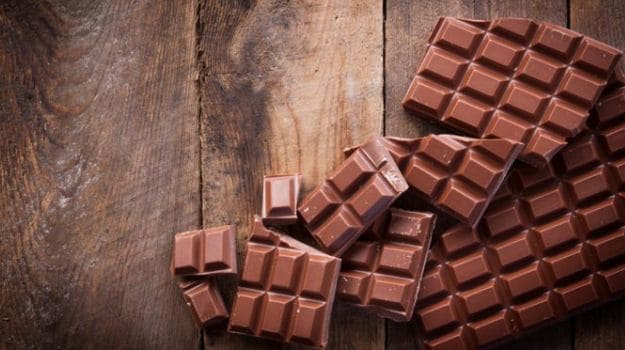
Andrew Jarvis, leader of the decision and policy analysis Program at International Centre for Tropical Agriculture (CIAT) says that although chocolate is not essential for our survival, it can help in raising awareness about the increasing rate of climatic changes by “hitting people’s soft spots.”
The core issue here, is that due to rising temperatures and constant change in weather patterns, it is difficult to produce cocoa. The rising temperature leads to ‘evapotranspiration’ in the cocoa trees which makes them lose more water into the air and thereby lowering its yielding capacity. Scientists have predicted that chocolate production will significantly diminished by 2030. It has also been predicted that in the next 40 years, the temperature in Ghana and Cote d’Ivoire, where 70% of cocoa is grown, is set to rise by 2°C. This will make the climate too hot and dry for growing cocoa trees.
3. Sorry, no coffee or wine with that
According to a research conducted by UK’s Royal Botanical Gardens, Arabica and Robusta, which are the main sources of coffee would suffer greatly because of environment changes. It also revealed that the number of locations where Arabica coffee grows would decrease by 85% by 2080. High temperature and extreme conditions are leading to coffee rust and fungus that are invading many plantations. Another problem is depleting water supplies. Severe drought in Brazil, flooding in Honduras and Vietnam running out of water shows that the problems have already started surfacing.
Climate is the most critical aspect for the ripening of fruit to its best quality in the production of wine. It has been seen, that the world’s premium wine regions are under threat due to hotter and unpredictable weather like Bordeaux and Rhone regions in France, Tuscany in Italy and Napa Valley in California.

4. The plunging future of seafood
Due to global warming, the temperature of the sea has started to rise, causing a sharp decline of a number of water-species. If the planktons, which are kind of algae and shrimps found in oceans and seas, were to go extinct, it would definitely have an impact on the population of fish and other seafood. UK’s Government Chief Scientific Advisor, Sir Mark Walport declared that “Thanks to man-made CO2, the acidity of oceans has increased by 25% since the dawn of the industrial revolution”. This threatens a whole wide range of ocean species.
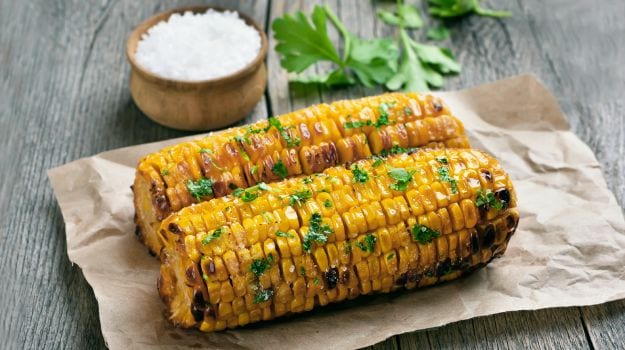
Bad news for corn lovers. According to a study in the journal of Science titled ‘Climate change curbs crops’, it has been reported that the global corn production has been nearly 4% lower than it would have been if the climatic changes were slowed down. This is happening due to global warming. Just 1 degree Celsius rise in temperature, decreases the rate of corn production by as much as 7%. Corn is also a major feeding source of livestock, so a lower production of corn would mean expensive meat.
Deforestation and Palm Oil
While our favourite foods may be disappearing, the production of those that are not really needed is on a rise. One such product is the Palm Oil, which could be a reason for the loss of our favourite foods.
Palm oil is a type of edible vegetable oil that is derived from the palm fruit. It can grow and flourish wherever heat and rainfall are abundant. Where does the problem lie? Tropical forests are being cleared to make space for palm oil plantations. Thus, carbon dioxide is released in the atmosphere along with other greenhouse gases, elevating global warming. Top fast food brands in the world use palm oil to fry and bake their foods. Hence, they play a key factor in aggravating the situation by being a major buyer of palm oil.
According to the World Wildlife Fund, “an area equivalent to the size of 300 football fields of rainforest is cleared each hour to make way for palm oil production. This large-scale deforestation is pushing many species to extinction.” A new industry standard of deforestation-free palm oil has emerged. Sustainable palm oil is an approach to oil palm plantation which aims to produce palm oil without endorsing deforestation. Palm oil is present in a wide range of products which includes: baked goods, confectionery, washing detergents, shampoo and cosmetics.
We know that we should conserve our resources (reduce, reuse and recycle), which helps in lessening the impact of human activities on the natural ecosystem but we rarely do anything about it. This is easy to achieve by making small changes like switching to organic food as chemical fertilizers emit a great amount of greenhouse gases. You should also prefer locally grown food because they do not require transportation which can impact the pollution levels. It has been further seen that the way food is grown, has a greater impact in reducing carbon emissions than the over-all emission as a result of shipping. Do your bit and you’ll still be enjoying your favourites on the dinner table many years from now.
21 Comments on "5 of Your Favourite Foods Predicted to Go Extinct"
makati1 on Sun, 5th Jun 2016 6:51 pm
Coffee and chocolate trees are growing on our farm. Maybe they will be able to survive and thrive in the future? We shall see. At least, I don’t have to import those luxuries. Many wild bees there also and huge honey combs hanging in the trees. No insecticides used in that area so they too may survive. Seafood and corn may not. But there are other crops that will.
Kylon on Sun, 5th Jun 2016 8:53 pm
Any of the desirable foods/animals will be maintained in specially preserved commercial environments, so long as civilization doesn’t collapse completely.
However, the price of those foods will increase to the point that it’s out of reach for anyone but the upper class.
Everyone elses diet is going to become far blander, with less food, higher prices, lower nutrient content, and less variety.
On the bright side I see a future in specialty flavoring agents to make a small set of fortified (artificial nutrient injected) foods be able to appear and taste like a much wider variety of different foods.
There will also be a market in taking things like honey and streching them, but dilution with fructose, some artificial nutrients proteins and what not derived from algae, various other agents to compensate for less nutritional value ect…
So the average person might be able to have a honey substitute that has a little honey, some flavoring agent, and some added nutrients to compensate for the dilution. It won’t be as good as real honey, but it will be affordable. Same goes for other products.
makati1 on Sun, 5th Jun 2016 9:07 pm
Kylon, your ideas have some merit, but honey will not be available at any price, unless you stored it yourself now. You have no concept of the quantity of flowers a bee has to visit to get one drop. There will be no “preserved commercial environments” that huge. I suggest you store a few hundred pounds if you like honey. It keeps practically forever under the right conditions.
Go Speed Racer on Sun, 5th Jun 2016 9:09 pm
The rich will continue to have real food.
The poor will have to make do with substitutes. For example, brown candle wax will give the poor an excellent substitute for chocolate.
Oh, they already have that on the shelves right now. Notice all the substandard products for ignorant poor people, that say “Chocolatey coating”.
That is because “chocolatey” does not have any chocolate, it is just brown candle wax.
Fortuantely the poor are so stupid and so fat, they don’t know the difference.
“Get your government out of my food stamps” the poor people say, as they vote in Donald Trump.
makati1 on Sun, 5th Jun 2016 9:17 pm
Go Speed, how will they? Are they immune to the climate? No amount of greenhouses will provide even a smell of food for the 2,000+ billionaires and their families, not to mention the almost billionaires. No, they are going to suffer and starve also, just a little later than we serfs.
Davy on Sun, 5th Jun 2016 9:32 pm
You are friggen dense Makati Bill. Are you drunk?
Speeder the jester give the uptight assholes hell LMFAO.
Northwest Resident on Sun, 5th Jun 2016 10:02 pm
honey substitute? Not me. I just harvested and processed a gallon of honey from one of my beehives, and still have about two gallons in the frames I didn’t get around to processing today. I suspect I’ll get a few or more gallons with the end-of-summer harvest. I’ll be living high on the real stuff while all the serfs eagerly lick the honey-coated chocolate wax that I give them, but only if they beg.
It was an interesting harvest. About 50% of the honey in two full medium supers is very light colored and not as thick as most honey I have experienced. The other 50% that I haven’t processed (or tasted) yet is clearly buckwheat honey — dark purple or brown. I’ve never had buckwheat honey before, but I’m about to experience it for the first time courtesy of somebody somewhere near by growing a crop for my bees to forage. The fall/end-of-summer harvest should be almost entirely blackberry honey, I hope, same as last fall’s harvest — the best! BTW, if you’re thinking about starting your own bee colonies to avoid the terrible fate of honey-deprived serfs, don’t even try unless you’re able to do some pretty hard labor. Beekeeping ain’t for woosies!
makati1 on Sun, 5th Jun 2016 10:18 pm
NWR, better store some of that away while you can. It will not be available forever. You have the advantage of not having to pay exorbitant prices and can put away a lot of it for future use.
makati1 on Sun, 5th Jun 2016 10:24 pm
Go speed, candle wax has ZERO taste. Your bullshit is almost funny. It can have a carob coating which is “chocolaty” and is not noticeable if it is coating something else.
Real chocolate is available everywhere. But, yes, the stupid Americans will believe anything these days.
GregT on Sun, 5th Jun 2016 11:31 pm
“About 50% of the honey in two full medium supers is very light colored and not as thick as most honey I have experienced.”
Was it capped NWR? Bees normally don’t cap the comb until it reaches a certain moisture content. Do you by chance have much fireweed in the area? Fireweed produces nearly clear honey.
Northwest Resident on Sun, 5th Jun 2016 11:51 pm
Hi Greg. Yes, it was capped. It isn’t THAT thin, just not as thick as I would expect. Minor observation, maybe. I’m guessing it is a combo of white clover, maybe some apple trees, most likely a fair amount of some orange blossoming wild flower that grows in abundance around here and probably some dandelion too. Very good tasting, no complaints, just not what I expected. I don’t think we have fireweed around here — not what I saw when I looked it up on Google anyway — maybe in the mountains, but not here in the valley. Thanks for asking!
Northwest Resident on Sun, 5th Jun 2016 11:54 pm
GregT — BTW, it was around 95 F here today. That might also have something to do with how thick the honey is. We’ll see how thick it is in less intense heat.
GregT on Mon, 6th Jun 2016 12:09 am
Yes NWR, 95º here today too. Way above normal.
The state of honey is obviously temperature sensitive. Much easier to harvest and filter when it is warm, than when it is not.
Have you paid attention to how the bees circulate the air through the hives? I always found that to be fascinating.
Lawfish1964 on Mon, 6th Jun 2016 8:47 am
You can’t print food and you can’t eat money.
green_achers on Mon, 6th Jun 2016 11:23 am
Corn is in such massive overproduction that we use about a third of it for fuel and the price is still depressed.
onlooker on Mon, 6th Jun 2016 11:25 am
Corn is better for fuel than food according to what I have read about its worthiness as food.
Davy on Mon, 6th Jun 2016 1:00 pm
Looker, that is true of field corn. There are many varieties that are very healthy and tasty. These almost always are garden heirloom verities. The way the native Americans did corn was especially healthy. Corn is an excellent source of carbs.
onlooker on Mon, 6th Jun 2016 1:48 pm
Well corn and other domesticated grains have a relatively short time as staples in our diet. Roughly 10000 years. So our biology has not had sufficient time to evolve into this type of food. Plus because of the way the are prepared in modern times they are ill suited for us because of the starch and sugars they are broken down into. Sugar is one of the worse habits you can have as a human
Davy on Mon, 6th Jun 2016 1:57 pm
Looker, yea in regards to our evolution grains are not the best diet at the level we are eating them and the quality of the nutrients. But in our modern world there is a big difference in quality as most here know with processed and permaculture/organic.
The best diet we could have is the semi-nomadic hunter gather diet which did include some cultivated grains. In that world you cover all your options because hunger is an ever real possibility. Corn for example was very good to store for the Native Americans. Stored food was essential to combat the unknowns of winter time.
Sissyfuss on Mon, 6th Jun 2016 2:18 pm
In my 5 acre slice of nature, I used to be pestered and sometimes attacked by copious and varied species of bees and wasps. That was a few yrs ago. So far this year I have seen 4 bees, 1 wasp, and zero Monarchs. It gets worse every year and this is on rewilded land that is unpoisened and organic. But Monsatan will tell you it’s all in your head.
Go Speed Racer on Mon, 6th Jun 2016 8:32 pm
Hey there everybody. Well if I can’t dazzle you with brilliance, then I will baffle you with bullshit. See how it works?
Sorry I mis spoke. ‘Chocolatey Coating’ is more complex than just brown candle wax.
There are herbicides mixed into it. Also, bug killer like you shoot under that old porch that’s being eaten by ants. It gives ‘Chocolatey coating’ that delicious taste craved by the land whales at Wal-Mart on SNAP cards.
To make America great again, Trump will deport them all. By barge, since transporting all that fat by aircraft is too expensive.