
Peak Oil is You

Donate Bitcoins ;-) or Paypal :-)


Page added on September 17, 2018

‘Zero Emissions’ EVs Actually Run on Natural Gas

Last week was National Drive Electric Week and events were held in all 50 states to extol the virtues of electric vehicles (EVs). And EVs do have certain advantages that those who can practically take advantage of them enjoy: they tend to be cheaper to own, cheaper to maintain, they reduce carbon emissions, they – along with domestic oil and gas production – reduce our dependence on foreign oil, and they are fast and fun to drive because of their instant torque.
What EVs are not is “Zero Emissions,” despite the implication made by numerous manufacturers.
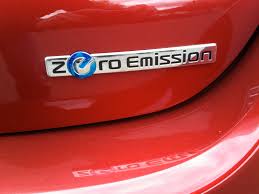

Um, no. Source: Naotake Murayama; Tesla Motors Club
Yes, EVs have no tailpipe exhaust (and no tailpipe!) and thus no CO2 is added to the atmosphere from burning gasoline or diesel, and this is a good thing from a climate perspective. But from the rubber, literally, meeting the road, to battery production, to manufacturing, to charging, EVs still use plenty of fossil fuels and contribute to greenhouse gas emissions, albeit fewer of them. In addition, EVs are not (yet) accessible or practical for most Americans.
Manufacturing
Certain basics of the manufacturing process must be considered when examining the environmental impact of EVs. In 2015, the Union of Concerned Scientists conducted a rigorous assessment of the carbon footprint of EVs in comparison to internal combustion vehicles.
As summarized by the report:
“Global warming emissions occur when manufacturing any vehicle, regardless of its power source, but BEV [battery electric vehicle] production results in higher emissions than the making of gasoline cars— mostly due to the materials and fabrication of the BEV lithium-ion battery. Under the average U.S. electricity grid mix, we found that producing a midsize, midrange (84 miles per charge) BEV typically adds a little over 1 ton of emissions to the total manufacturing emissions, resulting in 15 percent greater emissions than in manufacturing a similar gasoline vehicle. However, replacing gasoline use with electricity reduces overall emissions by 51 percent over the life of the car.”
So, while producing batteries produces more carbon emissions that producing an ICE vehicle, overall emissions still decline, but they are certainly nowhere near “zero.”
Further, EV manufacturers are always looking to develop bigger and better batteries that provide more mileage range per charge. Unfortunately, the larger that batteries get, the greater the emissions will be as a result of their production.
A report by the Swedish Environment Institute last year found that car batteries used in EVs generate so much CO2 that it cancels out some of the climate benefit.
According to the authors of the report:
“The production of lithium-ion batteries for light electric vehicles releases on average 150-200 kilos of carbon dioxide equivalents per kilowatt-hour battery. One of the smallest electric cars on the market, Nissan Leaf, uses batteries of approx. 30 kWh; many new models have batteries of 60 and 100 kWh. An electric car with a 100kWh battery has thus emitted 15-20 tons of carbon dioxide even before the vehicle ignition is turned on.”
One of the report’s authors found that it would take a Nissan Leaf 2.7 years, and a Tesla Model S 8.2 years, of driving before any emissions saved would compensate for the emissions associated with battery pack production. And these calculations were based on battery production in Sweden, where solar, wind and hydropower account for half of the country’s electricity. The U.S. on the other hand, still relies heavily on non-renewable energy sources with 78 percent of its total energy production coming from coal, oil, and natural gas, which means that emissions mitigation could take even longer.
Another speed bump in the way of a “zero emissions” electric car is the mining of ingredients needed to build lithium-ion batteries and to provide magnets to electric motors. In 2016, Tesla CEO Elon Musk confirmed that the battery his vehicles use are mostly made of nickel and graphite, with lithium itself merely “the salt on the salad.” Of course, the extraction of these metals comes at a cost. In 2017, the Philippines shuttered 17 nickel mines because of environmental concerns. The mining of nickel-rich ores themselves, combined with their crushing and transportation by conveyor belt, truck or train, can generate high levels of dust in the air, dust that itself contains high concentrations of potentially toxic metals, including nickel itself, copper, cobalt and chromium. Though the negative environmental effects of batteries will be reduced as battery lifetimes grow longer, the present average lifetime of an EV battery is about 9 to 10 years, after which the capacity is below 70 to 80 percent and it is no longer strong enough to power the car.
As well, the mining of rare earth metals is necessary to manufacture the powerful magnets that help power many EV motors. Rare earth magnets are the most powerful magnets in existence, and they mostly use neodymium (Nd) and praseodymium (Pr). These elements are found in “permanent magnet” style motors, though not in alternating-current induction motors.
And while the Tesla Model S and Model X feature alternating-current induction motors, the new long-range version of the Model 3 uses a permanent magnet motor, as do EVs from many other manufacturer. It is Tesla’s decision with the more-affordable Model 3, however, that is likely to spike demand for rare earth elements like neodymium.
As Lizzie Wade wrote in Wired:
“Rare metals only exist in tiny quantities and inconvenient places — so you have to move a lot of earth to get just a little bit. In the Jiangxi rare earth mine in China…workers dig eight-foot holes and pour ammonium sulfate into them to dissolve the sandy clay. Then they haul out bags of muck and pass it through several acid baths; what’s left is baked in a kiln, leaving behind the rare earths required by everything from our phones to our Teslas.
“And, as in every stage of the process, mining has hidden emissions. Jiangxi has it relatively easy because it’s digging up clay, but many mines rely on rock-crushing equipment with astronomical energy bills, as well as coal-fired furnaces for the final baking stages. Those spew a lot of carbon dioxide in the atmosphere in the process of refining a material destined for your zero-emissions car. In fact, manufacturing an electric vehicle generates more carbon emissions than building a conventional car…”
It remains true that driving a Nissan Leaf, Chevy Bolt or any Tesla will produce fewer emissions while driving than would any gasoline-powered car, but significant emissions are a necessary byproduct of production of EVs before any of these cars can even hit the road.
Charging
As noted above, once they are on the road, EVs do not emit exhaust from a tailpipe – but that doesn’t mean that they aren’t contributing to emissions, it just means that the source of emissions moves from the car to a power plant. EVs are charged via the electric grid, which is powered largely by fossil fuels. The way it works is simple: an EV has an electric motors that is powered by a large lithium-ion battery pack which, like a mobile phone, must be plugged into a charging station or wall outlet to charge. The electricity used to charge this battery is produced by largely by burning fossil fuels or by generating renewable energy. The fact is that more than 64 percent of electricity in the United States is generated by coal, natural gas or other fossil fuels.
The magnitude of car charging-related emissions was investigated by the University of Michigan’s Transportation Research Institute. The Institute found that an EV charged by a natural gas-powered plant is equivalent driving a car that gets 58 miles per gallon, double the national average. Depending upon the energy source, this number varies – as renewables performed better than fossil fuel sources, of course. However and again, only a small portion of the nation’s electricity comes from renewables. In the U.S. and around the world, 6.5 out of 10 times an electric car powers up, it is doing so thanks to fossil fuels.
Et tu, California?
California is the state leading the charge in the fight against climate change; it is therefore no surprise that the it sells the most EVs in the United States, even though they still account for around only five percent of the cars on the road in the Golden State.
Despite California being the climate-mitigation policy capital of the country, our cheapest power is produced from natural gas, hydroelectric dams and nuclear — at night when people are sleeping and charging their cars. In fact, of all the electricity generated in California, 43 percent is sourced from natural gas. This is compared to 29 percent from renewables and less than one percent coming from coal. As “clean” as solar is, this power is only generated during the day when there is sunlight to feed the grid. Similarly, windmills stop spinning when there’s no wind and, in today’s reality, there is almost no capacity to store solar and wind-generated electricity to use later. That leaves one other option: natural gas, on which most EVs in California and the U.S. rely. (It should be noted that though natural gas is a fossil fuel, the replacement of coal with 50-percent-cleaner gas in power plants – and the fracking that made this possible – is the reason the U.S. leads the world in CO2 emission reductions — a great climate success story.)
So, while EVs can reduce emissions even though they do not mean the end of fossil fuels, one final note of caution is needed about the likelihood that EVs will replace ICE vehicles in the near future. In the short term, EVs are simply not accessible to most people, even in California.
A well-equipped Tesla Model S sedan or Model X SUV is a six-figure purchase. The down payment alone is something that most Americans cannot comfortably afford. Even a loaded Model 3, Tesla’s current budget model, can top $50,000, which is out of reach for many Californians. There are less expensive EVs but they are not practical for long-distance driving as there is no fast-charging infrastructure (yet) to support them, making them impractical for many commuters or those who require interstate travel. While a Tesla can be driven anywhere in North America and Europe and always be in reasonable proximity to free or low-cost charging, no other current brand can provide this. Until economy car manufacturers invest in a low-cost, widespread charging infrastructure and luxury brands like Tesla come down in price, electric vehicles remain an impractical solution for the average lifestyle and wallet, even in progressive California.
It is an unfortunate fact that in California, where most of the country’s EVs are driven, more than one million people live in energy poverty, spending more than 10 percent on their income on energy – not including gasoline and transportation. A study conducted by Pacific Research Institute found that, under a renewable-intensive energy plan, that rate could nearly double, mainly affecting low-income young adults and senior citizens not economically equipped to bear the extra expense. Still, activists in the California legislature pursue extreme measures — like, for example, “100% renewable energy” proposals or even AB 1745 which would have imposed an outright ban on the sale of ICE vehicles after 2040. BP conducted alternative scenario studies on this proposal. The modeling assumed that the electricity used to power the EVs was generated entirely by renewable forms of energy but still found the change in demand on liquid fuel to be negligible.
Even more interesting is BP’s finding that the environmental impact of more EVs being on the road would be offset by less investment in other forms of vehicle efficiency. And just because engines would be banned it doesn’t mean that gasoline powered cars disappear. For the average individual, a car is not an annual purchase so the demand for electric vehicles wouldn’t be immediate for middle class families. Low income drivers in particular would be in no rush to replace their cars with electric vehicles, given the cost. And since the ban wouldn’t change demand, there would be a marginal impact on carbon emissions.
EV’s may be the future, and this author is on the record as an owner and a fan, but we have a long way to go before they are in every driveway – or before any form of transportation is truly “zero emissions.”
31 Comments on "‘Zero Emissions’ EVs Actually Run on Natural Gas"
Lee C Colliere on Mon, 17th Sep 2018 2:36 pm
EVs are run on natural gas FOR NOW.
In 10 years they will all be using solar energy. So the title is wrong.
Sissyfuss on Mon, 17th Sep 2018 2:57 pm
Progress, not perfection is what is to be aimed for. EVs are progress.
Davy on Mon, 17th Sep 2018 4:21 pm
WRONG
“In 10 years they will all be using solar energy. So the title is wrong.”
RIGHT
“Progress, not perfection is what is to be aimed for. EVs are progress.”
Get a Bike on Mon, 17th Sep 2018 6:09 pm
EVs are not progress; they are a desperate attempt to keep an unsustainable private vehicle based infrastructure going.
makati1 on Mon, 17th Sep 2018 7:24 pm
Get a Bike, you are correct. EVs will never be more than toys for the rich. They are less than 1% of the cars on the road or being manufactured.
Survivalist on Mon, 17th Sep 2018 9:00 pm
Show me an EV manufacturing facility that runs on solar.
Show me a cobalt mine that runs on solar.
You techno cornucopians are delusional.
Antius on Mon, 17th Sep 2018 9:15 pm
Electric batteries are being bent towards a task for which they are fundamentally unsuitable.
We are attempting to replace very high energy density chemical fuels that are obtained almost free from nature, with something that must be manufactured at huge energy cost; which has in real terms, one tenth of the energy density of diesel and which requires a long recharge time. By using it in the way we are, we are attempting to force a square peg into a round hole. The fundamental assumption behind the Tesla, is that state of the art battery batteries will allow mass motoring based lifestyles to be continued by another means. Hence we end up with a solution that is a kind of parody of an IC vehicle. The obvious conclusion that society appears to be stubbornly unwilling to admit, is that abandoning fossil fuels might mean giving up fossil fuel lifestyles.
The low energy density, high energy cost and high financial cost of batteries mean that BEVs could only make sense as a local transport solution. They provide the most mobility value in things like electric fork lift trucks; electric delivery trucks at a town level; scaled down personal transport systems like electrically assisted velomobiles, where relatively small battery systems are providing high value power in assisting the power output of human muscle.
For long-distance transport, electric vehicles have in fact been the unsung workhorses of our transportation systems for a century. But they are rail based, grid connected systems, that transport people and materials between specific nodes. They are also batch transportation systems, moving large numbers of people and accumulations of freight at the same time; between the same start and end points. This is what the real electric economy of the future will look like. It will be mass transport over long distances, drawing energy from grid connected power sources; with BEVs and other low energy density stored energy vehicles providing increasingly local transportation between the nodes and surrounding areas.
Against this backdrop, there will continue to be more limited use of ICE vehicles. Their cost will ultimately limit their application to the relatively wealthy or to situations where their range and flexibility provides high value.
Bottom line: James Kunstler is correct in his general assessment of the American suburban way of life. It is something that sprouted from the availability of ridiculously cheap liquid fuels. It doesn’t really make sense in absence of those cheap fuels. An electric future favours a different way of living; one that is far more focused around specific nodes. By this, I mean small and densely populated towns, which are focused around a railway station and delivery depot.
makati1 on Mon, 17th Sep 2018 9:57 pm
Yes, the US needs to regress to a less energy consuming culture. A lot of the ‘burbs’ will be abandoned in the not too distant future. As net incomes shrink, so will the ability to drive 10+ miles to buy anything, work, go to school, etc. Even without a collapse, the American lifestyle will be gone in a few more years. Close the airports and open more train depots. Build more rail and stop building cars. Etc. Downgrade now and avoid the rush.
Antius on Mon, 17th Sep 2018 9:57 pm
The real electric transport systems of the future.
Personal transport: http://www.lowtechmagazine.com/2012/10/electric-velomobiles.html
This is an affordable battery-electric vehicle, for the simple reason that it is far more efficient than any normal car. A much smaller battery provides high value power in assisting human muscle in moving a vehicle that is perhaps one twentieth the mass of a conventional car and it does so at lower speeds. This is clearly an inherently local solution.
Next up: A real hydrogen based transport system from the 1930s – 1940s:
http://www.lowtechmagazine.com/2011/11/gas-bag-vehicles.html
Many European countries used these quite intensively. But the gas bag has low energy density and high drag. They are therefore suitable only for local transport at low speeds. Something like this could be useful for powering buses. Speed is limited to 30mph and fresh gas can be available on pipe at bus stops, which are no more than a few miles apart.
Next: Mass electric transport for goods and people.
http://www.lowtechmagazine.com/2009/07/trolleytrucks-trolleybuses-cargotrams.html
Again, this is only workable in situations where large volumes of goods and people are shifted on specific routes, between specific stops, i.e nodalised. But unlike the previous options it could work long distance, because it does not rely on stored energy.
Other options include pipeline transport, which we have covered before. For low speed, low power applications like trailing of mining wastes; small gauge third-rail electric rail based systems are a practical proposition. These can be dismantled and moved about as mining operations shift.
makati1 on Mon, 17th Sep 2018 10:09 pm
Hydrogen is an energy sink, not gain. It has to be manufactured using other energy and the loss is not worth the effort. Desperation, not practicality. But, it too will never build out to useful percentages for the same reasons as above, available finances and time.
Antius on Mon, 17th Sep 2018 10:48 pm
“Hydrogen is an energy sink, not gain. It has to be manufactured using other energy and the loss is not worth the effort. Desperation, not practicality. But, it too will never build out to useful percentages for the same reasons as above, available finances and time.”
It has worked in the past; though not in the way that many of it’s modern proponents like to imagine. But you are correct – it is an energy sink, rather like a battery, and it has all the same limitations as batteries, in addition to being less efficient in absolute terms.
That said, it could have niche applications. It is more likely to be used as a chemical feedstock than a fuel.
As a fuel, it could be stored in gasometers and used to absorb intermittent electricity from renewable energy sources. It might be affordable to use hydrogen produced in this way to power buses fitted with gas bags for local transportation. This could be an affordable application only because the energy expenditure per passenger mile is low compared to a car and required range is short.
But even here there are many other (probably better) ways of doing the same thing. Things like flow batteries; biofuels; compressed air; stored heat engines; capacitors, etc.
makati1 on Mon, 17th Sep 2018 10:57 pm
The US crumbling natural gas pipelines.
“Massachusetts gas explosions shine spotlight on century-old pipelines”
https://www.reuters.com/article/us-massachusetts-explosions-pipeline/massachusetts-gas-explosions-shine-spotlight-on-century-old-pipelines-idUSKCN1LU2KK?feedType=RSS&feedName=topNews&utm_source=feedburner&utm_medium=feed&utm_campaign=Feed:+reuters/topNews+(News+/+US+/+Top+News)
Number of gas pipelines that leak annually in the US: WIKI
2005 – 21
2016 – 33
2017 – 36
Notice a trend?
Cloggie on Tue, 18th Sep 2018 1:20 am
“In 10 years they will all be using solar energy. So the title is wrong.”
Title: ‘Zero Emissions’ EVs Actually Run on Natural Gas’
Expect a debate on the meaning of the word “actually”
3, 2, 1…
“Currently” vs “now that you mention it”
May the best contestant win.
makati1 on Tue, 18th Sep 2018 2:59 am
Both are wrong. But only time will get that thru to the techie dreamers.
Antius on Tue, 18th Sep 2018 5:17 am
““In 10 years they will all be using solar energy. So the title is wrong.”
Title: ‘Zero Emissions’ EVs Actually Run on Natural Gas’
Expect a debate on the meaning of the word “actually”
3, 2, 1…
“Currently” vs “now that you mention it”
May the best contestant win.”
I don’t understand what you are trying to say here.
Suffice to say, business as usual will not be affordable if we attempt to replace our present car culture and energy system, with BEVs and renewable energy sources, respectively. Prosperity is declining across the western world and is levelling off even in the developing world. And we will soon be heading into a recession that will look as bad or worse than the 1929 Great Depression. Electric powered trains, buses, rickshaws and velomobiles, may be affordable to a less affluent society in the future. But Tesla model 3 will not.
Cloggie on Tue, 18th Sep 2018 5:30 am
“I don’t understand what you are trying to say here.”
That maybe the poster Lee Colliere doesn’t understand the title of the article, that’s all.
Antius on Tue, 18th Sep 2018 5:41 am
The next downturn could rival the Great Depression and wipe $10 trillion off US household assets.
http://www.focus-fen.net/news/2018/09/17/434225/the-telegraph-the-next-downturn-could-rival-the-great-depression-and-wipe-10-trillion-off-us-household-assets.html
https://www.thetrumpet.com/headlines/1797
http://theeconomiccollapseblog.com/archives/ron-paul-warns-that-when-the-biggest-bubble-in-the-history-of-mankind-bursts-it-could-cut-the-stock-market-in-half
In my opinion, one of the biggest problems with the Western world, especially European countries, is the overburden of rules and regulations that tends to choke any meaningful innovation. If I wanted to build my own electric or hydrogen vehicle in the Philippines, India or Bangladesh; I could simply do it and drive it where I wanted. In the UK, Netherlands or Germany; the burden of rules and regulations would make it an impossible task.
Likewise if I wanted to build a seasonal heat storage system. The cost of trying to do that in Britain or Netherlands and negotiating all of their various bullshit planning laws; would make it a soul destroying and unprofitable task. Plus the fact, few people have the space in these countries to really build anything even if they weren’t tied up in red tape. In many ‘third world’ places, I could simply do it – dig a hole in the ground, line it with polythene and straw and put the tank in place with the solar panels on top. There would be no officious planning officer telling me to knock it down on the basis that it didn’t comply with BS478-4-7261: Part B.
The sheer inflexibility of European society is what will ultimately sink its people. Everyone is wound up so tight that we don’t really have any personal control over our destiny anymore. This puts us in a very different position to the previous Great Depression of the 1930s, where there far less authoritarian oversight of peoples lives. This more than anything else, is why I think European society could be heading to collapse.
Cloggie on Tue, 18th Sep 2018 5:41 am
“Suffice to say, business as usual will not be affordable if we attempt to replace our present car culture and energy system, with BEVs and renewable energy sources”
Not sure about affordability, I am sure though that with a shared autonomous car fleet we can achieve massive energy demand destruction (embedded as well as operational) and as such stay mobile enough to keep most functions of society alive. The key is to do the same with less means.
https://youtu.be/jXuEs3-OQoE
The world’s first hydrogen train, since yesterday operational in Germany and soon in Britain.
Cloggie on Tue, 18th Sep 2018 5:44 am
“If I wanted to build my own electric or hydrogen vehicle in the Philippines, India or Bangladesh; I could simply do it and drive it where I wanted. In the UK, Netherlands or Germany; the burden of rules and regulations would make it an impossible task.”
Haha, cross posting, see my link to hydrogen train.lol
The point is that the skills do exist to design and manufacture a hydrogen train, in this case in France and Germany.,The existence of (smart) rules is a prerequisite for any society operating on a high level.
Cloggie on Tue, 18th Sep 2018 5:55 am
IEA: “Cost of wind-generated hydrogen to fall below natural gas”
https://www.windpowermonthly.com/article/1462904/cost-wind-generated-hydrogen-fall-below-natural-gas
“Hydrogen produced by surplus wind and solar energy can become cheaper than natural gas by the 2030s, according to new analysis.”
“Natural gas prices are set to rise steadily until the 2040s, from €0.017/kWh in 2020 to €0.032/kWh by 2030 and €0.041/kWh by 2040, the IEA claimed.
By contrast, IEA analysts forecast that production costs for hydrogen generated by wind power are set to fall from “about €0.18/kWh” to €0.13/kWh by 2020, to €0.12/kWh by 2030, and to between €0.021/kWh and €0.032/kWh by 2040, analysts at Energy Brainpool highlighted.”
There is absolutely no reason why we can’t have a hydrogen economy, as for instance envisioned by the Fraunhofer Institute:
https://deepresource.wordpress.com/2017/09/16/blueprint-100-renewable-energy-base-for-germany/
Davy on Tue, 18th Sep 2018 5:58 am
“I am sure though that with a shared autonomous car fleet we can achieve massive energy demand destruction”
“IM SURE” “MASSIVE” is a clear indication goal seeking an agenda. It’s all still theoretical, neder. There is more to it than the technology. You confuse the theoretical tree for the reality of a forest canopy. The technology is not even commercially proven or viable yet. It is all a notion still and you are talking like it is something massive and impending. No wonder you are drifting into irrelevance and becoming more desperate with your “IM SURE” “MASSIVE”.
Davy on Tue, 18th Sep 2018 6:01 am
“There is absolutely no reason why we can’t have a hydrogen economy, as for instance envisioned by the Fraunhofer Institute:”
You are not going to power the world with hydrogen. This is again something that is not even a commercial reality currently. There is much more to an economy than hydrogen. It is the other parts that need to be worried about.
Antius on Tue, 18th Sep 2018 6:31 am
“Natural gas prices are set to rise steadily until the 2040s, from €0.017/kWh in 2020 to €0.032/kWh by 2030 and €0.041/kWh by 2040, the IEA claimed.
By contrast, IEA analysts forecast that production costs for hydrogen generated by wind power are set to fall from “about €0.18/kWh” to €0.13/kWh by 2020, to €0.12/kWh by 2030, and to between €0.021/kWh and €0.032/kWh by 2040, analysts at Energy Brainpool highlighted.”
Why on Earth would anyone expect electrolytic hydrogen, produced using wind powered electricity, to be that much cheaper in 2040 than it is now, when the cost of every other manufactured good is now inflating faster than wages? These machines are not magic devices that can ignore the laws of physics and economics. They have capital and operating costs like everything else.
Assuming a 6-fold reduction in the cost of wind electricity in 22 years is beyond optimistic in my opinion. On a kWh basis, wind power is starting to rival the cost of electricity from other sources, even though it has generally much greater embodied energy. That is a significant achievement in my opinion, but expecting much more is probably not realistic. Even if it really did happen, you would have to build out most of the North Sea with wind turbines to replace natural gas with hydrogen. I could do the sums, but my gut tells me that this is not realistic.
Simon Rodgers on Tue, 18th Sep 2018 6:32 am
Hydrogen is a winner as the average guy cant make it, so it can be taxed, thus maintaining the Gov. tax base.
Antius on Tue, 18th Sep 2018 10:42 am
This website still has a software fault that prevents it from receiving some comments. They just don’t appear on the list. Very annoying.
Anonymouse1 on Tue, 18th Sep 2018 1:52 pm
Gee cloggenfraud, strange how this wide-open forum only seems to block you from sharing your irrelevant OT nonsense. Anything that slows you (and your alts), down, should be considered a plus, a ‘feature’ as it were, not a bug.
I only wish this feature would kick in more often with you, like, a LOT more often. That would be just fine too.
tommytommywantshismommy on Tue, 18th Sep 2018 2:46 pm
EVs make such a tiny percentage of cars on the road. I can count on 2 fingers how many Tesla’s i’ve seen locally in the past year..out of thousands of fossil cars. Until gasoline becomes unavailable or doubles/triples in cost… EVs will not make a dent—at least in this area.
MASTERMIND on Tue, 18th Sep 2018 2:54 pm
EV’s are way too expensive for the masses..Even with tax rebates..If you drive one only 200k miles it will cost you over 15k in batteries on top of its initial cost..
They are just a fad for rich yuppies..over half of America is now living pay check to paycheck..The last thing they can afford is a new car that is around 30 percent more expensive that you can’t even take out of the city..
rockman on Tue, 18th Sep 2018 3:44 pm
tommy, tommy, tommy: there you go confusing “what is” with “what could be”. Few here are concerned with the current state of affairs compared to “what if”. The “what ifs” require no complete analysis and just a good dose of imagination. Please stop wasting space here. The dreamers need as much room as possible to describe their world of the future: those what ifs need lots of room for those conditional statement they make.
makati1 on Tue, 18th Sep 2018 7:29 pm
For you techie dreamers: “No, Robots Cannot Replace Us”
https://mises.org/wire/no-robots-cannot-replace-us
Dream on!
fmr-paultard on Tue, 18th Sep 2018 8:36 pm
i’m not falling for paultarding/misses again. i was deep into it and escaped several eps of lead poisoning.