
Peak Oil is You
Donate Bitcoins ;-) or Paypal :-)


Page added on March 21, 2014

Will Your Family Be Able to Pay For Gasoline?

Putting aside the Peak Oil implications on basic services, food and retail transport and the financial markets, how much are you spending now vs the future on simply getting around in our car based society? Let’s break it down and start simple.

Do you think this is not going up?
Looking at my family only, my wife and I each fill up about once per week. I have a short commute. Only about 20 miles roundtrip. My tank is about $60 and hers is about $40. So $100 per week at $3.69 gas prices. That makes a little over $400 a month, just on gasoline, and will surely go up with prices.
When prices are $5, $6, or forbid $10 a gallon, will your pay rate suffice or will the lower and middle class folks become unable to function in that scenario? Think of the costs of all goods as transport goes ever higher. The first to feel the pinch will be fast casual restaurants with national distributions of their non local menus and box stores selling items that disregard location of origin.
We are this close to the economic ripple effect. All it will take is the price of gas as supplies start to rub up against demand. It’s not about running out. It’s about the realization of running out. What will happen then will shake our economies to their core. Cuz at their core is oil.
We’ve discovered the easy oil and passed peak production of it. Yes we’re finding new oil in harder to reach places, but not at the rate we need to satisfy where we’re headed, fast.
“All it will take is the price of gas as supplies start to rub up against demand. It’s not about running out. It’s about the realization of running out.
24 Comments on "Will Your Family Be Able to Pay For Gasoline?"
GregT on Sat, 22nd Mar 2014 7:05 am
What the heck is a fast casual restaurant? For starters, stop eating out. If your fuel costs are too high for your incomes, lose one of your cars. Finally, we are way past the economic ‘ripple effect’, the US national debt alone, has over doubled in the last 10 years. Our economies are already on life support.
If you think 400 dollars a month is bad, try living anywhere else in the world. It’s not about running out, it’s the petro dollar that is keeping your gas so damned cheap, that is about to change soon, especially if your government keeps pissing the people off around the world, that produce your oil for you.
DC on Sat, 22nd Mar 2014 11:21 am
More amerikans whining about nickels and dimes to keep their gas-burning trash cans fed. What would this guy think if he knew gas is so heavily subsidized amerikans are ‘paying’ only about 1/4 to 1/5 of its ‘true’ cost. Likely this person is not even capable of considering the price at the pump is so heavily distorted, on the short side, as to render it meaningless.
Sounds like this guy is upset its going to cost ‘too much’ to get to TGIF. Now where did I leave my hanky….
Beery on Sat, 22nd Mar 2014 12:37 pm
20 miles round trip is not a “short commute”. In the next 20 years it will become obvious that such a commute is so long that anyone who does such a commute will be regarded as either a moron or having more money than sense.
If the writer is worried about this stuff, he should buy or rent a home closer to his work. I live within two miles of my work, and I don’t own a car, because in the coming decades I’d prefer not to be viewed as a moron.
meld on Sat, 22nd Mar 2014 2:18 pm
Stop being so harsh on the guy! He only had about 30 years to get his affairs in order. It’s not his fault…it’s the government…and the oil companies…and the fast casual restaurants…? Does he mean Mcdonalds?
rollin on Sat, 22nd Mar 2014 2:42 pm
Ride sharing, combining trips, more efficient cars, and not taking that extra fun ride. Sure you will be able to afford the price of gasoline, by not using as much.
Of course 5 or $6 gasoline would crimp the economy so badly, you might not be too worried about the price of gasoline. More likely where the next meal will come from and how to heat the house in the winter (if you still have a house).
Kevin Cobley on Sat, 22nd Mar 2014 3:36 pm
In Australia we are already paying $6 per gallon, life hasn’t ground to a halt here and SUV’s are everywhere.
In the UK they are paying over $8.
Mike999 on Sat, 22nd Mar 2014 3:47 pm
We should look at the current cost of gas and ADD $1, or maybe $2 to that cost when we next try to pick a new car purchase.
Davy, Hermann, MO on Sat, 22nd Mar 2014 3:50 pm
We talk about driving and it is usually in relation to price. What about if and or when we have shortages. I remember an Australian study (I can’t find just now) that gave the effect of a 10% drop in liquid fuel availability on discretionary driving was an estimated 50% reduction effect. This is naturally due to the needs of essential services. The effects on the economy are very dramatic and will result in industry closures, sharp drop in consumer consumption, and curtailment of leisure activity. In today’s complex interconnected global system where the local support system relies on the global these effects are very troubling. This is especially true with the current Ukrainian crisis.
Boat on Sat, 22nd Mar 2014 6:33 pm
Demand destruction is here in the US. The refinery capacity has not changed much. In 2011 we started exporting finished petroleum product in earnest. Over 4 mbpd now. One more big price increase and the US will be energy independent. That 4 mbpg we now export we used to burn in gasoline.
superkaos on Sat, 22nd Mar 2014 7:05 pm
In 2008 I sold my car and have been commuting to work by bicycle since then. I typically do 16 miles per day but sometimes I have to go further and do 40 miles. Not only I was surprised as to how practical it turned out to be but also as to how fit I got and how much I enjoy it, not to mention all the money I have saved. Of course I eat a lot more, one can not fight the first law of thermodynamics. The book “Effective Cycling” by John Forester really helped me a lot I truly recommend it.
Dave Thompson on Sat, 22nd Mar 2014 7:05 pm
Demand destruction sounds so “real”. Peak oil production sounds so pointy headed. Demand destruction is a perfect way to keep the thought of violence in the forefront of our collective conscious. That way the next wars can be set up as the “war on demand destruction” or some such rot that will convince people that what we are experiencing has nothing to do with a finite planet.
Stilgar Wilcox on Sat, 22nd Mar 2014 7:22 pm
“In the UK they are paying over $8.”
I keep seeing this analogy between the UK and US fuel prices. However when I lived in the UK, only one person of the 40+ I knew had a car and it was a company car. Everybody took buses or on long trips, trains. Also, medical is free, whereas in the US you can go bankrupt from a simple operation.
Most people in the UK not working on offshore rigs make very little, so the idea they could afford a car or 8 dollar a gallon fuel is more than a reach, it’s a non-starter.
The comparison of the two countries suggests the American economy would do just fine with 8 dollar fuel prices. No, it wouldn’t, not unless someone can find a way to squeeze all those people commuting from suburbia into cities and the density of population would come close to matching Shanghai, which I don’t think people are ready for yet.
Does anybody out there realize the size difference between the UK and the US? America was developed on a far and wide basis because of cheap oil. People don’t get up in the morning and take the bus to work, they drive 20-80 miles there and back. At 8 bucks a gallon suburbia will become obsolete to those needing to commute, which only leaves those that retired. Not much of an economy there.
rollin on Sat, 22nd Mar 2014 8:05 pm
I agree with Stilgar’s assessment that the US is more sensitive to gasoline prices than GB. GB is small and a big trip is to the next town or city. Is about half of that $8 taxes?
I do not think $6 gas would crush the suburbs, much of the business and big companies have moved out into the suburbs and town regions away from the cities. I think that actual shortages of gasoline would hurt the suburbs and probably most businesses. A combination of increased price and shortages could send the economy into a tailspin, and it would not matter much where you lived. Jobs would disappear.
Kenz300 on Sat, 22nd Mar 2014 10:08 pm
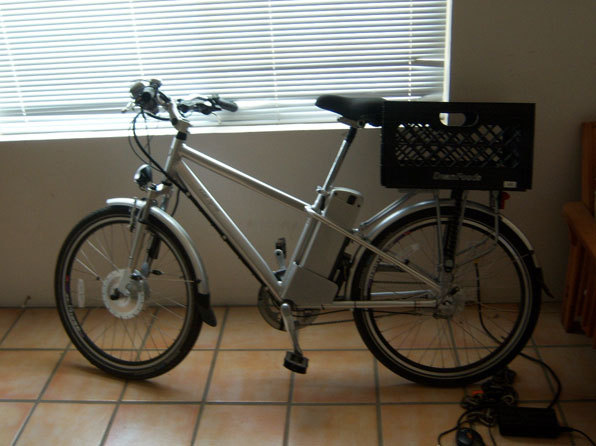
More people need to buy and use a bicycle for short distance travel. Get some exercise, stay healthy and save money on transportation costs.
Northwest Resident on Sat, 22nd Mar 2014 11:47 pm
“In Australia we are already paying $6 per gallon, life hasn’t ground to a halt here and SUV’s are everywhere.
In the UK they are paying over $8.”
Isn’t it true though that the reason Australia and UK can afford higher prices is related to the fact that they don’t have to support a global military presence? USA is providing the bulk of the military support that protects and insures relatively stable oil commerce. That high price is factored into the lower price we in USA pay for gas. Or, so I read somewhere. True or not?
Davy, Hermann, MO on Sun, 23rd Mar 2014 12:23 am
Well put NR.
DC on Sun, 23rd Mar 2014 12:54 am
You both know the there is a(large) difference between ‘protection’ and protection racket right?
red on Sun, 23rd Mar 2014 1:03 am
“All it will take is the price of gas as supplies start to rub up against demand. It’s not about running out. It’s about the realization of running out.” …
Davy, Hermann, MO on Sun, 23rd Mar 2014 2:07 am
DC, the racket is when people complain about being taken care of because they are incapable of doing it themselves. I guess that is global welfare.
Makati1 on Sun, 23rd Mar 2014 3:05 am
Hidden oil subsidies:
Highways & Bridges.
Military adventures/veteran benefits
Tax breaks for oil related corporations
Lax pollution laws/regulations
Etc.
$5 gas here in the Ps where the average income is only $ 4,636.00 per year. A car is really a luxury here, obviously. Yet, it is one of the fastest growing economies in the world. They know how to get more than $5 worth of value out of every gallon. They use it to grow, not drive to Walmart or commute to a job in the city so they can live in the country.
BTW: Walmart is NOT in the Ps. They cannot compete. The mall chains here are Filipino Chinese owned. ^_^
rockman on Sun, 23rd Mar 2014 3:17 am
I wonder sometimes if too much attention is paid to fuel consumption for work commute? I travel the roads in Houston day/night/weekends. Yes…a of traffic during commute time. But a lot of traffic midday, late night and weekends traffic. For instance I drove out of Houston this morning heading to a well 2.5 hours away at 0530 and passed many thousands of cars going the other way. They weren’t going to the office or the mall. Granted Houston logistics are much different than NYC. But the fact remains that at least in this part of the country there’s a significant amount of commercial travel outside the commuting hours. Moving closer to the office won’t change that much. Now will car pooling or riding a bicycle.
GregT on Sun, 23rd Mar 2014 5:07 pm
Ya Rockman,
There used to be two daily ‘rush hours’ here, 8am to 9am, and 5pm til 6pm. Now, some 20 years later, the traffic insanity starts at 5:30 am and ends at 2am the next morning. There are, of course, some quiet moments in between. Over the last 5 years, the growth in traffic has been exponential.
Nony on Sun, 23rd Mar 2014 5:20 pm
About 28% of vehicle miles are commuting according to this report:
http://traveltrends.transportation.org/Pages/default.aspx
P.s. Despite my being a free market cornie, I drive very little and bike a lot. Great exercise. (I do it for the wrong reasons! HA!)
Kenz300 on Mon, 24th Mar 2014 3:14 pm
We all need more options for travel other than a gasoline powered automobile…….
Walking, biking and mass transit need to become a bigger part of our daily lives.
Electric, flex-fuel, biofuel, CNG, LNG and hydrogen fueled transit options all help to diversify our choices.
When one energy source has a virtual monopoly consumers suffer. A monopoly is only good for the monopoly and not good for the consumer.