
Peak Oil is You

Donate Bitcoins ;-) or Paypal :-)


Page added on November 17, 2013

When is the oil going to run out – and should we worry about it?
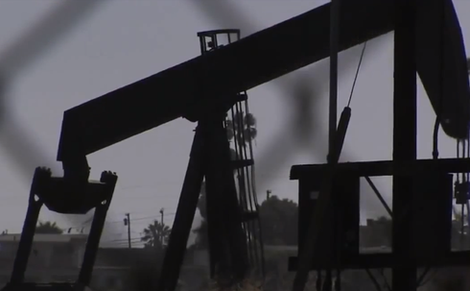
Lack of UK gas reserves underlines the fragility of fossil fuels
Energy experts have warned recently that Britain currently stores enough natural gas for only thirteen days of supply. Such a stark reality indicates how little reserve actually exists to fall back on. The news also brings to mind the concept of energy and fossil fuel shortage, depicted in movies such as ‘Mad Max’. But with our entire economy and way of life dependent on one particular fossil fuel, namely crude oil, how long can we expect this commodity to last, and for the present levels of production to be maintained?
A study by a German think tank published in September, 2010, warned of the potential for a dire global economic crisis in the next fifteen years as a result of a peak and irreversible decline in world oil supplies. The study stated that there is “some probability that peak oil will occur around the year 2010 and that the impact on security is expected to be felt 15 to 30 years later.” What could the effects of this be? “In the medium term the global economic system and every market-oriented national economy would collapse”, the report cheerily predicted.
Meanwhile, in June, 2011, The Guardian reported that British ministers had ignored reports from the Wicks review into energy security, which predicted that there could be significant negative economic consequences to the United Kingdom in the near-term caused by a peak in world oil production.
The actual supply of oil is not merely dependent on its existence, but also production. It is very tricky to know how much oil there is in the world, as this information is carefully guarded by some incredibly powerful vested interests. Similarly, it would be extremely difficult to predict when peak production will occur, even if we could predict the behaviour of the oil cartel, all of whom have a vested interest in capping production, because it will tend to keep prices high. There’s no incentive for them to produce a surplus of oil, because this would destroy the market. This is a control issue, as much as a production issue.
We do know that there are untapped sources of oil that have yet to be fully realised. One of the most obvious of these is in Venezuela, which is yet to reach the top ten nations in the world in terms of oil production, but is thought to have the biggest reserves of the commodity of any nation on the planet. It is often argued that many other sources could also exist, and furthermore that actually the looming scarcity of oil presents an opportunity not a disaster. We have the chance to meet the problem head on and solve it before it becomes a crisis.
Thus, peak oil could be a baseless scare, or it may have some substance. Both viewpoints have been advocated. Two things, I believe, can be asserted, the first one with virtual certainty. Firstly, there is going to be a point at some time in the future when oil production begins to decrease. Secondly, the policies related to climate change are likely to prompt this in the near future. And it could be strongly asserted, thirdly, that the existing oil cartel has a clear incentive to keep the levels of production low, regardless of how small, or otherwise, the world reserves of crude oil have become.
The theory of peak oil production is somewhat contentious in terms of timescale, as it is far too difficult to obtain reliable, consistent information. There are those that believe it is some years away. There are those that believe oil will remain plentiful for generations. There are those that believe it is just around the corner. However, regardless of your opinion on the matter, a view that the vast majority of people do subscribe to is that oil is a finite commodity, a fossil fuel, and at some point oil production is going to decline. Would it not make sense to prepare for this inevitability now
Yahoo UK
10 Comments on "When is the oil going to run out – and should we worry about it?"
Newfie on Sun, 17th Nov 2013 10:42 pm
Peak oil theory ? Peak oil is a fact.
DMyers on Mon, 18th Nov 2013 12:05 am
“It is often argued that many other sources could also exist,….” Right. This is argued by idiots.
“And it could be strongly asserted, thirdly, that the existing oil cartel has a clear incentive to keep the levels of production low, regardless of how small, or otherwise, the world reserves of crude oil have become.” Here, we see the emergent contours of the straw man.
The actual declines in production will be repeatedly denied, in favor of alleging that the oil cartel is purposely keeping levels of production low, in order to jack up prices.
Stilgar on Mon, 18th Nov 2013 12:26 am
Timescale is a great question as to when the flow descends enough to cause widespread problems. The world economy is still strong enough to sustain 100 plus oil price, but for how long?
BillT on Mon, 18th Nov 2013 12:59 am
Recovery decline vs consumer decline.
My guess at this point is that the financial ability to consume will be the cause, not the end of oil as a resource, but it will come at the cost of the human species and most life on earth before 2100.
Wheeldog on Mon, 18th Nov 2013 2:42 am
The issue needs to be rephrased. It is not “peak oil” that is the issue – it is peak NET oil and peak per capita oil that is the true measure of crisis.
rollin on Mon, 18th Nov 2013 3:47 am
Venezuela is a poster child for collapse while oil is still available. I don’t believe their new claims of oil reserves, but they surely have enough to run their country properly. Instead corruption and mismanagement have gutted the countries economics and food shelves.
Britain does have an energy crises but it is no worse off than the US. They are apparently hitting the economic wall as far as oil production.
http://www.bbc.co.uk/news/uk-scotland-scotland-business-23771338
Jimmy on Mon, 18th Nov 2013 4:43 am
Peak oil is not a theory. It’s an observation.
clueless on Mon, 18th Nov 2013 6:43 am
do we still have more or less 20 years to keep the earth rolling? any guess?
Cloud9 on Mon, 18th Nov 2013 11:54 am
I tend to trust the German analysis. They have a pretty good reputation for being meticulous and dealing with numbers. If I am reading them right, all liquids production should peak somewhere between 2015 and 2020. When lite sweet crude peaked in 2005, the wheels came off the economy two years later. Using that metric, I expect the tipping point to be reached somewhere between 2017 and 2020.
BillT on Tue, 19th Nov 2013 1:27 am
cloud9, I agree. The other variables are the world economy and wars. Climate change will have some effect, but not before 2020. I don’t see the 20s decade as being a recovery, but an ever steeper decline. By then, we will be past the top of the bell curve/bumpy plateau, I think.