
Peak Oil is You

Donate Bitcoins ;-) or Paypal :-)


Page added on June 8, 2013

Transportation Woes Keep US Oil Prices High
Given increasingly abundant supplies of natural gas and crude in the U.S., some consumers scratch their heads at the sight of high gas prices, which aren’t expected to sink much as the summer season gets under way.
Yet some observers point a finger at inefficiencies in the U.S. transportation system, which forces oil companies to rely heavily on heavy transport to move crude supplies. Crude pipelines – such as the hotly debated Keystone XL that’s now mired in Washington politics – could transport fuel more rapidly and at lower cost, some argue.
Better methods of transportation are needed “to move the commodities from where they are to where they aren’t,” said Joe Petrowski, Gulf Oil’s CEO, in an interview on CNBC’s “Squawk Box” this week.
Modernized railroads and shipping routes can help facilitate easier transportation of crude, analysts say, making infrastructure needs a key cog in the machinery of oil production. The better the transport, the more quickly crude can make it to areas of the country where prices are frothy.
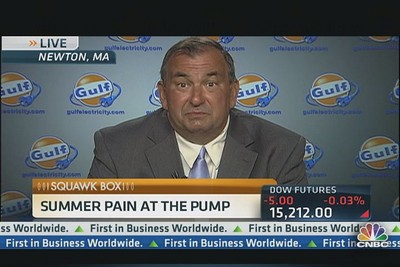
Yet Petrowski cited an inability of oil producers to meet demand in key parts of the U.S., due in large part to outdated methods of transport.
“We’re still relying too much on rail to move crude,” the CEO said. “For example, we’re moving crude 2,600 miles from the Bakken [in North Dakota] to the Canadian refinery in St. John’s where we buy a lot of our product,” he said. “It’s just a much more expensive movement than if we were to move by water or by pipe.”
With the U.S. producing more energy domestically, some argue that tax revenue from energy firms could help the industry help itself. In a 2011 study analyzing how the U.S. could tax oil receipts to fund transportation infrastructure, the Rand Corporation estimated a federal oil tax of 17 percent could contribute upwards of $80 billion for ground-transit infrastructure.
In the Bakken, some 71 percent of the oil produced leaves the region via rail by companies like BNSF and Canadian Pacific, with the rest transported by pipeline. Railroads are the most prevalent way to transport oil to both coasts and the Gulf, according to Justin Kringstad, director of the North Dakota Pipeline Authority.
Although that is less speedy than using a pipeline, “we don’t have pipeline access to the East Coast or the Gulf Coast,” Kringstad said in an interview. “The only way to reach higher priced markets is by rail car,” he said, adding that oil producers are pleased with the “flexibility” of the transportation options available in the Bakken.
Other Factors Come Into Play
Oil is a global commodity, and prices are influenced by a host of factors that can affect supply and demand. Still, domestic infrastructure can play a role in price fluctuations.
“Transportation bottlenecks are a huge issue,” said Charles Blanchard, fossil fuels analyst, Bloomberg New Energy Finance. Still, there are other factors keeping gas prices elevated, he said.
“Even if the transportation bottlenecks in US were completely solved so you can get barrel of oil from Bakken down to the Gulf Coast, that wouldn’t reduce gasoline and diesel prices at the pump” proportionately, Blanchard said. “U.S. prices won’t come down until we supply all our crude internally. We still remain a net importer of crude, but until (we export) we will pay international prices.”
2 Comments on "Transportation Woes Keep US Oil Prices High"
DC on Sat, 8th Jun 2013 7:56 pm
Actually, its that thing called ‘peak oil’ thats keeping costs high. The marginal cost of production keeps going up, while the ability of society to actually pay for it-is stagnant at best, or at worst, declining.
BillT on Sun, 9th Jun 2013 3:34 am
DC, you are pointing to the elephant they want to ignore. Faster movement of oil is not going to lower costs. If anything, it will raise them either in the form of payback for the improvements or taxes that will go to subsidize the improvements. It’s all about the Keystone Crapline. Not prices.