
Peak Oil is You

Donate Bitcoins ;-) or Paypal :-)


Page added on February 13, 2015

The World Has Reached Peak Chicken, Peak Rice, And Peak Milk
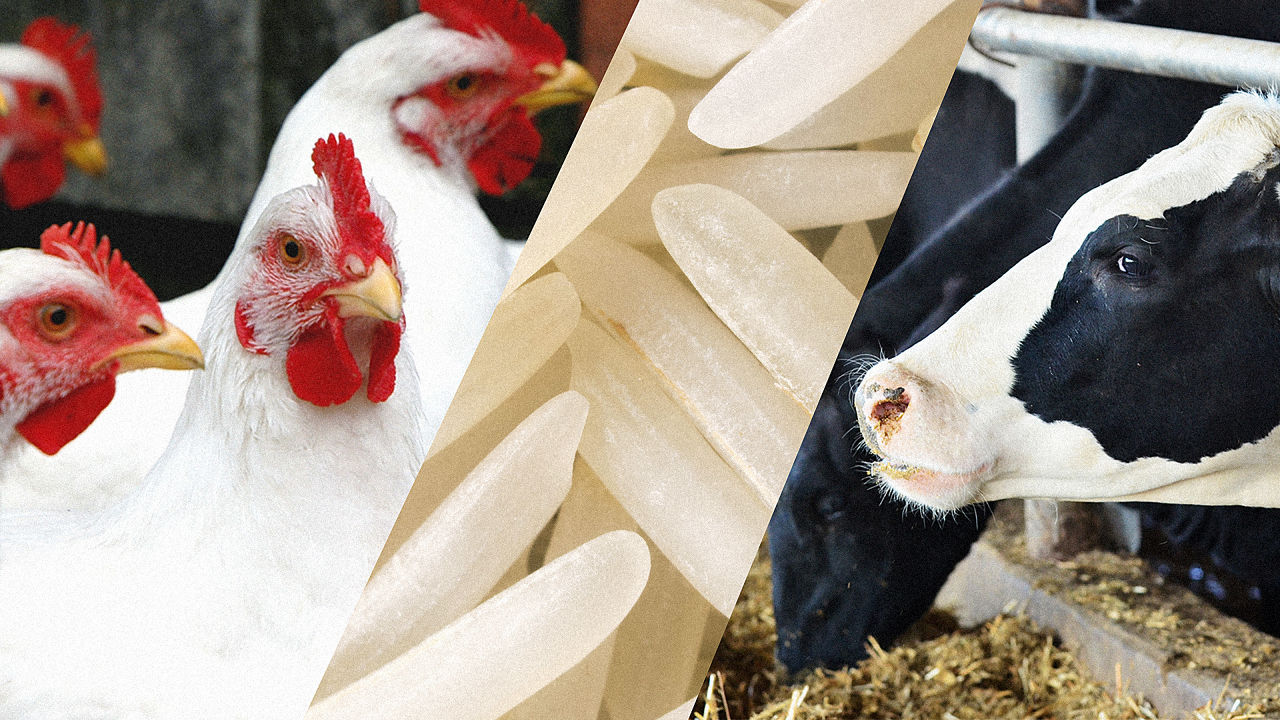
We still haven’t reached peak oil. But peak milk happened in 2004, peak soybeans in 2009, and peak chicken in 2006. Rice peaked in 1988.
A new study published in Ecology and Society explains that 21 key resources that humans rely on—mostly food—have already passed their peak rate of production.
“Peak,” in this case, doesn’t mean that we’re actually producing fewer chickens or less milk yet. Instead, the researchers looked at the fact that the rate of production has plateaued, at the same time that population is increasing.
“We wanted to develop something like early warning signals,” explains Ralf Seppelt, a researcher from the Helmholtz Centre for Environmental Research in Germany, who worked on the study with colleagues from Yale University and Michigan State University.
“We approached the whole thing with an open mind,” he says. “We didn’t want it to be apocalyptic. We tried to seek patterns that give reliable information about how we really harvest the Earth, knowing that no one really wants to experience the time when the whole thing plateaus.”

The researchers analyzed production rates over time for 27 key resources, including some fossil fuels. But while they found that nonrenewable resources like coal, oil, and gas haven’t peaked, most foods have.
“We were actually surprised to find so many peak year signs—surprised that this is such a consistent pattern happening in the last 10-20 years,” Seppelt says.
The production rate is slowing across so many foods at the same time partly because each relies on the same limited resources, like land and water. Some foods rely on each other, like meat, an industry that uses around 70% of the grain grown in the U.S.
While the data could possibly be used to try to predict a final peak—the point at which total production might decline—the researchers say that’s difficult to predict. “To make a prediction, you need to make assumptions about interrelated resources,” Seppelt says. “We said, let’s stick with the data we have and see what it says.”
It’s also hard to predict innovations that might dramatically change our ability to grow food. “We know that we could expect an increase in yields of new varieties by 1-2% per year,” he says. “But nobody knows if there will be a disruptive innovation that brings us much easier production of animal proteins or even more productive plants.”

Since we don’t know if that radical innovation will happen, Seppelt argues that it makes sense to plan based on the assumption that we won’t necessarily be able to dramatically change production.
Still, he’s optimistic about society’s ability to meet the challenge. The world wastes 1.3 billion tons of food a year, and most of that waste can be avoided. In some parts of the world, yields can easily be doubled. And a shift to a more vegetarian diet would also make a huge difference.
Seppelt points to the fact that consumption of meat in the U.S. has started to decline. “I would love to dig into this data and to work with social scientists to understand why this is happening,” he says. “My assumption is that these changes occur because of demographic shifts, education, and lots of social influences. If we understand them and foster and promote them, this might lead to a quicker and very reliable change.”
The key, he says, is to stay focused on solutions. “The major part of the story is that renewable resources aren’t as infinite as we always thought,” he says. “We should carefully use them. I think we can do that.”
14 Comments on "The World Has Reached Peak Chicken, Peak Rice, And Peak Milk"
paulo1 on Fri, 13th Feb 2015 12:37 pm
We can raise a helluva lot more chickens going forward than beef. Chicken conversion of feed to growth is 2:1..Fish is a whopping 1:1…and cattle is an inefficient 7:1.
http://www.agriculture.com/livestock/cattle/why-is-beef-losing-ground-to-chicken_276-ar21983
On the home front folks can raise chickens themselves on a small property. We currently have 4 layers which gives us way too many eggs and allows me to trade them for future considerations (my kids get most of the eggs). We also raise 30 meat birds every spring. Most survive. In the fall we start off with 3 freezers, down to 2 by Christmas and one by summer.
Davy on Fri, 13th Feb 2015 1:17 pm
Paulo, when you are ready to eat a chicken you go out to the barn yard and catch one. No need for a freezer. That is the other benefit.
Speculawyer on Fri, 13th Feb 2015 2:50 pm
““Peak,” in this case, doesn’t mean that we’re actually producing fewer chickens or less milk yet.”
That’s what peak means . . . if that is not happening then don’t say it is happening. FFS . . . people write so much stupid crap.
peakyeast on Fri, 13th Feb 2015 3:48 pm
I wonder why chicken cost more than beef here in Denmark. Its actually about 30-50% more expensive.
GregT on Fri, 13th Feb 2015 4:15 pm
Actually Spec,
The Peak is the point when we are producing the maximum amount of something. Just as the article above clearly points out.
“the fact that the rate of production has plateaued, at the same time that population is increasing.”
Rib on Fri, 13th Feb 2015 5:26 pm
Not to dispute the production figures for most food stuff’s, But in europe Milk production has been held back by draconian quotas up until next year.They are fining farmers for over production this year.
Makati1 on Fri, 13th Feb 2015 6:20 pm
For a good article with a nice chart of all of the foods reaching peak…
http://www.independent.co.uk/environment/have-we-reached-peak-food-shortages-loom-as-global-production-rates-slow-10009185.html
paulo1 on Fri, 13th Feb 2015 6:22 pm
Peaky:
I have always wondered why that is the case? I know in Iceland chicken is considered a luxury as well. Could it also be cultural as well as ample grazing land over there as opposed to grain production? Having siad that, you guys aren’t so far from France’s wheat fields and they export a lot of grain.
farmlad on Fri, 13th Feb 2015 8:17 pm
Paulo1 I understand the feed conversion ratios you quoted are lbs of feed to lbs of live animal weight.
Beef for example has like 55 to 65% hanging weight which still includes the bones, but not the organs.So only 60% of a live cow gets eaten.
and meat is like 85% water whereas the feed is commonly only 12% water.
farmlad on Fri, 13th Feb 2015 8:30 pm
peakyeast on Fri, 13th Feb 2015 3:48 pm
I wonder why chicken cost more than beef here in Denmark. Its actually about 30-50% more expensive.
Wow that is quite interesting. I Would just imagine your government is either subsidizing the beef or has stricter laws on how the chicken is raised and high import duties.
I raise Sheep in the USA and it takes less feed to raise a lb of sheep compared to beef but it takes way less feed to raise a lb of chicken compared to sheep.
Shaved Monkey on Fri, 13th Feb 2015 8:51 pm
Price of feed ?
antaris on Fri, 13th Feb 2015 9:01 pm
And what about Rabbits? To cute to eat?
Go Speed Racer. on Sat, 14th Feb 2015 2:50 am
Not a problem. If no rice, chicken or milk, just eat Twinkies, top ramen, and drink Pepsi. If no money, steal it from seven eleven. Problem solved.
Davy on Sat, 14th Feb 2015 6:25 am
Farmer, these issues are fascinating because humans pay no attention to food today except whether it is expensive or taste good. I personally think one needs a diversity of grazing animals. Let’s forget about the modern industrial meat operation. Let’s talk about pasture management with cattle and goats. On my place I need to manage noxious weeds and brush. Many of these were brought by the evil whites of Europe of which I am a descendent. I need the cattle to manage the beneficial and highly nutritional grasses. The goats follow and eat what the cattle don’t eat. This weeds and brush are only palatable for goats. Chickens can follow the cattle and goats in a very important function of breaking up the manure piles searching for insects. Mobile chicken houses do this.
We have the ability to do this intensive management with electric fences and human labor currently. The good aspect of this is the elimination and reduction of expensive equipment and inputs that must be added to the typical BAU cattle operation. I am not talking feedlots. I am talking cow calf operations on pasture or grass raised stockers. My point here is we shouldn’t lose site of the fact when we move away from BAU intensive farming towards the traditional rotational and symbiotic. Beef find their place along with goats and chickens in a rotational system. You know all this Farmer but many others don’t.
In reality we need an Amish style system of agriculture currently. The reason I say this is the Amish have been adaptive to the new and old. They do this for religious reasons primarily. We have to embrace the Amish way not with their religious focus but our focus of eliminating BAU from the equation. Yet, the paradox initially is we will have to use BAU to eliminate BAU.
The bumpy descent we are in now requires a hybrid living of new and old. We have transformed an environment into something that cannot for a generations be returned to pre-industrial. We will have to adapt industrial AG elements by salvage and adaption in a mix of new and old by necessity. We will have to look at our environment holistically now as an Anthropocene ecosystem by default. It has been changed and we can only adapt and change with it. This means the old we would like to return to will not happen for many years.
What I am proposing is the Amish style BAU hybrid. We must quit looking at the environment in the eyes of the evil Monsanto and Cargill but we still need them for a time. This must now be on a spiritual journey not a Wall Street Capex investment cycle. As much as we would like to dispose of the evil Wall Streeters we can’t immediately. Nature will cleanse us of the parasites eventually like she does other pollutants.
We have a way forward we should be optimistic that nature offer us a path. Our Plan B is Nature and only Nature. Our new science and social structure will by default turn to Nature as the only game in town. Science and technology that uses Nature first is ok in my book. Even some of the bad can be used in the transition by necessity and default. Nature does not have to be impersonal and deadly she can also give us tough love and hope.