
Peak Oil is You
Donate Bitcoins ;-) or Paypal :-)


Page added on April 15, 2016

The cuckoo that won’t sing: sustanaibility and Japanese culture
This post was published for the first time on April 6, 2011. It is re-proposed here as part of a mini-series on Japanese culture that includes the previous post here as part of a mini-series on Japanese culture that includes the previous post on population control during the Edo period
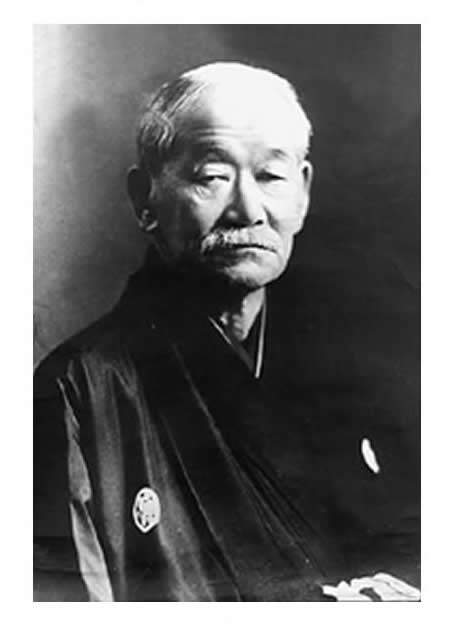
Ladies and gentlemen, let me say first of all that I gave many talks on energy and sustainability in my career, but this is the first time that I am giving one while sitting cross-legged on the floor on a Japanese mat, a tatami. But, let me add, it is a real pleasure to do it, and it is a special pleasure to give it in a dojo, under the portrait of Kano Jigoro, the founder of modern Judo. Indeed, I used to be a judoka myself, although I must say it is a while that I don’t practice. So, this place reminds me a lot of Japan, where I had a very nice time when I lived there, years ago and, as you all know, the recent events in Fukushima have highlighted the problem of energy and sustainability both in Japan and in the whole world.
The Japanese have suffered more than anybody else as the result of the way we have mismanaged atomic energy. It is a sad story that of the bombing of Hiroshima and Nagasaki, in 1945. Perhaps some of you had a chance to visit those places – I visited both cities and I can tell you that the memory of those events is not something you can easily ignore. In comparison, the nuclear accident in Fukushima has been a small thing, of course. But it remains difficult for us – intended as humankind – to manage nuclear energy. Maybe it is just too big and complex for us to manage.
Anyway, let’s not go into the pros and cons of atomic energy; it is not what I wanted to discuss with you today. Rather, I think you might be interested in discussing a little about Japanese culture. The very fact that we are all sitting on the floor on a Japanese tatami, means that Japanese culture is influencing us; just as it has influenced Western culture in many fields – just think of manga! So, what I would like to do today is to discuss what we can learn from Japan in terms of sustainability.
So, let me start with something about the history of Japan. You surely know of the early “Heian” or “Imperial” period that started long ago; it was the “classical” period of Japanese history. Then, the Heian age gave way to a period of civil wars; the sengoku jidai, the period of the Samurai. Many movies have shown it as a romantic age, but I am sure the people who lived in it didn’t find it very romantic; it was a period of continuous wars and it must have been very hard for everyone. Anyway, that historical phase was over when Tokugawa Ieyasu emerged as the winner of the struggle and he became the shogun, the ruler of all Japan. That was around the year 1600 and it started the “Edo” period which was much quieter. The Edo period lasted until Commodore Perry arrived with his “black ships” in mid 19th century and that started the modern period.
Now, the two centuries and a half of the Edo Period are very interesting in terms of sustainability. The two centuries and a half of the Edo Period are very interesting in terms of sustainability. It was not just a period of peace; it was also a period of a stable economy and of a stable population. Actually, that is not completely true, population increasing during the first part of the Edo period, but when it arrived at nearly 30 million, it stayed nearly constant for almost two centuries. I don’t know of another society in history that managed such a period of stability. It was an example of what we call today “steady state” economy.
The reason why most societies can’t manage to reach a steady state is because it is very easy to overexploit the environment. It is not something that has to do just with fossil fuels. It is typical of agricultural societies, too. Cut too many trees and the fertile soil will be washed away by rain. And then, without fertile soil to cultivate, people starve. The result is collapse – a common feature of most civilizations of the past. Jared Diamond wrote about that in a book of a few years ago; titled, indeed “Collapse”.
Now, there is an interesting point that Diamond makes about islands. On islands, he says, people have limited resources – much more limited than on continents – and their options are limited. When you run out of resources, say, of fertile soil, you can’t migrate and you can’t attack your neighbors to get resources from them. So, you can only adapt or die. Diamond cites several cases of small islands in the Pacific Ocean where adaptation was very difficult and the results have been dramatic, such as in the case of Easter Island. In some really small islands, adaptation was so difficult that the human population simply disappeared. Everybody died and that was it.
And that brings us to the case of Japan; an island, of course, although a big one. But some of the problems with resources must have been the same as in all islands. Japan doesn’t have much in terms of natural resources. A lot of rain; mostly, but little else and rain can do a lot of damage if forests are not managed well. And, of course, space is limited in Japan and that means that there is a limit to population; at least as long as they have to rely only on local resources. So, I think that at some point in history the Japanese had reached the limit of what they could do with the space they had. Of course, it took time; the cycle was much longer than for a small island such as Easter Island. But it may well be the civil wars were a consequence of the Japanese society having reached a limit. When there is not enough for everyone, people tend to fight but that, of course, is not the way to manage scant resources. So, at some point the Japanese had to stop fighting, they had to adapt or die – and they adapted to the resources they had. That was the start of the Edo period.
In order to attain steady state, the Japanese had to manage well their resources and avoid wasting them. One thing they did was to get rid of the armies of the warring period. War is just too expensive for a steady state society. Then, they made big effort to maintain and increase their forests. You can read something on this point in Diamond’s book. Coal from Kyushu may have helped a little in saving trees, but coal alone would not have been enough – it was the management of forests that did the trick. Forests were managed to the level of single trees by the government; a remarkable feat. Finally, the Japanese managed to control population. That was possibly the hardest part in an age when there were no contraceptives. From what I read, I understand that the poor had to use mainly infanticide and that must have been very hard for the Japanese, as it would be for us today. But the consequences of letting the population grow unchecked would have been terrible; so they had to.
We tend to see a steady state economy as something very similar to our society, only a bit quieter. But Edo Japan was very different. Surely it was not paradise on earth. It was a highly regulated and hierarchical society where it would have been hard to find – perhaps even to imagine – such things as “democracy” or “human rights”. Nevertheless, the Edo period was a remarkable achievement; a highly refined and cultured society. A society of craftsmen, poets, artists and philosophers. It created some of the artistic treasures we still admire today; from the katana sword to Basho’s poetry.
So, the Japanese succeeded in creating a highly refined society that managed to exist in a steady state for more than two centuries. I think there is no comparable case in history. Why did Japan succeed where many other societies in history had failed? Well, I think that being an island was a major advantage. It shielded (mostly) Japan from the ambitions of their neighbors and also from the temptation that the Japanese might have had to invade their neighbors. And if you are not so terribly afraid of being invaded (and you have no intention of invading anyone) then you have no reason to have a big army and so no reason to increase the population. You can concentrate on sustainability and on managing what you have. Then, of course, when Commodore Perry and his black ships arrived Japan was not an island anymore; in the sense that it was not any longer isolated from the rest of the world. So growth restarted. But, as long as Japan remained isolated, the economy remained in steady state and, as I said, it was a remarkable achievement.
But I don’t think that the fact of being an island explains everything about the Edo period. I think, that it would not have been possible without a certain degree of wisdom. Or, perhaps, a more correct term, in this case, is “sapience.”
Wisdom or sapience is not something that you can quantify or attribute to specific persons. But I think that Japan as a whole had attained a certain degree of – let’s say – “enlightenment.” Please, understand that I am referring to the Edo Period. I know very well that, today, Japan is just as ugly as most places in the Western World – polluted, overcrowded and full of ugly buildings. But, during the Edo Period they had developed a way of looking at the world that we still admire today, that is – in my opinion – embodied in Japanese poetry: a marvel of lightness, of perception of the detail, of love for the delicate little things of the impermanent world. But not just poetry – think of Judo according to Kano sensei. It is a way of life – a philosophy, a way of gaining wisdom. Judo is a modern idea, of course, but it has its origins with the Edo period. As far as I understand, the Japanese attitude at that time was as far as possible from that monstrosity that we have today; that of the golem we call “homo economicus” who seriously thinks that a tree is worth nothing unless it is felled. If this is the way we see the world, we deserve to collapse and disappear. Wisdom cannot be a non-renewable resource, but we seem to have been able to run out of it, too.
So, out of Japanese wisdom, I think I would like to tell you a little story that has to do with the warring period, but that was surely invented during the gentler Edo Period. You probably know the names of the main leaders of the last phase of the civil wars in Japan: Oda Nobunaga, Toyotomi Hideyoshi and Tokugawa Ieyasu. Eventually, it was Ieyasu who became shogun and the leader of all Japan. About how he managed to do that, there is this story which exists in the form of a “senryu“, a short poem. It says that one day Nobunaga, Hideyoshi and Ieyasu got together and they saw a cuckoo bird that won’t sing. So, Nobunaga said; “If it doesn’t sing I’ll kill it”. But Hideyoshi said, “No; I’ll convince it to sing” And Ieyasu said, “I’ll wait until it sings”
I think this story is a nice illustration of how people of the Edo Period rationalized the events that led to their age. It says that the winning strategy is not violence and not even cunning. It is adaptation. The Japanese had understood that they could not force or cajole their island to behave the way they wanted – just as you can’t force or cajole a cuckoo bird to sing. They had to adapt and they did. This, I think, is wisdom.
Now, one characteristic of wisdom is that it can be applied to different situations, different places, different times. Let’s see how we can see this story in our age. Of course, we have big problems: not enough oil, not enough mineral resources, not enough water and not enough atmosphere to take in the results of burning oil. So, how do we react? Well, a little like Nobunaga. We tend to use violence and not just in terms of “oil wars”. We try to force the earth to produce what we want. In a sense, it is like telling the bird “sing or I’ll kill you”. So, it is “drill, baby, drill” and we are willing do anything and use anything we can find in order to produce the liquid fuels we are convinced we absolutely need, even if we are going to destroy the land and the atmosphere. We are willing to build atomic plants, no matter what the risks involved and to do many other things to force the earth to produce what we think we need.
Then, there is a different attitude that looks more civilized. It is efficiency. It says that if we can convince people to use resources in more efficient ways, we can still have everything we are accustomed to have and save the earth, too. Fluorescent lamps and small cars surely look much better than the “drill baby drill” idea but, in the end, the concept is not so different in the sense that we are not willing to change in what we think we need. The American way of life remains not negotiable, apparently, just the way of obtaining it might be. It is a strategy that might even work – for a while, at least. But can we really find technological solutions to get all that we are accustomed to have – and for everyone? The recent case of the Fukushima disaster should have shown to us that we are not so smart as we think we are.
We have not arrived yet to the last part of the story; when we could discover that the winning strategy is neither forcing nor cajoling the earth to give more than it can give. The winning strategy is adaptation. We need to adjust our needs to what this planet can give us. It is what the Japanese did on their island and, after all, we are all living on an island, a gigantic, spherical, blue island floating in the blackness of space. It is up to us to manage the bounty that we can have from the earth and create something that could be as beautiful as the Edo Civilization in Japan; surely with better and softer ways of controlling population.
If the historical example of Japan counts for something, we may be heading in the right direction and the age of planetary civil wars may end one day or another. So, if we can wait long enough, one day we may hear the cuckoo sing.
Cassandra’s legacy by Ugo Bardi
18 Comments on "The cuckoo that won’t sing: sustanaibility and Japanese culture"
onlooker on Fri, 15th Apr 2016 7:17 pm
They’re is wisdom is this article. Too bad we did not uncover it soon enough. It is too late to adapt effectively. Oh we will try but Nature is going to be the final arbiter. This means they’re will be nothing soft about controlling and reducing our population.
JuanP on Fri, 15th Apr 2016 7:44 pm
The global wars are starting, not ending. Ugo is a hopeless optimist.
makati1 on Fri, 15th Apr 2016 8:32 pm
I like Ugo’s articles, and agree with his idea of what humanity needs to do, but…
1. I think it is way too late.
2. I don’t see the West even thinking about cutting their waste.
3. I see just the opposite, more wars and maybe the big one.
I wish I was wrong.
Apneaman on Fri, 15th Apr 2016 8:49 pm
Wherever Ugo, trouble is sure to follow.
Or is that wherever I go?
makati1 on Fri, 15th Apr 2016 8:54 pm
Ap, trouble is all around us constantly. The chaos is growing and being able to adapt is going to be the key to who survives the longest, I think.
Boat on Fri, 15th Apr 2016 9:38 pm
mak,
When those robots plant, water, weed and harvest. I am gonna start prepping.
I took my first picture of a check with my phone and made a deposit. No more driving to the bank. I felt greener.
Kenz300 on Sat, 16th Apr 2016 9:57 am
Japan has not learned the lessons of Fukishima……
Restarting nuclear reactors is a mistake………..
They have a 40 year plan to clean up the mess at Fukishima and admit that the technology to do it does not exist.
Nuclear energy is poisoning the planet…………
5 Years After Fukushima, ‘No End in Sight’ to Ecological Fallout
http://ecowatch.com/2016/03/05/5-years-after-fukushima/
makati1 on Sat, 16th Apr 2016 6:19 pm
Boat, when you no longer need that bank or the toy you worship, THEN you will be greener, AND free.
makati1 on Sat, 16th Apr 2016 6:23 pm
Kenz, and the US has no plans for safely closing the 100 odd nuclear reactors in the States. Already several of them are getting shaky and then there is the hundreds of thousands of tons of “stored” waste that will need expensive care for the next few centuries. Does that make you feel safe?
I’m glad the nearest nuke here is 500 miles away and not in the prevailing wind cycles. The Ps never got the nuclear bug. Oh, they built a plant under the American supported dictator Marcos, but it was never opened. Nothing but an old building rusting away.
Kenz300 on Sun, 17th Apr 2016 8:18 am
Poverty in the Philippines.
https://www.youtube.com/watch?v=9M5PAS8Lr10
Unsustainable population growth makes every problem harder to solve.
Dooma on Sun, 17th Apr 2016 10:06 am
Now if someone could write an article truly explaining MODERN Japanese culture, they deserve a prize in literature.
Crazy animal suites, talking toilets, panty vending machines and an unhealthy obsession with school girls. Yes it certainly is an interesting place.
Makati1 on Sun, 17th Apr 2016 10:14 am
Kenz, poverty is in EVERY country, and especially the Us. Take away food stamps,(~47,000,000 people, equal to half the Philippine population) unemployment insurance and welfare and see what happens. Those days are coming fast. The Us is a 3rd world country hiding behind the dollar printing press, but the smoke is already pouring out og the gears and it is about to grind to a halt.
Davy on Sun, 17th Apr 2016 10:38 am
Dooma, since you are Austealian lets talk about that dumbass country. I happen to admire Japan far more than your dumbass country.
Davy on Sun, 17th Apr 2016 10:40 am
Makati Bill, Kenny is spot on. Your club med is not a paradise that you want everyone to believe it is. You are selling snake oil as usual.
Apneaman on Sun, 17th Apr 2016 12:46 pm
**End of the World Tours, and Dopamine Cruise Lines, bring you the last voyage of the 1%**
Perilous Arctic passage that foiled centuries of explorers to be opened up to cruise liners
Climate change means the ice in the Northwest Passage is less thick, allowing luxury cruise ships to pass through
“The Crystal Serenity, taking more than 900 passengers at a cost of up to £78,000 each,….”
http://www.telegraph.co.uk/news/earth/environment/12199446/Perilous-Arctic-passage-that-foiled-centuries-of-explorers-to-be-opened-up-to-cruise-liners.html
This is the type of story that makes me wish HELL was real.
peakyeast on Sun, 17th Apr 2016 12:57 pm
“Climate change means the ice in the Northwest Passage is less thick, allowing luxury cruise ships to pass through”
Lets hope they forgot the lesson about using ship hulls that gets brittle in severe frost conditions.
https://en.wikipedia.org/wiki/Liberty_ship
I suppose I feel some of apes anger…
onlooker on Sun, 17th Apr 2016 1:34 pm
Yeah this is just one of those stories that just make you want to throw up.
Kenz300 on Mon, 18th Apr 2016 7:27 am
Rescuing Homeless Children From the Streets of India
https://www.youtube.com/watch?v=cpaR_pTVeBk
Endless population growth is not sustainable……….