
Peak Oil is You

Donate Bitcoins ;-) or Paypal :-)


Page added on March 3, 2014

Sharecropping 2.0
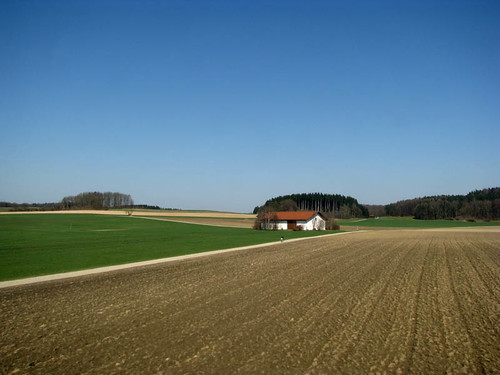
Institutional investors eyeing US farmland. Beginning farmers often priced out.
There’s a global land rush underway. While human population continues to grow, the amount of arable farmland on the planet is essentially a fixed resource, and in recent years worries about long-term food security have spurred a drive to snatch up agricultural lands. Enterprising journalists and watchdog groups have revealed the ways in which poor farmers, often in Africa, are losing their land to big investment companies and giant agribusiness outfits that want to turn small landholdings into export-oriented plantations to grow food for wealthier nations. Here’s how reporter Andrew Rice explained the situation in an article published in The New York Times Magazine in 2009: “A variety of factors – some transitory, like the spike in food prices, and others intractable, like global population growth and water scarcity – have created a market for farmland, as rich but resource-deprived nations in the Middle East, Asia and elsewhere seek to outsource their food production to places where fields are cheap and abundant.”
photo by Storm Crypt, on FlickrWho owns the land really determines how the land is used or misused,” says Anurdha Mittal,
executive director of The Oakland Institute.
It now appears as if a somewhat similar land rush, driven in part by massive investment firms, is occurring here in the United States.
According to a new report by The Oakland Institute, an environmental and social justice think tank, institutional investors are buying up US agricultural properties at an increasing pace. “Today, enthusiasm for agriculture borders on speculative mania,” the report warns. “Driven by everything from rising food prices to a growing demand for biofuel, the financial sector is taking an interest in farmland as never before.”
While only about 1 percent of US ag land is currently held by private equity, the report says an estimated $10 billion in institutional capital is looking for access to US farmland.
Unlike the situation in Africa, big investors aren’t interested in US ag land because it’s cheap – but rather because it’s valuable, and therefore a seemingly good investment. In recent years, US farmland prices experienced a huge jump. In 2012 alone, agricultural real estate values in some parts the country went up by more than 30 percent, prompting some people to worry of a price bubble in ag lands similar to the one that brought down the housing market. Sustained high prices for commodities like corn and soy is driving the steady increase in farmland values. The high commodity prices have been fueled by a number of factors – from increasing demand in East Asia, to the poor crop yields due to the 2012 drought, to federal biofuel and ethanol mandates.
Why does it matter that hedge funds and investment firms are gobbling up US ag lands? Two reasons, sustainable agriculture advocates say. First, absentee landlords, motivated primarily by investment returns, are less likely to be mindful stewards of the land. And second, the continued inflation in land prices is a major obstacle to the success of a new generation of farmers.
“I think the biggest worry is that who owns the land really determines how the land is used or misused,” says Anurdha Mittal, executive director of The Oakland Institute. “Given the crisis we face – when you look at climate change and the loss of topsoils – the prospect of these absentee landlords who look at lands as a commodity is frightening. They [institutional investors] look at this as an export model of agriculture. A lot of these investors are more interested in the rising economies [of East Asia]. They will grow pistachios or almonds for export, not food for consumption here in the US.”
Mittal uses a sweatshop metaphor to explain the risks of absentee ag land ownership. Just as giant retail brands that outsource the actual clothes-making can avoid responsibility for the conditions in overseas textile factories, so too can investment firms that lease lands ag lands turn a blind eye to how those properties are managed. “Think of GAP making clothese in Bangladesh – they are no longer responsible when there are fires or buildings collapse,” Mittal say. “With absentee landlords, operations are passed onto second or third parties. Who’s responsible? Who’s accountable? Those are huge issues.”
Bob Wagner, a senior policy advisor for American Farmland Trust, echoes this concern. “You always treat things that you own better, rather than things that you are using on a temporary basis,” Wagner says. “If you are so distant from the ownership, if it’s just a line on your balance sheet, are you going to be concerned about the use of the land, about soil and water conservation practices?”
Wagner’s take reminds me of the old quip about how no one, in the history of the world, has ever washed a rental car. Or, put another way: When agricultural lands are owned by far-off investment firms instead of local families, a farm becomes just another investment property and stops being the home-place. Inevitably, an ethic of stewardship and care will be lost.
Wagner also cautions that if more investment capital takes a keen interest in ag properties, it will make it even more difficult for young and beginning farmers to access land. The average age of the American farmer is 58. A 2011 study by the USDA’s Economic Research Service found that 30 percent of farmers were 65 or older, meaning that in the next decade the country will experience of wave of farmer retirements. Anecdotal evidence (you’ve seen all of those profiles of hot, young farmers, right?) as well as government statistics reveal an uptick in the number of young and beginning farmers. But those aspiring farmers are having a hard time fulfilling their dreams because ag land is increasingly unaffordable.
Land access is a problem nationwide, Wagner says. “This is a challenge when it comes to new and beginning farmers, because they are having a problem accessing land. They don’t have the capital to take out loans or purchase those properties. And the price of the farmland is pretty high, whether because of [housing] development pressure, or competition from existing farmers, or competition from hedge funds.”
Wagner then told me: “Having land owned by the people who farm it is always the best scenario.”
7 Comments on "Sharecropping 2.0"
Davy, Hermann, MO on Mon, 3rd Mar 2014 2:57 pm
US farm production is a very complex issues for the US and the world. I have experience with owning a 1000 acre corn and soybean farm that was leveraged. I had the farm as an investment with 2 other partners each contributing some advantage to the mix. I was the finance guy and the other two had experience with on the ground production. There were farmers in the vicinity who had less leverage but relied on the farm for all their income. These farmers struggled against low prices, high impute cost and erratic weather. The farm was a side investment for me and my partners. It was a difficult business to be in with multiple hazards. There is no wonder the US farm system is trending towards consolidation of power with larger corporate farms many owned directly or indirectly by very large corporations. The reality of the situation in a complex interconnect world faced with diminishing returns in a predicament of limits of growth in overshoot of carrying capacity is US big AG is too big to fail. There is no managed de-growth without unintended consequences of loss of production in a world already short on food. It will happen that some parts here and there locally will go back to a more sustainable arrangement probably in a situation with a dying corporate AG remaining here and there. This will in no way be enough to maintain or grow food supplies like we hear is needed. These claims of 50% increase in food production down the road are ridiculous. Big AG is already in decline. Production is just barely holding but the productive assets are suffering decay and decline. Water, soil, cheap fossil fuels, farm population decline, and traditional skills loss are all by products of the quest of increased production. This state of affairs is a bad recipe that will bring on a global food crisis.
paulo1 on Mon, 3rd Mar 2014 4:01 pm
Davy,
Nice to read a comment from someone who knows what they are talking about re ag.
What I have noticed here, on the west coast BC, is folks selling their milk quotas for big bucks and then going into other forms of ag….vinyards, hops, etc. Since the quotas are worth millions, I assume the buyers are pretty well fixed and forsee a continued presence in Govt. regulated marketing boards that keep prices somewhat higher, but stabilized. You don’t have the quota, you can’t sell your milk commercially.
I have relatives who are farmers in the US and without the quotas, I don’t see how it can ever pay beyond subsistence? Locally, I have two friends who raise(d) free range beef. One sold out his stock a few years ago and totally got out of the business and this is someone who had enough land and feed for all his needs. The other guy is still hanging in there trying to make it. He drives a school bus and works as a school custodian and his partner brother drives a logging truck. In the summer they move stock to grazing leases. In the winter they feed them hay cut from their own property and from others. I think that says it all. What I have noticed is the quality of their fields are going to shit. They are simply mining their land for the hay and put nothing back except for winter grazing manure. They don’t spread manure or fertilize. Blackberries and brush are reclaiming it bit by bit.
My wife and I bought 16 acres across the road from us. We left 10 acres in wood for firewood down the road,(some of the trees are 60 years old…most 30-40), have a large fenced in orchard and 1/4 acre in spuds for home use. At home, we have greenhouses and a large kitchen garden that meets our needs. I grew Christmas trees for awhile, had about 6,000 in various stages, but am slowly letting them morph back to the woodlot. The return for effort was a waste of time. This year I gave a local kid two hundred trees so he could raise some cash. He cut, sold, and transported them. I sat by the fire and watched it storm.
Paulo
ghung on Mon, 3rd Mar 2014 4:20 pm
Taking the systemic view, Other sources of food, such as seafood, are increasingly under pressure. World production of fish and other seafoods seems to have peaked about 2 decades ago putting greater pressures on terrestrial sources. Per capita production, globally, peaked around the same time as US oil production, in the early ’70s. Seafood/fish provides over 20% of human animal protein consumption and an additional 5% via animal feed. Easily half of the seafood available in my local market is farmed, requiring large inputs of feed, etc.. We are finding ourselves in the awkward situation of competing with our food sources for food sources.
A systemic peak/decline in aquatic food production is putting even greater pressure on terrestrial production/consumption. As with all energy, we’ll be robbing Peter to pay Paul’s food bill, while rates of production can’t keep pace with increasing claims. Modern humans were too flippant and short-sighted when they decided to dismiss Malthus’ ‘rants’, IMO. The means of food production will become increasingly more critical and valued, as it was in the past.
World Fisheries: Declines, Potential and Human Reliance:
h ttp://www.globalchange.umich.edu/globalchange2/current/lectures/fisheries/fisheries.html
J-Gav on Mon, 3rd Mar 2014 4:51 pm
3 good comments above.
Land (and water)management issues are only going to become more acute, I’m afraid, as time marches on. Here in France, more of the same … Smallholders squeezed unmercifully while the TBTF and Big AG lobbies so they can continue to use more ‘soil amendments’ than any country in Europe. Most of the soil is dead without them, most of the nearby fisheries are way down too. Hard to see how this can end well.
From the outside (I’m not a farmer or landholder of any kind), the best-case scenario, no doubt a bit utopian, might be for those localities that can get their act together enough to combine orchards, agro-forestry, holistic grazing, raising poultry, aquaponics and many kitchen gardens, all more or less on a permaculture design basis.
One of you asked a question about such communities along these lines recently: “What’s to stop the hungry surrounding communities who didn’t organize from moving in and stealing your food?” Well, ever heard of vigilantes?
That could all be naive dreamland when TSHTF but I still have respect for those who go for it … even if my own circumstances don’t allow it at present.
PrestonSturges on Mon, 3rd Mar 2014 8:27 pm
GF has a couple hundred acres of estate land – it’s almost river bottom (doesn’t actually flood) near the coast that seems immune to drought, about 15′ above sea level, black sandy loam that’ll grow anything. It’ll probably go to auction for $200 an acre. We’ve been reading these stories about booming farmland prices for years, but there are still plenty of rural foreclosure properties out there.
Davy, Hermann, MO on Mon, 3rd Mar 2014 8:55 pm
Paulo, I got into Big Ag because I thought I could do things differently by trying to be an example of sustainability and less toxic practices. It was an interesting time for me. I learned allot. It also strained my mental health. It showed me how bad out food system is from the very beginning of the food chain. I was basically naïve to ever think a large corporate farm could move towards anything close to a permaculture spirit of raising food. I am sure there are some big Ag operations that are better than others but for the most part the industry is ridged and unaccommodating to anything less harmful to the environment. There is no reforming Big Ag. It is a runaway train. I got out after 4 years. I lost a little money but not bad. Don’t you love the hypocritical Monsanto commercials that make you feel all warm and fuzzy! Total crock of Sh*t.
Makati1 on Tue, 4th Mar 2014 1:32 am
Yes, Massah! How high Massah?
If you think farms are not going to be ‘nationalized’…