
Peak Oil is You
Donate Bitcoins ;-) or Paypal :-)


Page added on February 17, 2014

Reaching Limits to Growth: What Should our Response Be?
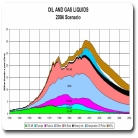
Oil limits seem to be pushing us toward a permanent downturn, including a crash in credit availability, loss of jobs, and even possible government collapse. In this process, we are likely to lose access to both fossil fuels and grid electricity. Supply chains will likely need to be very short, because of the lack of credit. This will lead to a need for the use of local materials.
The time-period is not entirely clear. Some countries, such as Greece and Syria, will be seeing these effects quite soon. Other countries may not see the full effects for perhaps ten or twenty years. What should our response be?
It seems to me that there are many different answers, depending on who we are and what our goals are. The various options are not mutually exclusive.
Option 1. Make the most of the time we have available.
If there are things that are important to you, do them now. If you have been meaning to reconnect ties with family members or old friends, now is the time to do it. If there are things you would like to accomplish that require today’s transportation and services, do them now. If you want to support local charities, now would be a good time to do it.
Appreciate what you have now. We have been privileged to live in a society where transportation is readily available and where most of us can live in homes that are comfortably heated and cooled. At the same time, we can still enjoy many of the benefits of nature—clear skies and plants and animals around us. Life expectancies in the past were generally 35 years or less. Most of us have already lived longer than we could have expected to live in the past.
Develop stronger relationships with family and community. This is likely to be a difficult transition. It is likely to be helpful to have as many allies as possible in transition. It may be helpful to move closer to other family members. Another approach is to form or join community groups, such as a church group or a group interested in common goals. The ties a person can form are likely to be helpful regardless of what path lies ahead.
Option 2. Prepare at least a little for the future
Learn to bounce back from downturns. When I was an editor at The Oil Drum, I was editor for a letter from a man who grew up in Kenya and returned there practically every year. He told that the people in Kenya were very happy, even though they had little material goods and mortality was high. One thing he mentioned was that if things went wrong—the death of a child for example—people were able to mourn for a day, and then move on. They also rejoiced in things we take for granted, such as being able to obtain enough food for the current day.
Do what you can to improve your health. In the United States, we have been used to a combination of practices that lead to overweight: (1) much too large food portions, (2) much processed food including much sugar and (3) lack of exercise. If we can change our eating and exercise practices, it is likely that we can improve our health. If healthcare goes downhill, fixing our personal health somewhat protects us.
Learn what you can about first aid. Injuries are likely to be more of an issue, as we work outside more.
We will need some specialists as well. As long as we eat grains, we will need dentists. As long as babies are born, we will need helpers of some type–doctors or midwives.
If circumstances permit, plant a garden and fruit or nut trees. Eventually, all food production will need to be local. Getting from our current industrialized agricultural model to a model with local food production with little (if any) fossil fuel inputs is likely to be a difficult transition. One approach is to learn what local plants, animals, and insects are edible. Another is to attempt to grow your own. Doing the latter will generally require considerable learning about what plants grow in your area, approaches to building and maintaining soil fertility, methods of preventing erosion, and a variety of related topics.
Find alternative water supplies. We currently are dependent on a water supply chain that can be broken in a variety of ways—drought, loss of electricity, storm damage, or pollution problems. If the long-term water supply seems questionable, it may be helpful to move to another location, sooner rather than later. Alternatively, we can figure out how to bridge a gap in water supplies, such as through access to a creek or lake. For the very short-term, a water barrel of stored water might be helpful.
Figure out alternative cooking arrangements. We humans are dependent on cooking for purifying water, for allowing us to eat a wider variety of food, and for allowing us to obtain greater nutrition from the food we eat, without chewing literally half of the day. We now depend primarily on electricity or natural gas for cooking. Determine what alternative cooking arrangements can be made in your area, in the event current cooking arrangements become unavailable. An example might be an outdoor fireplace with locally gathered sticks for fuel, perhaps supplemented by a solar cooker with reflective sides.
Store up a little food to bridge a temporary supply interruption. We have troubles today with wind storms and snow storms. There are any number of other types of interruptions that could happen if businesses encounter credit problems that lead to supply chain interruptions. It doesn’t hurt to be prepared.
Option 3. Figure out what options might work for a few years for taking care of yourself and your family
We have a lot of goods made with fossil fuels that probably will work for a while, but likely won’t be available for the long term. Examples include solar PV, batteries, power saws, electric pumps, electric fences, bicycles, light bulbs, and many other devices that we take for granted today. Of course, as soon as any part breaks and can’t be replaced, we are likely to be “up a creek, without a paddle.”
I expect that quite a few of the permaculture solutions and organic gardening solutions are temporary solutions. They work for now, but whether they will work for the long term is less clear. We are not going to be able to make and transport organic sprays for fruit for very long and irrigation systems will need to be very simple to be resilient. Plastic wears out and even metal tools will be hard to replace.
Purchasing land for agriculture can perhaps be a partial solution for some individuals, with sufficient skills and tools. Ideally, a person will want to be part of a larger group of people using a larger piece of land, rather than a smaller group, using a smaller piece of land, because of the problem that occurs if one worker gets sick or injured. It may be helpful to have multiple non-contiguous pieces of land, to help even out impacts of bad weather and pests. Ideally, the land should be large enough so that part of the land can remain fallow, or be used for feeding animals, and can be rotated with crop-producing land.
Security is likely be a problem, especially if a single home is distant from other homes. Ideally, a family will be part of a larger group in order to provide security.
Other issues include inability to pay taxes and the government taking over property. Because of the many issues involved, any solution is, at best, temporary. Unfortunately, that may be the best we can do. As parts of the system fail, a local group may be able to support fewer people. Then the group will need to deal with how to handle this situation–everyone starve, or kick out a few members from the group, or attack another group, with the hope of obtaining control of their resources.
Option 4. Work on trying to solve the long-term problem.
There are many studies of how pre-industrial societies operated without fossil fuels and without electricity. For example, Jared Diamond gives his view of how some very early societies functioned in The World Until Yesterday. The Merchant of Prato by Iris Origo documents the life of one particular 14th century merchant, based on old letters and other documents.
Through studies of how past societies behaved, it might be possible for today’s people to develop a civilization that could be operated using only renewable resources of the types used in pre-industrial times, such as wood, water wheels, and sail boats. Such groups would probably not be able to use much metal or concrete because of the problem with deforestation when wood is used for energy-intensive operations. (Today’s so-called “renewables,” such as hydro-electric, wind turbines and solar PV require fossil fuels for manufacture and upkeep, so likely will not be available for very long.) Heating of homes will need to be very limited as well, to prevent deforestation.
As a practical matter, the groups best equipped to make such a change are ones that have recently been hunter-gatherers and still have some memory of how they operated in the past. Perhaps some former hunter-gatherers could give instruction to others in sort of a reverse Peace Corps operation.
We do know some approaches that have been used in the past. Dogs have been used to help with herding animals, for hunting, and for warmth. Animals of various types have been used for transportation and for plowing. The downside is that animals require the use of a lot of land to produce the food needed for them to eat.
Traditional societies have used the giving of gifts and the requirement of reciprocal gift giving to increase the strength of relationships and as a substitute for our money-based financial system. With such an approach, a person gains status not by what he has, but by what he gives away.
Storytelling has been a way of passing on knowledge and entertainment for generations. Songs, games, and simple musical instruments are also part of many traditions. These are approaches that can be used in the future as well.
Option 5. Take steps toward getting population in line with likely long-term energy availability.
The world is now overfilled with people and with the many animals that people raise for food or as pets. Without fossil fuels and network electricity, we probably will not be able to feed more than a fraction of the current population of humans and domesticated animals.
Some steps we might take:
Keep family sizes small. Encourage one-child families. When a family pet dies, don’t replace it (or replace it with a smaller animal).
Eat much less meat. This could be started even now.
Option 6. Rearrange personal finances.
Paper investments are, in general, not going to be worth much, regardless of how we rearrange them, if resource availability drops greatly. Ultimately, paper investments allow us to buy goods available in the marketplace. But if there isn’t much to buy in the marketplace, they are likely to be much less helpful than we assume. Precious metals have the same difficulty–they can’t buy what is not available.
Purchasing land is theoretically better, but even land can be taken away from us by taxes or by appropriation. There is also a possibility that we may need to move, if conditions change, regardless of what property ownership conditions seem to be.
We need to learn to take each day as it comes. If we find that our bank accounts aren’t there, or that only a small fraction of the money can be withdrawn, or that the money is in the bank doesn’t buy much of anything, we need somehow to figure out a way around the situation. Very likely everyone else will be in the same boat. This is a major reason for working on substitute access to food and water supplies.
Option 7. Put more emphasis on relationships.
Studies show that relationships are what bring happiness—not the accumulation of goods. Starting to work now on developing additional strong relationships would seem to be a worthwhile goal. In traditional societies, extended family relationships were very important.
Religions can teach us how we treat our neighbors and thus about relationships. A version of the Golden Rule (Do unto others as you would have then do unto you) is found in several major religions. Many readers of this blog have given up on religions as hopelessly out of date, instead choosing such “wisdom” as, “He who dies with the most toys wins.” In fact, this latter wisdom is clearly nonsense. We can expect our fossil-fuel based “toys” to lose their usefulness before our very eyes in the not too distant future. Ben Bernanke and Janet Yellen are not gods, even if we are told that they are all-powerful.
Another aspect of keeping good relationships is finding ways to mend broken relationships. One such approach is forgiveness. Another is through reconciliation procedures aimed at returning broken relationships to wholeness. Such procedures are common in small societies, according to Diamond (2012).
Option 8. Find ways to deal with the stresses of a likely downturn ahead.
As much as we would like to take one day at a time, oftentimes it is easy to worry, even though this does no good.
Even though we think we know that outcome of our current difficulties, we really do not. The universe has many physical laws. Ultimately, the source of all of these physical laws is not clear–is there a Supreme Being behind them? The story of natural selection is in many ways a miracle. The story of human existence represents more miracles—learning to control fire; learning to control our environment through agriculture; learning to modify our environment further through the use of fossil fuels. In my own personal life, I see a pattern of circumstances working together in ways I could never have expected.
We are not the first to go through hard times. Because of my background, I find myself comforted by many Biblical passages. I am sure other religions have other passages that are also helpful.
Yea, though I walk through the valley of the shadow of death, I will fear no evil, for though art with me. Thy rod and thy staff they comfort me. . . Surely goodness and mercy will follow me all the days of my life. . . (Psalm 23: 4, 6)
. . . in all things God works for the good of those who love him . . . (Romans 8:28)
For me personally, more things have worked together for good than I would ever have dreamed possible. I will not rule out the possibility of this happening again in the future, regardless of what the external circumstances may look like.
Option 9. For those who are concerned about Climate Change
In my view, the changes we are encountering will bring a quick end to the use of fossil fuels. Thus, the concern that future fossil fuel use will cause rapid climate change is over-blown. If individuals would like to personally reduce their own fossil fuel use, I would suggest the following:
- Stop eating meat now, especially that raised in our current industrial system.
- Get rid of pets that are not providing support functions, such as hunting for food.
- Spend less of your wages. With more of the money left in the bank or in paper investments, this money will lose value and thus will reduce spending on fossil fuel-based goods and services. (While theoretically this money could be lent out and reinvested, lack of credit availability will put an end to this practice.)
- Use a bicycle for transport instead of a car, when possible. Or walk.
- Purchase a more fuel efficient car, if you need to replace a current vehicle.
- Turn down the heat in your home or apartment. Don’t use air conditioning.
I would suggest quitting your job as well, but if you quit your job, the job is likely to go to someone else, resulting in the same fossil fuel use for someone else. Even stopping a business you own will not necessarily work, if another business will expand and take its place. If the business that ramps up is in a part of the world that uses coal as its primary fuel, stopping your local business may lead to an increase in world carbon dioxide emissions.
28 Comments on "Reaching Limits to Growth: What Should our Response Be?"
ghung on Mon, 17th Feb 2014 11:49 pm
Step 1. Get your mind right. Accept that the future is going to be very different than the recent past; gradually, or perhaps more quickly than anyone anticipates. Whatever follows, you won’t be as surprised and shocked that none of the promises we’ve been counting on won’t be kept. Disconnecting from complex systems now, as much as possible means avoiding the rush later. One should already be living the life one expects to be living, within reason. Quit making BAU excuses.
There are other things I don’t agree with, such as “(Today’s so-called “renewables,” such as hydro-electric, wind turbines and solar PV require fossil fuels for manufacture and upkeep, so likely will not be available for very long…” Our oldest PV panels were manufactured in October 1994 and have been in continuous use since then. They have required zero maintenance except an occasional cleaning. I expect some of our panels will be useful for many decades in some application or another. I’ve even stored a few, along with some related equipment, just because I can.
As for “stop eating meat”, those who are on a purely vegetarian diet may find ‘long pig’ a little hard to get used to when that’s all that’s available 😉
Davy, Hermann, MO on Tue, 18th Feb 2014 12:34 am
Gail and I are on the same page here. My collapse handbook has many of the same ideas presented. These ideas are for the most part common sense and historical. There are concrete actions and behavioral actions. Many of these ideas need to be adapted to different cultures and climates. We will see a buffet of ideas not one big meal.
I would take issue with her on not eating meat. Meat has a comparative advantage over crops in many areas. It is the feeding of grain to make meat that is the mistake. Cows, pigs, chickens, rabbits, fish, and wild game are very important to our diet in a contracted world. Nothing delivers concentrated food to our bodies like meat. Grass-fed beef is actually beneficial to the pastures they graze if done properly. I realized she mentioned this in relation to AGW. Grass fed beef is better for the environment than converting the land to row crop production
@ghung – long pig—I think the Japanese called it sweet meat in WWII.
MSN fanboy on Tue, 18th Feb 2014 1:17 am
Actually reading this makes me think collapse is certain, who the “explitive” is going to do this on a 7+ billion planet.
If I am wrong about our predicament then chances are 6.5+ billion of us are dead in 30 years.
Northwest Resident on Tue, 18th Feb 2014 2:35 am
“If I am wrong about our predicament then chances are 6.5+ billion of us are dead in 30 years.”
MSN — that would tend to indicate that you think that our predicament can be solved, because if you’re wrong, THEN chances are that 6.5+ billion of us are goners in 30 years.
Can I hold you to that position? Or did you state it incorrectly.
On meat, I’ve read plenty of articles over the years (and seen it on the History Channel too) where they say that one of the main factors in humans eventually growing “so intelligent” is due to meat consumption. Try fighting a war on a veggie diet. Cattle are great if you have the natural pasture for them. But if you don’t, then chickens and rabbits will do just fine, and they are relatively easy and low maintenance to raise. Eggs might be a very good substitute for meat.
If some of us aren’t surrounded by family and friends in our local community because we’ve moved, or because our friends tend to be scattered around a major metropolitan area, then when collapse hits we’re going to have some interesting choices. I’m in that situation. When the economy starts collapsing, my neighborhood is going to be full of a lot of scared people who will eventually turn desperate. I don’t know any of them except for my next door and across-the-street neighbors who I’ve met briefly. If somebody comes to my door starving, what will I do? If hungry scavengers with guns happen to look over the tall fence or peek through the thick arborvidae and see I have a major food operation with chickens and rabbits, then I guess I might end up with a fight on my hands. But I expect that the small town (20K people in rural setting) I live in will have leaders that emerge and who at least make an effort to organize people for food growing, protection and other jobs. It is impossible to know how it will all go down. I do believe that when TSHTF, a LOT of city people will jump in their cars and drive into the countryside, where they might do all kinds of mischief. But Gail’s points are all good — getting prepared to deal with whatever happens the best you can AND getting mentally prepared as ghung points out — that’s all we can do. The rest is up to luck and each individual’s survival skills.
Dwight Eichorn on Tue, 18th Feb 2014 3:36 am
I often wonder how the US military is preparing for this. Is it just wishfull thinking that they will step in and try to keep a semblance of law and order? Or will they just stand back while gangs run the show? Or worse, does our future share more similarities with North Korea where the government is strong and at the same time very repressive, to the point that people die from starvation by the droves without a riot or protest?
Northwest Resident on Tue, 18th Feb 2014 4:18 am
Dwight — Great question. They ARE preparing, not much doubt of that. They were aware of this impending situation back in 2010 when they put out the Joint Operating Environment of 2010, where they stated a 10% shortfall of oil might occur as early as 2015, and that it would lead to international and civil conflict. The probability of needing to back up or assist civil law enforcement was specifically addressed. Veterans returning from Iraq and Afghan wars have been merging into law enforcement agencies around the country. They are getting left-over military equipment, and lots of it. I personally believe that when the soldiers return from Afghanistan later this year, the stage will be set. We may start seeing active duty soldiers in our streets one day in the not too distant future. THAT will be interesting.
GregT on Tue, 18th Feb 2014 6:58 am
There are some blogs on the internet of people’s experiences during post collapse scenarios. Ferfal’s blog,(http://ferfal.blogspot.ca) an Argentinian comes to mind, Dmitry Orlov (http://cluborlov.blogspot.ca) spent time back and forth to the Former Soviet Union during the breakup, and there are numerous stories from war torn countries around the world.
The biggest hurdle always to overcome is the psychological hurdle. As Ghung correctly points out above, get your mind right. If you can’t deal with yourself, it’s next to impossible to deal with externalities. The time to do that is now.
A common theme is that collapse does not happen all at once. It is an ongoing transition to a different state. While the ‘military’ or the ‘police’ may be on your side to begin with, as the chain of command breaks down, and the ‘security personal’ themselves need to look out for themselves and their families, they tend to become corrupted. They will to go to wherever the power is, or they become the corruption themselves. Like Mexico, or apparently in some places in the States already.
Know your neighbours. No man is an island, there is strength in numbers. If you can’t persuade people to prepare, make sure you have enough for your neighbours. If neither is an option, move.
Cash, after a period of time, may or may not be accepted as a form of currency. Nothing is likely to at first. Food, clothing, shelter, and security are necessities. Paper isn’t useful for much more than wiping your butt, or starting fires.
Gold and silver, have almost always been accepted as currency after a collapse. Will this time be different? It all depends on what the locals agree on. When any sort of trade resumes, chances are that both will be acceptable. Bartering for goods and services will be the norm for most transactions.
If Ferfal’s advice is to be taken, get a gun, preferably a handgun, semi automatic, in a larger caliber. If a handgun is not available, any gun is better than no gun. Learn how to use it, and learn to be decisive.
Stock up on the stuff that we now take for granted, toothpaste, soap, toilet paper, lighters, candles, vitamins, medications, clothing etc.. Supplies may return in the future, or not. A relatively small outlay now, could be the difference between a somewhat comfortable existence in the future, or a living hell.
Energy. Stand alone solar, micro hydro, or wind power are all available, and relatively affordable. Of the three, micro hydro is the best, if you have close access to a year round stream, no need for a battery back-up. Spare parts for the same. Stuff to power with that energy, lightbulbs, a small fridge, entertainment, and a two way short wave radio. If heating is a concern, and firewood is the only option, get as far away from largely populated areas as possible. A couple of million people will cut down a lot of trees in a very short period of time. Especially if they are really cold. Wood siding, plywood, and even floorboards are also an option. There will probably be lots of abandoned buildings.
Food and water, without them we all die. Pretty important. Stock up on non perishables. Learn how to grow your own, the sooner the better. Learn how to preserve food for when it cannot be grown. Stock up on books. Learn to identify what foods naturally occur in your surroundings. Learn how to fish. Learn how to hunt and trap. Move away from large population centres.
Get into good physical shape. Get any dental work needed done now.
Stephen on Tue, 18th Feb 2014 9:42 am
As to Dwight, I think the military will take a hit too if we run out of oil and other fossil fuels. Tanks, Planes, Drones, big ships, aircraft carriers, military surveillance systems, etc use fossil fuel energy too. I think we could have a situation in which using energy for war is not worth it.
Davy, Hermann, MO on Tue, 18th Feb 2014 11:35 am
@dwight – Be very sure the military has a plan. Their plan needs to be studied by all those here. They will be in charge when martial law hits. The paramilitary police will also be there. They will secure what they can especially WMD’s and Nuk plants et all. The important nodes of our survival as a society and dangerous game enders. There is not enough to secure everything that is why you need a defensive plan which may include guns. Guns do not have to be part of the plan but I recommend them as a worst case. Maybe at least to scare someone down the road to a less fortified target. I don’t see the military necessarily being dark and evil like some may think here but there is no reason this could not descend to that. They will have to do some nasty things to maintain law and order. They are good at triage in battle field situations. The military is also good at decision making and that is what we will need when SHTF. The part that will be interesting is if hunger becomes widespread. Will they remain in uniform if their family is starving? So, yes, read about the military plans. This will most likely be your next government. Read about martial law. Make friends with your local police. Better they are friends than enemies. If you are the enemy you may be hunted down like we saw in Iraq or killed from above in the tribal areas now. Lots of military capabilities everywhere. No shortage of that. You can be sure they have a plan B unlike the shady politician who they will sweep out of office when they make their last stupid move!
Stephen on Tue, 18th Feb 2014 12:55 pm
I have a question, what will the military do if the factories making bullets, weapons, swords, etc shut down due to lack of resources and fossil fuels needed to forge them and the military and martial law police run out of ammo, and some of the non-rich civilians are still alive?
My personal prediction is that society will adapt to not having ammo either cooperatively (everyone working together), or competively (by starvation and fist fights, and fights with non-powered tools that already exist such as knives or baseball bats).
Stephen on Tue, 18th Feb 2014 1:04 pm
Also if all the police and military vehicles break down, or there is no fuel for them and not enough horses/mules in every community to get everywhere, I doubt martial law would have much enforcement. Instead, I see what is going to happen is more like anarchy, or unarmed law enforcement on a local community level.
I also see the potential in which banks and governments do not have the resources to travel out to everyone’s property and foreclose on it if the taxes / mortgage aren’t paid in the future, especially if there is little or no fuel to run cars, tow trucks, or moving vans. Besides, if the stores go empty, having money (paper or metal) may not be useful due to the fact that many shops become empty due to a supply line failure.
Davy, Hermann, MO on Tue, 18th Feb 2014 1:37 pm
@stephan – You can be sure they have a plan B with vast stores of replacement supplies relative to the GP. Yet, it is not like it used to be with the drive for efficiency and the just in time nature of the world today. They will be the last to run out being able by force to confiscate what they need. A worst case scenario you are exactly right “things run out” for everyone. The host will be bleed dry.
Makati1 on Tue, 18th Feb 2014 2:05 pm
I doubt that the government is going to last long when the SHTF. All the best planning cannot run a country when there are no resources to do so. At what point do the police/military members just go home and take care of their families? The day the SHTF? A week after? When their families are threatened by their absence?
What banks? They will crash and burn even faster. When the money stops, no one goes to work. No one. Why would they? Everything stops. Then the riots, looting and sabotage begins. Even if you take all the military, cops, etc, it is less than 1% of the population. An armed population. And most of those have families, kids, wives, parents. I know where I would be on that day if I were a cop/soldier. At home.
No, I do not think they have a workable plan, all else considered. Only dreams of possibilities.
farmboy on Tue, 18th Feb 2014 2:21 pm
Stephen- Do you really think the US military will just lie down and give up? That would be a first in military history. Peak oil is not the same as running out of oil. The world still has a lot of crude. And the most powerful will, as always, control and allocate what remains; to their best interest, whether food,ammo,fuel, or whatever.
Davy, Hermann, MO on Tue, 18th Feb 2014 2:24 pm
@farmboy – maybe – wars destroy armies. Look at Nazi Germany and resource depletion. Tough until the end but not tough enough. We are all subject to limits including the US military. They are the first to admit it in their reports. These guys are as smart as they come for sure. They know whats up!
andya on Tue, 18th Feb 2014 2:55 pm
Some good advice here.
Northwest Resident on Tue, 18th Feb 2014 3:22 pm
You can bet that the US Military has a plan to secure strategic oil production and refinery sites and hang on to them in a collapse situation. The generals and admirals are stupid if they aren’t making plans to stay mobile and to keep their command structure intact — and they aren’t stupid. When everybody else has run out of gas, the military will be rumbling through town along with their DHS counterparts, still gassed up and mobile. I think you can count on that.
GregT on Tue, 18th Feb 2014 3:30 pm
farmboy,
” Do you really think the US military will just lie down and give up?”
Lie down and give up from what? It’s not like they would be at war in their own country, against their fellow countrymen. I supplied a couple of links above, with stories of real scenarios. We’re not talking about war here, we’re talking about a breakdown of society. There are as many different scenarios, as there are different people. People become very unpredictable when they are scared, or hungry.
If you were in the military, how long would you hang around killing your fellow countrymen for looting, or civil disobedience? Especially if you stopped receiving a pay check? Especially if you had a family to protect?
Northwest Resident on Tue, 18th Feb 2014 4:03 pm
GregT — How would said military member get back home to his family when he has no car and no gas? Would that military member rustle up a horse and start the long trek home, knowing that the military has mobile helicopters and vehicles with which they will chase him down, imprison and possibly execute him. What makes you think the military command is going to be “okay” with any kind of desertion? The military will be giving reassurances to their individual members that the best chance that their families and friends have is for them to stay united, focused and to keep the order.
GregT on Tue, 18th Feb 2014 4:58 pm
NWR,
Are you assuming that the military would be deployed all over the country? If so, how long would they be deployed for? A week, a month, a year, ten years? What exactly would they be deployed to do? Shoot looters? Single moms with small children to feed? The elderly? Would they just lockdown all of the streets, and watch the people starve. Would they be there to ration supplies? What would they do if, or when the supplies ran out? Would the military simply run the entire country just to feed the people? Work on the farms? Food distribution networks?
Like I said before, there are many different scenarios. If we are talking about a breakdown in society, what caused the breakdown? Financial collapse? Where does the government get the resources to maintain the military? Where does the food come from? How does a military maintain control of a heavily armed population, if they are vastly outnumbered. Do they just start shooting everyone? Their own people? How long would the bloodbath last before command broke down?
There are too many possibilities, with too many unanswerable questions. IMHO, all a person can do is mitigate risk. Look at their own particular set of circumstances, and try their best to make plans accordingly.
One thing that does seem pretty clear to me, however, is if the scenario is anything close to what you are describing above, I do not want to be anywhere near a largely populated area.
Northwest Resident on Tue, 18th Feb 2014 6:54 pm
Good points, GregT. Nobody knows. All we can do is speculate. But there are some facts that provide a lose framework upon which “reasonable” speculation can be built. Here’s what I speculate:
1) The U.S. Military since at least 2010 and probably before that has had a dedicated group of strategic planners whose job it is to envision all possible scenarios and develop plans for dealing with those scenarios — plans which are debated, validated and eventually approved
2) Among the plans that the US Military has is how to deal with civil unrest in the event of financial collapse — a reality that the US Military is taking seriously
3) In a collapse or near-collapse scenario, gas supplies to service stations will be cut, road blocks will be set up, populations will for the most part be stuck wherever it is they are when martial law is declared. Local/city/county and state law enforcement will fully join in and enforce the lock-down
4) Units of the military will be deployed to high-unrest locales to deal with it forcefully. These are likely to be combat-experienced Afghan special forces types, and yes, they will use deadly force. Violence and riot will be suppressed mercilessly. Instigators will be tracked down and dealt with quickly.
5) Government propaganda will kick into high gear. Broadcast channels on radio and television at the minimum will be kept operative, along with most of the electrical grid. Military will escort gas and fuel supplies to power stations to insure the grids stay up. Propaganda will be of the type “stay at home, do not panic, help is on the way, stay calm”, etc… For the most part, people WILL stay calm, but very frightened as they huddle in their homes and wonder what the hell is going on
6) Communities will be organized with the help of government specialists, military assistance and others to provide for themselves. Emergency supplies of food, water and other necessities will be provided to some limited extent.
7) Medications and advanced medical help will be severely cut. A lot of elderly and sick will die.
8) Electrical grids will be shrunk to include only certain areas of dense population. The grids will not be operational 24/7/365, but sporadically. Homes out in the middle of nowhere or spread out in the countryside are likely to be disconnected from the grid.
9) Through it all, the military and civilian law enforcement agencies remain gassed up and ready to roll. Order and structure and command integrity is maintained. Deserters and chickenshits are dealt with harshly and turned into public examples. Radio and television continues to be available, if only intermittently, and provides educational, organizational and government propaganda content.
10) Millions of people die due to lack of medications, lack of specialized medical care, lack of food and other needs — just in America. Throughout the world, billions die in riots and starvation and disease.
11) Over time, American communities learn to survive and to live in their own local communities. The government remains intact. The US military remains intact. The power grid remains intact. America cuts energy consumption by 95% or more, and becomes totally self-sufficient, with plenty of fossil fuel energy to last into the far distant future. We learn to live in the new paradigm, to be more sustainable, to let sick and elderly die when it is their time (and the young too), people are healthier and happier and feel more a part of the community. Thieves and villains are not tolerated.
And they lived happily ever after.
GregT on Tue, 18th Feb 2014 7:23 pm
NWR,
Points 1 and 2 I am well aware of. The rest IS pure speculation, but certainly possible. Or if you know something that I don’t, links would be appreciated. In Canada I don’t see that as much of a possibility, unless of course the US military completes the takeover of the 53rd state. http://answers.yahoo.com/question/index?qid=20090112195344AASRdpW We simply do not have the military might to attempt such a massive undertaking.
I myself am not waiting for the government to ‘save’ me. I am taking the steps to mitigate risk for myself. I can only hope that I will be prepared in time, but of course, only time will tell. The one thing that I believe to be certain, tough times are coming, and my guess is much sooner than later, and a lot worse than most would like to believe.
Northwest Resident on Tue, 18th Feb 2014 7:35 pm
GregT — Indeed, PURE speculation. It could go down that way — if I was in charge, that’s what I would try to implement. But as you say, it is much better to be prepared for the worst and to not depend on or even hope for government/military assistance. I know you are in a great location, much better than me. But I still think I’ll be okay, and yes, I am preparing to “go it alone.” It will be very tough adjustments to make, definitely not pleasant, and could end up being extremely nasty. Oh well — how much longer until we start finding out? A year, two maximum? If it goes until 2020 I’ll be very surprised, and I guess a little disappointed if only because we will have wasted that many more species and polluted that much more of the environment.
Stephen on Tue, 18th Feb 2014 7:39 pm
If Iraq, Iran, Saudi Arabia, UAE, et al decide to cut off their oil supply to the USA, due to the fact they have a small amount left, this will impact the US military.
Also, at some point, if there is very little oil supply left, people may want to use it for farm tractors, and taking food to different places, and keeping the water pumps on. This may preempt military use if the situation is very severe.
Davy, Hermann, MO on Tue, 18th Feb 2014 7:44 pm
@Greg – @N/R
Greg, I imagine the military will practice triage as far as shooting and killing. They will shot to kill in some situations and leave the crowds to their own devices in others. Look at the tribal areas in Pakistan. Some areas are not worth defending let the heathens go just so they don’t threaten the important military interest. I imagine they will have local police do some of the dirty work. We are talking extraordinary circumstances so the value of one’s life and rights will change. I imagine if the situation is bad enough local police will be around but may or may not be in uniform. I imagine state police will stay in uniform along with National Guard under the governor’s command. The feds will of course secure their federal responsibilities, military bases, and key nodes to the support system. I am sure prisons will be secured. Refugee camps will be set up. Prison camps will be set up for looters and undesirables. Local governments and communities will have ad hoc arrangements that will coordinate as best they can with the feds and state boys. Around here there will be country justice. This is when the situation is handled the outcome is understood. This all assumes the situation is not dire like …..Little food and in some places no food. In the case of mass starvation the local police may return to families possibly state police too. The military is a different story. Their structure is such that the continuity of units will be much better. Young men with no families tend to hang together like a brotherhood. Commanders will have their families nearby on bases. They have supplies and can confiscate supplies. We must remember there is “peak everything now” this means there is allot of stuff out there for someone with the resources and organization. Much can be salvaged for years. The military will have the ability to reboot important systems to cover their needs. The range of collapse scenarios is too large to contemplate in the mind. The military boys have serious computer power to digest these scenarios. They have looked at many angles I am fairly sure. I am not sure about all the military overseas and how, when, or if they will return to the States. Well, sounds good anyway…who knows.
Davy, Hermann, MO on Tue, 18th Feb 2014 7:51 pm
I guess guys we can watch the news with all that is happening at this moment in more and more places. I am wondering when or if this instability will spook the markets.
Northwest Resident on Tue, 18th Feb 2014 8:20 pm
Stephan — My opinion is that the US Military will not allow Iraq, Iran, Saudi Arabia or the UAE to cut their oil supply. From my perspective, the whole point of 9/11, The War On Terror and the Iraq invasion was to lock down all those major ME oil production centers and to position large numbers of military units and equipment adjacent to those oil production centers, ready to pounce at a moment’s notice. If that WAS the goal of 9/11, The War On Terror and the Iraq invasion, then it was successful — those military units are in place and the entire region is locked down. And while there are plenty of local residents in those areas that are capable of causing problems now, in a collapse scenario, don’t expect the US Military to continue abiding by Geneva Conventions, rather, expect that they will shoot everything that moves, burn entire towns and villages along with crops, and in general clear out a wide area of operation around anything they consider to be a vital interest. That’s what I think, anyway.
Stephen on Thu, 20th Feb 2014 2:27 pm
Northwest Resident:
What if down the road:
Saudi Arabia’s oil production drops from 8mb/day to less than 0.2mb/day, and UAE, Iraq, Iran, etc get down to 0.1mb/day? Say these governments now want to use the remaining oil for their people, and not export so they cut it off.
2) The weapons factories close down, due to the fact we are way past “peak bullets” due to metal supply depletion, fossil fuel depletion, and no energy for deep mining metals which require fossil fuels, and go bankrupt.
3) Crossing Peak Coal and Peak Natural Gas, the power grids only deliver a few hours of electricity per day.
4) The Military, CIA, NSA, State Police, et al are largely forced to reduce or stop their intelligence operations due to computers that cannot be replaced due to resource depletion and the power grid constantly going down.
5) Many of the companies that run the military industrial complex are forced into bankruptcy due to lack of metals, fossil fuels, and manufacturing equipment that doesn’t work well due to the power grid being unreliable.
6) Due to the lack of supplies of new bullets and gunpowder due to failing factories and supply lines, plus depletion, the police and military are forced to abandon “shoot to kill” orders in most cities.
7) At this point, many police departments, CIA, FBI, military, et al issue massive layoffs, as most of the evidence processing equipment, police cars, et al require fossil fuels to run and there is nothing to shoot due to very few bullets left. Also, the police and military are outnumbered. Many of them either go back to their homes, and start farming non-GMO crops with whatever seeds are left.
8) Due to stock market failure, people determine that it is unlikely that the bankers are going to end up being the richest. With the financial system in peril, real cash becomes king and most debts just get erased due to the computer systems that ran the banks failed with the grid crash.