
Peak Oil is You

Donate Bitcoins ;-) or Paypal :-)


Page added on February 14, 2015

Peak Oil and Scotland
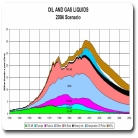
As it is a finite resource, by definition, we will run out of Oil at some point. Around the year 2000, Scotland (and the UK Continental Shelf as a whole) reached “peak oil” (Oil and Gas UK 2014). So what is “peak oil”, and what are the implications of it?
Peak oil is the point at which the highest rate of oil production is achieved, and beyond which oil production enters terminal decline. This could be due to many reasons – be it due to conscious policy choices by world governments to leave oil in the ground, or it becoming impossible or undesirable to extract what oil remains. The reason it is so difficult to anticipate when peak oil will occur is because new technology becomes available which either makes it possible to extract more difficult and remote fields, or it becomes possible to get more oil from fields which already exist.
Since 2000, Scotland’s rate of oil production has decreased, despite new oil finds. Regardless of whether or not there is enough oil under the sea to reach the previous output peak, environmental pressures and viability issues mean oil production almost certainly will not reach the same level again. In order to maintain revenue from the North Sea, therefore, the price needs to increase accordingly to compensate for low production- but the exact opposite of that has happened. The decline of production could be steady, predictable, and gradual, allowing Scotland to slowly divest its economy. The decline could be more sudden or volatile should economic or environmental pressures force it, however.
If wells become unprofitable, they can be temporarily mothballed until such a time as it becomes profitable to operate them again. Staff are retained on the platform to maintain it- meaning it is not a total loss for workers- but no oil is extracted, meaning the rig is running a loss. This, however, reduces total production, which in turn cuts revenue for both oil companies and for the state. Oil companies may simply try to ride out the storm and keep pumping, but if the downturn in oil price continues for too long, they may decide to simply cut their losses and begin decommissioning rigs.
Oil was a major factor in the debate surrounding the future of Scotland and the UK in 2014. This was primarily due to corporation tax revenues the industry provides the exchequer, and the jobs the industry sustains- both in the North East of Scotland and at the massive Grangemouth Refinery run by Ineos. A sustained period of low prices could have significant consequences for Scotland should producers begin to cut and run.
It’s also worth noting that oil isn’t just used as transportation fuel – it’s used to manufacture plastics, lubricants, fertilisers, or even in food additives. Any slowdown in the economy will reduce the demand to produce goods, and hence reduce demand for transportation of goods and the production of the goods themselves. The slowing economic growth, not least in developing economies, is undoubtedly a factor behind the drastic fall in prices. OPEC said in recent months that it would keep pumping at current rates even if prices dropped below $40 a barrel (Critchlow and Chan 2014). That would be around the level prices were as far back as 2005 before the global financial crisis.
Oil is also, of course, a tradeable commodity that can be treated as an investment. Oil producing states and companies can tolerate drops in oil price to some degree because investors and states may be sitting on oil that was bought or produced when it was selling for $30-$40 a barrel, although it is difficult to know exactly how much oil is sitting around in such reserves, who owns it, when it was purchased, and at what value. This means it’s incredibly difficult to predict what effect the dropping oil price will have on oil producing companies the world over, as they could still generate a healthy profit from their reserves of oil despite a falling price.
The Scottish Government based its White Paper predictions on the fact oil would be sitting around $110 around now; it’s about half of that. Of course this has been used as a political scoring point by those who campaigned against Scottish independence, but that doesn’t show anything near the whole picture – for a start, Scotland would not technically be “independent” until March 2016, and the oil price could easily reach a value beyond even $110 by then. Nobody denies that oil is a volatile resource, but volatility also includes upwards spikes, and with energy security and global economics being the wild, thrashing beasts they are, there’s no way to say with any certainty that oil price couldn’t just as rapidly spike upwards.
Oil price has effects far beyond just income tax revenue – it has profound implications for inflation (which recently halved in the UK for the first time in history from 1% to 0.5%), welfare costs, and economic growth. Lower fuel costs means lower overheads for business, opening the way to increasing wages, increased profits, or investment to grow the business. Increased wages could mean reduced fuel poverty, particularly among low earners, and increased income tax take as people have a higher income should wages increase correspondingly. This is reliant on businesses directly passing on savings and increased productivity to staff as wage increases, which has not been the case (either in the US or UK) since the 80s.
In reality it’s not unthinkable that some of the lost corporation tax from North Sea oil could be offset as corporation tax revenue increases from other businesses benefiting from reduced costs, but it’s hard to know how that would compare in scale. In short, it cannot be assumed that a drop in revenue from corporation tax will be offset adequately to avoid a pretty significant drop in Governmental income from the North Sea due to falling oil prices. Conversely, had oil prices shot up, that would have had a corresponding effect on prices not just in the shops, but at the pumps. The jubilation from the oil and gas companies, and the jobs created, would be offset by the misery of thousands of people facing prohibitively expensive fuel and electricity bills. So it’s an incredibly complicated picture, but not a scenario, by any means, unique to Scotland.
Scotland is a microcosm of what is soon to be a global problem. Thankfully, Scotland’s economy benefits from but is not overly reliant on the North Sea. Many oil producing countries throughout the world, such as those in Africa, are far more reliant and are facing far more precarious situations. If we take Nigeria as an immediate example, their oil exports make up 35% of their GDP (OPEC 2014). A fall in oil revenues as significant as is currently being experienced will almost certainly have significant repercussions for their economic development.
There will be infrastructure projects that are financed on money borrowed with assumptions about oil price factored in, throughout both developed and developing countries around the world. With oil prices crashing, this means there’s every chance of developing economies defaulting on payments servicing this borrowing for infrastructure. Particularly for developing economies, it isn’t feasible that infrastructure projects that are in progress can simply be cancelled until oil price recovers- more likely the payments will be renegotiated and a higher rate of interest applied for the future when oil prices are assumed to recover- at which point we enter a maelstrom of uncertainty.
Modern finance is a complicated maze of debt, and interactions between different types of debt. Futures and derivatives, investments made based on assumed values of commodities in the future, will not be unaffected by volatile oil prices. Sustained low prices could wipe billions from pension funds. Furthermore, the value of gas is directly linked to the value of oil. As the US Dollar is the world reserve currency (in practical terms, the currency used most widely to buy and sell oil as a common medium between different currencies), fluctuations in oil price will affect not only the price of gas but the US economy as it expands its domestic production.
How these different features of finance and commodities will interact in the coming months is almost impossible to tell. It gets more complicated still when one looks at the reasons for the collapsing oil price. Two of the world’s largest consumers of oil – Canada and the US – have greatly increased their domestic production through “fracking” and “tar sands”, and Canada’s “tar sands” reserves account for almost half of the world’s entire proven reserves. This means two of the biggest consumers of oil are no longer importing from the global market, creating a demand vacuum which has yet to be filled. When one looks at the situation holistically, then, the next Parliament, or the one after, is faced with an incredibly daunting prospect.
From here, the situation could develop in one of many ways. Environmental pressure groups such as Greenpeace could succeed in stymieing the growth of fracking due to environmental concerns. This would hasten “peak oil” as it would mean a significant amount of fossil fuel is left in the ground. Environmentally speaking, this would be a victory. In order to prevent global temperatures rising by more than 2’C (beyond which point the environmental effects becomes “severe”), reducing consumption of oil and gas is an essential first step.
It’s almost certain that production will drop in the next few months as the market corrects itself (the opposite isn’t impossible, of course, due to the inelasticity and unpredictability of oil as a commodity, but it’s overwhelmingly likely). This, and economic growth, would see an increase in prices. As prices increase, producers would be incentivised to start pumping again and production would increase, at least in the short term. In Scotland, this likely means there could be job losses in the short term, before production is increased (or, at least, the decline is slowed). At least in the short term, then, Scotland will inevitably face a drop in North Sea Oil revenue.
The Westminster and Holyrood Parliaments need to be pro-active to ensure the resilience of the Scottish economy, because so much is at stake. If oil prices become too volatile then divesting becomes essential to ensure the resilience and sustainability of our economy, and it just isn’t realistic to envision the North Sea Oil industry growing beyond what it currently is. We’re already beginning to see what post-peak-oil looks like as production enters terminal decline.
Scotland needs to pioneer the post-oil economy. Put simply, we can’t afford to let Grangemouth Refinery become another Ravenscraig. The year 2000 was realistically the best possible opportunity (short of starting it the day it was discovered) to create an oil fund- but consecutive Governments have failed to do so, despite rocketing income as oil prices shot up following the turmoil of 2001 and the Second Gulf War. We’ve operated on the assumption that falling production would be accommodated by growing prices, but as prices fall this mismanagement puts not just the Scottish, but the entire UK economy in a precarious position.
There is no value to harbouring grievance about this, nor can we expect to simply harness shale gas at a comparable scale as a stop-gap to smooth the transition. So how do we increase the resilience of the Scottish economy to a declining North Sea industry? There are many solutions, including but not limited to; incentivising microgeneration and community ownership of renewables to reduce demand from fossil fuel central power generation schemes; increasing biofuel production capacity and its contribution to transportation fuels; “closing the circle” and facilitating food production companies re-using their waste products to generate fuel to reduce waste and costs associated with transportation. The skills the North Sea Oil industry posses could prove invaluable to a growing renewables sector.
An idea now surfacing is re-thinking waste entirely and embracing the concept of “co-products”. That is, instead of treating leftover products as “waste”, treating them as a resource; instead of sending waste to landfill, aiming to send zero waste to landfill via increasing recycling capacity and bioethanol/biogas/bioplastic reactors. Reducing consumption of products (especially packaging and carrier bags) and energy in the first instance is also an essential step to reducing reliance on oil.
Through schemes like Zero Waste Scotland, the Biofuels Programme, and CARES, the Scottish Government is moving in the right direction, but it cannot be unilateral. Energy security is an issue which has global implications and which transcends borders and political jurisdictions. It is not simply enough to ban fracking, for example – we have to find viable alternatives. Either we develop our economy and increase its sustainability, or we forsake the environment, embrace shale oil and gas, and pursue mitigation instead of prevention of climate change. There isn’t really all that much scope for a middle ground.
When the world reaches peak oil, it’ll be a seminal moment in modern history. We’ll be forced to adapt rapidly as exponentially increasing demand coincides with exponentially decreasing resources. Scotland has a chance to be pioneers of a post-oil economy. We’ve long been industrial entrepreneurs, but now’s the time to prove we can deliver when it will matter most. Scotland is blessed in that we have ample energy resources and potential, but much of the world doesn’t, and countries don’t exist in a vacuum. So much of modern economic theory depends on the assumption that developing countries will learn from the mistakes developed countries made in the past and transition into development while skipping the mistakes of the past. Many developing countries are oil exporters, and so it is incumbent upon Scotland to prove that it is possible to be economically viable without oil.
Magnus Jamieson
4 Comments on "Peak Oil and Scotland"
Dredd on Sat, 14th Feb 2015 2:59 pm
The poisons of Scotland.
Reached a peak?
Whoopie!
Is there enough left to kill all the Scots?
But the big important question is: what is the price of a barrel of the poison?!
People will die naturally if we don’t kill them with the peak poison!
Whoopie, above all, we smart folks need to keep our eye on the price of Scotch Poison!
Whoopie! We’re all going to have to help the Scots die as the Scots by sending them some of our un-peak poison!
Whoopie (You Are Here)!
Plantagenet on Sat, 14th Feb 2015 3:28 pm
It’s too bad the Brits have been skimming off the oil tax revenue for decades. Scotland could’ve saved that money in a sovereign wealth fund
theedrich on Sun, 15th Feb 2015 4:22 am
Apparently the Scots do not mind being stolen from. Could it be that their politicians are being paid off by the English? In any case they are soon going to find out what it means to give away all of your wealth to self-important neighbors who have kept you under their foot for centuries.
Davy on Sun, 15th Feb 2015 5:34 am
Thee, the referendum says it all on money and votes in GB. A huge amount of money was spent timely and strategically to keep the Scots from succeeding. Succession was bad for business for TPTB.