
Peak Oil is You

Donate Bitcoins ;-) or Paypal :-)


Page added on May 2, 2010

Of the issue of peak demand and the consequent casualties
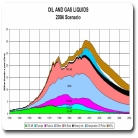
Crude world has undergone massive transformation in recent months. Gone are the days when the issue of “peak oil” was dominating headlines. That has receded into the background. The very issue of peak demand is now getting on to the centre stage and is starting to impact things all around.
Demand has already peaked in Western, industrialized countries. Everyone from IEA (International Energy Agency) to OPEC now seems to agree. However, with demand continuing to rise in the emerging economies of Asia, not everyone was initially concerned. Eyes remained glued to China as the brightest star on the horizon as far as crude consumption was concerned.
However, producers are beginning to get skeptic of the emerging realities. The concept of peak demand has apparently crept into the industry mainstream. Drop in global oil use last year caused by the economic slowdown and coupled with efforts to combat climate change and use oil more efficiently are starting to hurt the industry psyche.
“I think that peak demand will come before peak of supply,” said Ibrahim Al-Muhanna, adviser to Minister of Petroleum and Mineral Resources Ali Al-Naimi, while answering a question at an industry conference in Paris. “The demand in emerging economies will take time to peak but it will definitely peak, maybe this decade or early next decade,” he asserted. Oil consumption could fall even more in countries that are members of the Organization for Economic Cooperation and Development (OECD), Al-Muhanna added.
“In the OECD countries the peak is there and it is declining very fast in some countries. We might see further decline as a result of more efficiency and other sources of energy,” he said.
Muhammed Al-Sabban, head of the Saudi delegation to UN talks on climate change, said in January that the possibility that oil demand might peak this decade was a “serious problem” for Saudi Arabia.
The IEA, which advises 28 industrialized countries, said in January that demand might have already peaked in OCED countries as the recession entrenched a downward trend in oil use. Others including BP Chief Executive Tony Hayward seem to agree, conceding in February that global demand would reach a high point after 2020.
And with peak demand an almost reality, casualties are coming to the fore, one can’t help noticing. While the crude market prices were peaking in 2008 there was a lot pressure on oil producers to open taps so as to ease up the demand-supply fundamentals. One could recall Al-Naimi underlining and underpinning on numerous occasions then that there was no shortage of crude. He is on record saying that whosoever would approach the Kingdom for crude would get and that Riyadh had the potential to meet the (growing) global crude appetite. He was talking sense – none could argue. However, there was a definite catch in the entire scenario.
Most of the buyers then were looking for Arabian Light, whereas the additional crude on offer was the heavier one. And this made the difference. That crude on table for anyone to take literally had no taker. And there were reasons too. Global refineries were either not geared up or not willing to process the heavy crude.
The scenario forced Saudi Arabia to take initiative(s). And so it did. Two refining ventures – one in Jubail with Total and the other with ConocoPhillips at Yanbu on the west coast – were announced by Aramco.
This move was interesting. It was taking care of two birds simultaneously. It would definitely have helped ease global refining bottlenecks and at the same time would have added value to exportable crude.
However, the most interesting part of the move was that the proposed refineries were to process heavy crude which otherwise did not have many takers.
And with interesting times still around, the proposal of a refinery in Jazan was also floated. And initially it generated quite a lot interest, one can say with some hindsight.
However, changing times are beginning to impact some of these projects too. Projects that appeared interesting, while crude prices were oscillating around $150 a barrel and demand was at its peak, do not stand scrutiny at the current market scenario. Stakeholders are beginning to feel shy!
Only last week ConocoPhillips announced opting out of the Yanbu project. And the ConocoPhillips decision is being seen by many as the direct casualty of current market dynamics – dwindling crude demand and fast approaching peak demand.
It is for sure that international interest in the proposed export oriented, Jazan refinery also appears to have faded in the meantime, resulting in the handing over of the entire project to Aramco for execution. And interestingly, though Aramco was one of the originally pre-qualified companies for the project, the Saudi oil giant was not among the two original bidders which had finally submitted proposal for the project.
In the meantime, all the indications are pointing that in all probability the Ras Tanura, Dow-Aramco joint venture is moving over to Jubail on “account of infrastructural considerations.” Indeed, developing the land in Ras Tanura carried a huge price tag and in the changed circumstances that could have made the entire project less feasible. In Jubail, the infrastructure remains the responsibility of the Royal Commission and the venture is not required to foot the bill. Hence it is more feasible.
And at the same time, the Manifa field development that could have added 900,000 bpd of heavy crude has also been delayed by at least a couple of years.
The energy world has indeed changed. And the impact of the changed environment is getting more vivid with each passing day. There are indeed casualties, one cannot deny. The specter of peak demand is beginning to haunt and hurt and the consequences could be disastrous even at the cost of repeating.
One Comment on "Of the issue of peak demand and the consequent casualties"
Keith_McClary on Sun, 2nd May 2010 1:37 pm
This is the whole article, except for the authors’ names.