
Peak Oil is You

Donate Bitcoins ;-) or Paypal :-)


Page added on February 3, 2016

No peak oil demand until 2040
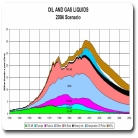
A peak in global oil demand is unlikely to occur before 2040 in a sub-$70 oil world, according to a research report from Bank of America Merrill Lynch (BoAML).
Over the medium-term, low oil prices will influence the trajectory of demand growth in three key ways, the report entitled “Global Energy Weekly: Oil is back to the future” explained:
1 They will stimulate demand for vehicle transportation, eg, by boosting car proliferation in EMs;
2 They will slow efficiency gains, as consumers switch to larger and less fuel efficient vehicles; and
3 They will slow the rate of substitution out of oil into alternative (non-oil consuming) vehicles. True, demand has already peaked in developed markets due to efficiency gains. But EM demand is still growing strongly due to rising incomes and urbanization.
Income inequality has been a major political topic around the world in the past decade. Now the massive drop in oil prices from $115 in mid-2014 to $30 per barrel (/bbl), if sustained, will push back $3 trillion a year from oil producers to global consumers, setting the stage for one of the largest transfers of wealth in human history.
This figure equates to an average net transfer of $400 per capita to the global consumer, likely having a long-term positive effect on global growth. Naturally, the price drop will have long-lasting effects on petroleum demand too. Oil is predominately a transport fuel, with 55 per cent of global oil demand consumed in transport, with most of it used in roads.
Low prices will boost global oil demand growth to 2020
Conservatively, we see global oil demand averaging 1.2 million barrels per day (b/d) growth per year from 2016 to 2020, boosted by lower prices. This represents a significant increase in demand growth from 1.0 million b/d per year during 2011-14 when oil prices averaged $108/bbl.
Brent dropped 46 per cent year-on-year (YoY) in 2015, and global demand responded by growing 1.7 million b/d, the second highest pace in a decade.
“Two thirds of this demand growth was a price response, on our estimates, the strongest single-year price response ever,” said the global research team at BoAML.
The price effect on demand is strongest in the first year after a price drop on higher miles driven. Yet the cumulative effect over the medium term to 2020 is even stronger, due to increased car ownership in EMs and larger and less fuel efficient car sales in DMs.
Alternatives and climate action: limited impact before 2020
“Alternative vehicles (AVs) pose a small threat to global oil demand over the next five years, in our view. We see AVs, including electric and natural gas vehicles, as a niche that comprises less than 2 per cent of global car sales by 2020. The higher costs of AVs and lack of refuelling infrastructure are even harder for consumers to stomach in a world of low oil prices,” the report said.
Climate action is also unlikely to have a material impact on oil demand over the medium term, as cutting coal in power generation is the cheapest way of reducing CO2 emissions.
If, however, countries around the world were to turn much more aggressive on reducing CO2 emissions, stricter fuel efficiency standards and taxes could reduce oil demand from 1.2 million b/d to just 0.4 per year on average to 2020, according to the report.
10 Comments on "No peak oil demand until 2040"
Davy on Wed, 3rd Feb 2016 7:06 am
Did I miss something from skimming this article so quickly? No mention whatsoever of a global recession. No mention of even a global slowdown. Just the usual in the abstract and out of context low oil price will do this and not that. This should immediately discredit this article.
Every indication I see is we are now in a global recession without adequate central bank or government fiscal tools for stabilization. It appears this downturn will be a global demand destruction cycle not a sector or regional downturn. That’s right a total global recession at “ALL” levels without bubbles to inflate. How can someone dismiss that unless they are selling something?
This is a worst case for oil’s recovery. No demand bright spots. Sure oil demand will remain because it has to but not what it takes to make the oil industry healthy. We have resource republics in the meantime decaying into oblivion. We know at some point supply will be noticeably damaged but by then demand will not be able to sustain a price shock reactions. It is going to come down to what falls faster demand or supply. Either one will bounce the other but if both are falling the bounce just magnifies a descent in the other instead of supports it. This screams end game to me and something we doomers have been predicting for 3 years now.
JuanP on Wed, 3rd Feb 2016 8:02 am
Russi-KSA negotiation? http://oilprice.com/Energy/Energy-General/Russia-Cries-Dyadya-Uncle-Is-Saudi-Arabia-Listening.html
JuanP on Wed, 3rd Feb 2016 8:03 am
Russia-OPEC deal? http://russia-insider.com/en/business/russian-deal-opec-could-raise-oil-40/ri12609
shortonoil on Wed, 3rd Feb 2016 8:12 am
Bank of America has a rather hefty portfolio of HY energy loans, and about 150 firms are scheduled to go belly up this year, and a bunch default. That couldn’t have a thing to do with these rosy demand projections, could it? With 100’s of $ billions in defaults coming down the road, a bank has to do something to keep the sheep from running off into the forest. “When things get bad enough you have to lie.”
Revi on Wed, 3rd Feb 2016 8:30 am
Ridiculous. Homeless people don’t demand more oil. Good luck with growing at 1.2 million barrels per day from 2016 to 2020.
This is a total fantasy piece in order to placate the people who think that there is something wrong.
According to this article we can continue with easy motoring far into the future.
joe on Wed, 3rd Feb 2016 9:55 am
Again, another prediction from another bank. Snore!
rockman on Wed, 3rd Feb 2016 11:52 am
Revi – IMHO you’re being kind to call it a fantasy. I take it has 100% pure propaganda designed to help ML financially.
Apneaman on Wed, 3rd Feb 2016 12:12 pm
Most apes will be dead by 2040. Funny how the concept of non linear is lost on the econ 101 math whizzes when it comes to ape overshoot, planetary inertia and biosphere degradation.
frankthetank on Wed, 3rd Feb 2016 6:35 pm
This is all true. Buy more stuff. Take out more loans. There will be no collapse.
roxy on Thu, 4th Feb 2016 7:29 am
When the supply of oil peaks so will the demand for oil. How can anyone demand oil when it’s not there?