
Peak Oil is You

Donate Bitcoins ;-) or Paypal :-)


Page added on April 17, 2013

Nevermind Peak Oil – What About the Price?
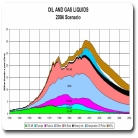
There have been many calls on peak oil – the tipping point at which global production reaches a peak – and, due to dwindling reserves, production declines, even if demand continues to rise. In reality, the industry and the technology have proved more resourceful than predictions have allowed and production has continued to rise. Indeed, the recent opening up of tight oil reserves in the US heralds the possibility that the US may become self-sufficient in a number of years if rates of production growth continue. Yet in spite of this creativity on the part of the extraction industry in finding new reserves (and even more challenging ways to extract them from tight formations or deep underground), we have rapidly become accustomed to the prices that would have been considered crippling just a few years ago. The price of oil has more than quadrupled over the last 10 years from about $25/barrel in 2002 to $110/barrel last year. “Hurrah!” say the environmentalists – only through high prices will consumers make better decisions about fuel economy, power use and alternative fuels – and no doubt they are right. But the reality is we have rapidly become used to high prices, and while the current oil price is certainly not helping the global recovery, there is little evidence to suggest the price is likely to drop enough, in spite of shale oil, to help it. The main assumption for the high price of oil is demand (and in particular, Asian demand) that wasn’t there 10 years ago. But a less-discussed influence on the price has been the rapidly rising cost of extraction. As an FT article amusingly puts it, there was a time you could poke a straw in the sand and oil would spurt out: think Iraq, Saudi Arabia, even Texas. But today, oil is increasingly coming from much more challenging sources. As the author of the article observes, oil companies have invested billions to turn Canada’s bitumen into synthetic oil, and freeze natural gas into an exportable liquid. They have ventured out into the remote, iceberg-strewn waters of the Arctic, discovered huge new oil reserves under a 2-kilometer-thick layer of salt off the coast of Brazil and “fracked” their way through vast shale and “tight” oil formations from Texas to North Dakota. “Projects are getting bigger in scale and more remote. The oil is harder to find and more expensive to get out,” Christian Brown, chief executive of Kentz, the engineering and services group, is quoted by the FT as saying. As a result, the cost of oil extraction has mushroomed. To be continued in Part Two.
2 Comments on "Nevermind Peak Oil – What About the Price?"
J-Gav on Wed, 17th Apr 2013 9:12 pm
Price has always been part of Peak Oil for anybody who’s understood anything. What an idiotic title.
BillT on Thu, 18th Apr 2013 1:09 am
Peak Oil IS about price as much, if not more, than it is about how much is left to recover. There will be billions of barrels of oil still in the ground when the last well shuts down. Why? Because they will shut down when the buyer can no longer afford to buy the oil.
If it costs $150 to get a barrel of oil to the market, and that price includes a small profit, and the consumer can only afford $120 oil, the demand drops and the pumps stop. Below $140, there is no profit. Above $120 there is no market. Game over.