
Peak Oil is You

Donate Bitcoins ;-) or Paypal :-)


Page added on March 5, 2012

Natural Gas Demand To Quadruple
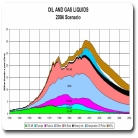
US oil billionaires, Robert Hefner III and T. Boone Pickens have championed natural gas as oil’s successor for around 15 years. They’ve done this mainly by pushing the ‘green’ attributes of natural gas. Calling it ‘the bridge’ to a cleaner future… Which it may be in some ways…
Pickens even has a plan – The Pickens Plan – to replace petrol and diesel fuel with compressed natural gas (CNG).
(The Pickens Plan used to include wind energy. But in December 2010 he revamped it to focus exclusively on natural gas. As reported on MSNBC, ‘Pickens said low natural gas prices have made utility companies view wind power as too expensive. “You’re going to get natural gas prices up, or wind — it just isn’t gonna happen.”‘ )
The thing is, even if natural gas is not the bridge to cleaner energy, enough people believe it is to make it worth thinking about as an investment.
Even the US Environmental Protection Agency (EPA) is throwing its weight behind the move towards gas.
From wealthwire.com…
‘Last week, Lisa Jackson spoke on behalf of the EPAat an energy conference in New Jersey regarding the fracking debate.‘According to Jackson, there’s “only an upside to hydraulic fracturing.” It will greatly benefit the economy through job creation; but that doesn’t necessarily mean the environment has to suffer like many critics claim…
‘Instead, Jackson explains that fracking can be clean, it just requires technology that will ensure the process is handled properly.’
On top of that, EPA research reports a Honda Civic powered by CNG travels the same distance as a petrol-powered Civic per kilowatt hour. And it emits 11% less carbon dioxide.
Of course, CNG-powered cars still ‘burn’ fuel and pump carbon dioxide through their exhaust pipes.
But with natural gas replacing coal at the power plant, electric cars become even cleaner. Bloomberg reports, ‘Encouraged by the availability of inexpensive and cleaner domestic gas, some electric utilities are replacing their coal-burning capacity with gas-fired units.’
That is the power of the market.
People who buy electricity want something cleaner… and something cheaper.
So here you have two converging ideas…
- We Need to Replace Expensive Oil
- We Need Clean Energy
And now they’ve collided to make natural gas an attractive investment opportunity.
Is natural gas going to replace oil as the dominant energy source?
To answer that, let’s take a look at an excerpt from a recent update of Kris Sayce’s investment newsletter, Australian Small-Cap Investigator…
Gas Demand to Quadruple
‘There was a chart and comment [from the recent Coal Seam Gas Risks and Returns Conference] I found interesting…

“In BP’s recent World Energy Outlook, they stated the world will consume 30% more energy in 2030 than it does today.“Once source of power has always dominated the energy mix. Wood in the pre-industrial age, coal in the industrial revolution and then oil in the 20th century.
“The proven world oil reserves in 1990 were, 1.0 trillion barrels, in 2000 1.3 trillion barrels and in 2010 1.5 trillion barrels, so oil reserves are growing. If new technologies and operations are implemented oil reserves can grow significantly.
“By 2030 trends in the energy mix will see fuel shares converge for the first time as gas gains in importance.”
‘If oil reserves are growing, they aren’t growing at a rate fast enough to either, a) maintain oil’s share of energy consumption, and b) to cause a major fall in the oil price.
‘That’s not to say it won’t happen. But now, with natural gas so cheap and new technology and processes resulting in big discoveries now, a shift is definitely taking place – away from oil, and into natural gas…
‘[B]illions of dollars are going into developing Australia’s natural gas and liquefied natural gas infrastructure. And that’s not surprising considering the expected quadrupling of demand:

‘Natural gas stocks have gotten off to a good start in 2012.
‘And if I’m right about natural gas replacing oil as the dominant energy source over the next few years, you can expect to see an even better future for natural gas stocks.’
Aaron Tyrrell
Editor, Money Morning
5 Comments on "Natural Gas Demand To Quadruple"
Kenz300 on Mon, 5th Mar 2012 6:26 pm
Long haul truckers are moving to LNG.
GM announced today that they will begin taking orders for a CNG pickup truck in April.
Honda is selling a CNG car.
UPS and FedEx are using LNG.
It is time to end the oil monopoly on transportation fuel. We need choice at the pump and some competition. Bring on the electric, flex-fuel, hybrid, CNG, LNG and hydrogen fueled vehicles. There is no silver bullet. Monopolies are only good for the monopoly.
Anthony on Mon, 5th Mar 2012 8:42 pm
Kenz300…
Would you feel safe driving down the road with a tank full of CNG? WHat if you get t-boned or rear ended?
The same goes for compressed hydrogen…
BillT on Tue, 6th Mar 2012 12:34 am
Obviously, this article is nothing more than an ad to lure investors for natural gas enterprises. Natural gas is not going to last as long as they project, if a large number of users of oil switch over. In fact, there is likely to be no more NG years left than oil. By 2050, most of both will be gone. The last half of the 21st century will be spent reverting to an 1800s lifestyle…for those few who are still here.
MrBill on Tue, 6th Mar 2012 5:07 am
Anthony, if you get t-boned or rear ended, would not nat gas or hydrogen disapate as they are lighter than air? Doesn’t gasoline just hang around if you get rear ended? I read all the time about someone burning up in a gasoline fueled car after a wreck.
BillT on Tue, 6th Mar 2012 12:23 pm
MrBill, actually, hydrogen only takes a spark to ignite as does natural gas. A collision that would rupture a gas tank would likely rupture the container of either of those fuels and I am sure there would be plenty of sparks. Gasoline erupts in a fireball…natural gas explodes as does hydrogen, “think the Hindenberg”. The spread of explosive concentration is highest in hydrogen which is explosive at almost any concentration.
An ’empty’ tanker truck full of natural gas vapors still contains the explosive force of 10 tons of dynamite, and all it takes is a spark. Hydrogen flames can spread at 50 ft per second as recorded at the Hindenburg disaster.
Whereas, most diesel or gasoline fuel leaks from car accidents are not going to catch fire unless there is already a heat source from something else, like a hot engine. I’ve had engine fires when a gas line broke on a hot engine, but a simple small extinguisher put it out. No explosion.
I’ll take a diesel first, gasoline second, natural gas third and no hydrogen, thank you. But, currently I use the taxis.