
Peak Oil is You
Donate Bitcoins ;-) or Paypal :-)


Page added on February 15, 2013

NASA Develops Aircraft that Uses 50 Percent Less Fuel
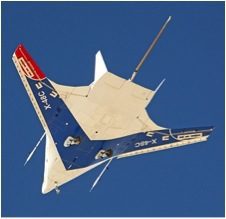
It seems like new, innovative technologies to reduce our carbon footprint are always 10 years away. It’s hard to imagine there won’t be another amazing technology just around the corner. In this case, NASA has developed a manufacturing method for wing-shaped aircraft. When combined with an uber-efficient jet engine called an “ultra-high bypass ratio engine”, this new design promises to cut fuel consumptions by half.
Scientists have long known the benefits of a wing-shaped aircraft compared to the conventional tube and wing design of virtually all existing aircrafts. The flying wing design hit mainstream awareness with the B2 Stealth Bomber although the patent for a “tailless plane” was filed in 1910 by Hugo Junkers.
The benefits of such a design are namely reduced structural material resulting in significantly lower overall aircraft weight, and more lift generated by more dramatic wing surface and curvature. The challenge of such a design thus far has been aircraft control during lower speeds. In addition, the flatter design has proven to be more challenging to support a pressurized cabin. Conventional tubular designs are easier to manufacture to support extreme temperature differences.
The scientific advancement by NASA is really in the manufacturing process, potentially opening the door to commercial manufacture in eight to ten years:
“NASA’s manufacturing process starts with preformed carbon composite rods. The rods are covered with carbon fiber fabric and stitched into place. Fabric is then stitched over foam strips to create cross members. The fabric is impregnated with an epoxy to create a rigid composite structure.” Tech Review.
In addition to strength and reduced weight, the carbon fiber stitching process appears to prevent more catastrophic events in flight. When pressured to the degree of breakage, the stitching prevented cracks from spreading. With recent failures in the most expensive aircraft ever built, the Boeing 787 “Dreamliner”, a safer design will be welcomed by consumers.
That being said, this new design is a result of a $300 million partnership between NASA, Pratt & Whitney and Boeing. Providing Boeing doesn’t convince the powers that be to include a lithium ion battery in the design, everything should work out.
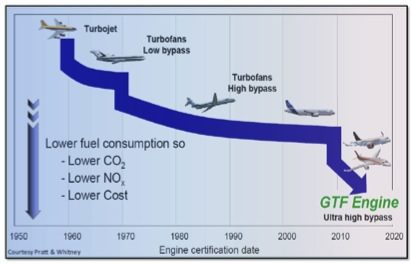
The new engine design (pdf), developed in 2010, will be used in the first commercial manufacturing process next year. It promises to dramatically reduce CO2, NOx emission and manufacture cost. If not in the entire flying wing package, the ultra-high bypass ratio engine promises to change transportation emissions significantly as it makes its way into the commercial airline fleet. More to come on this engine later.
globalwarmingisreal.com
24 Comments on "NASA Develops Aircraft that Uses 50 Percent Less Fuel"
BillT on Fri, 15th Feb 2013 3:28 am
The Us will have declared bankruptcy by 2022. This plane is likely to never be built. By then, China will not be loaning us money to build kill toys. Nor will the economy allow them to be built in quantity. Dream on techies.
DC on Fri, 15th Feb 2013 3:52 am
Who is this being built for again? The general public? or the US military? Not that the US needs expensive white elephant s(think F-35), but I dont see anything in here to suggest why anyone would really care. Jets are inherently in-efficent. Hey. I can think of a way to reduce fuel use by up to 100%!
Ground all the dreamliners and build electric trains instead! Or even better yet, another good way to reduce fuel use by 50% is end all airline subsidies. That would reduce fuel use by well over 50% I would think.
GregT on Fri, 15th Feb 2013 4:58 am
Even if BillT is completely wrong, (which he isn’t )and we could scrap every single jet aircraft on the planet tomorrow, and embrace this amazing new technology, it would only postpone the inevitable by a few months.
JJH on Fri, 15th Feb 2013 7:11 am
By the comments of BillT en GregT we should prep ourselves for doomsday!
I Believe in technology and remember every little bit helps us to learn and evolve to a more sustainable future.
GregT on Fri, 15th Feb 2013 7:37 am
JJH,
Technology is what got us here. Expecting the cause of our problems to be the solution to our problems, is quite foolish.
You can believe in technology, witchcraft, or fairytales. It really doesn’t matter. We are all bound to the laws of nature. If you truly wish to evolve to a sustainable future, then I would suggest reading up a bit on ecology.
Furthermore. If you are under 30, it would be very wise to start paying attention to what is going on around you. The issues leading to what you call “doomsday” are being discussed and addressed at all levels of government, worldwide.
mike on Fri, 15th Feb 2013 8:17 am
JJH the fact that you “believe” in technology should tell you something about your world outlook. Technology simply does not improve things, it changes them. Often people think for the better, but for everything we apparently gain we also lose. Look at cell phones, all the kids nowadays sit about talking to each other over messenger whilst in the same room together, lose themselves in virtual worlds and are mostly overweight and unfit. Facebook and twitter etc are making them grossly opinionated and self centered. Is this a positive step for mankind?
Arthur on Fri, 15th Feb 2013 10:22 am
“Technology is what got us here”
Yesterday I watched “once upon a time in America”, a movie from 1984 about the jewish maffia in NY, with Robert de Niro, with depressing pictures of dirt poor 1920 America. Compare that life with yours, no doubt with a car, warm homes, all sorts of entertaiment, computers, holidays to remote destinations, airco, etc, etc. You want to go back to 1920? Retorical question.
What got us here? Exactly, technology. Without it we would still be in these shabby 1920 conditions. Is our current mode of living sustainable? Of course not, the end of the oil age is in sight, no discussion about that.
Many here say: give up, the end is near, resistance is futile, even thinking about possible solutions is a sin, bordering to ‘greed’.lol my message to those: happy dying.
My approach would be to carry out a Great Audit of the magnificent repository of western civilization, including technology, accept the challenge that we need to rethink our industrial civilization from the ground up and come up with a plan for the future. One of the premisses needs to be that for decades to come we are going to witness an energy crunch. That means we need to save and ration energy. We need to understand that the biggest energy waster on a personal level is the car. So we need to have a very critical look at the car and push back its role. The car is mainly used to commute. That can be avoided by working from home. Instead of a bucket of benzine (‘gas’) for your car each day, you merely need a small wine glass to power a laptop and headset and webcam to achieve the same result, if you are an office worker, like most. If you have to drive to work, than exercise car sharing, not on a voluntary but obligatory bases, as a government measure. This measure could slash commuting fuel use by a factor of 4 to 5, which is enormous.
r nemo on Fri, 15th Feb 2013 11:24 am
America will not be bankrupt by 2022. All this peak oil nonsense came and went in 2005. Nothing happened. Why are humans so obsessed with apocalypse? Society is dynamic–nothing is static. Reality is ever changing. get used to it.
There is and will be no peak oil crisis…
BillT on Fri, 15th Feb 2013 11:37 am
Arthur, ancient cultures that disappeared left their writing in stone and baked clay where they could be read thousands of years later. Even the Romans left scrolls and other ‘books that are still being read. How do you read a computer disk when the tech is gone? Answer: you don’t.
So, did we advance or decline using tech? Look around. How many things are really an improvement over 1920? Cars are still cars, reciprocating engines blasting oil fumes a few thousand times a minute. Electric is basically made the same way carbon based fuels burned to turn a generator, and used the same way by turning that energy back into heat in most cases.
Yes, we have airplanes, but they would not exist without the governments of the world supporting them with blood taken from you and everyone else in the world because…they would be too expensive to use except by the wealthy.
No, tech was born and allowed to live because we had cheap, plentiful energy to wast on it. Now that cheap plentiful energy is gone and we will be cutting back on all but 1920’s necessities,if we are lucky, and 1820s if we are not.
Arthur on Fri, 15th Feb 2013 2:19 pm
Bill, the situation we are facing is unique. As far as I know never earlier was a civilization so threatened by resource depletion as abrupt as ours is. I do not care about the survival of the car or aviation, the hell with them. I have driven and flown too many miles in my life already to care about many more (is not to be interpreted as a death wish). But we are stuck with them for the moment, certainly the car. So a transition period is required.
mike on Fri, 15th Feb 2013 3:02 pm
So Arthur you base your entire argument on an 80s movie? A film designed from the get go to make the past look dirty and bleak. You are aware this is what all civilsations do, make the past look bad and the future look good. The 20s weren’t bad, they were just different, just like Roman or Stone age times are different. This whole better/worse thing is a false perception brought about by conditioning.
The rest of your post is a rehash of the Venus project, a communist Utopian vision that has about as much chance of working as me flying to uranus.
mike on Fri, 15th Feb 2013 3:05 pm
r nemo, peak oil isn’t the Mayan apocalypse you know. It was roughly calculated that peak oil would hit around 2006-2008. Remember that thing that happened in 2008 that no country has really recovered from properly? Oil prices have stayed high even though industrial output is collapsing. You have your head in the clouds son.
mike on Fri, 15th Feb 2013 3:25 pm
Also Arthur other civilizations have always faced resource depletion before they collapsed. It’s just the resource was fertile land. We replaced fertile land with stored sunlight inside fertilizer and pesticide etc. It’s not really that much different, it’s just we were stupid enough to make the system too complex rather than simplified. Where you see genius and human imagination I see stupidity and Human ego. Which one of us is right?
Bor on Fri, 15th Feb 2013 3:48 pm
The Peak of conventional oil is already here. The Tar Sand (Athabasca, Alberta) and the tight (such as N.Dakota) oil will prolong our denial phase for a while. The blame phase will come upon us in 2-3 years.
mike on Fri, 15th Feb 2013 5:15 pm
Bor is correct. It makes me wonder what the EROEI is for shale, something like 3/1 is it? I’d love to see some real research done into EROEI on renewables. Something tells me if you take everything into account (transport, metals, wages, upkeep etc.) they are probably a net energy loss. Which comically would mean the faster we move towards renewables the faster the economy goes downhill, just a theory mind.
DC on Fri, 15th Feb 2013 5:22 pm
Headline:NASA Develops Aircraft that Uses 50 Percent Less Fuel
Follow-up Headline
NASA Develops Aircraft that costs 400% more to build, flies 50% less due to heavy maintenance requirements
rollin on Fri, 15th Feb 2013 5:34 pm
NASA is doing what it was charged with doing, exploring and initiating the frontiers of aerospace technology. They have been very successful at what they do.
That aside, I think that the timeline should be accelerated and commercial planes like this should come out in five years. Currently a Boeing 747 gets 91 passenger-miles per gallon of fuel, if it has a full passenger load. To get planes near 200 passenger-miles per gallon would be a wise move. I don’t see why they can’t fly slower, that would make a big difference.
GregT on Fri, 15th Feb 2013 6:37 pm
Arthur,
People have lived happy, healthy, productive lives on this planet for tens of thousands of years without modern “technology” powered by oil. Focussing on the depression years of the 1920s doesn’t really make sense, because during the 20s much of our technology was already in development.
Are you even listening to what people here are saying? I don’t hear anyone saying “give up, the end is near, resistance is futile, even thinking about possible solutions is a sin”. I hear people saying that now would be a good time to prepare for a future without oil. Learn how to grow your own food, learn how to hunt, trap and fish. Move away from large population centres. Install a PV system on your house. Make sure that you have a reliable source of clean water. Get involved in a small close knit local community. Trade your fiat money in for tools that will allow you to be self sustainable. Have a plan for your defence, and practise it until it becomes second nature. Get into shape. Learn how to take care of yourself, because no one else is going to do it for you.
Your approach above is more or less the same approach that I would advocate. It is the same approach that many of the world’s great thinkers and scientists have been advocating for over 40 years. Do you see any evidence of action being taken by those in power? Or do you see a mass media frenzy promoting BAU, growth, and anything possible to save the economy?
I really do not understand why it is that you think that everyone will be sitting at home on a computer working. Working doing what? The food on your grocery store shelves does not just magically appear there. It will continue to become more and more expensive, until the system falls apart. Just like it has in many parts of the world already. When people are hungry they are not exactly civilized, and using history as an example, we kill each other. We have even been known to eat each other!
So if you think that you can change the world, and get everyone to ration fuel, give up their current ways of life and power down society, by all means, go for it. I personally do not believe that to be a fruitful use of my energy. That is why I choose to plan for a self sustainable future, that will hopefully take care of my family, friends, and myself.
Arthur on Fri, 15th Feb 2013 10:45 pm
Greg, all what you advocate is fine. But I am not convinced that the transition should inevitably be that drastic, that everybody should live like Thoreau and that cities have absolute no future.
Here are pictures from Amsterdam 1918:
http://www.youtube.com/watch?v=a09_wVSBkyw
Hardly cars, a lot of trams, many bicycles, hand carts… all in all a far lower energy footprint. Now we are able to put solar panels on the roof and have arrays of windturbines (20 MW in 2020) in the Northsea.
The car will be gone, but not the city.
GregT on Fri, 15th Feb 2013 11:52 pm
Arthur,
I would like to believe that the transition could be less drastic, but it is very obvious to me that we will not be able to feed this many people in a post oil society. Our food here mostly comes from thousands of miles away, and the farmland that once sustained a population one tenth of today’s, has been mostly developed into big box stores and townhouses.
The problems that we face where I live are insurmountable. Perhaps after a massive population reduction, the area may be sustainable, but as it stands today, it is not. Not without cheap, abundant, oil.
BillT on Sat, 16th Feb 2013 12:12 am
Arthur, cities may survive in some form. Possibly the centers for gangs who plunder the countryside until there is nothing left in walking distance to plunder. Or perhaps they will just be abandoned to Mother Nature who will reduce them to hills of rubble covered in vegetation and soil in 1,000 years. But, I do know that the days of cities as we know them, are numbered. They cannot even be maintained today, and certainly will be inoperable tomorrow. When the trucks stop rolling in every night full of food and supplies they will die. There are no surrounding farms and factories, like in the pre-oil days, to supply them with the things they need.
Just look at what one condo tower needs, in a days time, to operate and you will understand why I say that. Constant repairs and materials, energy to pump water, run elevators, lights, etc. and manpower that has to be supported with food, shelter, etc. No, cities are going to be a thing of the past soon.
Norm on Sat, 16th Feb 2013 9:16 am
disagree with the gloom about cities. people in a condo are more energy efficient. its very easy to keep their lights on. the people who are going to be hurting are the rural republican christians out on their 40 acre parcels, who need to burn up 3 gallons of gasoline everytime they need to buy some toilet paper. THATS whats not going to work out when energy gets scarce. People sitting in a condo tower will be doing much better.
Arthur on Sat, 16th Feb 2013 11:04 am
Bill, you may be right about the ‘diverse’ US megacities, but in the Amsterdam of 1918 of a few hundred thousand with typical three story buildings, there were no gangs, the city was well organized, without much fossil fuel. There was electricity, but that was only used for a few light bulbs as there were no tv’s, computers, airco’s, fridges, not even radios as the world’s first radio broadcast would take place one year later in neighbouring The Hague. In all homes there was a little stove fired by coal and the rest of the house was cold.
With modern technology we can have an indoor life with 10 watt led lighting, 40 watt fridge, 3 watt tablets for tv, internet, education, teleworking, communication, 25 watt thermo wired clothing (like an electric blanket), largely powered by the solar roof. Double glazing, no heating, no airco, no car. That’s feasible.
GregT on Sun, 17th Feb 2013 12:13 am
Norm,
You are joking, right?
Where do you think toilet paper comes from? It certainly does not grow in condos, and neither does food. They both come from 40 acre parcels of land.