
Peak Oil is You

Donate Bitcoins ;-) or Paypal :-)


Page added on June 9, 2016

IEA Sees Tighter Markets Next Decade
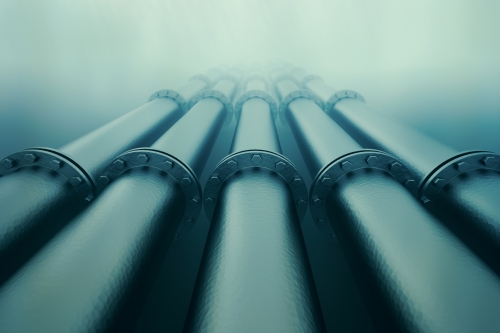
The International Energy Agency (IEA) sees the present length in the global gas market – as evidenced by spot prices lower than oil-indexed prices would be – continuing, with “heavy oversupply” until 2018. But upstream investments will remain low, setting the course for higher prices by the early to mid-2020s, its latest Medium-Term Market Report for gas says.
“We see massive quantities of LNG exports coming on line while, despite lower gas prices, demand continues to soften in traditional markets,” said IEA CEO Fatih Birol. These contradictory trends will both impact trade and keep spot gas prices under pressure.” He added that the combined factors of cheaper coal and continued strong renewables growth were blocking gas from expanding more rapidly in the power sector.
Net imports to Europe are projected to increase by roughly 40bn m³/yr over the next five years as demand growth, albeit very slow, and falling production push import requirements to record highs. Some of this will come as LNG, as Japan, China and Korea move from short to long positions; although Europe’s ability to absorb additional LNG is limited by cheap coal and increasingly competitive Russian supplies.
The report also dwells on how Russian gas will reach Europe, in particular the relative merits of Ukraine and Nord Stream. Ukraine now transits 63bn m³ – or 40% of total Russian pipeline exports to Europe (including Moldova).
Gazprom is determined to minimise flows through Ukraine – although the report says that flows have been very reliable for a few years, especially given all the problems the country has to deal with – and yet expanding Nord Stream is also problematic contractually and physically, not to mention politically. This last is an area the report steers clear of.
Gazprom is the major stakeholder of the project, with a 50% share, while the remaining stake is split among Engie, BASF, Shell, E.ON and OMV, who do not own any capacity but collect on transit fees. If this 55bn m³/yr expansion is realised, total transit capacity through Nord Stream would be 110bn m³/yr, more than enough to displace all gas transiting Ukraine to the EU.
But gas flows would need some reconfiguring. Gas today is contracted to delivery to Eni, Austrian Econgas and generally south/south-east companies at Baumgarten – the border point from Slovakia into Austria. But shifting the contractual delivery point for all that gas, as Gazprom has proposed, to the Nord Stream landfall at Greifswald instead would require complex capacity bookings between north Germany and Baumgarten, leading to price renegotiations, and more pipeline links having to be built, it says.
Given the above bottlenecks, even with an expansion of Nord Stream, it is likely that Turkey’s fast growing Istanbul region, Moldova and probably Hungary, Bulgaria, Greece, the Balkans and parts of Italy would still need to be supplied via Ukraine. This could amount to about 40-45bn m³/yr, about 25bn m³/yr less than was shipped through Ukraine in 2015.
It is also questionable if 110bn m³/yr supplied via one route would improve gas transportation security. Disruption of any serious kind to the Nord Stream pipeline system could affect up to 60% of Russian gas exports to Europe if the Yamal route, Nord Stream 1’s, precursor, is full. If Ukraine transit falls significantly, today’s large and flexible capacity is unlikely to be kept in working order.
For Ukraine, Russian gas transit is worth about $1.6bn/yr, used not only are used to cover the operational and investment costs of the system, but also help reduce Naftogaz’s deficit. Operating the Ukrainian gas transmission system effectively is significantly different depending on whether it handles 70bn m³/yr or 30bn m³/yr.
Gazprom’s success in launching Nord Stream 2 remains subject to resolution of a number of issues, the IEA says, including new supply terms with its European buyers such as outspoken opponent Eni; and how will Gazprom address the regulatory issues related to third-party access and the current limitations on the use of OPAL.
Prices and supply
Overall, global projected demand growth of around 140bn m³/yr is not enough to absorb the 190bn m³/yr of new liquefaction capacity projected to come on stream between 2015 and 2021 and the supply side will need to do its part to keep the market in balance, including low use of export facilities.
However by 2021, the report expects demand and supply to have returned more into alignment. For new projects in particular, this suggests that returns on investments will be low for some years.
Similarly, the sharp compression of price differential among regions reflects a tendency for prices to move towards (and in some cases below) marginal costs of transportation – a natural development in an oversupplied market with no region needing to attract extra cargoes. Slower demand and converging prices have resulted in a trading environment less conducive to growth in spot and short-term transactions. It is not surprising, therefore, that after a long period of growth, spot and short-term transactions as a share of total trade declined last year.
But while persistent oversupply and compressed regional spreads are set to remain a drag on the growth in spot trading, there are more sellers and buyers entering the LNG market, meaning a longer chain of potential transactions. And the more flexible contract model governing US exports will naturally trigger growth in short-term and spot trading. How lucrative those transactions are seems to be the key question rather than whether they will occur at all.
In aggregate, the three top Asian LNG importers are likely to see their imports-to-contract ratio moving from a short position of around 40bn m³/yr in 2011 to a long position of around 20bn m³/yr in 2017-18. Korea, Japan and China all tapped heavily into the spot market until last year, to meet robust demand growth. The outlook for 2015-18 is remarkably different, as all three countries will likely have to enter the spot market on the selling side. Sellers will therefore be forced to chase new markets and new buyers.
Potential customers previously shunned as too risky or too challenging to trade with, often due to their low credit-worthiness or their small volume requirements, are now attracting the attention of LNG sellers. Lower prices make purchases financially more accessible thus lowering counterparty risks while sellers who sit on long-unsold positions are happy to take on more risk.
Pressure to renegotiate contracts will intensify and the sellers look likely to lose. Petronet took only about 70% of its contracted 10bn m³/yr from Qatar over a period of time, falling below minimal contractual obligations. But anxious to retain business, last year Qatar waived $1bn of penalties and they rewrote the formula to bring contract prices more in line with the level of spot prices.
The IEA expects the trend to continue towards shorter contract duration, full destination flexibility and, particularly as oil prices start recovering, lower oil slopes.
9 Comments on "IEA Sees Tighter Markets Next Decade"
Apneaman on Thu, 9th Jun 2016 1:07 pm
The cancer industry never sleeps.
Whistleblower: EPA Officials Covered Up Toxic Fracking Emissions for Years
‘The cover-up has allowed the industry to dig in for years of delay in cutting emissions—at the worst possible time’
http://commondreams.org/news/2016/06/09/whistleblower-epa-officials-covered-toxic-fracking-emissions-years
yoshua on Thu, 9th Jun 2016 1:11 pm
Oil is dead. Oil producers all over the world (except for perhaps the big ones in the Middle East) seems to head for bankruptcy.
Gas seems to be the energy source that the world will cling on to next, to save at least parts of our civilization.
The transition will be interesting to follow. Politicos and the military will have geopolitical concerns to deal with, while the markets will have to make adjustments to the new energy environment.
I don’t even know if we have enough gas, or for how long it will last, or if a transition from oil to gas is even possible.
JuanP on Thu, 9th Jun 2016 2:23 pm
Russia exports more oil than Saudi Arabia!
https://www.rt.com/business/345957-russia-oil-major-exporter/
FNORD on Thu, 9th Jun 2016 2:45 pm
“IEA Sees Tighter Markets Next Decade”
I like it tight ;D
HARM on Thu, 9th Jun 2016 4:24 pm
“Next decade” = next century to most people. Average person, regardless of country, technology level, income bracket or education level, discounts probabilities that far off as essentially worthless. We are evolutionarily hard-wired for NOW. Oil is plentiful and (relatively) cheap right NOW. Ergo, trucks & SUVs are selling like hotcakes, and no one (outside of places like this) know anything about Peak Oil, other than the vague notion that it’s a discredited theory from tree-hugging doomers.
And then there is no guarantee the EIA’s assumptions or predictions are even correct. While most here pooh-pooh the odds of the fracking boom spreading from the U.S. to other countries –and thereby deferring the global peak by decades more– I do not. Because the rules that global finance lives by are NOT the same rules that you and live by.
“Money” is scarce and hard to make for YOU and ME. Supply and demand still matters for YOU and ME (and whatever still remains of the so-called “real” economy).
Money is NOT scarce and incredibly EASY to make for the global financial elite. Supply and demand and other quaint constraints do NOT apply to them, as we saw in the aftermath of the U.S. 2008 mortgage debt “crisis”, and more recently in China. THEY can conjure up unlimited Trillions in dollars, Yen, Yuan, Euros, etc. at the stroke of a key. They can monetize whatever bad debts/derivatives that need monetizing –as we have seen.
“Money” simply does not mean the same thing to the elite as it does to you and me. WE don’t have unlimited ability to create it, or unlimited ability to monetize (essentially cancel) our debts –but THEY DO. The old “rules” simply don’t apply to them. And this is why I believe that fracking can –and most probably will– spread to the rest of the world when maintaining BAU *requires* it to.
Kenz300 on Fri, 10th Jun 2016 4:29 am
With Wind and Solar you do not have to worry about future price increases………….
7 Charts Show How Renewables Broke Records Globally in 2015
http://ecowatch.com/2016/06/03/renewable-investment-broke-records/
Fossil Fuels Vs. Renewables
https://citizensclimatelobby.org/laser-talks/jobs-fossil-fuels-vs-renewables/
shortonoil on Fri, 10th Jun 2016 12:42 pm
World producers are now replacing less than 8% of the reserves that they are extracting. The average producer is now receiving 40% of their full life cycle production cost for the oil that they produce. There will probably be over 300 oil producers filing for bankruptcy in the US in 2016. Venezuela, the nation with the largest liquid hydrocarbon reserve in the world is now down to eating its dogs, and cats; Saudi Arabia the richest oil producer in the world is now borrowing money to pay its bills.
“other than the vague notion that it’s a discredited theory from tree-hugging doomers. “
Is that the same bunch that spends 28 hours a week watching TV?
Davy on Sat, 11th Jun 2016 7:02 am
“Former Fed President: “All My Very Rich Friends Are Hoarding Cash”
http://www.zerohedge.com/news/2016-06-10/former-fed-president-all-my-very-rich-friends-are-hoarding-cash
“Among his biggest concerns:”
“Government Debt: he is worried about the $19 trillion US government debt (up $11 trillion since 2008) because the Fed has fired all its monetary bullets and can’t expand the balance sheet any further.
China and social instability: he thinks communist leaders care about production but not efficiency. “They might produce more, but our products work,” jokes Fisher. There are entire cities in China with nobody living in them, according to him. Fisher says the biggest problem in China is social stability. “I’m deeply worried about their ability to maintain social stability,” but… “It doesn’t affect us directly.” Another risk in China is that millions of people are pulling their money out of the country.
Low interest rates don’t work: “We had a long period of moderation and low interet rares, which did nothing to adjust.” The online countries that adjusted were Poland and Mexico, according to Fisher.
The failed Brazilian experiment: Fisher said Brazil is a symbol of what’s wrong with emerging markets. They lived through the crisis but learned nothing from it.“Brazil has always been a country with potential, and it’s never been realized.”
Raising rates is long overdue: he made the point that raising interest rates won’t ruin the economy. “The debt rollover is what we should be worried about. Yet nobody is talking about it.”
It’s all one big Ponzi scheme: “Our government has to borrow money just to pay interest.” Or as Minsky would say, this is the Ponzi finance stage, just before everything goes to hell. “We have a lot of unsound policy in place. It is agreeable, but in my view, it is unsound.”
The death of the middle class: Fisher says the lowest income quartile has seen an increase in income. The highest quartile has also seen a massive increase in income. The two middle quartiles were flat over a period of many years. “This is why we have such support for people like Donald Trump and Bernie Sanders.”
A ritalin monetary policy: “We have what I call a Ritalin based monetary policy.” Now Janet Yellen’s job is to wean it. “It has to do with taking the distortions out of the financial markets and letting the markets down easier.” “These are the lowest interest rates in 239 years of history.”
But as Sagami points out, Fisher’s most telling comment came during the Q&A session when he was asked how his personal portfolio was positioned. Fisher’s response: “In the fetal position.” Moreover, he also said that “all my very rich friends are hoarding cash.”
Kenz300 on Mon, 13th Jun 2016 8:55 am
The world is in transition away from fossil fuels and to a safer, cleaner and sustainable future……….
7 Charts Show How Renewables Broke Records Globally in 2015
http://ecowatch.com/2016/06/03/renewable-investment-broke-records/
Dubai Utility DEWA Said to Plan 1,000 MW of Solar Power Plants
http://www.renewableenergyworld.com/articles/2016/06/dubai-utility-dewa-said-to-plan-1-000-mw-of-solar-power-plants.html
5 Huge Climate Success Stories 10 Years After the Release of Al Gore’s ‘An Inconvenient Truth’
http://ecowatch.com/2016/05/24/al-gore-inconvenient-truth/
Big Oil Could Have Cut CO2 Emissions In 1970s — But Did Nothing
http://www.huffingtonpost.com/entry/big-oil-emissions_us_573c9d81e4b0aee7b8e8a046