
Peak Oil is You
Donate Bitcoins ;-) or Paypal :-)


Page added on May 14, 2014

How much is too much?
I’ve been doing rather a lot of manual labour recently—digging out a basement, digging out a pond and using the spoil from both to build a foundation for the poly tunnel on a sloping field. As I’m sure most of you know, doing work such as this is a great way to ponder things over: the body is occupied so the mind is free to roam. As such there are often thoughts drifting through my head that I try to file away mentally under tz
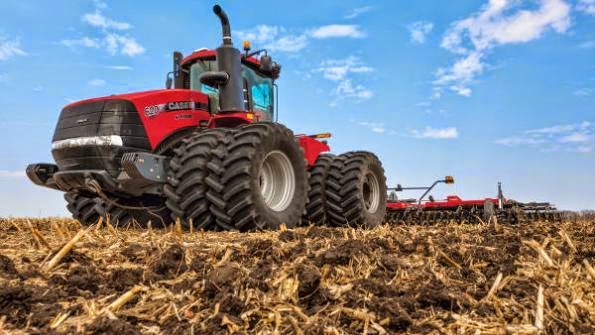
While I was doing this, in the next field over, a man turned up with a tractor. It wasn’t a quaint old-style tractor that you might see on a picture of an old farm—no, this was one of those giant modern ones that looks like an SUV on steroids. Indeed, it was so large that it was wider than the country lane leading to the field—which was only ever meant to be wide enough for two horses to pass—and I later saw that it had driven there with one wheel on the verge, leaving a trail of crushed wildflowers in the process. In a quarter of the time it took me to dig my little patch by hand, the tractor went over the entire 10 or so acres in the neighbouring field, turning and tilling the soil until it was a fine crumbly mixture, and then planting many thousands of potatoes in it.
Which got me thinking: how much energy is too much energy? From the perspective of the agribusiness that owns the land adjacent to mine, their method is obviously seen as the most efficient. After all, they no doubt have fleets of tractors, easy-flowing credit and lakes of pesticides to throw at the ‘problem’ of getting the land to yield a saleable commodity. My method, by contrast, is highly inefficient. For all the physical energy I put in, I’ll probably get back about the same amount in terms of calories—assuming the birds, rabbits and slugs don’t jump into the middle of my equation and eat my produce first. In energy return terms, my method probably comes in at 1:1 or slightly less (although it would be higher if I were planting potatoes or other starchy crops).
But that wouldn’t be taking into account all the other factors that, in my opinion, make the low-tech human-powered method the more sustainable. Here are some of the things that I count as benefits, but which would not show up on the balance sheet of the agribusiness ‘farming’ the next field:
– I am not disturbing the soil too much. More and more research is showing that deep ploughing by machinery is ruining the structure and the content of soil. It takes years—decades even—for soil to find a healthy balance, and by violently disturbing it every few months we destroy the immensely complex communities of organisms that make soil soil rather than dirt. [Taking this further, when my poly tunnel is up I’ll be experimenting with no-dig gardening, in which the soil is hardly disturbed at all.]
– I am not killing too many earth worms. Worms are our soily allies. They turn decaying matter into worm casts, which is highly enriching for soil and plants. There are inevitably a few casualties even when digging by hand, but this is nothing in comparison to the millions that must be sliced in half by the tractor blades next door. And no, cutting a worm in half does not make two worms – it makes two halves of a dead one.
– I am getting exercise. No need to join a gym when you spend the day digging!
– It costs me almost nothing (I already own the land, the tools and the seeds) – which is very helpful as I have recently lost the only means of paid employment I had and every penny counts.
– I am fostering a deeper sense of my place in this particular ecosystem. Instead of seeing the land as something I can bludgeon into submission with chemicals and machines, I get to see it as it really is: a community of organisms working together to create the whole. I am but one organism within that rich community, and by working slowly and deliberately my mind has time to adjust to this reality rather than be shielded from it.
– The food will nourish me and my family far more than the chemically-raised mono crop being grown in the field next to me. My food is grown from organic heritage seeds, will be eaten fresh and won’t be packaged. The distance it will travel before it is eaten will be negligible.
– I am being part of the human community in the area. By working the land and growing food and fuel I will be able to swap it with others, or even give them some if they need it. By contrast, the agribusiness does nothing but take. None of the local people even know who is driving the tractors, who owns the business or where the money goes to. It certainly doesn’t end up in the local area.
I’m sure we could all think of other benefits, but the point is that ‘efficiency’ is not the be-all-and-end-all when it comes to growing food. In essence, I managed to dig enough ground to grow some healthy and nutritious food for me and my family, and during the same time the man driving the tractor—probably earning minimum wage—earned enough to buy a few Big Macs (and the company he was working for probably earned a few thousand pounds to pay in dividends to shareholders or purchase some more distressed land from yet another broke farmer). I could summarise as:
Agribusiness: How many costs can we externalise so that the land earns the business maximum profits?
Me: How much money can the land save me, and how many other intangibles can it earn both for me and it?
In a nutshell, the agri-business is exploiting what remains of any integrity the land has at the expense of its longer term viability. By wrecking the soil structure, dousing it with chemicals and growing four crops per year (one crop of daffodils, two crops of potatoes and one crop of cabbages last year) the soil has been reduced to little more than a medium for absorbing chemicals and keeping plants upright in. What’s more, the field is being ploughed in the wrong direction, with the tractor driving up and down the contours rather than across them, meaning that every time there is a heavy burst of rain the local roads and streams are turned bright red with soil being washed away. This soon finds its way into the sea, and I saw a large bloom of red in the sea back in March as the soil was washed away.
But, in any case, why should the tractor driver care if the soil is washed away? He is probably a migrant worker and is being paid by the job, so the quicker he can get it done the better. He will move onto a new job in a different area the next day and there is no obvious reason for him to care about the damage being done to the land. He’s just doing his job, right? Who can we locals complain to about the soil that is being washed away if it is not ‘our’ soil and we don’t know which companies are responsible for this act of vandalism?
Yet all of this damage is possible because of cheap fossil fuels. Oil to turn into pesticides, gas to turn into fertiliser, oil to build and fuel the tractors, oil to transport and process the produce far and wide and oil to keep the economic model ticking over and provide a basis for leveraged debt-based growth to occur in order that giant agribusiness conglomerations can claim that this is the only efficient way of growing food.
So, the question remains, how much energy is too much energy and at what point does too much cheap energy begin to kill us?
10 Comments on "How much is too much?"
sunweb on Wed, 14th May 2014 8:00 am
I would add not just energy but all other resources such as iron, aluminum, copper, rare metals.
When I lived for ten years without electricity (by choice), I had an old farm pump in a small room off the main room and a retaining tank in the ceiling. When friends came to visit, I would tell them to use all the water they wanted, they simply had to pump it. It was amazing how quickly people learned to conserve.
I have suggested for years a work shop where people were given a listing of the electrical use of various appliances – pumps, hair dryers, washing machines, etc. – and a limited amount of watts they could use a week. They could choose any thing they wanted but once their limit was used they had to wait.
When after ten years, I got some solar panels and was still off grid, I had to watch the weather to know when I could say vacuum clean or even use my computer on the small inverter.
As an aside, I have radically changed my mind about so-called “renewables”
http://sunweber.blogspot.com/2011/12/thruanotherlens.html
and http://sunweber.blogspot.com/2014/03/reality-again.html
paulo1 on Wed, 14th May 2014 8:30 am
And to think they have ‘robot tractors’ that plow by gps.
This year I put in 180 hills of potaoes for our family, with minimal tilling. We have a huge kitchen garden and a couple of greenhouse. We have a decent sized fruit orchard. We use no pesticides or hebicides. Our apples might have some black spots, but they still taste the same. The remaining land is a supply of wood heat for us for as long as we live here. It is the way to go, but it is not intensive enough to support anyone else beyond family.
When the tractors stop working many people will starve, it is that simple.
Paulo
diemos on Wed, 14th May 2014 8:45 am
Including you Paulo, when the starving hordes overrun your farm.
Respect for property rights goes out the window when people are starving.
Makati1 on Wed, 14th May 2014 8:58 am
I would suspect that a farm at least 30 miles from any large town or city would be safe from mobs. They will never get that far. First, they will stay in the city until it is impossible, by which time there will be little left in the suburbs to live on as that too will all be consumed. Many farms are much more than 30 miles away. A healthy person may walk 30 miles in a day, with good weather, but not if they have to scrounge for food and water along the way. Planning a totally safe situation is probably not possible, but distance and natural barriers like mountains and rivers will increase your odds. Or so it seems to me.
GregT on Wed, 14th May 2014 7:47 pm
diemos,
I have a very good idea as to where Paulo lives. He won’t need to worry about the starving hordes. They would never make it that far, nor would they even bother to try.
Yeti on Wed, 14th May 2014 8:02 pm
Paulo, is firearms training a part of your prepping? And by that, I don’t mean how to form your own end of the world militia, but rather the basics of safe firearm handling and how to properly use a rifle when your target is a few hundred yards out?
A handful of people with scoped .308’s that know how to use them will deter pretty much anything but a trained coordinated assault on you and yours.
Davy, Hermann, MO on Wed, 14th May 2014 8:34 pm
Yeti, I have firearms and ammo. I grew up with them. I know how to use them well. I am no gun freak like many in the US but they are a part of my prep. They are also can be used to hunt. I recommend 308 rifle, 45 handgun, and 12 gauge shotgun. A 308 is good long range and it will stop a car engine. 308 is a great deer hunting round. A 45 handgun is a great in close personal protection. 12 gauge is great in close protection and excellent for hunting. If you get in a situation you should never show your gun unless you plan on using it IMHO. If you use it make it count. The best thing to do is to hope you don’t need it. Guns are scary and serious business. Mine are locked up but locked up in such a way as I can get to them relatively quick.
meld on Thu, 15th May 2014 7:37 am
He’s digging? what fucking time era is this guy from, nobody who has read a book in the last decade still digs the soil. This really angers me, wankers who dig and then moan about it. STOP DOING IT! you are destroying the soil structure and your own back FOR NO REASON AT ALL!. Another thing that annoys me? people who “compost” or you know you could just chuck the plant matter straight back on the soil and let the worms do it 10 times more efficiently. I’ve never even broken a sweat growing food on my allotment, the hardest part is layering newspaper on the ground.
Northwest Resident on Thu, 15th May 2014 9:36 am
Davy — You should add a pocket .357 snub nose to that list. Light, easy to carry, and a great “in your face” method of last resort conflict resolution. Also — a .45 is awesome — but 9mm with the proper rounds isn’t bad either. IMO.
Davey on Thu, 15th May 2014 10:10 am
Good choices NR definitely.