
Peak Oil is You

Donate Bitcoins ;-) or Paypal :-)


Page added on November 12, 2015

Get ready for car-as-a-service (CaaS)
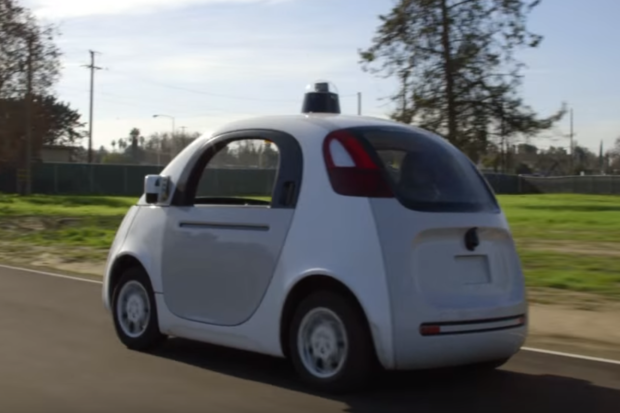
Self-driving cars are expected to take over the roadways in the next two decades, but the vast majority of the fleet will likely be dedicated to services and not owned by individuals, according to a new report by IHS Automotive.
Within five years, Google and carmakers are expected to have driverless vehicles on the world’s roadways. By 2035, 12 million self-driving and driverless cars will be sold globally, IHS Automotive estimates.
However, given that 85% of the world’s population doesn’t have a driver’s license and teenagers in developed countries are waiting longer to get a license — and driving less when they do — the majority of autonomous vehicles will likely be used by a services industry.
Car-as-a-service (CaaS) opportunities are becoming a new driving force for urban transportation, according to IHS Automotive. Essentially an extension of ride-sharing using driverless vehicles, CaaS will enable people to summon a car via an app or to be used for deliveries.
IHS estimates that the deployment of driverless CaaS will begin before 2025 and will have an increasing impact as technology advances and driverless car volumes grow. In addition, autonomous driving and the associated costs will dramatically lower the cost of mobility services as a whole.
CaaS also will provide car mobility services for anyone, since no driver’s license is needed. And it will be an affordable transportation means for a large portion of the global population. IHS Automotive estimates there are currently 6.2 billion people globally without a driver’s license, or nearly 85% of the world’s population.
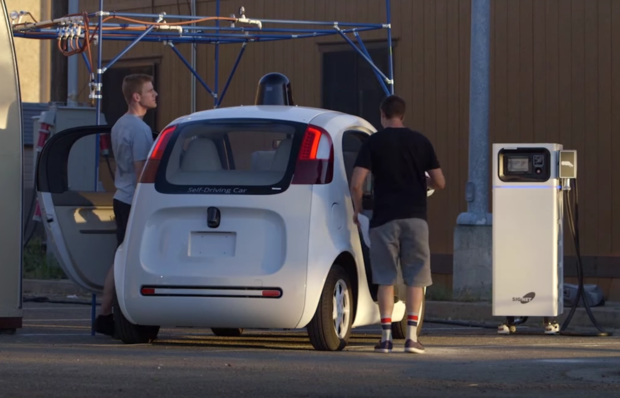
While the majority of today’s car manufacturers are taking an evolutionary approach to autonomous vehicle research and development, increasingly adding advanced drivers assistance systems (ADAS) and partial self-driving features, Google is taking a revolutionary approach — building a fully autonomous vehicle from the ground up.
Google’s autonomous car, which is already being tested on U.S. roadways, will have a major impact in the coming years, according to Egil Juliussen, senior director at IHS Automotive Technology. Uber is also beginning to implement some of its own R&D in CaaS.
 Google
Software will be a key differentiator in autonomous vehicles, as it’s responsible for interpreting the information from a vehicle’s sensors and can learn to mimic the driving skills and experiences of the very best drivers.
Google is the current technology leader in this arena, according to IHS Automotive. The company has invested nearly $60 million so far in autonomous vehicle research and development, which works out to about $30 million per year.
Unlike traditional vehicle manufacturers, Google can leverage related technologies and information from its other projects and investments, IHS said. Google has been involved in robotics, drones and similar technologies that help in driving, including neural networks, artificial intelligence (A.I.), machine learning and machine vision.
Those additional R&D areas have provided Google researchers with expertise not available directly to traditional carmakers, IHS said. “No other company has as much relevant technology to advance autonomous driving software,” said Juliussen, who authored the IHS repor.

IHS Automovie
Toyota’s recent announcement of a $1 billion, five-year investment in A.I., driverless cars and robotics is likely partly due to Google’s rapid technology advances.
Google’s self-driving car software is already performing better than nearly all drivers in the vast majority of traditional driving situations — at least in good weather, according to IHS analysis.
Google’s strategy is to provide the technology infrastructure, maps and software to make CaaS happen sometime after 2020.
Still lacking, however, in Google’s autonomous vehicle software is the ability to predict and react to “once in a million” events — such as performing under diverse weather conditions, unique road work, specific traffic situations and other non-traditional driving situations.
Driverless vehicles will also blow open the market for electric vehicles (EV), as driverless car mobility services will mostly happen in urban areas and will primarily be short trips; those characteristics favor EVs as the powertrain for driverless cars; they can easily re-charge themselves using existing and growing public charging networks as needed between trips, which eliminates any range anxiety.
IHS Automotive forecasts that global EV charging stations will grow from 650,000 in 2015 to more than seven million in 2021 (excluding home charging outlets).
Mega-cities and other large urban areas also will prefer low emissions and as a result, should be keen to implement fleets of driverless EVs in their communities.
IHS Automotive forecasts that the global production of battery EVs will grow from 273,000 in 2015 to 1.3 million in 2022. And global production of plug-in hybrid EVs is projected to grow from 179,000 in 2015 to over 2.4 million in 2022.
Driverless car fleets for CaaS are likely to greatly increase the sales of EVs after 2025.
18 Comments on "Get ready for car-as-a-service (CaaS)"
makati1 on Thu, 12th Nov 2015 7:21 pm
More techie dreams…
A 16 wheeler crosses into it’s lane in front of it. SPLAT!
Davy on Thu, 12th Nov 2015 7:58 pm
More stupid useless and distracting tech. Techies suck is all I can think about when I read such and article. The last thing we need is more car distractions. What we need is less cars. What we need is innovative ways for people to drive less and remain local. Instead asshole techies are dreaming up ways to make it worse. Just wait until fuel shortages start. I know we are in a oil glut but how many realize it is a demand destruction glut that will cripple supply. What the hell are techies going to do when gas stations are dry and the grid flickers? Sounds like a techie horror story
ennui2 on Thu, 12th Nov 2015 8:39 pm
Grumpy cat doomers strike again with their fist-shaking at progress.
Davy on Thu, 12th Nov 2015 9:32 pm
Fist shaking at progress or slow suicide. I think it is more than clear today’s progress is regression. We are going in reverse thinking we are going forward. It is the paradox of modern life that is hard for the deluded to understand.
apneaman on Thu, 12th Nov 2015 9:50 pm
ennui2, progress towards what?
keith on Thu, 12th Nov 2015 11:01 pm
This is part of the new sharing economy. Car-sharing, job-sharing, house-sharing, etc.
simonr on Fri, 13th Nov 2015 3:54 am
Ok, assuming it all works.
If the car detects a situation where it cannot avoid an incident which will cause casualties, exactly who is getting sued ?
pinkdotR on Fri, 13th Nov 2015 4:34 am
This is not a solution for current and coming transportation/energy challenges. Car pooling is far more efficient than CaaS. It will only increase the efficiency of vehicles use – they will spend more time in motion than being parked. It will not reduce energy use but increase it – even more people will be using cars for they travels. It will not reduce but increase traffic being already to high in urban areas which is bad for air quality, safety and noise level. It will require even more waste of ground for roads.
Real solutions are:
– reducing transportation needs (both people and goods transportation)
– increasing use of our own muscles (walking and cycling) for short distance travels
– increasing use of public/mass transport means for long distance travels
Davy on Fri, 13th Nov 2015 6:22 am
We definitely should be reducing transport but more importantly the systematic use of transport. What good is reducing discretionary transport if we are still overly reliant on transport for food and essentials? Sure it makes a difference in sustainability and resilience but the real key is the systematic reduction in transport needs. This means localization especially with food.
Using animal and human muscle power is a no brainer. We should be promoting this somehow at a minimum by not discouraging it. Try using a horse and buggy on a New York Street and you will be in trouble unless you have a special permit for limited use. Bike riding and walking should come back in a big way. Just look at old documentaries on China pre-Deng society. Bikes were everywhere. I admire China from that time both urban and rural. Today China is a monster cancer of the worst of east and west.
Carpooling is a must. I often shoot down the greens and anti-Americans that whine about American rolling stock configuration. What they don’t understand is an American large pickup can transport multiple people. They are built tough and will manage under serviced roads. They are surprisingly efficient if you have 15 people in the back.
The really green thing to do is drive less and collapse in place into localism. You can make a difference individually by orientating your life to driving less. Leave a job that requires long commutes. Stop activities that require driving long distances. Get out of the car culture mentality where you buy your persona with a car. I absolutely hate car commercials that project an image through car ownership.
Mass transit is important but it is nowhere near enough to make a dent in replacing car and truck use. Europe is an exception in some places but even there they are far too reliant on truck transport for essentials. We very much should see the return of slow simple rail as one of the most efficient uses for longer range transport. The US has one of the best freight rail systems in the world and overall one of the worst passenger rail systems. This should be balanced towards more efficient passenger rail. We do not need Focking high speed rail period. Fock techies and their asshole dreams. There is nothing on the drawing board for slow simple rail. We should resurrect use of water transport especially with sail.
There are many things we should do but if we don’t get after it we will never manage to scale then in time and quantity to make a difference. Nonetheless you can personally make a difference for you. I would start there and forget about the rest of the world.
rockman on Fri, 13th Nov 2015 6:42 am
“Self-driving cars are expected to take over the roadways in the next two decades.” We already have millions of transport vehicle folks neither own or drive themselves: they’re called taxi cabs (Uber or otherwise). And that’s not counting public buses and trains. The problem has already been solved. LOL
Lawfish1964 on Fri, 13th Nov 2015 7:19 am
More useless corn-porn.
Kenz300 on Fri, 13th Nov 2015 9:39 am
Electric vehicles are the future…….safe, clean, fast and fun……. no emissions……..
twocats on Fri, 13th Nov 2015 10:13 am
Well, if cities could begin eliminating human driven cars from certain sections of cities (Portland is already playing around with this) and all that bikers had to worry about were these relatively predictable robot cars and easily seen mass transit vehicles, biking in major cities could go from becoming an adrenaline filled death race to an actual practical means of transportation.
Another aspect being that driving is increasingly becoming PRIMARILY about status, not about transportation. People might even find public transportation more convenient at times, but they’ll be damned if they are going to shell out $30 – $120k for a vehicle and then not parade it around town. In SF-Bay and Seattle (where these things are primarily targeted), every third car is worth more than $50k, often being driven by a teenager.
simonr on Fri, 13th Nov 2015 11:31 am
If I walk down the middle of the road, will a machine have the right to run me over ….. just asking
if not, will it call the cops.
if so, I presume the offence of ‘jaywalking’ will suddenly be punished disproportionately
rockman on Fri, 13th Nov 2015 12:27 pm
Simon – Actually in Texas we have the right to run over jaywalkers. But there is a limit of only 2 per season. It’s a conservation thing.
simonr on Fri, 13th Nov 2015 12:29 pm
That sounds reasonable Rockman, as long as its in hunting season.
apneaman on Fri, 13th Nov 2015 5:23 pm
Police pull over self-driving Google car for doing 25mph in a 35mph zone
http://arstechnica.co.uk/tech-policy/2015/11/google-self-driving-car-pulled-over-for-not-going-fast-enough/
Kenz300 on Mon, 16th Nov 2015 9:17 am
Electric vehicles, bicycles and mass transit are the future…….
How The Decline Of Cars Is Changing Cities For The Better
http://www.huffingtonpost.com/entry/car-decline-cities_561f34dae4b0c5a1ce620dd9