
Peak Oil is You
Donate Bitcoins ;-) or Paypal :-)


Page added on April 21, 2018

Dreaming of A New Sustainable Economy
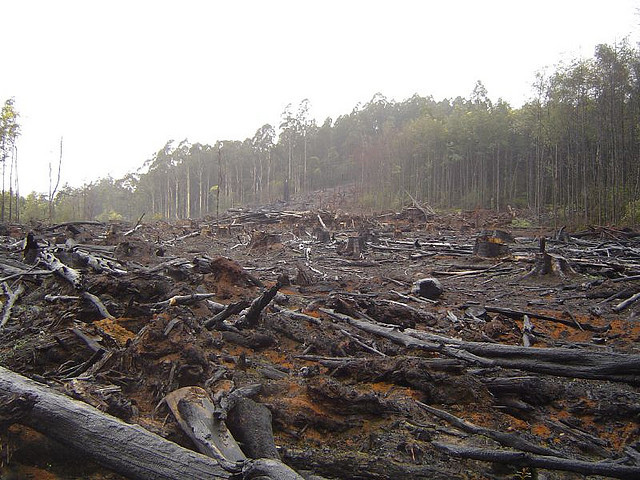
Officials from around the world came together to create and support a vision for a new, sustainable economy: a bioeconomy.
Almost 1000 bioeconomy experts, from former heads of state to civil society leaders, convened in Berlin for the second Global BIoeconomy Summit to discuss best practices and challenges.
Already, over 50 countries have begun to pursue bioeconomy policies in their own ways.
But what exactly is bioeconomy?
Though there is no single definition for the relatively new term, bioeconomy refers to the use of renewable biological resources instead of fossil-based sources for sustainable industrial and energy production. It encompasses various economic activities from agriculture to the pharmaceutical sector.
“How will we feed a growing world population? How will we supply the world with energy and raw materials? How do we react to climate change? The bioeconomy can help us to master these challenges,” said German Federal Minister of Education and Research Anja Karliczek in her opening address.
“We must use renewable resources, biological knowledge and biotechnological processes to establish a biobased – and above all sustainable – economy,” she continued.
The Globa Bioeconomy Summit provides a forum to discuss such issues and to work towards protecting the ecosystem and developing an economy based on renewability and carbon-neutrality.
Among the speakers and participants at the conference is Global Green Growth Institute’s (GGGI) Director-General Frank Rijsberman.
“We are facing a huge crisis on climate…people might not be as aware that agriculture and forestry— key parts of the bioeconomy—are in fact major drivers of planetary ill health,” he told IPS.
“Our food production system is really not sustainable,” Rijsberman continued.
The world population is expected to grow to over 9 billion by 2050, according to the Food and Agriculture Organization (FAO).
Feeding such a population means that food production will need to increase by approximately 70 percent. Production in developing countries alone would need to almost double.
However, agriculture, particularly the expansion of agriculture, significantly contributes to increased deforestation, water scarcity, soil depletion, and greenhouse gas emissions.
In South America, soybean farming has been a major driver of deforestation across the region including in the Amazon rainforest.
Soy is often used to feed livestock, and as global demand for meat and other soy products have grown, so has deforestation in order to expand soybean production.
According to Greenpeace, almost 70,000 square kilometers of the Amazon rainforest was destroyed between 2003-2006 in Brazil alone largely for soybean production. The amount of land lost is larger than the size of Ireland.
Though Brazil recently enacted laws to curb deforestation and disincentivize soybean farming in such areas, concerns still remain across the region.
Rijsberman pointed to Colombia as an example where the government and a rebel group signed a historic peace agreement after a 50-year long conflict.
“Now that there is a peace accord, which is obviously a good thing, the fear is that the part of the country that has not been accessible will suddenly be developed and that like in Brazil, trees will be cut and the cattle ranchers and soybean farmers will destroy the forest,” he told IPS.
Soon after the demobilization of the Revolutionary Armed Forces of Colombia (FARC), deforestation in the country’s rainforests rose by 44 percent from 2015 to 2016.
Much of the land that was once controlled by FARC has been opened up and lost to illegal logging, mining, cattle ranching, and palm oil production.
GGGI has been working with the Colombian government to come up with alternative ways of developing and using their forests.
“We are trying to support the Colombian government…to get high-value products produced by the forests itself, to have sustainable livelihoods and green jobs…alternatives to cutting the forest down for agriculture,” Rijsberman said.
Other countries have also chipped in, including Norway which has donated $3.5 million over two years to the South American nation to curb deforestation through the adoption of sustainable farming methods and eco-tourism projects.
While bioeconomy can help countries become more green, not all bioeconomy is sustainable, Rijsberman said.
For instance, biofuels, which are made from food crops, have been seen as low-carbon substitutes for liquid fossil fuels to power transportation.
In the United States, 96 percent of ethanol was derived from corn in 2011. Brazil uses sugar cane in order to produce ethanol. Both countries produced 85 percent of the world’s ethanol in 2016.
However, research has shown that the demand for such biofuels leads to the destruction of forests, higher food prices, and increased greenhouse gas emissions.
In fact, accounting for all factors in production such as land use change, biofuels from palm oil and soybean cause carbon emissions comparable to that of oil from tar sands.
Though research is already underway on new biotechnologies such as deriving clean biofuels from algae, a lot more work is needed to get government policies right, Rijsberman said.
“We need to work together on this issue. We need to find ways to share experiences between countries. That is what this summit helps do—it helps bring people together that share progress in technologies and policies that have worked in different places,” he told IPS.
Karliczek echoed similar sentiments in her opening remarks during the Global Bioeconomy Summit, stating: “We must make use of regional strengths and unite them on the global level because the shift to a sustainable bioeconomy is a global task.”
This involves the inclusion of indigenous communities who are most impacted by harmful environmental policies and are often the frontline defenders of natural resources.
However, they are often marginalized and even killed for their work.
In 2017, 67 percent of activists killed were defending land, environmental and indigenous peoples’ rights in the face of extractive industries and agribusinesses.
Rijsberman also highlighted the need for investments in research and policies as well as technology transfer to countries such as Colombia in order to transform the world’s agriculture and food system into one that is sustainable.
20 Comments on "Dreaming of A New Sustainable Economy"
Go Speed Racer on Sat, 21st Apr 2018 6:53 pm
A bio-economy? Bring it on!
The dogshit in my backyard,
will be worth a fortune.
Cause it’s fertilizer.
I’ll be rich.
Jeff on Sun, 22nd Apr 2018 2:05 am
Bioeconomy is like throwing water out of the Titanic with a tea spoon.
anon on Sun, 22nd Apr 2018 4:05 am
There is no way to keep all the fancy toys of the industrial age without abundant cheap oil.
There is a realistic bio-economy if they want to cal lit that, which is well known under other names. Most people these days would call it ‘the middle ages’. The iphone and tablet generation can’t comprehend that though, and thus keeps dreaming up fantasies of ‘bio economy’ nonsense so they can imagine having their cake and eating it too.
Sissyfuss on Sun, 22nd Apr 2018 8:53 am
A sustainable economy relates to a sustainable environment which would consist of half a million hunter gatherers living in caves. Been there and heading back there soon.
Antius on Sun, 22nd Apr 2018 10:19 am
Reposted from previous thread.
With electricity you can do almost everything, including turning it into H2 or NH3 for storage purposes and combust it in a retrofitted fossil fuel power station.
Even the competent specialist and trained scientist Antius admitted a few days ago that a renewable energy base is possible in principle, but he is still pessimistic about the cost aspect.
I trust that one of the best renewable energy research institutes in the world, the Fraunhofer Institute, did its home work when they calculated that a renewable energy base will come at about the same per kWh cost as a fossil fuel based system. Extra cost for storage and renewable energy infrastructure is offset by absence of fuel cost.”
Thank you for the compliment, but I doubt very much that I am any better trained than a lot of other people here. There is too much to say here for one post, but I will start with the Fraunhofer report. It would take a small book to go through this topic adequately.
It has been several months since I read the study produced by the Fraunhofer institute. Whilst I cannot dissect their analysis in much detail, one thing I did notice was that they anticipated that total energy consumption will be substantially lower in 2050, thanks to rapid improvements in energy efficiency and conversion of end uses to a mostly electric power supply. Assuming that the German economy continues to grow at say 1.5% per year, then by 2050, its economy will be 60% larger than it is now. Yet to meet these requirements, the Fraunhofer institute assumes that it will need substantially less energy than today. What they were evaluating was not the cost of energy per kWh; it was the cost of energy services. If energy can be used more efficiently, then even more expensive energy can prove the same energy service at the same cost.
To a limited extent, this can be done. We have witnessed some successes in limited areas in recent years, such as more efficient lightbulbs for example. Living in collective accommodation, i.e. shared houses or blocks of flats will tend to reduce the energy needed to live at a tolerable standard. Increasing economy of scale has tended to improve energy efficiency historically, but there are clear limits to how far this can be taken without creating other problems. Many of the big improvements in energy efficiency have tended to come from switching to more efficient fuels, i.e. from coal to oil, from oil to natural gas and electricity. Another problem is that much of the reduction in energy intensity that western economies have witnessed in recent years, has come from outsourcing energy intensive industry to less developed countries – i.e. China, India, Vietnam, Korea, Philippines, etc. Because a large part of the wealth is repatriated, but the energy intensive manufacturing takes place elsewhere, this gives the impression of lower energy intensity in the developed nation. In reality, it is just shifting the problem elsewhere. We have also witnessed a gradual increase in inequality in western nations. This tends to reduce energy intensity of GDP, as a greater percentage of income of wealthy people tends to be reinvested in new infrastructure, rather than consumption. Growing inequality may actually reflect the fact that as time goes on, a progressively greater proportion of new wealth must be reinvested to keep the system going, rather than paid out as wages which are generally used for consumption. Redistributive taxes could in fact be worsening some problems in this way.
In countries where there is much less outsourcing and where people are generally poor, there is a much closer fit between GDP and total energy consumption:
http://euanmearns.com/egypt-energy-population-and-economy/
For the world as a whole, GDP is quite a good linear function of energy consumption:
https://gailtheactuary.files.wordpress.com/2015/04/world-gdp-compared-to-energy-consumption.png
This would seem to suggest that in a society in which globalisation is reversing and where inequality is hitting limits, improvements in energy efficiency will be much slower and more incremental than recent reductions in energy intensity have led us to believe. To live well on ambient energy will require changes to the way we live.
Shifting to a new source of energy both enables and in many cases demands large changes in the way that we live. Shifting from biomass to coal in the 19th century, allowed a much greater abundance of energy per capita and greater wealth in material goods. But it required more centralised and industrialised way of living, both to extract and exploit the energy. Oil allowed for much more distributed ways of living, because it brought cheap, fast and personalised transport to the masses. Natural gas brought cheap grid electricity and cheap heat, whilst at the same time oil allowed personalised mass transit.
We are now trying to adapt to other (ambient) energy sources that will produce mostly intermittent grid electricity at a cost that is higher than oil, coal and natural gas during the heyday. We need to do this efficiently with the lowest cost per unit-GDP, which means the way that we use the energy must adapt to its characteristics. It would be unrealistic to expect that we can seamlessly adapt to these new energy sources with the same living arrangements and same levels of affluence that we had during the era of abundant fossil fuels. More later.
“A kWh is a kWh.
With electricity you can do almost everything, including turning it into H2 or NH3 for storage purposes and combust it in a retrofitted fossil fuel power station.”
This is actually a very inefficient way of using an expensive energy source. It means getting 1 unit of electricity back for about 5 units that you put in. And the equipment needed to do this is complex, has its own embodied energy and capital cost. I have shown in the past that attempting to store energy in any type of electricity-electricity loop, at least triples the final cost of power and wastes at least half of the original energy. In this case it will be more, because of the inefficiencies involved. Except for a few niche applications, this sort of thing will never make sense.
Storage will be needed, but the embodied energy and cost of the equipment involved needs to be as low as possible, whereas to avoid loss of exergy, the number of energy transitions needs to be minimised. Hence, we can store excess wind power in hot and cold. But we will use the heat as heat, i.e. hot water storage for domestic and industrial use; high-temperature heat stored in hot rock for cooking and industrial use; cold storage for refrigeration and freezing. If we do make ammonia using intermittent power, it will be because we want ammonia as an end use product, i.e. a fertiliser or chemical feedstock. If we produce hydrogen, it will be used to reduce metal ores or provide feedstock for some other end-use chemical product. It will rarely be acceptable to burn something so expensive as a back-up power source.
We can use back-up power sources to a limited extent. We can use a reduced level of fossil fuels, biomass and stored heat to provide back-up power without attempting to use electricity as the original input for energy storage. But generally, living on renewable energy will require using it when it is there and curtailing its use when it is not. Applications that require continuous power or power available at will; need to be cut back and made as energy efficient as possible.
When we accept these limitations, it gives us a better idea of what a renewable energy economy will look like:
1. Keeping warm in winter will mean living close to a source of stored heat. This only works well at a large scale, because heat losses from stored heat decline with increasing volume, so we will need to live more collectively. That means blocks of flats with thermal stores built into them, or lots of terrace houses closely clustered around a thermal store. It may mean communal shower and bathing areas.
2. High temperature stored heat is even more scale dependant, since thermal gradients are greater. Expect communal cooking and multiple users to cluster around a single large heat store.
3. Food storage will take place in large freezer units. The more intermittent the power, the more thermal inertia these will need and hence the larger and more communal they need to be. Also, bigger means more efficient, since heat losses per unit volume decrease with size and heat engine efficiency also increases with scale. Expect food storage to be communal as well as food cooking.
4. Transport will focus on direct electric power (trains, trolley buses, trams) and stored energy. It will be relatively expensive and will focus more on moving goods than people. It will be better suited to moving people and goods between nodes, rather than discrete points. This is because transport needs to be dependable and available at all times. To be affordable in a renewable energy economy, it will need to be collective. Rail and water-based transport will be the best options. Road based transport will be relatively expensive. Few people will have access to cars for day to day travel. They will need to walk or bike to work, or maybe get the train.
5. Power supply is intermittent. Sometimes there will be long periods where it is available for performing energy intensive tasks. Other times, those processes will be cut back. Working patterns may be less predictable than they are now and people will need to respond more quickly. You may find yourself working 20 hour shifts for a couple of weeks and then have long lull periods, where you are either off work or maintaining equipment. You will need to live quite close to work to respond to changes to energy availability. Holiday arrangements will be different.
The use of intermittent renewable energy as our main energy source will ultimately affect our culture. It will be more focused on the local with more of a village culture. Tribal affiliations will be more important, since people will generally interact with the same local group a lot more. Long-term planning and collective action will be needed. Expect communities to be conservative, suspicious of outsiders and more rooted in their ways. Maybe this is exactly what we need. But the point is, that way of living, culture and social attitudes will be very different in a society adapted to intermittent energy.
Antius on Sun, 22nd Apr 2018 10:35 am
Some plus sides of developing an economy adapted to intermittent energy.
You don’t need a grid as such, as you can install a wind turbine and solar panels anywhere. If you can accept intermittent power and live accordingly, you don’t need much backup either. So in principle, power could be cheap and living standards (in terms of material goods) may be good. But living this way requires adapting in ways that make life less flexible.
Boat on Sun, 22nd Apr 2018 10:47 am
Antius
Or adjust policies to embrace lower populations. Packing more people into smaller spaces just so more people can be accommodated would not be my answer to intermittent energy.
Cloggie on Mon, 23rd Apr 2018 2:28 am
Bloomberg pays US contribution ($4.5m=peanuts) to Paris accords from his own pockets (or forked over from his buddies at the Fed?)
http://www.spiegel.de/politik/deutschland/nachrichten-am-morgen-die-news-in-echtzeit-a-1203707.html
This is one of the very few occasions I’m with Bloomberg and not with Trump.
Antius on Mon, 23rd Apr 2018 2:40 am
“Or adjust policies to embrace lower populations. Packing more people into smaller spaces just so more people can be accommodated would not be my answer to intermittent energy.”
Maybe not a desirable way of living from what we are accustomed to. But we are stuck with the populations that we have and need to find solutions that work for them. The most energy efficient solutions are the best, because they will allow a higher level of material affluence in a world where energy supply is constrained by what nature can provide. And social approaches that allow the sharing of resources are part of this.
There are side benefits.
Cloggie on Mon, 23rd Apr 2018 2:54 am
The grid is still the most efficient way to cheaply distribute large amounts of energy around. I don’t see the grid disappear. What will change is that the grid will change from distributing power from a single huge source, into a more internet-tcp/ip like structure, where small packages of energy can come from all directions, where every buying consumer can be a producer and seller of energy at the same time (“smart grid”).
Cloggie on Mon, 23rd Apr 2018 2:59 am
The internet of energy.
https://www.greenbiz.com/article/5-problems-internet-energy-can-solve
Antius on Mon, 23rd Apr 2018 3:13 am
You are probably correct:
“On a kilowatt-hour basis, utility distribution budgets average 0.89 cents per kilowatt-hour (see Table 1.1 for budgets shown relative to other benchmarks).”
Taken from: http://electrical-engineering-portal.com/cost-of-electricity
That is about 7% of the cost of residential electricity and 13% of the cost of industrial electricity, so about 10% on average. And the grid allows access to a much larger resource base.
I am more sceptical of the idea of a smart grid, with millions of independent feedins. Putting power onto the grid needs to be quite a controlled process, with the phase lining up with the dominant wave form and demand precisely matching supply. Trying to do that with millions of generators and an internet of things, would be highly complex and vulnerable to disruption.
It would work better to keep the grid structure essentially as it is now and use distributed generation to reduce demand on the grid. Excess local power could be used to heat water. Trying to put power back into the grid at a million different points is a recipe for chaos.
Davy on Mon, 23rd Apr 2018 5:48 am
“It would work better to keep the grid structure essentially as it is now and use distributed generation to reduce demand on the grid. Excess local power could be used to heat water. Trying to put power back into the grid at a million different points is a recipe for chaos.” My thoughts exactly Antius. We have a huge and expensive grid built already. We can improve on it by taking it a little further with the inclusion of renewables in the sweet spots. We can improve on storage technologies. We can push the envelope of intermittency with fossil fuel backups. We can educate the mass to demand management and legislate bad behaviors out of our lives. We can change bad behavior by pricing but also education.
We can do this with the understanding energy and behavior reform is an extender of the status quo. (Mind you, I am just speculating here so bear with me. The world is completely off its rocker with its future narratives so this is just a “what if” crisis cements change). We can then contemplate what’s next because we are at the end of the road with modernism. Maybe it last a few more decades but the planet, climate, and resource base will not support unlimited linear growth. Our market based system is a linear growth based system. It cannot degrowth. The planet operates as a cyclical system. Physics has its laws and limits. We are so far into overshoot with population that a change to the economy or even population levels too drastic will likely mean the end of modernism and all its comforts and achievements. We can take this energy reform and behavioral reform extenders to mitigate a coming disaster. There are many other reforms related to localism and food production too but to start with it must be with energy and demand management. We can make an effort to lower the dangers of catastrophic collapse and hope for some kind of new order once the current order runs its course.
To allow this new energy paradigm to work we should have distributed generation with demand management. This means efforts should be made for residential and vital services to have some of their own generation. I have a combination of solar power and grid power. I use both along with biomass for space heating and hot water. I would like to add wind to my system eventually but at around $10K it will have to wait. I find when the wind is really blowing many times the sun is lacking. I have learned these cost are prohibitive for everyone but many still can do it and most importantly vital services should be change to this type of hybrid system of on/off grid with biomass where applicable.
We can find a new benchmark of a combination of renewables and fossil fuels to ride the gradient of decline down. When society realizes it is downhill and we must change maybe it will. In the past of our many decades of modern history crisis has driven change. It is still possible even though our populations have been dumbed down and spoiled. The pain of hunger in the belly and no safety net for failure may change attitudes. It is not entirely apparent if we are capable of a decline and remain cooperative. It is possible we will destroy ourselves in one last massive modern war. It is not clear if our economy can decline much before it catastrophically collapses. This late stage market based capitalism that is global is uncharted waters. Maybe with behavioral changes some change can occur before it is too late. What is certain if significant decline occurs many people are going to perish. Lifespans will have to shrink. Pain is certain with overshoot. There is no way to avoid it.
Energy reform is part of what is needed to stave off the worst and delay our end of modernism. Climate change may well spell the end of modernism but that may be many decades away. That is still unclear also, it may be as little as a decade away. Abrupt climate change could play havoc with our industrialized food system the entire world relies on for stability. Energy reform will allow for a peak oil demand to occur. It will take some of the pressure off of our need for oil but it will not end that need. A 100% renewable world is a sick fantasy of fairytales and lies. We can extend out this process to hopefully find the wisdom and the stoic sacrifice that humans have shown in the past to change our dangerous and damaging ways. We can initiate that process now. We are the key to the next generation’s future. We have to do it now while there still is an economy that can make it happen.
Dredd on Mon, 23rd Apr 2018 9:11 am
“Dreaming of A New Sustainable Economy”
It is a bad dream unless and until there is a sustainable environment to support it (Ents & The Entities Become Nomadic – 3).
Antius on Mon, 23rd Apr 2018 9:57 am
Agreed Dredd.
It is in fact very difficult to picture a really sustainable economy that achieves better than hunter gather levels of resource use on a finite planet. Every time you dig a mineral or anything else out of the ground, you deplete something that some future generation won’t then be able to use. Every time you work the soil, you damage it and reduce long-term fertility. Even renewable resources like wood and fish have firm limits on their rate of regeneration that is generally a lot lower than we are using them up.
A sustainable economy would have no more than a tenth of the present human population and would allow Stone Age levels of resource use. Talking about a transition to renewable electricity is a little pointless in that context, because it is not renewable either. It requires huge quantities of concrete and refined metals – about an order of magnitude more than the equivalent nuclear power plant on a per kWh basis. Given that these materials come from finite ores of a certain grade, in this sense renewable energy is no more sustainable than fossil fuels and less sustainable than nuclear power.
Given that nothing an industrial economy does can ever be sustainable, perhaps it is sensible to rethink our long term goals. If maintaining decent living standards is our real priority, then the logical course of action is to leave the finite environment of the Earth where nothing beyond stone tipped spears can ever be sustainable in the long run.
Simon on Mon, 23rd Apr 2018 10:57 am
Hi Antius
It is an interesting and dynamic idea, with loads of little generators.
Whilst I agree, modelling the response of a single micro generator is nigh on impossible. You can reasonably accurately model the response of 1million, effectively the bigger the data set, the more accurate.
This is the model that is being followed across a large section of the EU
thanks
Simon
dave thompson on Mon, 23rd Apr 2018 11:53 am
Putting sustainable and industrial civilization in the same sentence says everything you need to know, it ain’t gonna happen because it ain’t possible.
Cloggie on Mon, 23rd Apr 2018 12:16 pm
I am more sceptical of the idea of a smart grid, with millions of independent feedins. Putting power onto the grid needs to be quite a controlled process, with the phase lining up with the dominant wave form and demand precisely matching supply. Trying to do that with millions of generators and an internet of things, would be highly complex and vulnerable to disruption.
https://en.wikipedia.org/wiki/Solar_power_by_country
The leaders (in % total consumption) in solar are currently:
Italy…..7.5%
Germany…6.5%
In other words, countries like Germany and Italy DO have millions of independent grid feedins and recently I saw a report that the German grid was more stable than ever. Confirmation here:
https://www.next-kraftwerke.de/energie-blog/stromnetz-stabilitat
Davy on Mon, 23rd Apr 2018 12:29 pm
Wow, 6.5%, yea, it is going to be stable. Lets see how stable it is at 40% wind and solar.
Davy on Mon, 23rd Apr 2018 12:37 pm
Extend and pretend Euro style.
“ECB Capitulates On Defusing Eurozone’s “$1 Trillion Ticking Time Bomb”
https://tinyurl.com/yauhbr3y
https://tinyurl.com/ycp9mu8p
“In late 2017, the ECB surprised central bank watchers, briefly spooked markets, and angered many Italians, with its plan to eradicate what many have dubbed the “ticking time-bomb” at the heart of the Eurozone, namely the roughly $1 trillion in non-performing loans across European banks (a number which is materially higher in reality as Euro banks were recently caught misrepresenting it). The ECB then quickly came under fire – mostly from Italy whose banks have the biggest notional amount of bad loans – for demanding that banks set aside far more capital as loss buffer for when the €900 billion in bad loans are ultimately discharged. Fast forward six months when it now appears that the European central bank came, saw… and ran away when faced with what now appears to be an certifiably insurmountable problem: as Reuters reported this morning, the ECB “is considering shelving planned rules that would have forced banks to set aside more money against their stock of unpaid loans, after suffering a political backlash. Instead, the ECB is now planning to tactically surrender as there NPL problem has proven too massive for banks to be able to officially address it, or as Reuters put its far more politically, “the ECB was now considering whether further policies on legacy non-performing loans were necessary depending on the progress made by individual banks.” Of course, since there has barely been any progress in resolving this issue, the conclusion is simple: the ECB is no longer pushing for an NPL resolution, as there simply isn’t a viable one.”
“So what will the ECB propose instead? Well, the ECB’s Single Supervisory Mechanism, which is formally separated from the rest of the ECB, has come up with a more “benign” outcome by assuming banks would continue reducing their stock of bad loans, as they have done for the past two years. In other words, the ECB will assume that the environment which started in 2016 with the ECB’s launch of its corporate QE, and which pushed yields and spreads to record low levels, will persist indefinitely, even as the ECB itself also admits it will soon start tightening financial conditions, resulting in chaos in the bond market, a surge in defaults and hundreds of billions in more NPLs. The ECB could not get any more circular if it tried. That said, the good news – for bulls – is that the ECB’s capitulation virtually guarantees that another episode of QE will follow shortly after the ECB “ends” the current one.”