
Peak Oil is You

Donate Bitcoins ;-) or Paypal :-)


Page added on August 3, 2013

A New Peak Oil Ahead?
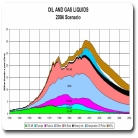
There’s a fascinating piece in the latest Economist arguing that the world’s “supermajor” oil companies—BP, ConocoPhillips, Exxon, Total, Shell and Chevron—are facing serious challenges in the near term.
Two trends undergird these surprising prediction: First, supermajors have been pushed out of directly controlling oil reserves by various national oil companies (NOCs) like Brazil’s Petrobras and Saudi Aramco, who are with every passing year more powerful and self-reliant. In the 1950s, 85 percent of global reserves were under the control of the big oil companies. Today, 90 percent of the reserves are being exploited by NOCs and the sovereign governments that own them.
As this shift picked up speed, the supermajors initially remained relevant. Even as NOCs started coming onto the scene, they would be called in to bring their technical and project management know-how to bear. In recent years, however, NOCs have been building up in-house expertise, and are increasingly turning to more nimble support services firms for the kinds of contracts that used to go to the big guys. The supermajors are thus left prospecting for the kinds of expensive and hard to retrieve oil deposits that are out of reach and unattractive to NOCs.
This development leaves them in turn vulnerable to the second trend identified by the Economist: that we might be reaching a sort of “peak oil” inflection point, but for global oil consumption rather than production:
The forecasts of future demand used by the supermajors show oil sales rising inexorably as more cars hit the roads, more trade crosses the oceans and more aircraft take to the skies….
None of this growth is expected in the rich world, where the supermajors are based. Oil demand in developed countries has been falling since the mid-2000s, the result of more efficient vehicles and of demographic trends that have seen car-ownership and car use peak, as well as of a recession. Instead, it is expected that demand will boom in the rest of the world, rather as it did in rich countries two generations ago, except on a scale that reflects the far larger populations getting mobile.
But emerging economies will never see the sort of gas guzzlers that Detroit used to churn out in the 1950s and 1960s, when governments which took much less care of the environment had little reason to constrain the use of gasoline. The world’s new cars will have ever higher fuel efficiencies as time goes on….
So most vehicles will be burning less petrol. Some will be burning none at all. The opening up of unconventional natural-gas reserves in America has made natural gas there a quarter the price of petrol, and as a result it is replacing oil at the fuel pump (and in the petrochemical plant). Compressed or liquefied gas is finding its way into the tanks of trucks, buses and delivery vans. A fifth of America’s buses run on natural gas, as do two out of every five new garbage trucks. Caterpillar and GE, two large engineering companies, are both working on natural-gas-powered railway trains. TOTE, a shipping company, has ordered the first container ships built to run on liquefied natural gas.
There are lots of interesting implications for several stories we like to follow here at VM in the article. Though some of the large oil companies may struggle in this new environment, the United States itself remains uniquely well-positioned among the world’s powers to capitalize on this shift if it fully materializes. And the news is pretty good for the environment too. Greens in particular should think long and hard about just how unpredictable levels of manmade pollution are as they plot out costly interventions to avert doomsday scenarios for the planet.
The Economist doesn’t present its predictions as a sure thing, of course. It’s a well-hedged and nuanced argument, so we strongly encourage you to read the whole thing. It’s a great read and good food for thought.
8 Comments on "A New Peak Oil Ahead?"
Beery on Sat, 3rd Aug 2013 3:27 am
Of course there will be a peak in consumption – you can’t consume more than the existing supply, so the peak in supply will be matched by a peak in demand.
This talk of ‘peak demand’ is just another in a long line of efforts to deny peak oil.
dashster on Sat, 3rd Aug 2013 5:40 am
Yes, $100 oil is forcing some optimists to rethink things. You can’t just say “there’s plenty of oil, nothing to worry about here” with oil staying at $100″.
From memory, back in 2005 the counterpoint to Peak Oil was just that there was plenty of oil.
– Now you hear about there being an economic subsitute for oil – if and when that becomes necessary. A painless transition to non-oil-based transportation.
– And you hear more about how technology is something that the Peak Oil people have overlooked – as in creative engineers will find ways to recover more and more of the oil we can’t process right now. This is always mentioned in conjunction with fracking.
– And now there is a third cause for optimism – Peak Oil Demand. As production declines, we may hear that it isn’t because people can’t afford as much gas, but instead, they just are choosing not to drive as much.
Girish on Sat, 3rd Aug 2013 6:19 am
We are now moving towards lower quality fuels.
Mike on Sat, 3rd Aug 2013 8:56 am
Peak oil 2006, peak consumption a few years later as people can’t afford the oil. Oil prices rise slowly but surely, demand drops, the world economy grinds to a halt, pensions evaporate, riots, wars, communities destroyed. you get the idea. It’s long, it’s dull and nobody will notice it’s happening.
economist on Sat, 3rd Aug 2013 11:13 am
In Germany it’s already cheaper for companies who get a good electricity price, e.g. 5ct/kWh, to heat with electricity than with heating oil (>8,5ct/kWh).
This market including this demand will tend to zero in a decade or two. Other countries will follow depending on tax structure.
Hydrogen fuel cell vehicles for example, are already as economical as gas or diesel burning air pollution vehicles (before taxes) in terms of fuel price/km:
1kgH2/100km * 33 kWh/kgH2 * 5 ct/kWh / 82,5% efficiency = 2 €
4LDiesel/100km * 0,5 €/LDiesel = 2€
Electric vehicles are way cheaper already today.
Oil will be faded out. Everybody how keeps using oil will pay more in the future than for alternatives. The heavy duty markets probably will not follow this trend any time soon, of course (trucks, trains, ships, airplanes..).
BillT on Sat, 3rd Aug 2013 3:08 pm
economist, your name is perfect for your thinking, slippery and unreal. Hydrogen fuel cells are NEVER going to be a common source of energy as they are just carriers of existing energy from other sources. A net LOSS of energy.
Play with your numbers, but what happens when the whole financial system goes into the crapper and the whole globalization fad evaporates? Then gets pounded by a nuclear war?
DC on Sat, 3rd Aug 2013 4:18 pm
Q/Hydrogen fuel cell vehicles for example, are already as economical as gas or diesel burning air pollution vehicles (before taxes) in terms of fuel price/km:
ROFL! Hydrogen Fool-Cell test vehicles cost a million dollars-PER. None are available for sale and even if they were, few would have the means or desire to own one. How ‘economical’ is that?!! LOL! As for H2 itself, its very hard to find how much a kg of H2 goes for-but it seems to be in $10.00-$20.00 Kg range. There is nothing ‘economical’ about fool-cell cars-nor will there ever be regardless of how much tinkering they do to make them ‘cheaper’.
I wonder if this is Econ101s latest sock puppet haha.
Harquebus on Sat, 3rd Aug 2013 9:38 pm
ROI is not the same as EROEI. The times they are a changin’.