
Peak Oil is You

Donate Bitcoins ;-) or Paypal :-)


Page added on October 2, 2012

Robert Rapier Interviews John Hofmeister: A difficult decade ahead for oil prices and supplies
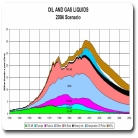
Potential for Expansion of Global Oil Production
I, along with my editor Sam Avro, recently conducted a broad-ranging interview with John Hofmeister, former President of Shell Oil. The topics touched upon included future oil supplies and prices, climate change, U.S. energy policy, and topics familiar to R-Squared Energy readers such at Peak Lite and the Long Recession.
I will present this interview in a series of stories covering some of the various topics. In this first story, I will discuss Mr. Hofmeister’s detailed answer to the question, “What do you feel is the potential for expanding global oil production, and the time frames?”
Readers my recall that I have put forth a pair of hypothesis with respect to future oil production and prices. One is called Peak Lite.
In a nutshell, we all know that peak oil is a phenomenon in which global oil production begins an irreversible decline, and the shortages that ensue drive global oil prices very high and cause widespread hardship. However, as I began to see spare global oil production capacity erode away over the past decade, I began to ask myself how that situation was really distinct from peak oil? Technically the difference is that production can continue to grow in that scenario, but if demand growth is higher than production growth, for practical purposes you have a situation that mimics peak oil. I referred to this situation as peak lite.
The Long Recession hypothesis is related. Historically the oil recession undergoes boom and bust cycles. When oil prices are high, the oil industry invests more money into infrastructure, the economy slows (and often ends up in recession), and consumers begin to conserve. This results in a major correction — and often a crash in oil prices. This leads to underinvestment by the oil industry, and people once more are attracted to gas guzzlers. This ultimately tightens up supplies, and the cycle repeats.
But what if the supply situation was so tight that spare capacity could not be built out? In either a peak oil or a Peak Lite scenario, it will be impossible for the oil majors to build out sufficient spare capacity because it simply isn’t there to be had. So high oil prices slow the economy, and people begin to conserve, but supply can’t build out ahead of demand as in years past either because demand is growing too fast, or supplies are declining. This prevents a collapse in prices which previously enabled the economy to recover. Therefore, what’s waiting on the other side of the recession is more recession: The Long Recession.
Mr. Hofmeister’s views very much reiterated my positions on these topics. The first question I posed to him was:
RR: How great do you feel is the potential for expanding global oil production, and over what time period? Some people have suggested 100 million bpd of oil, some even higher. My former CEO (at ConocoPhillips) Jim Mulva was quoted as saying he didn’t think we could get to 100; he didn’t know where that oil would come from.
In response he reminded me of the studies from the late 1990′s and early 2000′s that claimed that oil production could reach over 120 million barrels per day (bpd). But he suggested that this we before a more realistic understanding of the nature of the resources evolved, and concluded “I think that 120 million bpd of global production probably remains on the outside of optimistic. So I am not sure we will ever get there.”
On the topic of Peak Lite, he stated “I think the course that we are on, with China growing rapidly, India not too far behind – I think that demand for oil is going to exceed the supply by the middle of this decade – the current decade. And I think we are going to be hard-pressed to keep supply growing as rapidly as it needs to grow to meet the demand.”
Gas Lines — U.S. At Greatest Risk
What might that mean? “And so what I actually anticipate is that even with the shale oil of North America, the Canadian oil sands, the bare beginnings of Arctic development, with Brazil coming in on time, which is late in the decade, and the other kinds of basin development that are taking place, I am not sure that in this decade supply will keep up with demand. And I anticipate shortages, gas lines — at any price — because of the growing demand, without alternative fuel technologies yet grabbing hold and picking up some of that demand.”
This is very much in line with my assessment of the upcoming decade, which thus far is playing out as I expected. Oil prices are high by historical standards, and I see little relief over the longterm due to very strong demand in developing countries. Mr. Hofmeister agrees: “Possibly by 2020 and beyond we could see alternative fuels beginning to play a bigger role than they do today, which could ease the pain on the oil front, perhaps even ease the price on the oil front. But in the meantime I think this decade is going to be a struggle, and countries like the United States are going to be the greatest countries at risk from suffering the effects of not only high prices, but insufficient supplies.”
Mr. Hofmeister has been helping to shape content for the launch of Total Energy USA as a member of the Executive Committee. Total Energy USA is the groundbreaking conference and exposition that addresses the greatest uncertainty in the energy industry today — the cross-fertilization of energy sectors and technologies. More information about Total Energy USA, November 27-29 in Houston, Texas at www.TotalEnergyUSA.com
5 Comments on "Robert Rapier Interviews John Hofmeister: A difficult decade ahead for oil prices and supplies"
Kenz300 on Tue, 2nd Oct 2012 2:20 pm
Quote — ” “Possibly by 2020 and beyond we could see ALTERNATIVE FUELS beginning to play a bigger role than they do today, which could ease the pain on the oil front, perhaps even ease the price on the oil front. ”
——————–
Diversify..diversify…diversify…
End the oil monopoly on transportation fuels before we are forced to by supply or price.
Those electric, flex-fuel, hybrid, CNG and LNG vehicles will gain in popularity quickly if we have oil shortages and price spikes or gas lines at the pump.
Plantagenet on Tue, 2nd Oct 2012 4:29 pm
Its past time for the US to build high speed intercity trains and light rail commuter systems.
The 800 billion Obama wasted on phony stimulus can’t happen again—we need future spending to go to real infrastructure projects that produce a lasting benefit.
James A. Hellams on Tue, 2nd Oct 2012 9:22 pm
In response to Plantagenet, I totally agree.
We are VERY late in the day to build the rail infrastructure we DESPERATELY need for the end of the oil age.
The END of the oil age is coming! We do NOT have the train service we DESPERATELY NEED to get us through the collapse of the oil supply.
www.Earthprojects.info on Wed, 3rd Oct 2012 12:57 am
He has simply stated the fact divulged in Denver back in August at Enercon by Core Lab’s CEO that we have peaked in global oil production. That is, if you call 2013 “middle of this decade”. Seeing as we peaked in 2012, it will only take 1 year to prove it through consistently declining production reports. Once it is proven to the commodities markets the prices will spike and the lines will form. We are currently not meeting the global demand Oil production levelled out in 2005. How has demand been reduced other than through demand destruction? If production had continued to increase since 2005 we would have more players in the game demanding more oil. Demand has not declined, if has been destroyed. Let’s be clear about it.
BillT on Wed, 3rd Oct 2012 1:59 am
Some mention of growth in the sludge called rock oil or sand oil, but no mention of the rapid decline of mature fields all over the world. No, we are not producing as much crude today as we have previously. Take out the moonshine and liquid natural gas and tar and we are way down the graph. Show a graph of NET oil production and we are obviously past peak. Way past. So, all you deniers, dream on!