
Peak Oil is You

Donate Bitcoins ;-) or Paypal :-)


Page added on November 10, 2015

What were the Real Origins of the great oil crisis of the 1970s?

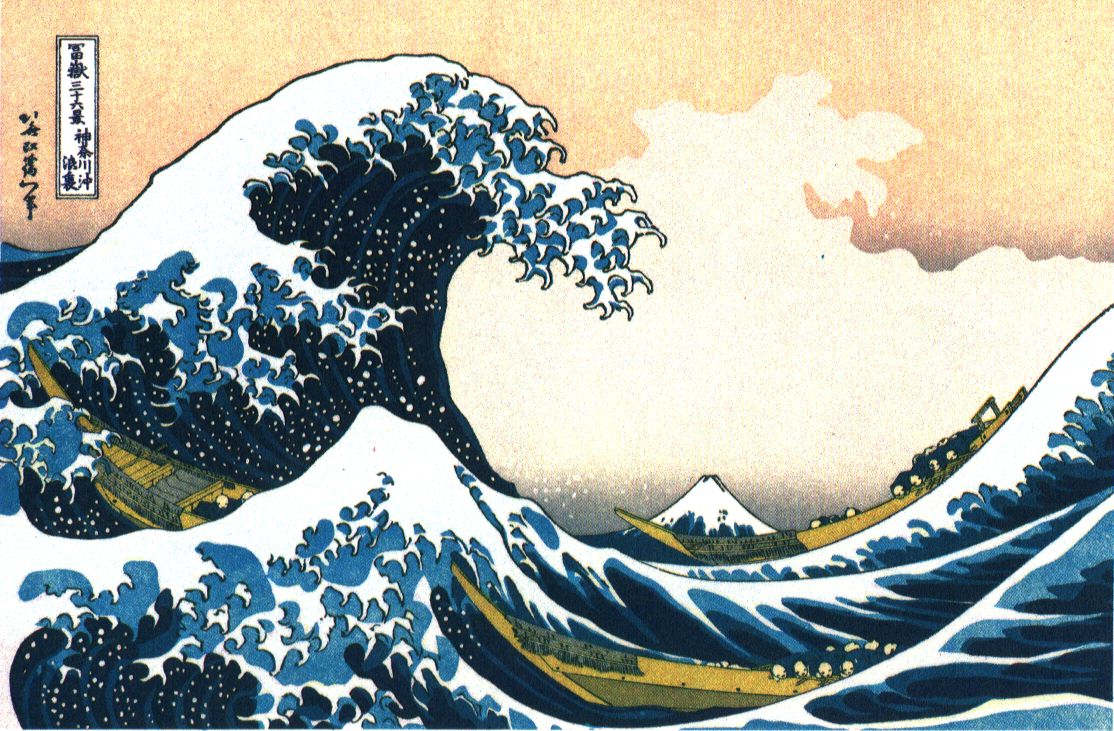
If you happen to be caught in a boat in a major storm, such as in this image by Hokusai, you’ll surely think you experiencing a major shock. However, it is also true that no storm changes the average water level of the oceans. So, the oil storms of the 1970s were perceived as major shocks, but did they change the average patterns of the world’s oil production? In this post, I argue that they didn’t. Just like a sea wave has to crash on a shore, sooner or later, so oil production had grown so fast in the 1950s and 1960s that it had to crash, sooner or later. And it did.
The oil crisis that started in the early 1970s is still widely remembered today and much of the interest in the vagaries of the present oil market is derived from a comparison with the events of that time. Yet, it may also be that the crisis was widely misunderstood while it was taking place and that it remains misunderstood even today; often reduced to the work of a small group of evil Arab sheikhs, perhaps the ancestors of today’s Daesh. But, as it often happens, every question may have an explanation that is simple, obvious, and totally wrong.
Last week, there was a meeting at the University of Venice, Italy, dedicated to this issue: what were the origins of the oil shock and of the countershock of nearly half a century ago? The conference collected for two days experts in subjects such as political science, economics, communication science, history, and more and I won’t even try to summarize for you all what was said. Suffice to say that even after you study a subject for 15 years (as I did with peak oil) there are always chances to learn something new that you didn’t suspect before. I emerged out of the meeting with the understanding that there was an important political and human side to the great oil crisis. Yet, I remain convinced that there are deeper factors; those factors that people call “fundamentals.” And, when dealing with a mineral resource, crude oil, depletion is the fundamental factor.
Not that I pretend to have “the” answer to the origins of the great oil crisis of the 1970s, but I can’t avoid to note that the magic word “depletion” was almost never mentioned at the meeting. It is the usual problem: depletion remains a widely misunderstood concept. For the oil industry; as long as their books list “reserves” existing somewhere; then the problem is not considered to be of any importance. And, for historians, if oil production restarted after the crisis, then it means that there never was any lack of oil and, as a result, the crisis must have had political or financial reasons. But depletion doesn’t mean “running out” of anything; it is a gradual phenomenon that was already strongly affecting the oil markets at the time of the crisis.
Here, I’ll discuss a little only the case of Iran; examined at the Venice meeting by Abbas Maleki, former Iran’s deputy foreign minister, and by Claudia Castiglioni, researcher at the University of Florence, Italy. Both of them appeared to see the history of Iran’s oil as mainly the result of political and financial factors. Surely, these factors played a role in the crisis, but I thought they couldn’t be the whole story. So, after hearing Maleki’s talk, I looked for the data for the Iranian oil production; and here they are (image by Plazak, Wikipedia):


Looking at this graph, I was struck by a curious thought. There came to my mind Hokusai’s famous “great wave” image you see it reproduced here, on the right. Note the shape of the oil production curve for the period from about 1950 to 1980; doesn’t it look like an ocean wave that grows and then crashes down? From 1955, for some 20 years, Iran’s oil production doubled approximately every 5 years; something that corresponds to a yearly growth rate of about 15%. And now ask yourself: how long can anything double every five years?
If you think about that, it makes little sense to ask why Iran’s production collapsed; it had to. Just like an ocean wave, it had to crash down sooner or later. Keeping oil production rising for a longer time would have needed not only to match investments to the rapid doubling rate, but also to increase them further in order to overcome the progressive depletion of the “easy” oil resources. Iran was not running out of oil; it was running out of the capital resources needed to extract it.
So, I think that the conventional explanation for the collapse of Iran’s oil production is wrong: it is not correct to say that it collapsed because of the revolution. But it would be just as wrong to say that the Iranian revolution was caused by the production collapse. The two phenomena went together and reinforced each other; one more example of another misunderstood concept: that of “enhancing feedback”. The same phenomenon affected the Soviet Union, but Iran turned out to be more resilient: the country survived the revolution, the oil shock, economic sanctions, and a major war. Slowly, Iran reached a new stability, the oil industry was rebuilt; and Iran became again an oil exporting country, even though it never reached the peak level of 1979 (and probably never will).
The interest in the great oil crisis of the 1970s-1980s is not just a game for academic historians; it is something that has deeply affected the world’s history and it is still affecting our perception of the factors affecting the supply of crude oil that, today, we need as much, and even more than we needed it at that time. So, there is a crucial question to ask: could we see another great oil crisis in the near future?
As always, the future is obscure, but at least not beyond all conjecture. Today, we don’t see in any country (with a single exception) oil production growing so rapidly as it was the case for Iran and others before the great crisis. Hence, it seems unlikely that we’ll see again an abrupt crash (apart from the above exception, which seems to be already crashing). Nevertheless, the problem of depletion remains, and it can only grow bigger as more oil is extracted and burned. So, we are heading toward a difficult future; we may not see another “oil shock”, but an “oil decline”, even a rapid one, very likely, yes.
9 Comments on "What were the Real Origins of the great oil crisis of the 1970s?"
makati1 on Tue, 10th Nov 2015 5:50 am
Ancient history. Moving on….
“…the future is obscure, but at least not beyond all conjecture.”
Conjecture- ( Merriam-Webster )
a : inference from defective or presumptive evidence
b : a conclusion deduced by surmise or guesswork
rockman on Tue, 10th Nov 2015 6:55 am
True mak. But let’s at least apply a tiny bit of logic. The article essentially implies that Iranian oil production took a dramatic drop because they ran out of “easy oil”. Obviously this writer has no concept of the dynamics of oil production: Iranian production didn’t fall from almost 6 mm bopd to less than 1.5 mm bopd in less than 2 years because the Iranians couldn’t find more “easy oil” and they were overwhelmed by depletion. Production fell because they VOLUNTARIALLY reduced the rate. They could have easily produced several times their 1981 rate had they chosen to. They cut production because oil prices were collapsing as a result of the global depression brought on by the high oil prices of the late 70’s.
And if the article did want to follow its silly “easy oil” theory then they would also have to say that Iran apparently discovered a good bit of easy oil in the ten years after their production “collapsed”: their production rate more than doubled by 1991. And Iran wasn’t the only member of OPEC to VOLUNTARIALLY REDUCE PRODUCTION RATES: Saudi Arabia made an even bigger cut percentage wise. And how was the KSA rewarded for the sacrifice of their revenue stream: most of OPEC refused to reduce production rates.
But it does serve to look back and compare. Eventually the KSA decided to stop playing the fool and opened their wells back up. This led to a much deeper collapse of oil prices to about $14/bbl for the next few years. But adjusted for inflation that was equal to $31/bbl. Which is a 50% reduction from the previous year. A 50% reduction like the recent fall of oil prices from $90/bbl to $45/bbl.
Coincidence? You be the judge. But IMHO the KSA learned their lesson in the 80’s: they were not going to be rewarded for trying to stabilize high oil prices in 2015 any more than they were in the 80’s. This time they weren’t going to suffer almost a 100% loss of revenue: at the rate the KSA was cutting production by the mid 80’s their revenue would have fallen to $ZERO within the next 18 months. Today even at the low oil price they are producing about $170 billion of oil per year. Which is about what they averaged between 2005 and 2009. The KSA is receiving less revenue today than a year ago. But they are still making 70% more revenue than they were just 10 years ago. And that ain’t my definition of “poor”. LOL.
Revi on Tue, 10th Nov 2015 8:52 am
You have to keep the junkies hooked. Otherwise they will stop using and then the oil market drops.
KSA knows this and are trying as hard as they can to hold up the present order of things.
Unfortunately a lot of people are falling out of oil use anyway. Homeless people use a lot less oil.
BobInget on Tue, 10th Nov 2015 9:02 am
KSA is at war today. Why can’t we remember that?
Saudi Arabian population break down;
Age structure: 0-14 years: 27.6% (male 3,869,961/female 3,681,616)
15-24 years: 19.3% (male 2,832,538/female 2,458,339)
25-54 years: 45.4% (male 7,086,004/female 5,323,373)
55-64 years: 4.5% (male 674,571/female 555,136)
65 years and over: 3.2% (male 444,302/female 420,146) (2014 est.)
Those in charge, that 3.2% is blowing the future of the nation by wasting what oil remains.
This year there will be No Wheat Crop in the desert for Saudi Arabia. The wells that once made KSA a major wheat exporter are now dry. How difficult is it to comp this fact to
crude oil?
http://www.bloomberg.com/news/articles/2015-11-04/saudi-wells-running-dry-of-water-spell-end-of-desert-wheat
Riyadh will import all the wheat needed for 2016 consumption
Aquifers that had irrigated wheat crops depleting rapidly
For decades, only a few features punctuated the vastness of the Saudi desert: oil wells, oases — and wheat fields.
Despite torrid weather and virtually no rain, the world’s largest oil producer once grew so much of the grain that its exports could feed Kuwait, United Arab Emirates, Qatar, Bahrain, Oman and Yemen. The circular wheat farms, half a mile across with a central sprinkler system, spread across the desert in the 1980s and 1990s, visible in spring to anyone overflying the Arabian peninsula as green spots amid a dun sea of sand.
BobInget on Tue, 10th Nov 2015 9:15 am
Not to insult anyone here, my point should be obvious.
One or two rhetorical questions.
Where will Kuwait, United Arab Emirates, Qatar, Bahrain, Oman and Yemen gonna get flatbread?
I don’t do grain futures.
second rhetorical:
When KSA’s one percent squanders every last barrel on genocide, where will UK, US
get its crude oil?
Maybe another pipeline from Canada?
Certainly not from Venezuela. That oil has all been pledged to China.
Canada’s oil sands. Venezuelan heavy, the last oil standing.
BobInget on Tue, 10th Nov 2015 9:19 am
http://www.pri.org/stories/2015-09-15/what-does-california-have-common-decades-old-saudi-arabian-water-mystery
Boat on Tue, 10th Nov 2015 10:40 am
Bob,
Oil goes to the highest bidder. Exported wheat will go to the highest bidder.
Iraq and Iran have new oil to produce along with Brazil. When the price of oil gets around $60-$70 you will see frackers jump back in/ more tar sand development.
rockman on Tue, 10th Nov 2015 1:49 pm
Speaking of revisiting old history I’ll explain again why the Iranian “oil embargo” actually had little direct effect in the US. The older farts here will certainly remember the lines at the gas stations, the odd/even day scheduling, limited gasoline purchases, etc. Maybe even remembering watching Geraldo Rivera cruising along the coast in a chopper looking for Exxon oil tankers going in circles trying to drive the price of oil up. Which itself is rather silly since no company had to hide efforts to not deliver oil since doing so wasn’t illegal. But back to the suddenly missing fuel inventory: and it really did disappear almost overnight. Lots of finger pointing at the time that drew big front page headlines. Unfortunately many months later when the feds finished their investigation the result received little public disclosure.
If you think about it for a moment it becomes very logical: if you’re not worried about a fuel shortage when do you pull into a station for a fill-up? I doubt very few here do so with much more than ¼ remaining. I usually wait until I’m down to 1/8th unless I’m on a long road trip. But what if you’re concerned the next few stations down the road might be empty? More than a few would start thinking serious about filing up at the ½ level…if not a little sooner. So after all the numbers were reported the feds discovered who was hoarding all that gasoline: it was the public. When they estimated the additional fuel motorist were carrying above the historical norm they found a near perfect match to the extra fuel in the 100+ million vehicles on the road and the “missing gasoline” from inventory. Once the refineries were able, after some time, to refill the tanks at the gas stations the lines suddenly disappeared.
And the same phenomenon occurred when the last big hurricane blew thru Houston. Having grown up in Hurricane Alley the Rockman knew to top off his tank just before it hit. In the following week he passed station after station with long lines as well as other stations that had been drained. Even though the Rockman lived across the road from the 2nd largest refinery in the western hemisphere it took time to deliver to those empty stations for an obvious reason: the refineries don’t keep enough tankers to fill all the stations in one day. It’s usually done on a 1 to 3 week cycle. As expected after a week of commuting to work and needing to refuel there was no problem pulling up to an empty pump.
A lesson to remember. Which probably also explains why we don’t see the big gas station lines when someone blows up someone else in the Middle East: we’ve learned that we won’t be faced with an immediate shortage. But this is all about only short term dynamics. Looking ahead for 5 or 6 years and a different picture might emerge.
makati1 on Tue, 10th Nov 2015 8:57 pm
Boat, the oil goes to the ones with the contracts first. Then to the highest bidder. In many cases China holds those contracts, and may even own part of the fields. Do some research.