
Peak Oil is You

Donate Bitcoins ;-) or Paypal :-)


Page added on February 11, 2023

What the Energy Transition Needs Now is a Good Plumber
Cleantech investment is ready to flow… but the pipes of progress are clogged.
2022 was a watershed year for federal climate change legislation. The Inflation Reduction Act (IRA) directed $369 billion toward clean energy technology, infrastructure, and climate mitigation. The energy-related parts of the Infrastructure Investment and Jobs Act add another $75 billion. This feels like progress.

This level of federal investment has the potential to be transformative. Widely cited modeling exercises (see here, here, and here) project that IRA incentives will induce *major* increases in technology deployment. For example, the REPEAT project estimates over 590 installed GW of utility solar and over 470 GW of onshore wind by 2030 (compared to 97 GW and 136 GW today) and incredible accelerations in the adoption of EVs, heat pumps, etc. This all adds up to large projected reductions in US GHG emissions (~40% below 2005 levels by 2035).
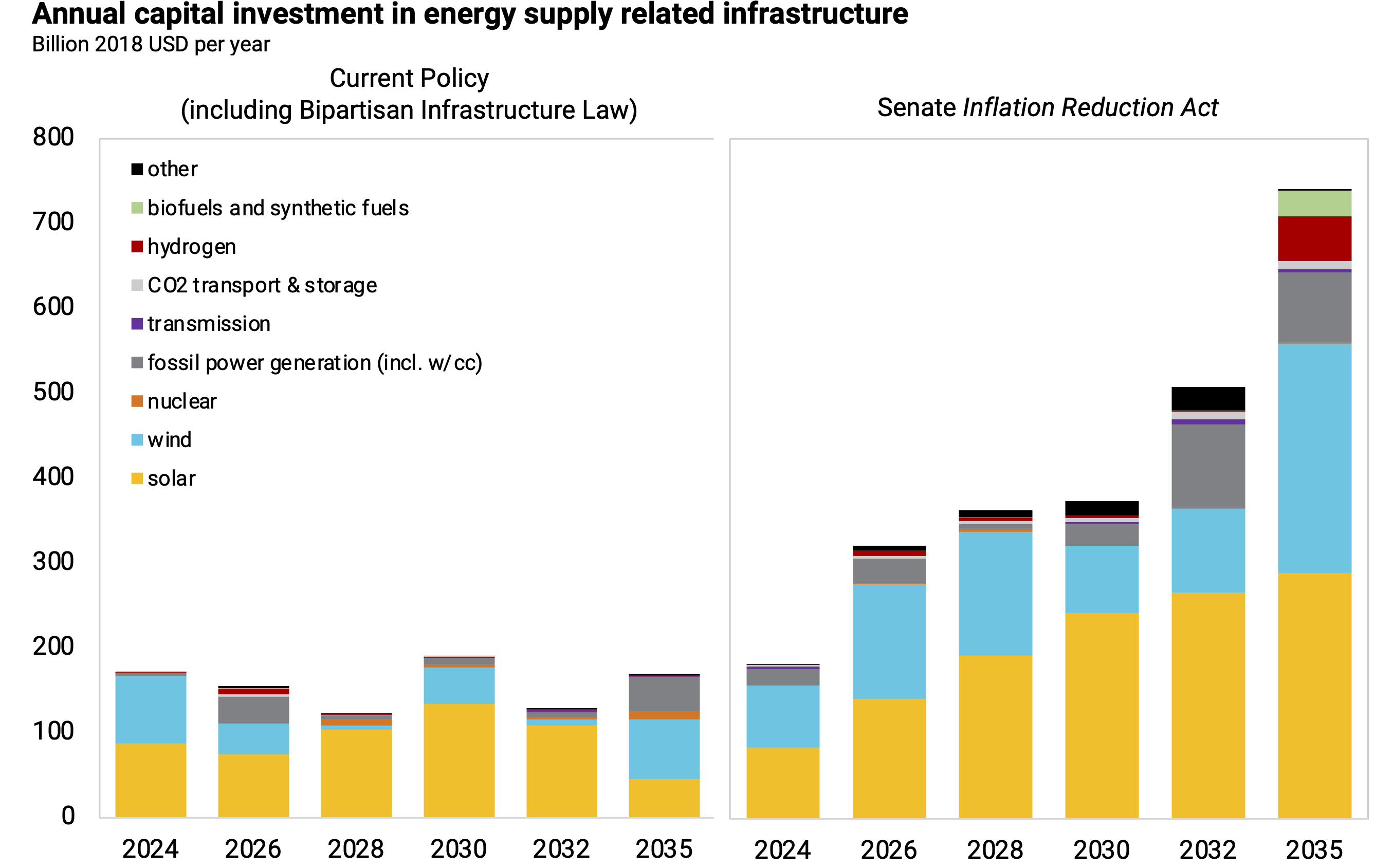
If you’re climate-concerned like I am, it’s easy to get excited about these big numbers. But it’s important to remember that the models behind these projections make some big assumptions. For example, it’s assumed that the main barriers standing between us and a clean energy future are high technology investment costs. Households and firms are, implicitly or explicitly, assumed to operate like perfectly-informed cost-minimizers. When government incentives make renewable energy cheaper to build and EVs cheaper to buy, the model quite sensibly builds/buys more.
Decarbonization hairballs
Largely missing from these models are other “non-cost” barriers such as permitting gridlock, NIMBY challenges, behavioral biases, land use restrictions, skilled labor shortages, supply chain issues, information problems, culture wars, to name but a few. We have seen repeatedly how these kinds of obstacles can delay or defeat clean tech deployment in the real world.
Riffing on my bad plumbing metaphor, these obstacles are like hairballs in the pipes of decarbonization progress. They are idiosyncratic and messy and hard to build into our models. But a failure to account for them means that our modeling projections will almost surely overstate the real-world climate impacts of new federal legislation.

If we want to bring clean tech deployment anywhere close to these optimistic modeling projections, we’ll need to figure out how to replumb or remove the hairball obstacles. In other words, we need some industrious “policy plumbers” who understand how the system works, why it’s getting clogged, and how we can get things moving.
Where are the policy plumbers?
The federal government is uniquely positioned to direct many billions of dollars toward clean energy investments. But it is not in a great position to engage in the weedy trouble-shooting that will be required to clear a path for clean tech deployment across localities with different zoning restrictions, permitting requirements, local building codes, and political nuances. States and local governments are arguably in a better position to act as creative policy plumbers.
With many billions of federal dollars ready to flow, state and local governments should be looking for ways to direct this flow into their energy systems and their economies. And if any state should be working to clear the way for decarbonization investments, it’s California.
California’s recently adopted Scoping Plan charts an ambitious path to significant GHG emissions reductions by 2030. The plan calls for a rapid scale-up of building electrification, a four-fold increase in wind and solar investment, a doubling of electricity generation, and the list goes on. There are mounting concerns about how this plan will be implemented, what this will cost, and who will pay the price.
In the past, California has relied to a significant extent on retail electricity rate increases to pay for power sector decarbonization costs. We’ve blogged before about the inequities and inefficiencies baked into this approach. Federal incentives for clean technology and infrastructure deployment under the IRA are more progressive distributionally because they are funded by increasing the corporate income tax. If California can attract these federal dollars, this will shift some of the decarbonization cost burdens off of California utility customers and onto a more progressive base.
California has situated itself on the bleeding edge of decarbonization efforts. So we are hitting the hairballs before other jurisdictions. This has spurred some notable, and often controversial, plumbing efforts in the Golden State. Here are a few that I’m following:
- Land use/local permitting: California recently issued “emergency regulations” (AB 205) that delegate blanket authority to bypass local permitting for siting of solar, wind, and certain battery backup projects.
- Grid integration of renewables: Last week, the California Independent System Operator (CAISO) approved the Extended Day-Ahead Market (EDAM) proposal. Western grid integration/coordination will help support higher levels of renewable penetration.
- Utility rate reform efforts are exploring ways to address affordability concerns and leverage demand response.
- Building code restrictions: Some California cities have started requiring homeowners to install electric appliances when they replace gas equipment or undertake renovations.
- Information campaigns are trying to convince grandpa Max that a heat pump will keep him just as warm and an electric range will crisp his schnitzel just as nice.
That’s my list. I would be interested to hear from blog readers about the initiatives you’re tracking. And the hairballs you’ve spotted before the rest of us.

Learning by plumbing?
New federal climate initiative will go a long way toward removing the investment cost barriers to decarbonization. But there are other obstacles to reckon with. In the past, green states have provided an important laboratory for experimenting with climate policies like renewable portfolio standards, tax credits, consumer subsidies, and carbon pricing. It seems the next frontier in this experimentation should be more focused on non-cost barriers. These obstacles will manifest differently across states and localities. But there are generalizable lessons to be learned from state and local-level trial and error. Let’s get plumbing.
Energy Institute Blog by Meredith Fowlie
8 Comments on "What the Energy Transition Needs Now is a Good Plumber"
makati1 on Sun, 12th Feb 2023 2:46 am
More “renewable” bullshit from the techie dreamers!
Schnelldokumente.de on Wed, 3rd Jan 2024 8:54 am
Der Kauf eines deutschen Führerscheins war noch nie so einfach. Ob Sie sich in Brandenburg, Bayern, Hessen oder einem anderen Bundesland oder auch außerhalb Deutschlands befinden, wir sind für Sie da, um Ihnen einen registrierten deutschen Führerschein zu besorgen.https://www.schnelldokumente.de/kaufen-deutschen-fuhrerschein
kaufen osterreichischen fuhrerschein on Tue, 20th Feb 2024 11:31 pm
Wenn Sie mit dem von unserer Agentur erworbenen Führerschein fahren, müssen Sie diesen bei Polizeikontrollen frei vorzeigen können, da die von der Polizei in einem Datenauslesecomputer überprüften Angaben zum Führerschein zeigen, dass er echt und in der staatlichen Datenbank registriert ist. https://www.echtedokumente.at/kaufen-osterreichischen-fuhrerschein
iptv serveur on Wed, 12th Mar 2025 9:19 am
Accédez à plus de 32 000 chaînes HD, films, séries et événements sportifs avec un streaming fluide, garantissant une qualité optimale à chaque utilisation serveur iptv
iptv abonnement france on Wed, 12th Mar 2025 9:25 am
événements sportifs avec un streaming fluide, garantissant une qualité optimale à chaque utilisation serveur iptv
iptv france abonnement on Wed, 12th Mar 2025 9:25 am
Accédez à plus de 32 000 chaînes HD, films, séries serveur iptv
iptv fr on Wed, 12th Mar 2025 9:26 am
Accédez à plus de 32 000 chaînes HD serveur iptv
iptv abonnement on Wed, 12th Mar 2025 9:26 am
Accédez à plus de 32 000 chaînes HD, films, séries et événements sportifs avec un streaming fluideserveur iptv