
Peak Oil is You
Donate Bitcoins ;-) or Paypal :-)


Page added on December 14, 2013

How the Paper Money Experiment Will End
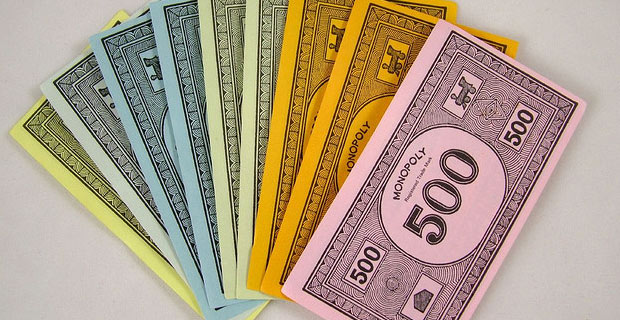
A paper currency system contains the seeds of its own destruction. The temptation for the monopolist money producer to increase the money supply is almost irresistible. In such a system with a constantly increasing money supply and, as a consequence, constantly increasing prices, it does not make much sense to save in cash to purchase assets later. A better strategy, given this senario, is to go into debt to purchase assets and pay back the debts later with a devalued currency. Moreover, it makes sense to purchase assets that can later be pledged as collateral to obtain further bank loans. A paper money system leads to excessive debt.
This is especially true of players that can expect that they will be bailed out with newly produced money such as big businesses, banks, and the government.
We are now in a situation that looks like a dead end for the paper money system. After the last cycle, governments have bailed out malinvestments in the private sector and boosted their public welfare spending. Deficits and debts skyrocketed. Central banks printed money to buy public debts (or accept them as collateral in loans to the banking system) in unprecedented amounts. Interest rates were cut close to zero. Deficits remain large. No substantial real growth is in sight. At the same time banking systems and other financial players sit on large piles of public debt. A public default would immediately trigger the bankruptcy of the banking sector. Raising interest rates to more realistic levels or selling the assets purchased by the central bank would put into jeopardy the solvency of the banking sector, highly indebted companies, and the government. It looks like even the slowing down of money printing (now called “QE tapering”) could trigger a bankruptcy spiral. A drastic reduction of government spending and deficits does not seem very likely either, given the incentives for politicians in democracies.
So will money printing be a constant with interest rates close to zero until people lose their confidence in the paper currencies? Can the paper money system be maintained or will we necessarily get a hyperinflation sooner or later?
There are at least seven possibilities:
1. Inflate. Governments and central banks can simply proceed on the path of inflation and print all the money necessary to bail out the banking system, governments, and other over-indebted agents. This will further increase moral hazard. This option ultimately leads into hyperinflation, thereby eradicating debts. Debtors profit, savers lose. The paper wealth that people have saved over their life time will not be able to assure such a high standard of living as envisioned.
2. Default on Entitlements. Governments can improve their financial positions by simply not fulfilling their promises. Governments may, for instance, drastically cut public pensions, social security and unemployment benefits to eliminate deficits and pay down accumulated debts. Many entitlements, that people have planned upon, will prove to be worthless.
3. Repudiate Debt. Governments can also default outright on their debts. This leads to losses for banks and insurance companies that have invested the savings of their clients in government bonds. The people see the value of their mutual funds, investment funds, and insurance plummet thereby revealing the already-occurred losses. The default of the government could lead to the collapse of the banking system. The bankruptcy spiral of overindebted agents would be an economic Armageddon. Therefore, politicians until now have done everything to prevent this option from happening.
4. Financial Repression. Another way to get out of the debt trap is financial repression. Financial repression is a way of channeling more funds to the government thereby facilitating public debt liquidation. Financial repression may consist of legislation making investment alternatives less attractive or more directly in regulation inducing investors to buy government bonds. Together with real growth and spending cuts, financial repression may work to actually reduce government debt loads.
5. Pay Off Debt. The problem of overindebtedness can also be solved through fiscal measures. The idea is to eliminate debts of governments and recapitalize banks through taxation. By reducing overindebtedness, the need for the central bank to keep interest low and to continue printing money is alleviated. The currency could be put on a sounder base again. To achieve this purpose, the government expropriates wealth on a massive scale to pay back government debts. The government simply increases existing tax rates or may employ one-time confiscatory expropriations of wealth. It uses these receipts to pay down its debts and recapitalize banks. Indeed the IMF has recently proposed a one-time 10-percent wealth tax in Europe in order to reduce the high levels of public debts. Large scale cuts in spending could also be employed to pay off debts. After WWII, the US managed to reduce its debt-to-GDP ratio from 130 percent in 1946 to 80 percent in 1952. However, it seems unlikely that such a debt reduction through spending cuts could work again. This time the US does not stand at the end of a successful war. Government spending was cut in half from $118 billion in 1945 to $58 billion in 1947, mostly through cuts in military spending. Similar spending cuts today do not seem likely without leading to massive political resistance and bankruptcies of overindebted agents depending on government spending.
6. Currency Reform. There is the option of a full-fledged currency reform including a (partial) default on government debt. This option is also very attractive if one wants to eliminate overindebtedness without engaging in a strong price inflation. It is like pressing the reset button and continuing with a paper money regime. Such a reform worked in Germany after the WWII (after the last war financial repression was not an option) when the old paper money, the Reichsmark, was substituted by a new paper money, the Deutsche Mark. In this case, savers who hold large amounts of the old currency are heavily expropriated, but debt loads for many people will decline.
7. Bail-in. There could be a bail-in amounting to a half-way currency reform. In a bail-in, such as occurred in Cyprus, bank creditors (savers) are converted into bank shareholders. Bank debts decrease and equity increases. The money supply is reduced. A bail-in recapitalizes the banking system, and eliminates bad debts at the same time. Equity may increase so much, that a partial default on government bonds would not threaten the stability of the banking system. Savers will suffer losses. For instance, people that invested in life insurances that in turn bought bank liabilities or government bonds will assume losses. As a result the overindebtedness of banks and governments is reduced.
Any of the seven options, or combinations of two or more options, may lie ahead. In any case they will reveal the losses incurred in and end the wealth illusion. Basically, taxpayers, savers, or currency users are exploited to reduce debts and put the currency on a more stable basis. A one-time wealth tax, a currency reform or a bail-in are not very popular policy options as they make losses brutally apparent at once. The first option of inflation is much more popular with governments as it hides the costs of the bail out of overindebted agents. However, there is the danger that the inflation at some point gets out of control. And the monopolist money producer does not want to spoil his privilege by a monetary meltdown. Before it gets to the point of a runaway inflation, governments will increasingly ponder the other options as these alternatives could enable a reset of the system.
15 Comments on "How the Paper Money Experiment Will End"
BillT on Sun, 15th Dec 2013 12:04 am
ALL of the above options mean the end of capitalism. No? Why not? The dollar is involved with almost everything financial in the world today. When/if it goes, it will take down most of the West and cripple any other country that holds it in their banks/reserves.
DMyers on Sun, 15th Dec 2013 3:29 am
How the Paper Money Experiment Will End.
Answer: badly. In the alternative, very badly. (See Weimer Republic).
I must state my opposition. Money should not be experimental stock. Rats, mice, plant life, and maybe certain winos who have only a few days to live anyway, are the appropriate subjects for public interest experimentation.
Note, that list does not include money. Leave money alone! I ain’t got that much, and what I got can’t take no experimental tweaking, and, sure as hell, no stress tests.
acomfort on Sun, 15th Dec 2013 5:30 am
With the newly printed money (keystrokes) all going to the financial industry (85Bln a month) this only creates inflation in the financial markets but not on Main Street. This results in loss of jobs and less money to be spent on products. I think this will look like and feel like deflation to the masses. Products may cost less but most of us will have less or no income.
Stilgar on Sun, 15th Dec 2013 9:34 am
I think what you say DMyers in your note is why all hell would probably break loose if as it says, “Basically, taxpayers, savers, or currency users are exploited to reduce debts and put the currency on a more stable basis.” So many people have found ways to get by but only just barely with many people living paycheck to paycheck. Going back to the well so to speak, i.e. the people in the middle will be a big mistake as there would be x # of millions disenfranchised. Like BillT says ‘that would spell the end of capitalism’, because without the masses in the middle it won’t work anymore. They can only squeeze us so many times in different ways until the system breaks.
J-Gav on Sun, 15th Dec 2013 12:05 pm
3 + 6 would be the responsible way of re-setting the system … for a while.
Jubilee! The practice goes back to ancient Babylon – and the U.S. has effectively repudiated its debt at least twice in its history.
wildbourgman on Sun, 15th Dec 2013 2:17 pm
Printing money is so passe’. Electronic digitizing has been the norm for a while.
Arthur on Sun, 15th Dec 2013 2:39 pm
Paper money in general did not die with the demise of the Reichsmark in the Weimar Republic, only the Reichsmark did. Any government is able to impose a paper currency on it’s own tax farm as long as it is disciplined enough to not to print too much money. The Dutch guilder and German DM were not goldbacked, yet very stable because of the independent institutions of the Nederlandse Centrale Bank and the Bundesbank resp..
Once the FED has been abolished after the Great Reset, the Americans can create a new central but independent bank, owned by the people, not the banksters, with the obligation to keep inflation below 2%. No problem with paper currency in that case.
Oh, and anybody with more than a few thousand in the bank should have his head checked, because bail-ins are next. The banks and their customers are going to be held accountable for future failures, not tax payers. And this is the way it should be. It already happened partially in Cyprus. If you, as a potential new customer enter a bank, you should suppress a vile grins and with a straight face ask what securities/collateral the bank can offer, before you would be so kind trusting the bank with the handling your savings.
For the rest, if you happen to have excess cash and a few m3 storage space, you could consider buying durable goods now and act like the Chinese do: get rid of dollars now and avoid the rush.
tahoe1780 on Sun, 15th Dec 2013 5:54 pm
JG, As my financial adviser says “One man’s debt is another man’s asset” A Jubilee, in today’s world, would mean one man’s (government’s) debt would be reduced/eliminated and the other’s (you and me) would see our pensions, IRA’s, 401K’s, annuities, bond funds, etc. reduced/eliminated. Careful what you ask for…
DMyers on Mon, 16th Dec 2013 1:39 am
Good point, Tahoe. If it comes down to a question of net gain, there may be none on paper, but relief from debt slavery would be an intangible of enormous proportions.
Newfie on Mon, 16th Dec 2013 10:48 am
I’m converting my fireplace so it will burn boxes of US dollars. It will be cheaper than wood in the future.
BillT on Mon, 16th Dec 2013 10:55 am
Good idea, Newfie, just don’t breath the smoke. It’s probably toxic.
BillT on Mon, 16th Dec 2013 10:57 am
tahoe, it is likely that things like 401Ks, IRAs, etc. will be gone before the crash. The government is going to ‘nationalize’ those trillions of dollars before the ship goes down. Wait and see.
Stephen on Mon, 16th Dec 2013 3:59 pm
I think that if the energy crisis takes the economy down first and shutters supply lines, we will ultimately see hyper-deflation of goods that require large sums of energy to work (such as cars), while hyperinflation of basic needs (food, etc). The price of items will have changed so much that the banking industry will not be profitable at that point!
We will get to a point where foreclosures do no good and many of the big banks end up failing. To survive, society may decide that growing food on the land close to them will be the only way to survive, and may enact laws to prevent the banks from taking property away if debts aren’t paid. Heck, if the computer networks go down due to a power grid failure, and there is little gas remaining, running farm tractors will get the remaining gas and forcing people to move because loans have defaulted will not be worth the energy cost.
As to massive Hyperinflation, I don’t think we will end up like Weimar. After all, the US Mint department may not have the resources to keep printing money if the power grid goes down or the resources to make coins and bills gets scarce.
Instead, I think that we will have to make decisions to survive that aren’t the most profitable for the biggest corporations, the financial system, and make policies that don’t result in only giving benefit to the parties that biggest campaign contributions. If we don’t, we will likely die.
RICHARD RALPH ROEHL on Wed, 18th Dec 2013 8:16 am
The days of the FEDERAL ZIONIST RESERVE BANK are numbered.
Juan Pueblo on Wed, 18th Dec 2013 3:53 pm
Great article and comments!
Paper money is a product of human civilization. How will human civilization end is the big question here.