
Peak Oil is You

Donate Bitcoins ;-) or Paypal :-)


Page added on November 20, 2014

A rivalry of giants born in first U.S. oil boom
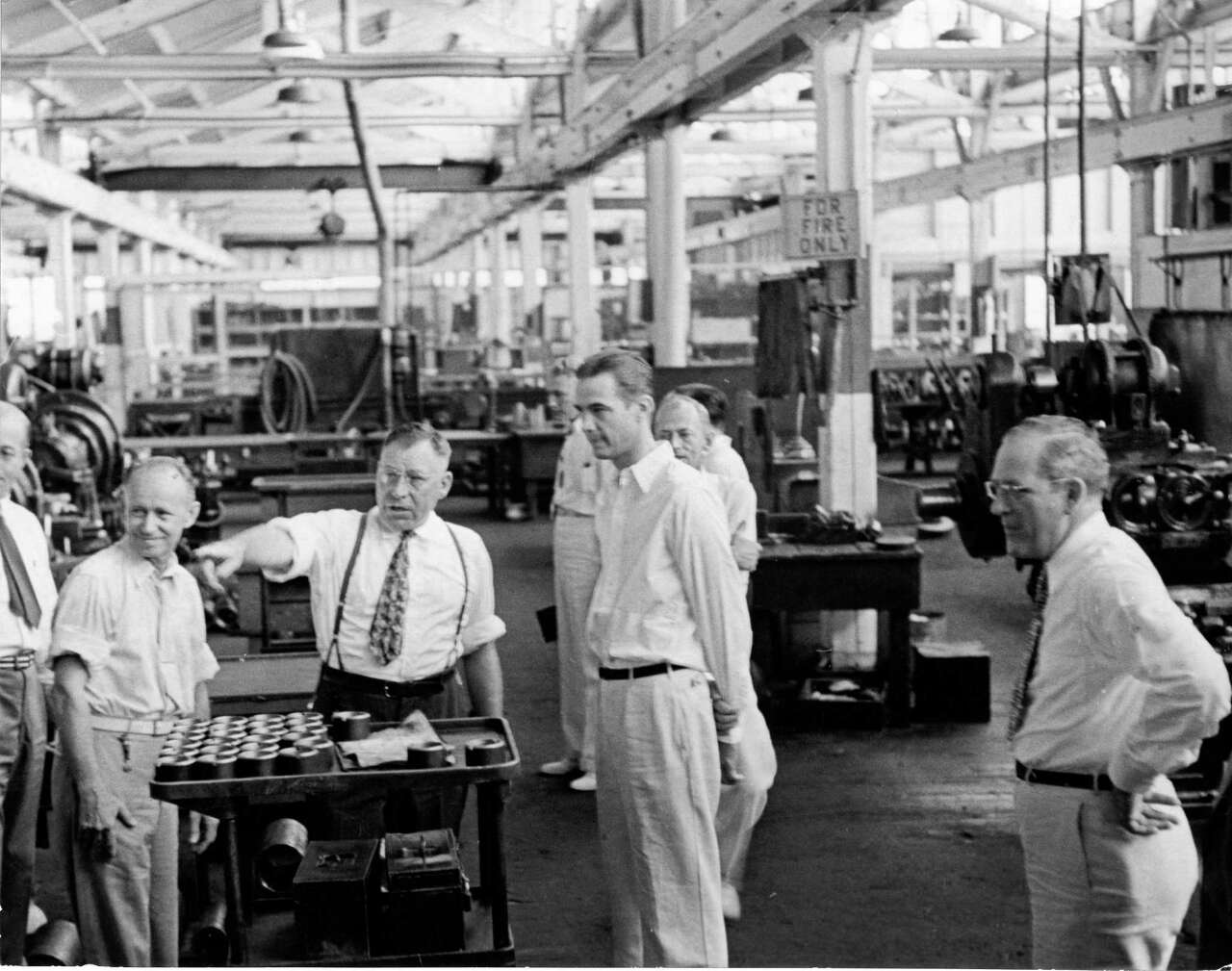
In the early days of the original U.S. oil boom, after Spindletop sent a gusher of black gold raining down over an area near Beaumont, the industry struggled against some basic challenges.
How do you rein in an out-of-control well spurting crude into the sky? How do you crush through seemingly impenetrable rock to tap the reservoirs of oil and gas underneath?
A century after three entrepreneurs set out to tackle the industry’s pressing problems and figure out ways to drill faster, cheaper and more efficiently, a $34.6 billion merger between long-time competitors Baker Hughes and Halliburton fuses together some of the founding fathers of today’s oil field services industry.
“One thing you can safely say about both companies is that they’ve each revolutionized the technology of the industry,” said Bruce Wells, executive director of the American Oil and Gas Historical Society. “These are two giants in the petroleum industry.”
Heralded as one of the largest deals in the history of the services sector, the merger ends a long-standing rivalry between two firms that can trace their roots to the dawn of the U.S. oil boom more than 100 years ago.
The deal comes as crude prices have plummeted more than 30 percent in recent months, driven down as the U.S. shale boom floods the market with crude while global demand for oil has remained relatively flat.
“Both Halliburton and Baker Hughes were born out of the great U.S. oil boom at the beginning of the 20th century,” Daniel Yergin, energy historian and author of the Pulitzer Prize-winning book “The Prize,” said in a statement. “Now, a century later, it’s the impact of the new boom in U.S. oil production that has helped create the impetus for their merger.”
But that same boom has also helped transform the U.S. oil and gas industry into a key global player thanks in part to innovations developed over decades by the these two companies, said Jeffrey Rodengen, who wrote a book on Halliburton’s history.
“If today’s rate of oil exploration and discovery continues and investment continues, we will be energy independent within 10 years,” he said. “And that wouldn’t have been possible without the technologies that Baker and Hughes and Halliburton have discovered and shared.”
Long before they were competitors, Halliburton and the companies that later became known as Baker Hughes, were scrappy little companies founded by oilmen trying to solve specific problems.
In 1907, California farm-boy- turned-wildcatter named R.C. Baker invented a tool that revolutionized cable-tool drilling, a method of crushing rock by repeatedly dropping a bit suspended from a steel cable into the bottom of a hole.
A year later, Howard Hughes Sr., a Harvard-educated lawyer who gave up law to drill for oil, helped build the first modern-day steel drill bit to push through the hard layers of rock frustrating drillers along the Gulf Coast.
Within a decade, Erle Halliburton, newly fired from his job at the Perkins Oil Well Cementing Co., proved his critics wrong when he gained control of a wild well gushing crude in Oklahoma by forcing cement down the hole to steady the pipe so it could be fitted with devices to control the flow.
The three inventions served as the foundations for Halliburton and the two firms that would later merge in 1987 to become Baker Hughes.
For years, the companies stayed out of each other’s way, operating in specific geographies and offering different products and services, but after World War II, the firms gradually expanded their international footprint and gobbled up smaller competitors in moves that increasingly pitted them against each other.
Business was booming when oil prices were high, but the bust of the 1980s forced the services companies to make tough choices. Halliburton slashed its capital expenditures by 59 percent in 1986, the worst financial year of the company’s history, by furloughing employees, consolidating plant operations and selling off equipment, including recently purchased planes, according to Rodengen’s book.
Halliburton’s rivals took a more drastic step. After laying off hundreds of people and shutting operations, Hughes Tool Company merged with Baker International in a 1987 deal that draws parallels to Monday’s announcement.
“Sure there were hard feelings,” said Ron Bitto, a former Baker Hughes employee who authored a history about the company. “It’s not that different than the conversation we’re having now. There was initial talk of we can have an amicable merger, then all of a sudden, bam! It happened. And the Baker people essentially took over the company.”
Despite the rough transition, the company emerged as a stronger competitor, more capable of going head-to-head against Halliburton and its other rival, Schlumberger. But while the firms were often dubbed the Big Three, Schlumberger has long dominated the industry, giving Halliburton and Baker Hughes extra incentive to join forces and streamline operations as oil prices continue to slide. The domestic benchmark price of crude slid to $75.64 on Monday.
“The Baker Hughes merger came about in the same situation almost 30 years ago,” said Joseph Pratt, an oil historian at the University of Houston. “With low oil prices and uncertainty about how competitive you are in different parts of the portfolio, you suddenly realize, it’s a lot safer, you’re a lot more certain to survive in the long term, if you have size.”
If the merger gains regulatory approval, Baker Hughes will become known as Halliburton and trade under that company’s stock ticker. The transaction spells death for the Baker Hughes brand, marking the end of a long and storied history of oil field innovations.
“A more competitive company will come out of the other end and those left at the company will benefit from it,” Bitto said. “But a lot of people will have to make career changes or life changes. It will be painful for a year or two.”
One Comment on "A rivalry of giants born in first U.S. oil boom"
rockman on Thu, 20th Nov 2014 7:52 pm
“But a lot of people will have to make career changes or life changes. It will be painful for a year or two.” Had lunch with 3 Baker hands today: heard an interesting stat: Baker has 102 VP’s. But some might survive if they go with pieces of Baker that get sold off. There will be a number of divisions the SEC will require spun off. At lunch my engineer was contemplating those potential buying opportunities.