
Peak Oil is You
Donate Bitcoins ;-) or Paypal :-)


Page added on October 5, 2011

Ugo Bardi: The renewable revolution, III – the Jevons paradox

I received an interesting comment today on my first post on the renewable revolution. In answering it, I thought that the exchange was worth publishing as a post in its own, so here it is.
- Karl Northsaid…
- Ugo, you are no doubt familiar with the Jevons Paradox, which says that energy efficiency gains, in a typical capitalist political economy of few policy constraints, are used in ways that lead to higher energy use at the macro level. In my view something similar is at work if the “clean” energy alternatives that you are advocating replace fossil fuels to a significant degree. The use of alternatives (again in our dominant form of political economy) will be used to chew up the same resources as fossil fuels do. Many of these resources are nonrenewable, many of them destructive of global carrying capacity in their production and use. As just one example, fossil fuels have permitted an industrialized form of agriculture that is an ecological slow-moving disaster but has temporarily doubled world population, which in turn is causing its own problems. As a systems analyst I am sure you can appreciate the positive feedbacks involved. So in general, significant production of alternative fuels would continue the disastrous process that is producing ‘peak everything’ both in terms of resource depletion and nest fouling.
Few writers on the subject of energy flow in our planetary system are considering the question: What is the level of energy use (of any sort) that is excessive, because it simply wears out the system. I liken the problem to running a car at rpms that are in the red zone of the car’s tachometer. Again, as a systems analyst I would think that you would be interested in such questions.
- October 4, 2011 6:50 PM
- My answer:
- Karl, I am glad that my post generates such interesting questions; what you say deserves a post on its own.
- Now, the Jevons “paradox” is not a paradox at all, as you know. It is not coded explicitly in the models but it is there. It is a consequence of the positive feedback relationship of consumption and production. It is a very simple assumption, it is curious that it works; but it does. Basically, people always want more, they maximize their “utility function” by satisfying their short term wants. Nate Hagens explains this in terms of dopamine production within the brain. It is the way things are, at least for our civilization. I am not sure it is so general over history, there may be social rules that control it. I am sure that in several societies these social brakes have been very effective, but in our case it is dopamine, dopamine, dopamine, and the more, the better.
- Now, Jevons’s idea, positive feedback if you like, is what leads to overexploitation, or overshoot as it is often termed. It is the main source of our troubles. As production grows so does consumption and if there were no negative feedbacks both would grow to infinity. These negative feedbacks, pollution and depletion, exist, but arrive with a time delay; too late. The result is that you have badly depleted your resource and you must go back not just to the sustainability level, but to a much lower level in order to allow the resource to grow back. That’s what we call collapse. In the end, it is caused by a molecule called dopamine, probably the most dangerous molecule on earth, perhaps even more than CO2!
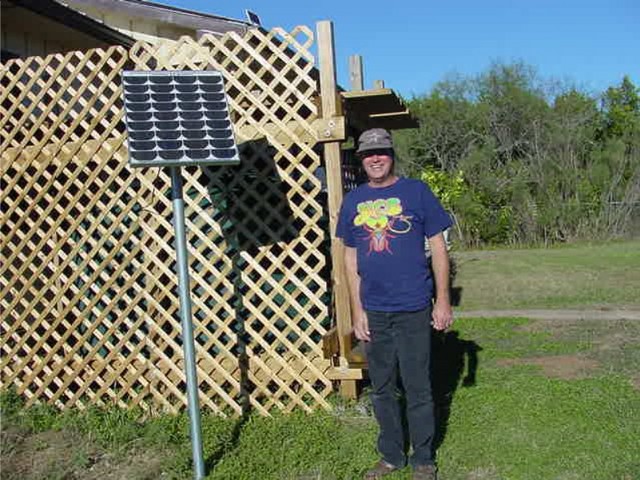
These are very general considerations that apply to non renewable or slowly renewable resources. There is a different case, though, that of renewables. The trick with solar or wind based renewables is that you can’t overexploit the sun. That is true, at least, for renewables such as wind and photovoltaics. Agriculture, instead, has a big problem of soil erosion that makes it often a non renewable resource. It doesn’t have to be; you can create an agriculture that doesn’t overexploit the soil, but let’s remain now on technologies which don’t damage the soil; such as PV.
Then, if you model the growth of renewables you have some of the same mechanisms that control the growth of non renewable resources. It is generated by a positive feedback and it grows rapidly. But the point is that the negative feedbacks do not generate such disastrous consequences as they do with non-renewable resources. That is, you might find that you installed too many solar panels and that it has negatively impacted agriculture. Well, at this point you may simply go back to the sustainability level, just removing the excess panels. The soil below the panels is still as good as before (and perhaps better). You didn’t affect the solar flux so you don’t have to remove more than those panels which exceed the sustainability level.
- In the model, you would assume that the flux from the resource stock remains unchanged. Playing with the models, what normally happens is that the system naturally stabilizes to the sustainability level. I don’t know whether this would happen in the real world, but I notice that people are already loudly complaining about PV using “too much land” and clamoring for stopping installations, even though the area used up to date is minuscule. So, I think that there are built-in mechanisms that would stop PV installation much before paving the whole planet with silicon cells. That applies not only to the use of land area but also to the use of mineral resources to build the panels themselves. If recycled carefully, which can be done, these resources can last a long, long time.
So, I believe that renewables are not subjected to over-exploitation themselves, or at least that the tendency to overexploitation/overshoot can be kept under control. It is a different mechanism of growth.
Now, to go back to your comment, what you say, actually, is more complex. If renewables alone are not so damaging to the environment, you are correct in saying that the mix of fossils and renewables is a different matter. It may well be a very unhealthy in the sense that it would generate a higher consumption of fossils and other mineral resources. And I am afraid you are totally right. If we were to come up with the perfect energy source, say something with EROEI= 100 and that lasts forever, then we would have electric power for free, but people would still want SUVs and they would invest in pulling out of the ground every and anything that can be burned: Tar sands, shale oil, bitumen, anything…..
Within some limits, this is an unsolvable problem. It has to do with human nature; can we fight dopamine? I don’t know – perhaps not. The only thing I can say is that if we have renewable power we have a chance to convince people that destroying the earth to burn fossil fuels is not a good idea. We can say that, because we can say that we don’t need to do it. If we don’t have an alternative, we have no chance – it doesn’t work. If you tell people simply that they have to stop burning oil and coal and be happy with less; well, look at the debate on global warming and see what is happening. Look at the debate on shale gas. These are dopamine driven debates. What people are saying is, “we must burn X (X=coal, oil, shale gas, etc….) because we don’t have alternatives.” If we can’t propose alternatives, they’ll burn everything that can be burned and then we’ll be back to Middle Ages (if we are lucky, because the alternative is the Olduvai Gorge and not even that: it could be a place as ancient fossils ourselves).
I am personally convinced that there exists a road to sustainability based on renewables; a road to a world that maintains some of our good things we did, such as that modest prosperity and freedom from the elementary wants, hunger, that we have been able to create at least in a fraction of the world and even there in a fraction of society. But it is something compared to the alternative which is – to cite Jevons – that “laborious poverty” of old times.
I am also convinced that we’ll arrive there, eventually. But the road is narrow and winding, and there are good chances to make a mistake and end up as Wily Coyote, squashed at the bottom of the canyon. I think, however, that we should try to see this road and do our best to follow it.
- Legacy
One Comment on "Ugo Bardi: The renewable revolution, III – the Jevons paradox"
Kenz300 on Thu, 6th Oct 2011 9:37 pm
Can we live sustainably?
The ever growing human population would be an argument that we can not. Too few resources meets too many people.