
Peak Oil is You

Donate Bitcoins ;-) or Paypal :-)


Page added on April 5, 2013

Two Energy Revolutions Vie Across the Atlantic

A front-page article in the Washington Post reported on the trend of energy-related investments in the US by European companies. This is another aspect of the competing energy revolutions I mentioned a few weeks ago, in my comments on President Obama’s State of the Union speech. Germany’s 2000 Renewable Energy Law introduced feed-in tariffs for wind and solar power that have made that country a global leader in green energy implementation, yet it has also become increasingly apparent that this carefully planned transformation paid insufficient attention to the cost of the new energy sources it was embedding at the heart of the German economy. The Post describes how leading German firms are looking across the Atlantic to invest where energy is cheaper, thanks to the unplanned, largely unanticipated extraction of hydrocarbons from shale.
The Ludwigshafen, Germany dateline of the article caught my eye immediately. Having just returned from a family trip to California with a packet of letters I wrote to my parents during a temporary work assignment in Germany in the early 1980s, I had only yesterday re-read the account of my visit to BASF’s sprawling petrochemicals complex there. I recall being greatly impressed by the site, which dwarfed the Los Angeles refinery at which I worked at the time. The BASF facility was part of the post-war boom–the Wirtschaftswunder–that made Germany the economic and industrial center of Europe, where it remains today two decades after reunification and a decade after relinquishing its cherished Deutchmark for the Euro. Now the company apparently wonders whether Ludwigshafen can remain competitive in a global market dominated by US shale gas.
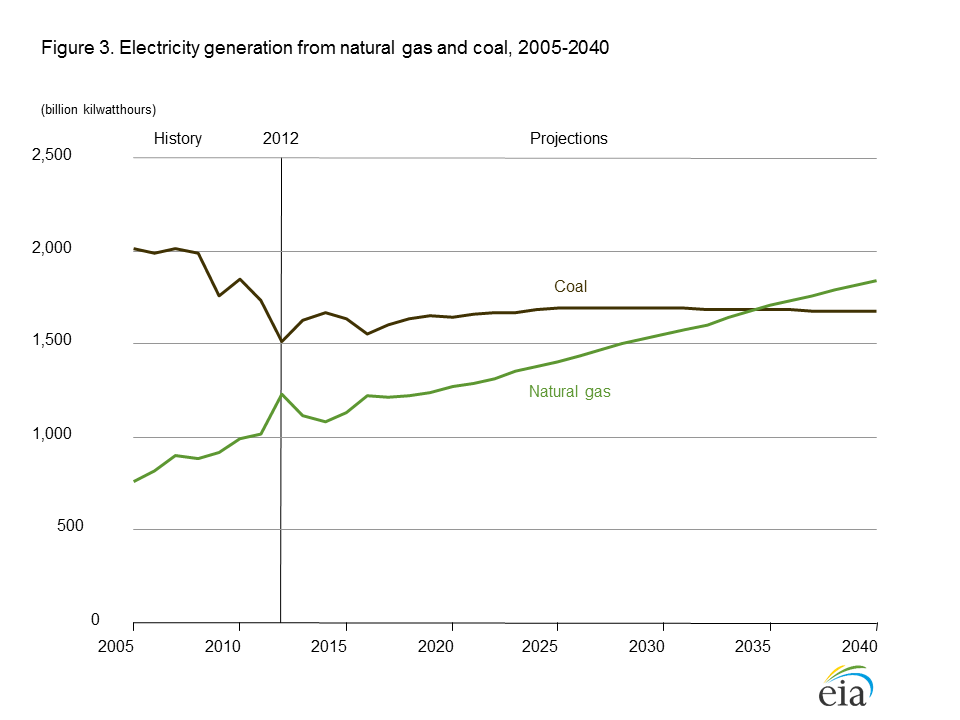
The divergence of energy prices that worries German industrialists is the result of conscious choices made by that country’s government and a set of developments that occurred here largely out of sight of the US government, while its attention was focused elsewhere. In the same decade in which production from shale gas deposits in Arkansas, Louisiana, Oklahoma, Pennsylvania and Texas–output that now sets the price of both gas and electricity in much of the US–was gathering momentum, the German government was negotiating for more imported natural gas from Russia, via a pipeline built by a company led by a former German Chancellor. It also set up a mechanism for consumers of electricity to fund the payment of up to $0.70 per kilowatt-hour that was necessary to support the initial solar power installations in one of the world’s least sunny countries.
German solar tariffs have declined significantly since then, thanks in part to ruinous competition with China-based solar manufacturers. However, in the aftermath of the nuclear accident at Fukushima, the German government agreed to retire the country’s nuclear power plants, which supplied 22% of its electricity in 2010. New solar might soon be cheaper than new nuclear capacity, but there aren’t many energy sources cheaper than an existing, fully-depreciated nuclear reactor, even after allowing for waste disposal and site cleanup. As a consequence of these policies, German managers such as those at BASF face natural gas prices that are a multiple of those here, along with the prospect of steadily rising electricity rates. The option to offshore production must seem as obvious for them as it did for US companies in 2005, when US natural gas prices reached $10 per million BTUs.
Of course this comparison is just a snapshot in time; the competition between these two energy revolutions will likely ebb and flow for years. However, the current energy divergence between Germany and the US should remind us that the cost of energy remains a very important economic parameter, even in highly developed countries. Measures that inevitably raise it are very likely to bring adverse consequences, no matter how well-intended or carefully justified they might seem. That’s worth considering here, as well, when Congress debates new energy taxes and the administration proposes new rules that could raise energy costs or constrain output.
8 Comments on "Two Energy Revolutions Vie Across the Atlantic"
BillT on Fri, 5th Apr 2013 12:46 pm
Any way you cut it, energy is only going to get more and more expensive, forever.
GregT on Fri, 5th Apr 2013 4:37 pm
” the cost of energy remains a very important economic parameter, even in highly developed countries.”
Energy is not just “a very important economic parameter”, it is “the parameter” that fuels our economies, especially in highly developed countries.
Shut down all sources of energy to your society for a month, and then come back and report on how well your economy is doing.
Kenz300 on Fri, 5th Apr 2013 8:31 pm
The cost of oil, coal and nuclear keeps rising and causing environmental damage.
The cost of wind and solar keeps dropping and they are safe and clean.
Easy choice.
BillT on Sat, 6th Apr 2013 3:49 am
Kenz, ALL of those things require massive hydrocarbon energy to exist. Factor in ALL of the energy requirements to enable those “clean” energy sources to exist and they are NOT very clean.
Take a peak at this:
http://sunweber.blogspot.com/2011/12/machines-making-machines-making.html
Arthur on Sat, 6th Apr 2013 2:02 pm
“Kenz, ALL of those things require massive hydrocarbon energy to exist.”
They don’t. Build a single wind turbine with oil and use the wind turbine to build the next 20 ones (assuming EROEI=20) and repeat process. After a few years (decades?) you have your shining renewed energy basis ready with millions of wind turbines.
BillT on Sat, 6th Apr 2013 2:27 pm
Arthur, you obviously did not read the above article by sunweber.
A cubic yard of concrete uses a barrel of oil to exist.
A ton of steel takes many times that energy.
The windmill is not going to build and maintain the highways/bridges to truck the parts to the locations.
Build the rigs/ships to place them if they are off shore or cranes to place them onshore.
Build/maintain the roads to each one. Mine/refine/manufacture the minerals/ores for the wiring system to connect them.
Supply the maintenance vehicles and parts to maintain them for 20 years.
Mine.refine and manufacture the machines to mine/refine/manufacture the machines, etc.
PLUS have enough net energy to make a profit from the sales of energy. No profit, no wind mills.
Sorry, ALL alternatives are sucking on the oil teat and will not exist when oil goes away.
Arthur on Sat, 6th Apr 2013 3:54 pm
“A cubic yard of concrete uses a barrel of oil to exist.”
Energy is energy, regardless whether it comes from oil or wind electricity.
Just like you don’t need oil to drive a car (ask mr Energy Czar), you can run a steel mill on electricity:
http://en.wikipedia.org/wiki/Electric_arc_furnace
(we have had this discussion before).
And who needs mining? All the iron we need is already above the ground, in fact parked before your house.lol… more than enough iron to add to that wind tower so your family is assured of electricity, if the wind blows. If not, go to bed, just like the Siberians do 6 months per year.
Arthur on Sun, 7th Apr 2013 11:12 am
I have to retract what I said in my first post, concerning the timing of setting up a new energy base. I did a calculation here…
http://deepresource.wordpress.com/2013/04/07/sobering-thoughts/
…showing that, although the longtime term potential of renewable energy is not in doubt, the path towards that energy future will likely be hazardous, to put it mildly. We are simply too late to innovate ourselves out of the mess.