
Peak Oil is You
Donate Bitcoins ;-) or Paypal :-)


Page added on August 15, 2016

The “stereosphere” and the upcoming photovoltaic revolution

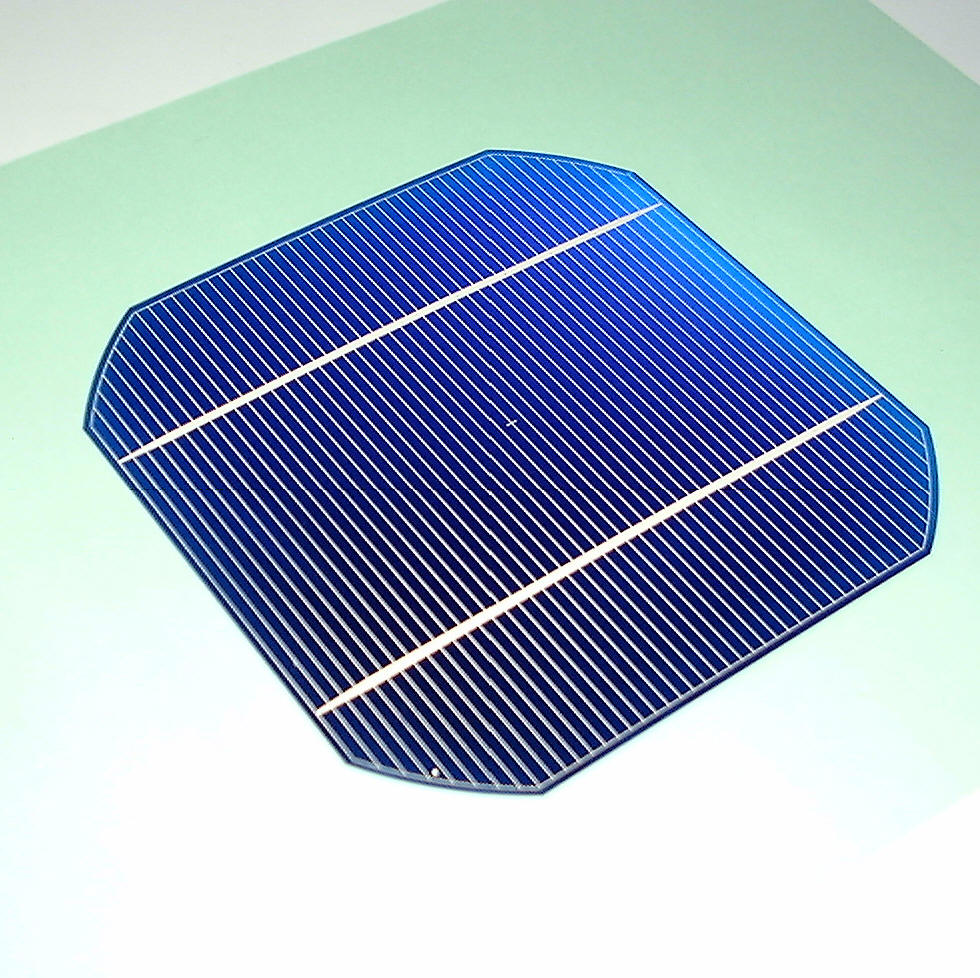
The main nutrient for the biosphere is CO2, taken from the atmosphere, while the stereosphere consumes SiO2, taking it from the geosphere. Both metabolic chains use a variety of other nutrients: the stereosphere can reduce the oxides of metals such as aluminum, iron, and titanium, and use them as structural or functional elements in their metallic form; whereas the biosphere can only use carbon polymers. The biosphere stores information mostly in specialized carbon-based molecules called deoxyribonucleic acids (DNA). The stereosphere stores it mostly in silicon-based components called “transistors”. Mechanical enactors are called “muscles” in the biosphere and are based on protein filaments that contract as a consequence of changing chemical potentials. The equivalent mechanical elements in the stereosphere are called “motors” and are based on the effects of magnetic fields on metallic elements. For each element of one of these systems, it is possible to find a functional equivalent of the other, even though their composition and mechanisms of operation are normally completely different.
A major difference in the two systems is that the biosphere is based on microscopic self-reproducing cells. The stereosphere, instead, has no recognizable cells and the smallest self-reproducing unit is something that could be defined as the “self-reproducing solar plant factory.” A factory that can build not only solar plants but also new solar plant factories. Obviously, such an entity includes a variety of subsystems for mining, refining, transporting, processing, assembling, etc. and it has to be very large. Today, all these elements are embedded in the system called the “industrial system.” (also definable as the “technosphere”). This system is powered, at present, mainly by fossil fuels but, in the future, it would be transformed into something fully powered by the dissipation of solar energy potentials. This is possible as long as the flow of energy generated by the system is as large or larger than the energy necessary to power the metabolic cycle. This requirement appears to be amply fulfilled by current photovoltaic technologies (and other renewable ones).
A crucial question for all metabolic processes is whether the supply of nutrients (i.e. minerals) can be maintained for a long time. About the biosphere, evidently, that’s the case: the geological cycles that reform the necessary nutrients are part of the concept of “Gaia”, the homeostatic system that has kept the biosphere alive for nearly four billion years. About the stereosphere, most of the necessary nutrients are abundant in the earth’s crust (silicon and aluminum being the main ones) and easily recoverable and recyclable if sufficient energy is available. Of course, the stereosphere will also need metals which are rare in the earth’s crust, but the same requirement has not prevented the biosphere from persisting for billions of years. The geosphere can recycle chemical elements by natural processes, provided that they are not consumed at an excessively fast rate. This is an obviously complex issue and we cannot exclude that the cost of recovering some rare element will turn out to be a fundamental obstacle to the diffusion of the stereosphere. At the same time, however, there is no evidence that this will be the case.
So, can the stereosphere expand on the earth’s surface and become a large and long-lasting metabolic cycle? In principle, yes, but we should take into account a major obstacle that could prevent this evolution to occur. It is the “Allee effect” well known for the biosphere and that, by similarity, should be valid for the stereosphere as well. The idea of the Allee effect is that there exists a minimum size for a biological population that allows it to be stable. Too few individuals may not have sufficient resources and reciprocal interactions to withstand perturbations and avoid extinction. In the case of the stereosphere, the Allee effect means that there is a minimum size for the self-reproducing solar plant factory that will allow it to be self-sustaining and long-lasting. Have we reached the “tipping point” leading to this condition? At present, it is impossible to say, but we cannot exclude that it has been reached or that it will be reached before the depletion of fossil fuels will bring the collapse of the current industrial system.
The next question is whether a self-sustaining stereosphere can coexist with the organic biosphere. According to Gause’s law, well known in biology, two different species cannot coexist in the same ecological niche; normally one of the two must go extinct or be marginalized. Solid state and photosynthetic systems are in competition with each other for solar light so, if the efficiency of solid state transduction systems were to turn out higher than that of photosynthetic systems, it could expand at the expense of the biosphere. But this is not obvious. PV cells today appear to be more efficient than photosynthetic plants in terms of the fraction of solar energy processed but we need to consider the whole life cycle of the systems and, at present, a reliable assessment is difficult. We should take into account, anyway, that solid state creatures don’t need liquid water, don’t need oxygen, are not limited to local nutrients, and can exist in a much wider range of temperatures than biological ones. It means that the stereosphere can expand to areas forbidden to the biosphere: dry deserts, mountaintops, polar deserts, and more. Silicon based creatures are also scarcely affected by ionizing radiation, so they can survive in space without problems. These considerations suggest that the stereosphere may occupy areas and volumes where it is not in direct competition with the biosphere.
Notes:
1. I am not discussing here whether the possible emergence of the stereosphere is a good or a bad thing from the viewpoint of humankind. It could give us billions of years of prosperity or lead us to rapid extinction. It seems unlikely, anyway, that humans will choose whether they want to have it or not on the basis of rational arguments while they still have the power to decide something on the matter.
2. The concept of a terrestrial metabolic system called the stereosphere is not equivalent, and probably not even similar, to the idea of the “technological singularity” which supposes a very fast increase of artificial intelligence. The “self-reproducing solar plant factory” needs not be more intelligent than a bacterium; it just needs to store a blueprint of itself and instructions about replication. Intelligence is not necessarily useful for survival, as humans may well discover to their chagrin in the near future.
3. About the possibility of a photovoltaic-powered Dyson sphere around a white dwarf, see this article by Ibrahim Semiz and Salim O˘gur.
4. The idea of “silicon-based life” was popularized perhaps for the first time by Stanley Weinbaum who proposed his “Pyramid Monster” in his short story “A Martian Odissey” published in 1933. Weinbaum’s clumsy monster could not exist in the real universe, but it was a remarkable insight, nevertheless.

Cassandra’s legacy by Ugo Bardi
6 Comments on "The “stereosphere” and the upcoming photovoltaic revolution"
Go Speed Racer on Mon, 15th Aug 2016 6:23 pm
We absolutely should bring back the Stereosphere.
To do this, it will be good to bring back Pioneer receivers, Dual record changers, and the large JBL bookshelf speakers.
Don Stewart on Mon, 15th Aug 2016 7:00 pm
Ugo
I hope you are tolerant of comments from non-scientists. Here are my thoughts about the replacement of fossil energy with solar and possibly wind energy.
First, I think we have to observe that industrial civilization as we have known it is unlikely to survive the demise of fossil fuels, whether as a result of physical depletion or thermodynamic decay, as outlined in the recent series of posts by Louis Arnoux. Second, consequently, we are looking at the prospects for survival of certain groups who have adopted technologies which are adaptive in the new environment. In other words, there will be a selection event.
Third, I want to propose that ‘complexity’ is best defined in a certain way. Nick Lane, in The Vital Question: Energy, Evolution, and the Origins of Complex Life, shows how the synergy between what became the mitochondria and the host cell resulted in many characteristics of eukaryotes, from sex to senescence to death and many other attributes. Many of the characteristics are required in order to solve what I call the Two Clocks Problem. I use the term ‘clock’ analogically to refer to any essential process which is happening in two autonomous critters, but which must result in finely controlled output from the total of the two critters. In Lane’s work, that is the energy production in the mitochondria and the energy use in the host cell. The tolerances are measured in angstroms and involve quantum tunneling. In an ‘advanced’ society of humans, who do not have fossil energy, but do have access to solar technology, I submit that the requirement for close tolerances and cooperation are likely to be a precondition.
Consider a hunter-gatherer group of 150 people. They need close cooperation, but they don’t have access to solar panels. In order to achieve a society with solar panels, it will be necessary to get cooperation in a considerably larger group of people.
Let me give an example of the type of cooperation I envisage as being required. It is known that humans have two different kinds of minds. One kind reacts almost immediately and without much thinking to a stimulus: see a donut; eat donut. The second kind of mind is more thoughtful: see donut; consider ‘healthy eating’ resolutions; pass on donut.. IF the society is organized along the lines of laissez-faire capitalism, then there will be a constant bombardment of messages indicating that eating the donut will solve all the little nagging problems that might afflict a person. It will require a society somewhere on the scale from social to eusocial in order to suppress the harmful messages. If the harmful messages are not suppressed, then most of the people in the society will develop diseases, which must be paid for by the whole society if the species is social.
Considering Nick Lane’s example of the Two Clocks problem at the cellular level, and the problem with ‘healthy eating’ as an example of the Two Clocks problem, then one begins to get an idea of the costs of complexity. Investments in infrastructure and in fuels are required to cope with the unavoidable problems of dealing with the Two Clocks. But in a solar powered society, infrastructure and fuels are likely to be relatively scarce as compared to fossil energy societies in their heyday. A completely eusocial critter solves the problem by having a single clock, as when all the offspring are clones. Neo-Liberal economic man tries to solve the problem my making a God of money…the invisible hand will solve all problems so long as everyone maximizes the money.
Consequently, we need to study how eusocial critters have evolved. E.O. Wilson lays out the requirements for the development of eusociality on page 187 of the paperback version of The Social Conquest of Earth:
*Formation of Groups
*A valuable and defensible nest
*Knocking out of anti-social behavior
*Group level selection by environmental forces
*Group level selection drives further evolution
(I paraphrase. Strongly recommend reading Wilson’s paragraphs.)
I believe we can visualize two paths to a solar powered future, which still involves more technology than hunter-gatherers, less free energy consumption that we have become accustomed to, and a tendency toward eusocial behavior. First, we can imagine that some great leader emerges who convinces the whole world to embark on a global mobilization. Second, we can imagine some group which forms and begins to move in the direction of solar. For example, the group might evolve toward DC appliances, as well as rooftop PV units and solar hot water. They may also evolve in the direction of localization for essentials such as food, water, and building materials. They will also develop ways to defend their ‘nest’. And, importantly, they will restrict the commercial appeals to the knee-jerk school of consumerism.
My bet would be on the second alternative.
Here are a few excerpt from Wikipedia on Wilson’s notions of eusociality:
https://en.wikipedia.org/wiki/Eusociality
Summarizing the positions taken, Herbert Gintis noted that Wilson explicitly diverged from the general view that human sociality is accounted for by W. D. Hamilton’s inclusive fitness theory, formulating instead a controversial theory of group selection. Wilson’s claims, especially as formulated in his 2010 paper with Nowak and Tarnita,[41] were “vigorously rejected”[1] by up to 134 scientists at a time, writing in the same journal, Nature, as well as by well-known individuals like Richard Dawkins[38] and Steven Pinker.[39] Dawkins noted that human groups involve many unrelated families who may cooperate to a high level, but do not have reproductive division of labor.[38] Gintis further observes that biological altruism cannot exist in “advanced eusocial species”, because altruism by definition reduces fitness: but non-reproductive workers already have a fitness of zero. Gintis thus agrees with Dawkins that humans are not eusocial, though he suggests some changes to Hamilton’s rule to make it more complete.[1]
—————-
Many scientists citing the close phylogenetic relationships between eusocial and non-eusocial species are making the case that environmental factors are especially important in the evolution of eusociality. The relevant factors primarily involve the distribution of food and predators.
With the exception of some aphids, all eusocial species live in a communal nest which provides both shelter and access to food resources. Mole rats and ants live in underground burrows; wasps, bees, and some termites build above-ground hives; thrips and aphids inhabit galls (neoplastic outgrowths) induced on plants; ambrosia beetles and some termites nest together in dead wood; and snapping shrimp inhabit crevices in marine sponges. For many species the habitat outside the nest is often extremely arid or barren, creating such a high cost to dispersal that the chance to take over the colony following parental death is greater than the chance of dispersing to form a new colony. Defense of such fortresses from both predators and competitors often favors the evolution of non-reproductive soldier castes, while the high costs of nest construction and expansion favor non-reproductive worker castes.
The importance of ecology is supported by evidence such as experimentally induced reproductive division of labor, for example when normally solitary queens are forced together.[46] Conversely, female Damaraland mole-rats undergo hormonal changes that promote dispersal after periods of high rainfall,[47] supporting the plasticity of eusocial traits in response to environmental cues.
Don Stewart
makati1 on Mon, 15th Aug 2016 9:44 pm
More unicorn shit piled higher and deeper…
Davy on Tue, 16th Aug 2016 4:08 am
There will be selection when “crisis time” comes. We are going to see a dual selection process. The long term process is obvious and we see that in evolution. That is more academic and less of an influence on dooming and prepping. The initial and intermediate selection is important for us doomers. The longer term is a survival of the fittest by time proven adaptations. Individual survivability should be based upon the initial selection process. Initially it is preparations and proper location that are the key. Longer term it is natural selection over multiple years which is beyond the scope of the individual. It is interesting to talk about but it is not relevant for dooming.
The immediate selection process will be the leveling of locations per dependence on fossil fuels that will go into shortage. That process of shortages will vary by location but the fact that it will be a global event will impact all. We have a common global world that will be impacted by energy intensity and economic velocity changes. Any widespread shortage will affect all because we are mutually dependent. Locations that are in physical overshoot for reasons of supply, climate, and population will be rendered down to sustainable. Complexity and technology will be leveled leaving mostly abstract social complexity and residual technology that can be salvaged. Those who are organized and cooperative will have advantage.
This initial selection event is going to favor locations and populations that now have resilience and sustainability over those who now have complexity and efficiency. Locations that currently are less fossil fuel complex but more robustly sustainable per non fossil fuel attributes will have a natural positive selection. Most rich areas have higher population densities which allow economic velocity and energy intensity. They are nodes of control and production. The problem for them is they have control and produce wealth based upon the status quo of fossil fuel energy intensity and global economic velocity. Less complex and less populated locations will likely maintain cohesion and ride out a storm of destructive change with more advanced locations breaking down. The initial selection is going to be pro locations that are less not more.
We know limits and diminishing returns are current conditions and forces of change. These forces are now significant in the new age of decline and decay. This makes those areas that are the most advanced the most at risk. This does not mean those areas that are already the poorest and most exposed to a range of destructive forces will fare better. Many locations that are now the most vulnerable because of overshoot of population and consumption will be the first to go into complete collapse. I am referring to locations that have stability and strength now. This is also not to say some of these overpopulated most vulnerable locations will not level out and be sustainable once a sizable die off occurs. That will be part of the longer selection event.
Intermediately we will see those areas that are less complex and energy intensive naturally having selectivity over highly complex and energy intensive areas. This is important because it means those current industrial and political power centers are likely not going to maintain dominance as we see now. In the very initial event or process these areas will likely exert control and influence. Initially they will maintain themselves by brute economic and political force but their power will quickly diminish as complexity and energy intensity wane.
The point here is if you are looking for a refuge you should consider a place less wealthy by virtue of the incongruities of the status quo and decline. These incongruities are efficiency and speed over the natural sustainability and resilience of places. Less economic activity has been a handicap during the growth process but now will be an advantage. Paradoxes will be manifested routinely in the coming age of decline. The “less” is going to be the “more” as far as survivability.
There is a trump card in this condition and this is chance. Some places are going to be in the wrong place at the wrong time and other will be blessed with luck. That said it still will be a factor of being more sustainable and resilient within the situation of being lucky or unlucky. You can be unlucky and have what it takes to survive. Being unlucky and not having what it takes is game over. What is coming is going to be broad based and inclusive. This will not be like a normal weather event where the tornado hits some places and not others. All places will be flooded with adversity and tornados will hit some leaving pathways of destruction within an area of adversity.
Longer term selection is obvious. A leveling and die off will create a new people. Modern man will evolve into a postmodern man with new attributes of strength that are different from today. We know there are timeless attributes of strength but these will be altered by the devolution of complexity and energy intensity and the evolution of adaptive characteristics that coincide with less affluence. What is considered right today will not be tomorrow in many circumstances because we are talking an extreme reorganizations of civilization. I would prepare accordingly. I have often said location is the basis of preparations. It is fundamentally the foundation on which to build survival.
Hawkcreek on Tue, 16th Aug 2016 11:47 am
If there is a massive dieoff, the whole world will become a massive, well-stocked, junkyard, with the resources available to anyone with the proper knowledge and skill set. These people would be able to build solar furnaces to smelt metal, use the leftover PV systems to power telegraphy, etc, etc. You can build a comfortable civilization without any type of computers or micro-processors.
It’s all about knowledge. Most of our knowledge to date is all in hard-copy in millions of libraries. Physical preps will get you through a few years, but knowledge preps will get you through the tough decades to follow.
Once you get past killing the zombies and new empire builders, it will be a McGyver’s paradise.
Cloggie on Tue, 16th Aug 2016 12:17 pm
No need for a dieoff. Most iron ever needed is already above the ground. A good financial crisis or war will make available hundreds of millions of junk cars, ripe for the smelter.