
Peak Oil is You

Donate Bitcoins ;-) or Paypal :-)


Page added on January 3, 2017

Solar Could Beat Coal to Become the Cheapest Power on Earth
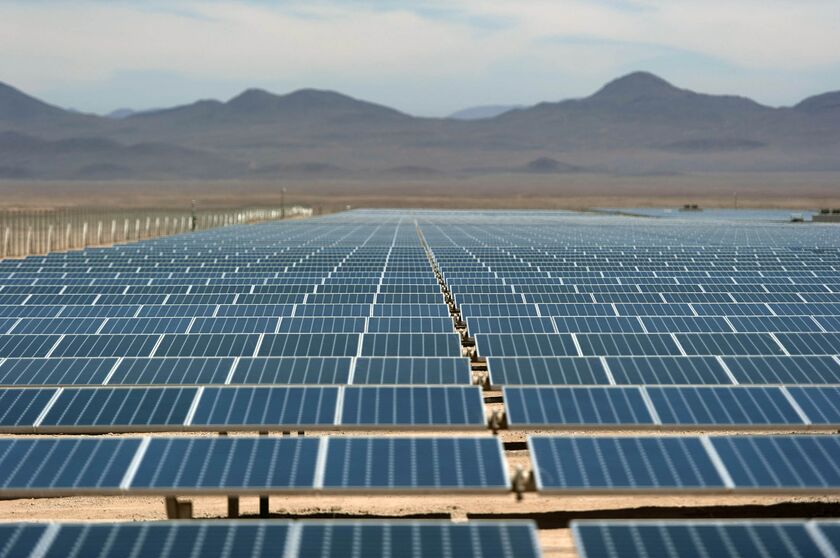
Solar power is now cheaper than coal in some parts of the world. In less than a decade, it’s likely to be the lowest-cost option almost everywhere.
In 2016, countries from Chile to the United Arab Emirates broke records with deals to generate electricity from sunshine for less than 3 cents a kilowatt-hour, half the average global cost of coal power. Now, Saudi Arabia, Jordan and Mexico are planning auctions and tenders for this year, aiming to drop prices even further. Taking advantage: Companies such as Italy’s Enel SpA and Dublin’s Mainstream Renewable Power, who gained experienced in Europe and now seek new markets abroad as subsidies dry up at home.
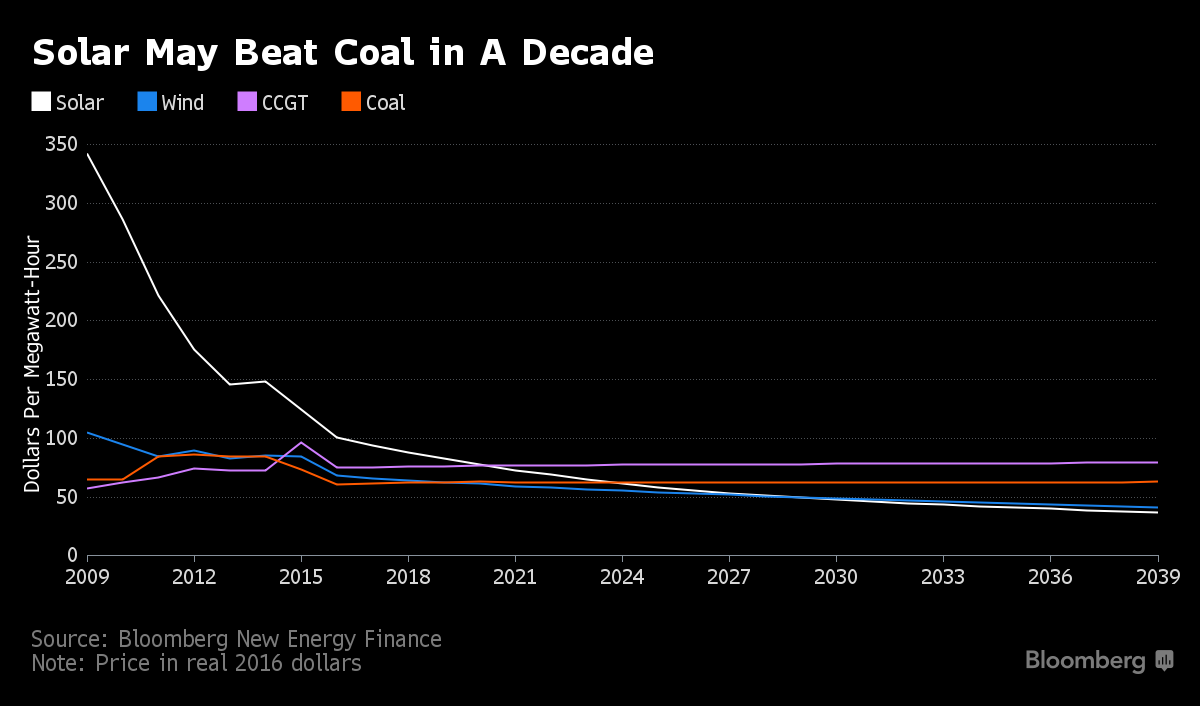
Since 2009, solar prices are down 62 percent, with every part of the supply chain trimming costs. That’s help cut risk premiums on bank loans, and pushed manufacturing capacity to record levels. By 2025, solar may be cheaper than using coal on average globally, according to Bloomberg New Energy Finance.
“These are game-changing numbers, and it’s becoming normal in more and more markets,” said Adnan Amin, International Renewable Energy Agency ’s director general, an Abu Dhabi-based intergovernmental group. “Every time you double capacity, you reduce the price by 20 percent.”
Better technology has been key in boosting the industry, from the use of diamond-wire saws that more efficiently cut wafers to better cells that provide more spark from the same amount of sun. It’s also driven by economies of scale and manufacturing experience since the solar boom started more than a decade ago, giving the industry an increasing edge in the competition with fossil fuels.
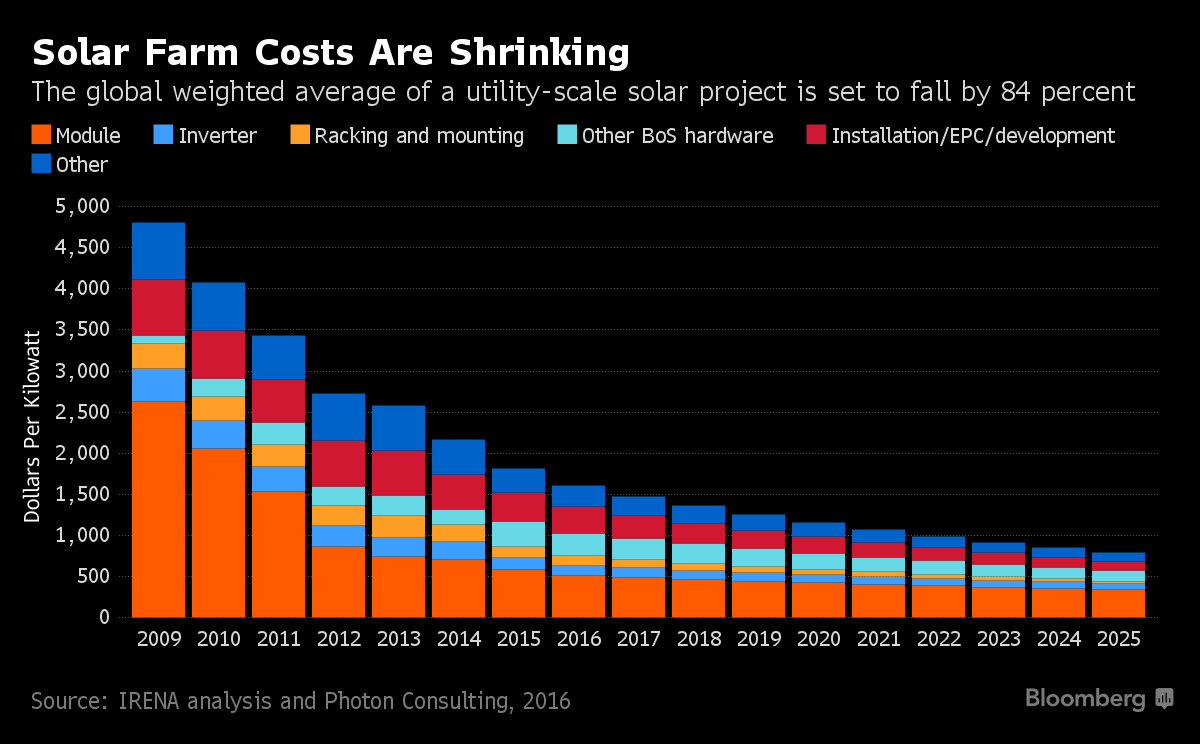
The average 1 megawatt-plus ground mounted solar system will cost 73 cents a watt by 2025 compared with $1.14 now, a 36 percent drop, said Jenny Chase, head of solar analysis for New Energy Finance.
That’s in step with other forecasts.
- GTM Research expects some parts of the U.S. Southwest approaching $1 a watt today, and may drop as low as 75 cents in 2021, according to its analyst MJ Shiao.
- The U.S. Energy Department’s National Renewable Energy Lab expects costs of about $1.20 a watt now declining to $1 by 2020. By 2030, current technology will squeeze out most potential savings, said Donald Chung, a senior project leader.
- The International Energy Agency expects utility-scale generation costs to fall by another 25 percent on average in the next five years.
- The International Renewable Energy Agency anticipates a further drop of 43 percent to 65 percent for solar costs by 2025. That would bring to 84 percent the cumulative decline since 2009.
The solar supply chain is experiencing “a Wal-Mart effect” from higher volumes and lower margins, according to Sami Khoreibi, founder and chief executive officer of Enviromena Power Systems, an Abu Dhabi-based developer.
The speed at which the price of solar will drop below coal varies in each country. Places that import coal or tax polluters with a carbon price, such as Europe and Brazil, will see a crossover in the 2020s, if not before. Countries with large domestic coal reserves such as India and China will probably take longer.
Coal’s Rebuttal
Coal industry officials point out that cost comparisons involving renewables don’t take into account the need to maintain backup supplies that can work when the sun doesn’t shine or wind doesn’t blow. When those other expenses are included, coal looks more economical, even around 2035, said Benjamin Sporton, chief executive officer of the World Coal Association.
“All advanced economies demand full-time electricity,” Sporton said. “Wind and solar can only generate part-time, intermittent electricity. While some renewable technologies have achieved significant cost reductions in recent years, it’s important to look at total system costs.”
Even so, solar’s plunge in price is starting to make the technology a plausible competitor.
Sunbelt countries are leading the way in cutting costs, though there’s more to it than just the weather. The use of auctions to award power-purchase contracts is forcing energy companies to compete with each other to lower costs.
An August auction in Chile yielded a contract for 2.91 cents a kilowatt-hour. In September, a United Arab Emirates auction grabbed headlines with a bid of 2.42 cents a kilowatt-hour. Developers have been emboldened to submit lower bids by expectations that the cost of the technology will continue to fall.
“We’re seeing a new reality where solar is the lowest-cost source of energy, and I don’t see an end in sight in terms of the decline in costs,” said Enviromena’s Khoreibi.
128 Comments on "Solar Could Beat Coal to Become the Cheapest Power on Earth"
Cloggie on Wed, 4th Jan 2017 12:51 pm
the majority of people in the first world today are living pay check to pay check
https://en.wikipedia.org/wiki/List_of_countries_by_wealth_per_adult
Mostly paid off/surplus value real estate and pension funds. The first world is still the first world for a reason.
It is still true that they live from paycheck to paycheck, but mostly because they don’t have the discipline NOT to buy. They quasi volunteer to go deep into debt, for instance to join the college madness. They go into debt because everybody does it.
penury on Wed, 4th Jan 2017 1:10 pm
Rockman, I fear that you talk too much sense for the alt energy lovers to comprehend. You and others do not seem to comprehend “if we wish it, it shall be” mindset of so many people.
GregT on Wed, 4th Jan 2017 2:27 pm
“They go into debt because everybody does it.”
I bought my first house when I was 26 years old Cloggie, for $58K. I was making ~$40K per year. The lot alone that that house sat on, (not sure if the house is still there) would easily fetch over $1 M today. My son is 24, and makes ~$50K per year. A good wage in todays standards for a person of his age. His monthly rental is 10 times what my monthly mortgage payment was back in the day. A 2 bedroom condo in the same area today, easily costs over 500,000 dollars.
There are many more reasons as to why people are going so far into debt, other than “everybody does it”.
Boat on Wed, 4th Jan 2017 2:28 pm
Rock,
In OCED countries renewables dominate new grow. Globally renewables are expected to surpass coal around 2020 for new demand. Every power plant has a life cycle. As plants shut down wind and solar will dominate their replacement. One has to look at these developments over 70 years or if one thinks renewables can capture say 85+ percentage of the market. Just like electric cars. First they have to become cheaper, after that a few decades for scale to happen. By the time a 2 year old graduates from collage the electric economy will be well on it’s way. By the time he is 70 there will be lots of plug in stuff.
onlooker on Wed, 4th Jan 2017 2:44 pm
In a related story according to this study ‘
Tenfold Jump in Green Tech Needed to Meet Global Emissions Targets
“Based on our calculations, we won’t meet the climate warming goals set by the Paris Agreement unless we speed up the spread of clean technology by a full order of magnitude, or about ten times faster than in the past,”
https://nicholas.duke.edu/about/news/tenfold-jump-green-tech-needed-meet-global-emissions-targets
GregT on Wed, 4th Jan 2017 2:47 pm
Boat,
A two year old today, will be 70 in 2085. If we don’t completely stop using all fossil fuels within the next decade and a half, chances are very good that the human race will be extinct by then. And Boat, in case you can’t quite figure this one out either, that “plug in stuff” is manufactured, distributed, and maintained with fossil fuels. As is the entire electric grid that powers that “stuff”.
GregT on Wed, 4th Jan 2017 3:00 pm
And that would be OECD countries Kevin. Not OCED countries. One more to add to long list of things that you cannot ever seem to get right.
GregT on Wed, 4th Jan 2017 3:13 pm
“Globally renewables are expected to surpass coal around 2020 for new demand. Every power plant has a life cycle. As plants shut down wind and solar will dominate their replacement.”
It is estimated that by 2020, over 15 percent of China’s energy capacity will come from non-fossil fuel sources, and the country is the clear global leader when it comes to renewable energy.
Even as China adds mountains of renewable energy capacity and develops progressive government policies to improve air quality, the old incumbent coal is still maintaining its leading position — and its looking to do so for a long time yet.
China’s National Action Plan for Air Pollution Prevention and Control’s mid-term review, which was released on July 5th, shows that the eight provinces which make up their ‘key regions,’ added on a massive 50.8 GW of new coal-fired energy capacity between the years of 2013-15. For scale, the country’s total installed energy capacity in 1980 was 66 GW. On top of this, the report showed that 42 GW of additional coal-fired capacity is currently under construction, with 11 GW more being approved just last year.
Considering that each coal-fired power plant has a lifetime of thirty to fifty years, it seems as if China has hedged its biggest energy bet on coal for the foreseeable future.
http://www.forbes.com/sites/wadeshepard/2016/07/08/if-china-is-so-committed-to-renewable-energy-why-are-so-many-new-coal-plants-being-built/#7a3ef75465f7
Simon on Wed, 4th Jan 2017 3:22 pm
Cloggie, I can echo Daves sentiment, you make really good points, and while it is nice to have someone talking up the EU for a change, it does rile people up.
Rockman.
Initial Capital is a problem, I doubt you will see many older plants being closed down (where I am they still have a few HFO plants on the books). These old plant are still liable to compete in capacity auctions so they effectively can get paid for ‘standing by’, this is the reason that you will not see older plants decommissioned.
To workout the amount of Carbon saved by alts, is quite a feat, you would need to
Determine the Generator State of the thermal Generator before the AE plant took over
The Ramp Rate of the Generator to bring it up to the required level(the level of the AE), Ramp rate being the speed it cycles up or down, from a given state.
The Heat Rate per minute of the Generator depending on the Ramp Rate.
The Carbon Emmissions at a given State for a given amount of Gas/Coal
Oh and probably the ambient temperature.
Now, a lot of this is commercially sensitive data, so you will probably never know the figure.
Thanks
Simon
Simon on Wed, 4th Jan 2017 3:23 pm
Bum .. Heat rate is a measurement of Joules per Mw
Davy on Wed, 4th Jan 2017 3:28 pm
Simon, you are intimately involved with the Euro-grid so I think we can take your opinion to the bank.
Boat on Wed, 4th Jan 2017 5:52 pm
greggiet,
Yea China and for that matter India are still betting and investing in coal. Billions of extra health care costs will be the result along with maybe the demise of the human race. As climate change worsens one would hope it will become apparent it’s time to take a drastic change in energy production.
PS, I meant to say renewables would pass coal in new energy growth around 2020.
makati1 on Wed, 4th Jan 2017 6:34 pm
As long as we keep digging up and burning about 8 billion tons of coal and lignite per year* (500 kilos for every man, woman and child in the world), the whole world will reap the destruction from coal pollution, not just China or India. Just because you cannot see the pollution from coal does not mean it is not in your nose and lungs. It is. And it is killing the ecosystem you need to live.
* https://yearbook.enerdata.net/coal-and-lignite-production.html#coal-and-lignite-world-consumption.html
https://www.worldcoal.com/coal/08012016/us-coal-production-falls-10-percent-in-2015-eia-2016-24/
BTW: the U$ digs up and burns or exports about 10% of that 8 billion ton total. So, the blame rests on The U$ as much as anywhere else. Bring the ‘jobs’ home and the pollution will be visible in YOUR neighborhood again. lol
rockman on Wed, 4th Jan 2017 8:45 pm
Simon – Yes, as they say the devil is in the details. Texas is hanging on to its lignite burners for the same reason (back up) but also in case NG prices eventually get a lot higher. This month in Texas we’re scheduled to start up the largest CO2 sequestration project in the world for the second largest single source of GHG in the USA. That plant has 3 NG burners and 3 lignite burners. Not sure if the data is public but I’ll hunt it. There might be a source for a lot of data from ERCOT. A very unique organization that essentially managers most of the state’s energy aspects from private investors to utilities to consumers to regulators. The more I learn about EXCOT the more it looks like a great model for the other 2 USA electric grids. But it would be the Mother of All Control battles between hundreds of individual entities in those 48 states. The reason it worked in Texas was the state authority: you followed its directions and played by its rules. If not the governor could send a Texas Ranger to arrest your butt. LOL.
ERCOT if interested: http://www.ercot.com
rockman on Wed, 4th Jan 2017 9:03 pm
Boat – “In OCED countries renewables dominate new grow.”. Exactly the problem I’m pointing out: “new grew” won’t reduce GHG emissions. Only “new substitution” will do that. And that’s the number I’m looking.
So OK: lots of folks here can rattle off how much alt energy capacity has been added the last 20 years. Great: now tell me how much fossil fuel generated capacity has decreased over that same period. If that number hasn’t decreased then none of the alt gains have made the situation BETTER…they’ve only reduced the rate of the situation getting worse. Which would mean we’re still heading for a bad ending but just getting there a little slower.
Project all you want decades into the future. But that means nothing compared the DOCUMENTED trend we’re on right now IMHO.
Boat on Wed, 4th Jan 2017 9:55 pm
Rock,
Didn’t you read I agreed with you? Just adding that as coal plants closed at the end of their life cycle will be primarily replaced by renewables because of their growing cost advantage.
Sissyfuss on Wed, 4th Jan 2017 10:10 pm
But but but Nero, uh Donald says we have abundant clean coal to power us into infinity. Which will arrive much faster than we thought.
GregT on Wed, 4th Jan 2017 10:16 pm
There is no such thing as renewable energy Boat. All of those alternate electric power generators require fossil fuels in their resource extraction, refinement, manufacture, distribution, and maintenance. As do all of the gadgets that we use that electricity for. Telling a lie often enough does not make it the truth. Contrary to popular belief.
Feel good stories that we humans tell ourselves that have no basis in reality what-so-ever. We either power down modern industrial society voluntarily, or the Earth will do it for us. Permanently.
makati1 on Wed, 4th Jan 2017 10:41 pm
Boat, if “renewables” are cheaper, please explain:
“There are 2,100 new coal plants being planned worldwide — enough to cook the planet”
http://www.vox.com/2015/7/9/8922901/coal-renaissance-numbers
We burn about 8,000,000,000 TONS of coal per year. that is NOT going to be replaced with any “renewables” EVER.
GregT on Wed, 4th Jan 2017 11:10 pm
Too many zeros behind that 8 mak. Boat doesn’t do zeros very well.
Cloggie on Thu, 5th Jan 2017 3:54 am
Boat, if “renewables” are cheaper, please explain:
“There are 2,100 new coal plants being planned worldwide — enough to cook the planet”
That’s in the third world where mining labor doesn’t cost anything but not in the West.
Renewables are only relatively “cheap” in Europe and lesser so in the US, for tax reasons, because Europe has a renewable policy where the US doesn’t (government level).
Cloggie on Thu, 5th Jan 2017 4:22 am
Doing some fact checking on Rockman’s claim that Texas has the world’s largest CO2 sequestration project under construction and then discovered this, which I didn’t expect, namely that in North-America the world’s largest CO2 sequestration projects are situated:
https://www.carbonbrief.org/around-the-world-in-22-carbon-capture-projects
Honor where honor is due.
Davy on Thu, 5th Jan 2017 6:15 am
“Smog-hit Beijing slapped with top ‘fog’ alert for second day”
http://www.reuters.com/article/us-china-pollution-idUSKBN14O0AK
“China is in the third year of a war on pollution aimed at reversing the damage done to its skies, soil and water after decades of untrammeled economic growth. But measures taken so far have had little or no effect.”
Davy on Thu, 5th Jan 2017 7:15 am
Climate change and drought are difficult to predict in this new altered world. I have been watching the precipitation forecast for California and they have been wet. This has been the case for weeks now. Check out this latest one. I am not trying to diminish the longer term drought prospects for California just point out how erratic climate is becoming. Drought projections are increasingly difficult to predict longer term without including extremes of possible wet in some areas. Climate change in the near term may turn out to be more like periods of extremes within longer term patters of wet or drought.
http://www.wpc.ncep.noaa.gov/qpf/p168i.gif?1483621546
rockman on Thu, 5th Jan 2017 7:44 am
Boat – Not so much directed at you. Just taking advantage of your post to beat that horse again.
rockman on Thu, 5th Jan 2017 8:04 am
From 2016: Proposed 69 European coal fired power plants:
“According to a November 2012 working paper released by the World Resources Institute, there are 69 proposed coal plants totalling 65,421 MW in Europe (excluding Russia). The paper estimated that an additional 26,000 to 48,000 MW of coal-fired electrical generating capacity will also be added in Russia by 2030, but did not list project names or locations.”
Impressive map of those new plants:
http://www.sourcewatch.org/index.php/Proposed_coal_plants_in_Europe#Map:_Proposed_coal_plants_in_Europe_.28excluding_Russia.29
rockman on Thu, 5th Jan 2017 8:14 am
Cloggie – Fact checking is good. But ran into this problem before: Texas does not have the largest CO2 sequestration project operating. But it does have largest CO2 sequestration project under construction and set to start operating shortly:
https://blogs.scientificamerican.com/plugged-in/world-s-largest-carbon-capture-facility-under-construction-in-texas/
rockman on Thu, 5th Jan 2017 8:17 am
Yes, fact checking is the best way to go:
Largest CO2 sequestration project under construction in Texas
69 new proposed coal fired power plants in Europe (excluding Russia)
Cloggie on Thu, 5th Jan 2017 9:44 am
Texas does not have the largest CO2 sequestration project operating. But it does have largest CO2 sequestration project under construction
As you can verify at my 4:22 post, that is exactly what I said.
69 new proposed coal fired power plants in Europe (excluding Russia)
Assuming without fact-checking that you (69 in Europe) and makati (2100 worldwide) are right, than I am going to claim (without fact-checking) that most of this new European coal capacity is going to be built in Eastern Europe.
Oh wait:
http://www.sourcewatch.org/index.php/Proposed_coal_plants_in_Europe
Turkey is still counted as Europe.LOL
Most new capacity is indeed planned for Eastern Europe, but additionally quite a few are planned for Germany and the UK as well.
Kenz300 on Thu, 5th Jan 2017 11:34 am
Install wind or solar power and never have to pay a monthly bill for fuel. With nat gas, coal or oil you continue to pay month after month after month.
Wind And Solar Now Cheapest Unsubsidized Electricity Sources In The U.S. – First Solar, Inc. (NASDAQ:FSLR) | Seeking Alpha
http://seekingalpha.com/article/4031497-wind-solar-now-cheapest-unsubsidized-electricity-sources-u-s
World Energy Hits a Turning Point: Solar That’s Cheaper Than Wind – Bloomberg
https://www.bloomberg.com/news/articles/2016-12-15/world-energy-hits-a-turning-point-solar-that-s-cheaper-than-wind
Solar cheaper than natural gas and coal.
Climate Change will be the defining issue of our lives.
Kenz300 on Thu, 5th Jan 2017 11:37 am
Climate Change is real.
It will be the defining issue of our lives.
People in the future will wonder why we were so self destructive.
GregT on Thu, 5th Jan 2017 11:48 am
“Install wind or solar power and never have to pay a monthly bill for fuel. With nat gas, coal or oil you continue to pay month after month after month.”
Now your just being plain silly Kenz. If you aren’t willing to be honest, then you are a part of the problem, not the solution.
Ghung on Thu, 5th Jan 2017 1:47 pm
I came around to wish you all a happy new year. Good to see all of you old fart coal-burnin’ gridweenies are still on the job, beating the crap out of dead horses. Anyway, Happy New Year!
BTW: Greg, I haven’t paid a monthly “fuel bill” (or any utitity bills) for almost two decades, so go easy on the Kenzbot 😉
GregT on Thu, 5th Jan 2017 2:25 pm
Well Ghung, along those same lines I guess one could say that I have no monthly heating bill. I still have close to 3 chords left in the wood shed. 🙂
Happy New Year to you and yours as well!
Rockman on Thu, 5th Jan 2017 3:43 pm
Cloggie – “Turkey is still counted as Europe.LOL” I saw that. But on that link it shows a map but rather cluttered so it’s difficult to pick out the countries involved. How legitimate is that story? Don’t know which is why I included the source. The good news: they should be more efficient. I was surprised to learn a year ago that Texas has some of the most efficient (less CO2 per KW) coal fired US plants because the tend to be much more recent construction.
A few years ago they were going to build a big coal fired plant in Texas ironically right on top of a NG field I was developing. Rather controversial given it was just 40 miles from a big nuclear plant. A plant that was set for a 50% capacity increase until that “little” nuke accident in Japan. Another irritating issue: the new coal project (approved by President Obama’s agencies) included a 20 year coal contract to haul by train coal half way across the country from Illinois (President Obama’s home state) instead of a huge lignite field just 2 hours by truck down the road. But eventually NG prices decreased even further which hurt the economics enough to suspend the plan.
makati1 on Thu, 5th Jan 2017 5:23 pm
Rockman, suspend, not end. It will return, I think.
Rockman on Thu, 5th Jan 2017 10:23 pm
That coal fired plant might come back. I skipped some details but even the financing was shaken. And its huge fresh water consumption was also a very hot issue. Can’t predict decades into the future but alt energy development is all the buzz in Texas these days. And as alluded to nothing of significance happens with electricity generation in the state without passing muster with EXCOT. And so far with the exception of our new big CO2 sequestration project EXCOT is much more into alt expansion the coal expansion. At least as long as NG prices stay low.
ERCOT will watch the plan for Georgetown, Texas, to go 100% green. And not just the city govt consumption like some are bragging but all residential and commercial. If that model works as predicted we could EXCOT pushing dozens of cities down that path…as long as we keep coal/NG as backups. Particularly if the solar component of the Georgetown plan works: as much wind potential as Texas has we have many times that in solar if the economics work.
Antius on Fri, 6th Jan 2017 10:33 am
Renewable energy will never be cheaper than fossil fuels because of the cost of back up or storage. If back up is used, you will still be using your coal or NG power plants to produce power when sun isn’t shining or demand exceeds supply. The best the solar plant can do is reduce the amount of fuel that the station burns.
Storage would appear to be more environmentally friendly, but all available options are so expensive that they dwarf the cost of CCGT.
As I have said before, the solar plant is not producing the same product as the coal plant. Intermittent and uncontrollable power is far less valuable. It is easy to forget what a wonderful gift fossil fuels and uranium really are. Energy dense, portable and infinitely storable fuels that can be deployed as needed.
Antius on Fri, 6th Jan 2017 10:51 am
Traditionally, the cost breakdown for electricity for a coal power plant has been a roughly equal split between capital, operating and fuel costs. With that is mind, assuming that the coal plant is used as a backup generator and is 33% efficient, the solar plant will ‘compete’ with the output of the coal plant when the cost of its variable electric power is less that the cost of the fuel needed to produce the equivalent amount of electricity. As a rule of thumb, we can say that solar will compete with fossil fuel or nuclear, when a solar kWh is one third the price of a non-intermittent kWh. In other words, intermittent power is only worth a third as much as dependable power.
It is probably about the same if you use storage instead of backup. Hydrogen or hot rock thermal storage are only about 50% efficient. If half of all energy is stored, you lose a quarter and the capital and operating costs of these storage options would be similar to a power station without the fuel.
When bulk renewable energy is 3x cheaper than fossil energy, it will make more sense to build new renewables and thermal storage instead of new fossil plants.
Cloggie on Fri, 6th Jan 2017 10:55 am
Renewable energy will never be cheaper than fossil fuels because of the cost of back up or storage.
I’ll made a copy of that one, for future amusement.
https://cleantechnica.com/2016/12/09/much-energy-storage-needed-solar-wind-powered-grid/
Up to a renewable share of the total energy mix of 40%, you don’t need storage.
Additionally the larger the geographical areas are that are interconnected into a single grid, the less storage you need (statistical effects kicking in).
Storage would appear to be more environmentally friendly, but all available options are so expensive that they dwarf the cost of CCGT.
What’s so expensive about upgrading an existing hydro-power station with a pump? You can reuse everything else: pipe, dam, lake. The only requirement is that you have a dam and reservoir down stream to pump water from. To even out short term fluctuations it suffices to have a small reservoir.
Here is a good example: the Mattmark hydro-power plant near Saas-Fee / Switzerland, that I visited as an excursion during a holiday in 2012 (when I still believed in the immanent significance of peak oil, silly me).
https://deepresource.wordpress.com/2012/11/25/mattmark-hydro-power-plant/
The 9th picture from the bottom shows the relatively tiny size of the necessary secondary reservoir.
As I have said before, the solar plant is not producing the same product as the coal plant. Intermittent and uncontrollable power is far less valuable. It is easy to forget what a wonderful gift fossil fuels and uranium really are. Energy dense, portable and infinitely storable fuels that can be deployed as needed.
Yes, but they are dirty and are running out, although not as fast as people were led to believe.
GregT on Fri, 6th Jan 2017 11:33 am
“Renewable energy will never be cheaper than fossil fuels because of the cost of back up or storage.”
Renewable energy isn’t renewable, without fossil fuels. No fossil fuels, no modern industrial economy, no ‘renewable energy’, and no gadgets to power with that ‘renewable’ electricity.
GregT on Fri, 6th Jan 2017 11:53 am
“Yes, but they are dirty and are running out, although not as fast as people were led to believe.”
Fossil fuels are not going to run out. Just like gold did not run out. There’s plenty of gold left in them there hills, (and in the oceans) it just isn’t economically profitable to extract.
Kenz300 on Fri, 6th Jan 2017 12:02 pm
Clean energy production with solar panels / tiles and battery storage.
Clean energy consumption with electric vehicles. No emissions.
Solar panels are now being projected to have a much longer life and lower cost than just a few years ago.
GregT on Fri, 6th Jan 2017 12:15 pm
Solar panels and electric vehicles are manufactured with fossil fuels. Roads, highways, bridges and tunnels? Fossil fuels. Refrigerators, freezers, computers, flat screen TVs, and lightbulbs? Fossil fuels. The economy that people make the money from to buy and maintain all of these things? Fossil fuels.
Everything else? Irrelevant.
Cloggie on Fri, 6th Jan 2017 12:18 pm
http://www.greenbuildingadvisor.com/blogs/dept/musings/testing-thirty-year-old-photovoltaic-module
30 year old solar panel shows no degradation whatsoever. Which means that if the panel can produce for another 30 years. the EROEI of the panel doubles.
http://costofsolar.com/how-long-do-solar-panels-last/
According to a study undertaken by the National Renewable Energy Laboratory (NREL) a few years ago, which looked at the ‘photovoltaic degradation’ rates of some 2000 solar installations, the average solar panel loses about half of a percentage point (0.5%) of efficiency per year, which means that a panel at the end of its 25-year warranty period should still be operating at about 88% of its original capacity.
If you assume linear degradation, that would mean that after 60 years the panel still produces 76% of the original output.
They are making progress at the inverter front as well:
a newer type, the so-called ‘micro-inverters’, are installed or included with each solar panel, and are said to have a much longer lifespan (up to 25 years), and could last for decades as well.
GregT on Fri, 6th Jan 2017 12:21 pm
“and could last for decades as well.”
Unlike the current non-renewable energy source of choice, fossil fuels. They will have lasted for centuries.
Cloggie on Fri, 6th Jan 2017 12:22 pm
Solar panels and electric vehicles are manufactured with fossil fuels.
No they are not (necessarily). Solar panels are produced in a factory with electricity. That electricity can come from fossil fuel (like now) or from renewable sources in the future, as renewable sources gradually take over from fossil sources.
https://www.youtube.com/watch?v=CiYfcZJmBNE
Solar panel factory. I guarantee you that there are no dirty combustion engines involved in the production process, just electricity from the wall outlet.
Cloggie on Fri, 6th Jan 2017 12:27 pm
Unlike the current non-renewable energy source of choice, fossil fuels. They will have lasted for centuries.
Everything has a beginning and an end. That applies to fossil fuel, witchcraft, geo-centric model of the universe, knighthood, sailing ships, steam locomotives, B&W-TV, photo films, bakelite telephones, etc., etc.
Stand-alone renewable energy and storage methods are next.
Cloggie on Fri, 6th Jan 2017 12:29 pm
Or to avoid knit-picking over the meaning of “renewable”…
Stand-alone solar, wind, geothermal, bio-fuel, hydrogen, hydro-pumped storage, algae, seasonal storage of heat and of course massive energy saving are next.
Cloggie on Fri, 6th Jan 2017 12:32 pm
To give an example of massive energy saving (just on the 18:00 o’clock news):
http://tinyurl.com/huwvfvb
Replacing conventional lighting in greenhouses by LEDs.