
Peak Oil is You

Donate Bitcoins ;-) or Paypal :-)


Page added on August 6, 2016

People Are Calling Natural Gas a ‘Bridge’ to a Sustainable Future—They’re Wrong
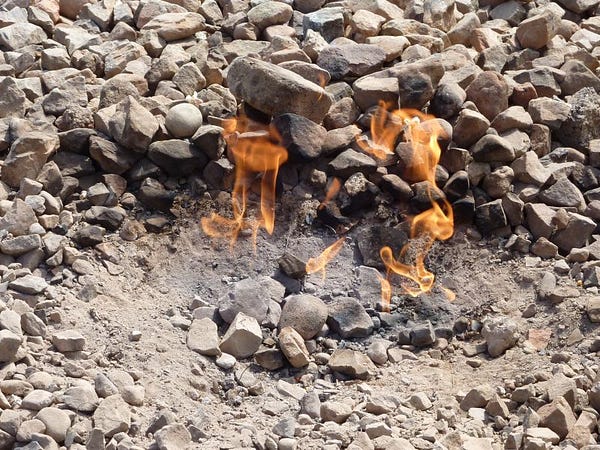
For America to reach full renewable energy, we need to re-focus our investments — and divest ourselves of some dangerous ideas about natural gas.
By Nancy C. Loeb
It’s been a hot summer, with record-breaking heat in the United States and around the world, and the same can be said for all of 2016 so far.
According to new reports from National Aeronautics and Space Administration and the Goddard Space Institute, 2016 is on course to be the hottest year on record around the globe. That makes 2016 the third year in a row to set a warming record — which should cause us grave concern. Indeed, the severe effects of climate change, including both drought and flooding in some of the poorest countries in the world, will lead to population dislocations that will likely exacerbate many of the dangerous political and social upheavals that we’re already facing.
In the face of these strong indicators of advancing climate change, the Democratic Party platform calls for a transition away from the fossil fuels and greater investment in renewable energy. The GOP platform, on the other hand, calls for new investments in fossil fuels. The Green Party promises an immediate drawdown of non-renewables.
Getting to a sustainable energy future will not be easy; the unfortunate reality is that we can’t make an overnight switch to renewables. The U.S. electricity grid is not equipped for such an immediate switch, and, while renewable technologies have advanced significantly, critical technologies, including large-scale battery storage, are not yet sufficiently advanced to replace fossil fuels completely.
Supposed “short-term” or “transitional” reliance on natural gas is a seemingly attractive option. For one thing, the U. S. has a lot of natural gas, and fracking has made it fairly easily recoverable, plentiful, and cheap. But it’s a dangerous mistake to tout natural gas as a cleaner energy source than other fossil fuels. It’s this same mistaken thinking that has people touting natural gas as a so-called “bridge” fuel, until a full transition to renewable energy sources becomes feasible.
Methane is a far more intense warming-inducing gas than the carbon emitted by coal and oil, so small releases of methane can have a disproportionately harmful effect.
Proponents argue that natural gas emits only about one-half the greenhouse emissions of coal-fired power plants. (Hillary Clinton has called natural gas “a bridge … we want to cross as quickly as possible.”) But the pro-fracking “bridge” argument doesn’t fully hold up under close scrutiny.
Natural gas is itself a fossil fuel that contributes to greenhouse gas emissions (GHGs), the principal driver of man-made climate change. While burning natural gas emits fewer GHGs than burning other fossil fuels like coal, we don’t know the actual extent of any advantage for natural gas from a climate perspective — and that’s because of significant but largely unmeasured releases of methane in the fracking process.
Estimates of methane leaks in the extraction and production of natural gas vary; an average estimate is that about 5 percent of methane will leak during the extraction and transportation of natural gas, although the actual amounts are likely highly dependent on the specifics of each mine and production process.
More important, methane is a far more intense warming-inducing gas than the carbon emitted by coal and oil, so relatively small releases of methane can have a disproportionately harmful effect.
Recognizing these facts, the Obama administration has proposed new regulations to limit methane gas emissions. Those regulations are under attack by the oil and gas industry, and by Republicans in Congress. In any event, we need research on actual methane emissions, as well as on ways to limit release of this methane — and to capture it.
There most likely is a near-term benefit in replacing older, inefficient coal-fired electricity plants with newer, more efficient natural gas plants. But the economic realities attached to investments in new-gas infrastructure, including wells, pipelines, and gas-fired power plants, threatens to squeeze out renewable energy sources over a prolonged period and may even raise GHG emissions over the longer term.
The history of coal is instructive if we want to understand why using natural gas as a “bridge” will set the private sector on a dangerous course.
Coal, especially in the years following the OPEC embargoes of the 1970s, became the fuel of choice to replace oil in U.S. power plants. The U.S. had a vast supply of coal and the cost was low, particularly in comparison with oil. The consequences today of replacing coal with low-priced natural gas demonstrate how hard a transition to a new fuel source can be. There are enormous costs, coal companies are going bankrupt, and jobs are being lost.
Companies are not going to make billions of dollars of investment in the infrastructure for natural gas that is expected to last about 40 years and simply walk away in five to 10 years — a five-year period is far too short for investment payback for these enormous sunk costs. To a large extent coal is being replaced by natural gas for electricity generation. But new investment in fossil fuels of any type — including natural gas — is a step in the wrong direction.
Research shows that, if we wait another 40 years for a more sizable switch to renewables, all of the GHG reduction benefits of natural gas will be lost. Indeed, even 20 years may be too long.
There is still more to do — especially in the areas of energy storage technologies and transmission infrastructure — that requires large investments, and this is where energy investment dollars should be going. For renewable energy sources like wind and solar to become the backbone of our electricity generation system, we need to be able to store the energy they generate for use when we need it. While there have been advances in storage technologies, this is a critical technology revolution we haven’t fully achieved. It’s where our investment dollars should be going.
Yes, we are reaping economic benefits from the abundant and inexpensive oil and gas we have enjoyed over the past few years. But if that’s all we do — or if we continue to invest primarily in continued fossil fuel dependence — we are only hoping for a sustainable energy future. We are not making the advances needed to assure it.
75 Comments on "People Are Calling Natural Gas a ‘Bridge’ to a Sustainable Future—They’re Wrong"
rockman on Sat, 6th Aug 2016 10:42 am
“For one thing, the U. S. has a lot of natural gas, and fracking has made it fairly easily recoverable, plentiful, and cheap.”. It is neither easily recoverable, plentiful (though not by much the US is still a NET NG IMPORTER). Or cheap compared to the same inflation adjusted price from 1987 to 2000. It is less expensive then the average price since 2012. Which again proves the old addage: the solution to a cheap (or expensive) commodity price is a cheap (or expensive) commodity price. High NG prices before 1987 led to lower prices which !ed to lower prices until 2000 when those low prices led to high prices that lasted until 2012 that we see today.
Which !eads to an obvious question: as a result of low NG prices today (which has led to an 80% rig count drop in the Marcellus Shale, the star of frac’d NG) what will the toll fee to cross our ” bridge to the future”?
Outcast_Searcher on Sat, 6th Aug 2016 10:44 am
From the brief reading/searching I’ve done, this looks like a reasonably balanced article.
So it appears if we can’t do a highly effective job of capturing the NG emissions, quite soon, the assumption that burning NG instead of, say, gasoline is fraught with risk.
So my assumption, for example, that using a Prius-Clone (e.g. like a Prius Primeto use electricity for my short car trips, and plugging into the grid is a net positive thing, could well be wrong.
Thanks for the info. Since AGW is such a big problem — it seems ridiculous to me that it is so difficult for a layman to make a reasonable back of the envelope (much less truly accurate) decision on whether “green” AGW mitigitation tech is, in fact, truly helpful over, say, the next 50 or 100 years.
Sissyfuss on Sat, 6th Aug 2016 10:56 am
In the battle between short term profit seeking and long term environmental protection, the former is still undefeated.
onlooker on Sat, 6th Aug 2016 11:08 am
Well said Sissy
rockman on Sat, 6th Aug 2016 11:54 am
Outcast – “So it appears if we can’t do a highly effective job of capturing the NG emissions, quite soon, the assumption that burning NG instead of, say, gasoline is fraught with risk.” It’s been documented that the great majority of methane leakage comes from the local distribution system which are essentially local utility companies serving residential areas. Just another aspect of our crumbling infrastructure. And it will be an extremely expensive fix: a few years ago they ran monitors down NYC streets and found measurable methane leaks ever 1.5 miles. Imagine the cost of digging up and replacing every NG line in just NYC. Given those huge cost would be born by the consumers I wouldn’t hold my breath waiting for politicians pushing that onto the voters.
Plantagenet on Sat, 6th Aug 2016 12:39 pm
One of the most moronic things the Obama administration has done is encourage greater use of NG for electrical power plants, cars, etc.
CH4 is 70x more effective then CO2 in causing global warming. The absolute last thing we need right now more is more NG drilling, more NG fracking, more NG pipelines, more NG storage etc. etc. because CH4 leaks out into the atmosphere at every stage of the process.
Cheers!
shortonoil on Sat, 6th Aug 2016 1:07 pm
EXXON was the only major last year that turned much of a profit, and it was down 60% from the previous year. The present fossil fuel system is going broke, and it will continue to go broke. Anyone who promotes it is a damn idiot.
But, as we have repeatedly pointed out it is not fossil fuels, per se, that is the problem. It is the fossil fuel energy production system. For every 10 BTU that comes out of the ground, at best, the end user gets to use 2 of them; usually less, and most of the time much less. Most of that energy goes to heating up the environment, and very little of it actually does any work. Using the present system we have to burn up an awful lot of FFs to keep our civilization running.
There are alternatives. There are engines running out there right now that are producing 250% more power for the energy input, and with very few emissions. If they were used, rather than the internal combustion engine now being used, the world would be burning 23 mb/d. But – the fossil fuel industry has $88 trillion invested in the present system. They are not going to go quietly into the night. To get their money back they will run it until every last thing on earth is dead, if that is what is required.
Our present system is 150 years old, it is obsolete, and broken. We can replace it, or get replaced! Probably with green mold!
http://www.thehillsgroup.org/
Apneaman on Sat, 6th Aug 2016 1:16 pm
That’s right planty, if it wasn’t for Obama none of that fracking for natgas would have happened and I’m certain if the other guy won, fracking would have been banned and fossil fuel rationing would have been put in effect. It’s ALL Obamas fault damn it! AGW is on Obama.
Boat on Sat, 6th Aug 2016 1:18 pm
Plant,
What does encourage use mean. Can you cite examples in policy. I believe Obama has supported renewables much more, by the billions, in subsidies/tax breaks. The market and the low cost of nat gas has driven growth. Remember the consumer drives the markets and the consumer is driven by price.
Paul C on Sat, 6th Aug 2016 1:36 pm
Please! The fracking process releases large amounts of unburned methane? Give me a break!
How about agriculture as the single largest source of unburned methane? Livestock and organic decay. But that would be inconvenient to include that wouldn’t it?
In addition “MOST” unburned earth sourced methane comes from natural seeps (i.e. four corners area or GOM Gulf of Mexico).
For the ill informed, “fracking” is an easy scape goat.
l.david cooke on Sat, 6th Aug 2016 1:41 pm
Hey All,
Simply put, for a portable fuel hydrogen gas is the preferred end. Whether it is incorp. In fuel cells or ICEs hydrogen is the least polluting choice. The issue, hydrogen is difficult to compress. However, as a major component of methanol or methane it is fairly easy to transport. Thus combining hydrogen with carbon in the presence of a catalyst or via biogas generation makes absolute practical sense. The key is to design low emissions within the production and distribution cycle. In short, a bit of great engineering makes the transition/bridging both practical and is vertical migratable and is reasonably scalable.
l.david cooke on Sat, 6th Aug 2016 1:41 pm
Hey All,
Simply put, for a portable fuel hydrogen gas is the preferred end. Whether it is incorp. In fuel cells or ICEs hydrogen is the least polluting choice. The issue, hydrogen is difficult to compress. However, as a major component of methanol or methane it is fairly easy to transport. Thus combining hydrogen with carbon in the presence of a catalyst or via biogas generation makes absolute practical sense. The key is to design low emissions within the production and distribution cycle. In short, a bit of great engineering makes the transition/bridging both practical and is vertical migratable and is reasonably scalable.
Roger on Sat, 6th Aug 2016 1:46 pm
This is another pie in the sky eco-nut opinion, without any solutions. There is no discussion of nuclear, and most of our rivers are dammed up, so all that is left is solar and wind, currently providing maybe 2% of our electricity. So don’t do this, don’t do that, and by the way I do not have any alternatives. Thanks for your emotional and idiotic input.
Don Huebner on Sat, 6th Aug 2016 1:47 pm
I don’t know where I’m gonna go when the volcano blows.
Apneaman on Sat, 6th Aug 2016 1:53 pm
Paul C, just because agriculture releases the most does not mean that fracking (the entire natgas system actually) is not a significant contributor. Don’t worry though, because there never was any plan to stop using fossil fuels and there never will be, so don’t be getting all riled up from listening to conservatard talk radio or whatever. You seem really sensitive about it, are you related to fracking or sumthin?
Boat on Sat, 6th Aug 2016 1:54 pm
rock
“as a result of low NG prices today (which has led to an 80% rig count drop in the Marcellus Shale, the star of frac’d NG) what will the toll fee to cross our ” bridge to the future”?
The price of nat gas around the world has dropped significantly. With all the new nat gas finds the range of pricing appears to be lower on average for the future.
The amazing production of the marcellus is shown by record growing demand being satisfied by such smaller rig counts.
observerbrb on Sat, 6th Aug 2016 2:02 pm
Shortonoil
“There are engines running out there right now that are producing 250% more power for the energy input, and with very few emissions. If they were used, rather than the internal combustion engine now being used, the world would be burning 23 mb/d.”
Well, that would be great. Could you provide us with a link in order to know more about these new engines? Could it be feasible to arrange a transition to a new model, then?
Best Regards,
Apneaman on Sat, 6th Aug 2016 2:05 pm
All the bridges are getting washed out.
How the World Falls Apart
“When six inches of rain fell in two hours on Ellicott City, Maryland on Saturday evening, it was, according to the National Weather Service, a once-a-millennium event.”
“Why is Armageddon always imagined as something that has to happen across the whole planet at the same time?”
“To get a feel for how many similar catastrophes are happening almost daily, it’s not enough to follow the news. Headlines give the impression that normal life is punctuated every few weeks by a disaster: July’s Maryland flood and June’s West Virginia flood followed May’s Fort McMurray fire, which came after April’s crazy rain in Texas. Terrible stuff, but only a dozen times a year. One could get the impression that Mother Nature is taking breaks between disasters to hate-watch campaign coverage along with the rest of us. But she’s not.”
“We learn from last week’s round-up, for example, that floods and landslides were assaulting 9 million people in China; twin mega-wildfires were raging in northern and southern California; Kuwait was broiling in a 129-degree heatwave; much of India’s Assam State was underwater, with 1.2 million people left homeless; a freak heat wave in Siberia thawed the carcass of a dead reindeer, releasing a fatal anthrax outbreak on the local population; a tornado blew the roofs off of 200 houses, 100 shacks, and a shopping mall near Johannesburg; a nationwide drought had become a “matter of life and death” for 4.5 million rural Zimbabweans; and Typhoon Mirinae was wreaking massive destruction in Vietnam.”
http://motherboard.vice.com/read/how-the-world-breaks
Again, reporters catch up to me after a few years;)
Nick Hayden on Sat, 6th Aug 2016 4:56 pm
I find the continued lop-sided issue of global warming alarming and full of ignorance. Why isn’t ANYONE talking about NASA’s recent announcement regarding the sun entering a “quiet” period which began a couple of months ago that always creates a “mini-ice age” as it did in the late 1400’s and late 1700’s? Based on their ONE article so far we are likely in for significant cooling in the Northern Hemisphere for the next 10 to 20 years. In the late 1700’s there was one year that didn’t even have a growing season – are we prepared? Everyone better make plans and merge the two issues together in order to have a qualified discussion and plan.
August Braun on Sat, 6th Aug 2016 5:07 pm
The U.S. EPA contradicts the idea that fracking is the main cause of methane. It is not. From the EPA website “Methane (CH4) emissions in the United States decreased by 6% between 1990 and 2014. During this time period, emissions increased from sources associated with agricultural activities, while emissions decreased from sources associated with the exploration and production of natural gas and petroleum products.” Furthermore, a pie chart of methane emission sources on the same web page reveals the following: 33% natural gas and petroleum systems, 22% enteric fermentation, 20% landfills, 9% coal mining, 8% manure management, 6% “other”. The aforementioned EPA pie chart indicated that 8% of methane emissions are from manure management and 22% is from “enteric fermentation” aka livestock “belching” and “flatulence”. Therefore, all natural gas and petroleum systems contribute only 3% more emissions than agriculture, yet the author and the rest of the eco – loons are obsessed with demonizing the foundation of modern civilization: energy. Why is that? What is their real agenda when they totally ignore agriculture?
Practicalmaina on Sat, 6th Aug 2016 5:10 pm
Leave the natgas in the ground, produce biogas! Organic matter municipal waste, agro waste are all going to contribute to warming, so mine as well capture energy from those circumstances.
Practicalmaina on Sat, 6th Aug 2016 5:13 pm
Boat, Obama called off the epa after the second election and allowed go doe to spread the lie of 100 years of plentiful cheap natgas, and the “environmental benefits” angle. Both of which have now proves to be bs. He also sold more cheap federal coal than GW. Add to this the huge amounts of non renewable disasters that happened under his term. BP spill, oil train leveling that Quebec town. Fukashima, Cali natgas holding well leak act.
makati1 on Sat, 6th Aug 2016 5:19 pm
Nick, IF the sun is in a “quiet” stage, so what? If you turn your furnace on full blast and your A/C on a little, what happens? We have turned the CO2 furnace on full blast and are keeping it that way. The daily sun has little effect when we can release a million years of stored sun’s heat in a year or less by burning fossil fuels.
Apneaman on Sat, 6th Aug 2016 5:50 pm
August Braun, “eco – loons”? Oh my. Have they caused a reduction in fossil fuel use that I somehow missed? All the information I have says it increases every year since I was born a half century. Where is the links to back your claims?
A single gas well leak is California’s biggest contributor to climate change
Rupture of Aliso Canyon well has released more than 77,000 metric tons of methane and refocused attention on America’s accident-prone infrastructure
https://www.theguardian.com/environment/2016/jan/05/aliso-canyon-leak-california-climate-change
Leaks in Boston area gas pipes exceed estimates
https://www.bostonglobe.com/metro/2015/01/22/natural-gas-leaks-boston-area-are-far-more-extensive-than-thought/5BykQrnaGRr2XLtxpHqLIM/story.html
Researchers find nearly 6,000 natural gas leaks in District’s aging pipe system
https://www.washingtonpost.com/national/health-science/researchers-find-nearly-6000-natural-gas-leaks-in-districts-aging-pipe-system/2014/01/15/f6ee2204-7dff-11e3-9556-4a4bf7bcbd84_story.html
Auggie, like the other tards, you have no need to worry that the humans will ever stop burning fossil fuels, no matter what Rush or of all the other well paid conservatard shit disturbers tell you. Fossil fuels were never realistically threatened (just lots of noise) and the humans will be burning them until the last man……which will be sometime before this century ends. How funny that “the foundation of modern civilization: energy.” Is the main reason the humans will be going extinct soon. No rush. First you get to witness it finish smashing the shit out of your sad country’s infrastructure, then the crops then you and yours (not necessarily in that order). I know you find that hard to believe, but you will come around within less than a decade – everyone will. Enjoy the endtimes.
rockman on Sat, 6th Aug 2016 6:14 pm
“The price of nat gas around the world has dropped significantly.” Yes it has…as a result of prices more the 5X the current level some years ago providing the incentive to develop more production
As far the Marcellus Shale goes it had a tremendous boom and increased its share of US NG production by over 400%. All it took to kick off the boom was a NG price more than 5X the current price. But eventually the lag time factor catches up as the EIA data
(http://marketrealist.com/2016/07/marcellus-shale-natural-gas-production-steady-june/)
shows the boom has ended and those huge year over year gains are no longer.
So understanding the years of lag time between the drilling boom/bust and the production boom/bust it’s not difficult to see the declining future of the MS. And while productivity PER NEW WELL is increasing it’s the result of the 80% decrease in rigs not drilling the poorer prospects. More production per well can’t make up for the huge decrease in the number of wells being drilled.
Following historic trends it will probably take several years of lag time to see how far total NG production declines.
shortonoil on Sat, 6th Aug 2016 6:47 pm
“Well, that would be great. Could you provide us with a link in order to know more about these new engines? Could it be feasible to arrange a transition to a new model, then? “
No I can not. We signed confidentiality agreements with the companies with whom we are working. Until the prototypes are made public I can’t tell you anymore than that. What I can tell you is that the early technology was developed by MDI. In spite of what the ads say MDI is NOT about a car that runs on compressed air. It is just that the early prototypes that they demonstrated were run on compressed air. The press (as usual) got it all screwed up. MDI is about a much more efficient engine cycle process.
http://www.futurecars.com/reviews/mdi-aircar.html
The companies that have adopted, and continued to advance this basic technology are now light years ahead of what is being publicized. The problems that we now face is that big oil, and big auto are fossils, inflexible and unyielding. They have invested untold $billions, and almost 100 years in developing the IC and the fuels to power it. They aren’t going to do anything that threatens that investment; even if it puts them out of business; which it will. Like the society as a whole they just can not bring themselves to believe that their days are numbered.
yoshua on Sat, 6th Aug 2016 6:50 pm
rockman – In 2014 the U.S drilled 35 000 wells, while Saudi Arabia drilled 400 wells. Both produced 11 million barrels per day.
It looks like the depletion rate in the U.S is magnitudes greater than in Saudi Arabia.
But then the rig count “collapsed” in the U.S while the production only has declined a little in two years.
Do you have an estimate on how many wells where drilled in 2014 but not fracked. It looks as if thousands of drilled wells are just waiting to be completed and brought on line.
Anyway, it looks as if the depletion rate in Saudi Arabia isn’t all that bad (for an amateur eye who never worked in the oil industry).
https://www.bing.com/images/search?q=global+drilling+intensity&view=detailv2&&id=7176229949086782C7083390E5CB6851A4F94A3B&selectedIndex=116&ccid=qPh50skF&simid=608014705605806640&thid=OIP.Ma8f879d2c9051b66e78f6fb7e799f09eo0&ajaxhist=0
Rick Bronson on Sat, 6th Aug 2016 7:06 pm
Every thing is relative. Oil is slightly cleaner than Coal, but if factor the energy needed to refine into various fuels, transport and distribute, its clean factor diminishes.
But Natural gas is lot cleaner than Oil and Coal and also its transported thru pipelines.
Just see how clean your vessels are after using natural gas as a cooking fuel. Try cooking with a gasoline or kerosene stove and see the carbon emissions in your home and the carbon deposited in the vessel. You will be horrified.
Yes, Natural gas is a bridge fuel to reduce the consumption of Oil & Coal and also reduce GHG. Paralelly, we can also develop renewable sources.
In 2016-H1 China has installed a record 20 GW of Solar photovoltaic power capacity. Besides China also has 80 million households using Solar water heating system.
So Renewable energy is also growing fast.
shortonoil on Sat, 6th Aug 2016 7:10 pm
Why isn’t ANYONE talking about NASA’s recent announcement regarding the sun entering a “quiet” period which began a couple of months ago that always creates a “mini-ice age” as it did in the late 1400’s and late 1700’s?
Because the media had it rubber stamped, and locked in a dungeon with beware of tiger written on the door. It doesn’t fit their agenda, and it would be a considerable inconvenience to the TPTB at this stage. If Hillary is elected she will certainly have to shut that bunch up. May she will have them shot as terrorists.
Boat on Sat, 6th Aug 2016 7:13 pm
rock,
You would think producers would cooperate some and not drive storage up so high.
https://www.eia.gov/naturalgas/monthly/pdf/table_08.pdf
I don’t think it will take years to work off that storage.
U.S. posts first summertime weekly net withdrawal since 2006. Net withdrawals from storage totaled 6 Bcf, compared with the five-year (2011-15) average net injection of 54 Bcf and last year’s net injections of 41 Bcf during the same week. This is only the third time ever that net withdrawals from working gas stocks were reported on a national basis during the summer months.
http://www.eia.gov/naturalgas/weekly/
observerbrb on Sat, 6th Aug 2016 7:17 pm
Thanks shortonoil, I appreciate your answer.
shortonoil on Sat, 6th Aug 2016 7:32 pm
“Yes, Natural gas is a bridge fuel to reduce the consumption of Oil & Coal and also reduce GHG. Paralelly, we can also develop renewable sources. “
It all depends on how it is used. Solar PV panels, for example, that produce electricity have a 20 to 30 year payback period. Solar hot water for heating, and cooling (one of the US’s largest residential and commercial uses of energy) can pay itself back in 5 years or less. Many system use fossil fuels as an auxiliary to a solar hot water system, and still have excellent payback periods. There are many options available to significantly reduce our dependance on fossil fuels, it is just that the energy companies don’t advertize them.
Rick Bronson on Sat, 6th Aug 2016 8:58 pm
“Solar PV panels, for example, that produce electricity have a 20 to 30 year payback period”
These were based on prices 10 years ago. Now the solar panels cost $ 0.70 / watt and the installed cost is $ 3.7 / watt.
And the payback period is 7.5 years.
Chinese are accelerating the solar panel installation. Soon others will follow. Their Coal consumption has already peaked. If they Oil consumption peaks, OPEC will have a heart attack.
http://news.energysage.com/how-much-does-the-average-solar-panel-installation-cost-in-the-u-s/
Sean Houlihan on Sat, 6th Aug 2016 10:01 pm
I can’t believe that you Peak Oil nubjobs are still around. The theory has failed so miserably that any sane person would be embarrassed to be associated with it. Proven Reserves have risen in every year since they have been measured, and they have risen most dramatically in recent years. It appears that no amount of evidence can influence Believers in the Peak Oil Religion.
GregT on Sun, 7th Aug 2016 12:36 am
“The theory has failed so miserably that any sane person would be embarrassed to be associated with it.”
Hubbert’s Peak is not a theory, it is an observation. Anyone who is incapable of understanding such a simple concept, is either disingenuous, or a complete simpleton.
Apneaman on Sun, 7th Aug 2016 12:37 am
Short, the other week your AGW denial claim included a link to a paper by an water engineer who has no credentials nor training in the subject and who also has publically stated that he believes in diving for finding oil. Now your back with mini ice age and cover up conspiracies? Are you aware that when you make such fucked upped claims that everyone knows are rooted in ideology it affects your entire credibility? On every and all subjects? As in many will instantly dismiss your model the second they hear the retarded childish climate denial bullshit. Especially when your reference is a dude who is convinced divining works? I know you have tried to hold your tongue, but sometimes you just can’t help it. That’s how deep the indoctrination runs. Well there is simply no way to cover something like a “mini ice” age up. So approximately when will we start to feel the chill? Y’all better stock up on winter coats, boots and mittens before the prices start rising. Don’t forget your toques too eh? I got boxes of winter gear from working in the northern Alberta winters. I’m ready for the mini ice age. Good day eh?
Cooo, loo, coo, coo, coo, coo, coo, coooo!
Cooo, loo, coo, coo, coo, coo, coo, coooo!
https://www.youtube.com/watch?v=_4i3wjL2qXU
peakyeast on Sun, 7th Aug 2016 6:56 am
My 9.5KW solar system has produced about 16.000KWh in about 3 years. That is 38.000DKR. Which means that the payback time is about 6 years. And my panels are mounted E-W which is very suboptimal.
I am currently relocating some of the solar panels onto a homemade tracker system – and putting up solar-water heating pointing south where the cell were placed. I expect them to reduce my consumption with about 1000KWh per year – at least. And the 36 x 60W panels that are being relocated is calculated to increase output with at least 50% possibly 100% since they are close to the forest and dont produce much now. – This means I am actually going to have free heating and electricity – from my annual bill for both at about 400$.
And they are set to produce for many many years… Even if the inverters should die – and I cant repair them (fairly unlikely) that will only extend the payback time with about 1-1½ year.
Installing solar panels is thus one of the better investments I have made.
shortonoil on Sun, 7th Aug 2016 8:14 am
“I can’t believe that you Peak Oil nubjobs are still around. The theory has failed so miserably that any sane person would be embarrassed to be associated with it. “
In 2015 the petroleum industry discovered 2 Gb of new oil; they pumped 34. Are these big numbers confusing you?
shortonoil on Sun, 7th Aug 2016 8:29 am
“Now your back with mini ice age and cover up conspiracies? “
That claim origianlly probably came from a article like this one:
http://www.bbc.com/news/science-environment-25743806
Even the researcher claims that there is probably only a 10 to 20% chance that it will occur. You are basing your claim on the IIPC model that has an admitted 20% margin of error. It sounds like a lot of people are doing a lot of guessing. I am basing my ambivalence toward the final conclusion on the knowledge (with a ±4.5% margin of error) that the fossil fuel age isn’t going to be around long enough to continue affecting much of anything. I’ll go with the smaller margin of error.
Kenz300 on Sun, 7th Aug 2016 8:30 am
Wind and solar energy are safer, cleaner and cheaper than fossil fuels……………….
It is time to speed up the transition to alternative energy sources and phase down the use of fossil fuels………
Climate Change is real and it will impact us and all future generations………
Energy from Offshore: Engineering Firm Transitions Expertise from Offshore Oil to Offshore Wind –
http://www.renewableenergyworld.com/articles/2016/07/energy-from-offshore-engineering-firm-transitions-expertise-from-offshore-oil-to-offshore-wind.html
3 Sure Signs of Texas’ Emerging Solar Market
http://www.renewableenergyworld.com/ugc-content/2016/07/22/3-sure-signs-of-texas-emerging-solar-market.html
Rick Bronson on Sun, 7th Aug 2016 9:45 am
Kenz300.
Thanks for the links about the Offshore and Texas.
Texans made it big with Wind energy, now they are moving into Solar and its great. They have bigger homes and plenty of sunshine. Sure they can use Solar to cut down peak power demand and also have clean energy running for years.
shortonoil on Sun, 7th Aug 2016 9:55 am
“Sure they can use Solar to cut down peak power demand and also have clean energy running for years. “
As Texas goes bankrupt from the oil bust, they are not going to have the money to buy bird seed, let alone, a solar powered society. Without oil they are back shoveling horse shit with an old scoop shovel to get it off the streets. Your solar powered world is a dream with the technology that we have available today.
Rick Bronson on Sun, 7th Aug 2016 9:58 am
“Sean Houlihan-I can’t believe that you Peak Oil nubjobs are still around”
Look at link provided by yoshua.
USA has 35,699 wells to Saudi Arabia’s 399 and both countries produced the same amount of Oil. Conventional oil has PEAKED.
These Shale and Sands Oil has high cost and requires many wells since the depletion is much higher. Now you know why the US oil production has gone down by 1 million b/d in last 1 year. Soon this will show up in the gas station.
rockman on Sun, 7th Aug 2016 10:16 am
Joshua – US crude oil production from the Lower 48 states from new wells (drilled since the start of 2014) made up 48% of total U.S. crude oil production in 2015, up from 22% in 2007. Production from new wells has grown as advances in horizontal drilling and completion techniques led to growth in oil production from low-permeability tight reservoirs. In 2015, production from tight formations—which include, but are not limited to, shale plays—accounted for more than 4 million bopd, or 50% of total U.S. oil production.
Which explains the big contrast between US and Saudi decline rates. IOW very high decline rates of unconventional fractured reservoirs and the conventional reservoirs such the Saudi fields. Especially huge Ghawar Field which has reached it’s very low decline phase. ITT was only the high rig count, now gone, that kept US oil production booming. But it won’t fall of a “cliff” as some predict because the majority of shale wells are now in their lower decline rate phase. Good chart here:
http://www.eia.gov/todayinenergy/detail.cfm?id=25472
As far as the number of wells of all categories that’s not as easdy to come up with. So take any numbers presented as “fact” with suspicion. Read this if you want to know why:
https://www.fractracker.org/2015/08/1-7-million-wells/
From this report: “The state of oil and gas data in the United States is clearly in shambles. As long as there are no national standards for data transparency, we can expect this trend to continue. The data that we looked for in this file is what we consider to be bare bones: well name, well type, well status, slant (directional, vertical, or horizontal), operator, and location. In none of these categories can we say that we have a satisfactory sense of what is going on nationally.”
GregT on Sun, 7th Aug 2016 10:31 am
“Your solar powered world is a dream with the technology that we have available today.”
Technology that is completely reliant on the burning of fossil fuels.
rockman on Sun, 7th Aug 2016 10:34 am
Boat – “You would think producers would cooperate some and not drive storage up so high.” And here’s the problem I have with that assumed stat: I’m not sure how much of that “stored” oil belongs to PRODUCERS. First, one has to differentiate “working volume” (most of which is owned by REFINERIES and BLENDERS (a lot of Cushing storage is owned by blending companies that buy from PRODUCERS and sell to REFINERIES) and not PRODUCERS. Second, how much is physically stored by SPECULATORS playing the contango angle. I don’t have data to support the proposition but I suspect a good bit of the volatility in the storage numbers is due to SPECULATORS buying/selling as oil prices decrease/increase. Essentially following the old goal: buy low…sell high. When prices dip…buy. And when they bump up…sell. And then repeat as the opportunity presents itself.
Which is why I would caution interpreting too much in short term trends.
rockman on Sun, 7th Aug 2016 10:49 am
Sean – Can’t read all of your post: what “have risen in every year since they have been measured…” Obviously not US oil production since it had declined significantly since the peak in the early 70’s. Until around 2008 when high oil prices made the once noncommercial shale plays viable. Came close to a new US oil rate peak but Hubbert’s prediction over SIX DECADES still stands as correct today. And given the huge drop in rig count I suspect it will still be correct for many years. In fact perhaps forever.
drwater on Sun, 7th Aug 2016 11:51 am
Actually, natural gas still looks like a good bridge fuel. There are ultra-efficient power generation cycles:
http://breakingenergy.com/2014/11/24/supercritical-carbon-dioxide-power-cycles-starting-to-hit-the-market/
It is also a lot easier and cheaper to do carbon capture and sequestration for an efficient natural gas plant than a coal plant.
Put a price on carbon emissions and methane losses and the market will take care of things.
As a side note, despite all the angst about fracking, atmospheric methane concentrations are have not gone up a whole lot in the last 10 or so years. And U.S. carbon emissions have been going down.
Boat on Sun, 7th Aug 2016 12:16 pm
The world market controls the price in a US market. The bumpy ride of US oil has more to do with the geopolitics of lower cost producers getting their oil to market than the idea of depletion.
Rick Bronson on Sun, 7th Aug 2016 12:22 pm
# of wells has started growing up in the last 2 years from 1.1 million to nearly 1.7 million. When it hits 2.5 million wells, that will be 1 well / 100 vehicles.
That’s a lot. But lot of interesting changes in the oil industry.