
Peak Oil is You

Donate Bitcoins ;-) or Paypal :-)


Page added on July 2, 2011

India’s rural poor give up on power grid, go solar
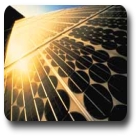
Despite decades of robust economic growth, there are still at least 300 million Indians — a quarter of the 1.2 billion population — who have no access to electricity at home. Some use cow dung for fuel, but they more commonly rely on kerosene, which commands premium black-market prices when government supplies run out.
They scurry during daylight to finish housework and school lessons. They wait for grid connections that often never come.
When people who live day-by-day on wage labor and what they harvest from the land choose solar, they aren’t doing it to conserve fossil fuels, stop climate change or reduce their carbon footprints. To them, solar technology presents an elegant and immediate solution to powering everything from light bulbs and heaters to water purifiers and pumps.
“Their frustration is part of our motivation. Why are we so arrogant in deciding what the poor need and when they should get it?” said Harish Hande, managing director of Selco Solar Light Pvt. Ltd.
The company, which is owned by three foreign aid organizations, has fitted solar panels to 125,000 rural homes in Karnataka state, including the Gowdas’, outside the west coast port of Mangalore.
Getting the technology to low-income customers is not easy. They need help with everything from setting up their first bank accounts and negotiating loans to navigating the fine print of payment contracts.
To find new clients, agents must go door-to-door in remote settlements, sometimes crossing rivers, hiking mountains or wading through wetlands to reach them.
But the sales pitch leads to reliable profits. Solar panels take little space on a rooftop, the lights burn brighter than kerosene lamps and they don’t start forest fires or get snuffed in strong winds. Unlike central power, solar units don’t get rationed or cut.
Buying solar panels is more expensive than grid electricity, but for people off the grid it compares well with other options. One of Selco’s single-panel solar systems goes for about $360, the same or less than a year’s supply of black-market kerosene. And government subsidies mean customers actually pay less than $300.
In two years, India’s government hopes the off-grid solar yield will quadruple to 200 megawatts — enough to power millions of rural Indian homes with modest energy needs.
3 Comments on "India’s rural poor give up on power grid, go solar"
sunweb on Sat, 2nd Jul 2011 3:07 pm
The renewable energy crowd creates a dangerous illusion. The illusion that middle class life can continue at some level of luxury and ease all over the world. That electricity for motors, electronics and lights will be available continually. That using “renewable” energy, we are not assaulting the earth’s resources and other life forms. That because it is “renewable”, it is clean and green. That because it is “sustainable”, it can go on indefinitely.
This belief that so-called renewables can replace fossil fuels does not look at the total process. To create the devices that capture the sun or wind, we use fossil fuels and toxic chemicals to mine, process, fabricate, manufacture and transport materials. The earth is gouged, rivers polluted, and air sullied. Given the amount and type of energy needed to get the end product, these devices are not renewable or green or clean or environmentally safe or sustainable.
From: The Renewable Illusion
http://sunweber.blogspot.com/2011/06/renewable-illusion.html
see also
Solar and Wind are not renewable. The energy from solar and from wind is of course renewable but the devices used to capture the energy of the sun and wind is not renewable. Nor are they green or sustainable.
An oak tree is renewable. A horse is renewable. They reproduce themselves. The human-made equipment used to capture solar energy or wind energy is not renewable. There is considerable fossil fuel energy embedded in this equipment. The many components used in devices to capture solar energy, wind energy, tidal energy and biomass energy – aluminum, glass, copper, rare metals, petroleum in many forms to name a few – are fossil fuel dependent.
Wind used by sailing ships and old style “dutch” wind machines is renewable and sustainable.
From: Energy in the Real World with pictures of proof.
http://sunweber.blogspot.com/2011/01/energy-in-real-world.html
Harquebus on Mon, 4th Jul 2011 6:41 am
Solar Pv technology only delivers negative energy returns. Another waste.
Kenz300 on Mon, 4th Jul 2011 6:11 pm
The ever growing world population needs ever more resources to survive. In a world of limited oil, water, food and jobs this continuing growth of the population makes solving the problems harder. The world added a billion people in the last 12 years and will add another billion people in the next 12 years. A conversation needs to begin about what is a sustainable world population.