
Peak Oil is You

Donate Bitcoins ;-) or Paypal :-)


Page added on July 6, 2016

For Better or For Worse
Author Richard Heinberg on new book “Our Renewable Future: Laying the Path for One Hundred Percent Clean Energy”. Plus plankton expert Dr. Michael Behrenfeld: is the foundation of ocean life in trouble? Radio Ecoshock 160629
Download or listen to this Radio Ecoshock show in Ecoshock 160629 Lo-Fi (14 MB) or Ecoshock 160629 CD Quality (56 MB)
************************************************
Richard Heinberg Wikipedia is known around the world as an energy expert. He’s a leader and Senior Fellow at the Post Carbon Institute, author of 13 books, and a returning guest on Radio Ecoshock. So when I got his newest book, written with David Fridley from the Berkeley Lab, I expected a triumphant plan for our transition to renewable energy in that post-carbon world. I was surprised, and we are all in for a big surprise, about how hard this change is going to be. It’s all in the new book “Our Renewable Future: Laying the Path for One Hundred Percent Clean Energy” published in June 2016. Richard Heinberg returns Radio Ecoshock.
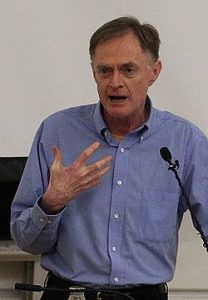
Richard Heinberg
I suppose I shouldn’t be shocked. Richard is are known for taking a hard doubtful look at things like oil reserves and coal industry hype. Now he and co-author Fridley dig into the realities of renewables. Just to be clear, David Fridley works at Berkeley Lab, which is part of the U.S. Department of Energy, although the lab is run by the University of California. Lately David has been a key advisor to the government of China about installing renewable energy there, which is being done on a colossal scale. Fridley speaks Mandarin.
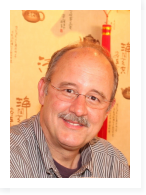
David Fridley
MANY MOUNTAINS TO CLIMB FOR TRUE RENEWABLE ENERGY
The whole green-dreaming world felt empowered when Professor Mark Jacobson of Stanford wrote an article in Scientific American in 2009. Jacobson said we can make the switch to alternative energy by 2030. When I interviewed Mark in late 2014, he felt even more certain it’s all possible. I get Richard’s take on the Jacobson plan.
Essentially, Heinberg thinks Mark Jacobson spoke primarily about production, trying to reach levels we use today. Fridley and Heinberg find this may be unrealistic due to a large number of bottlenecks. Fossil fuels are used everywhere, not just to power cars. In this interview, we discuss cement production, which accounts for about 5% of global greenhouse emissions. Our civilization is literally built on concrete.
YOUR FOOD AND FOSSIL FUELS
But it doesn’t end there. Agriculture is the single largest user of fossil fuels, when you add it all up. We’re not just talking about the fuel used by tractors and farm implements. There’s the fertilizers (often made from natural gas), the pesticides and herbicides (usually refined oil products). THEN we refrigerate all kinds of foods, all the way to markets. Some of those markets are overseas, like fruit flown in. But wait, none of those are the biggest part of fossil fuels in the food chain. That comes with industrial food processing, all the machinery and chemicals used to make modern “food”. We talk it through, as Richard points out there are over 10 calories of fossil fuels in every calorie of mass market food!
Other products, like some pharmaceuticals and paints, currently have no known substitute without fossil fuels. These may be the last uses for oil or gas. Some people can’t keep living without them.
Yes we look at the problem of getting renewable energy to produce enough power to replace all those solar panels and wind machines when they expire in 20 or 30 years. Plus there is the sudden jolt of greenhouse gas emissions that will happen when we use fossil fuels to produce the first mass wave of real alternative energy.
Given all that, Heinberg and Fridley’s book goes beyond Jacobson, to look at the demand-side economics. We are going to have to live with less, if we want a climate we can live in.
THE BOOK: TRY IT BEFORE YOU BUY IT
While you may want Richard Heinberg the book to go over, and for reference, the authors think it’s so important they are also making it available free online! The entire book can be found for free at OurRenewableFuture.org There’s also a Facebook discussion Post Carbon Facebook .
Download or listen to this 24 minute Radio Ecoshock interview with Richard Heinberg in Heinberg CD Quality or Heinberg Lo-Fi
You can read Richard Heinberg’s famous long-running blog here at Heinberg his web site.
GIVING STUFF UP
I really wonder if masses of people are willing to reduce their carbon imprint, by giving stuff up, by staying close to home, and having fewer energy slaves. We seem so addicted to the powers fossil fuels give us, like the ability for some to fly anywhere in the world anytime, or for many to visit relatives more than a hundred miles away, or a single farmer to grow food on 1,000 acres with fossil machinery and chemicals. We have a thousand super powers. Who will give that up?
THE PROBLEM OF INTERMITTENCY
Critics complain about intermittent power when the sun doesn’t shine, or the wind doesn’t blow. For years, I have claimed civilization can cope with intermittent power. Hundreds of millions of people with uncertain electric supplies have done it for years (in Lagos, in India or wherever). We can run our washing machine when the sun or wind are available. I think we could even run factories and mass transit the same way. When power is available, the wheels of commerce turn. When it isn’t, we tend our gardens, our families and our lives.
26 Comments on "For Better or For Worse"
dave thompson on Wed, 6th Jul 2016 8:53 pm
Heinberg knows better. The extension of renewable energy into a renewable future is total bullshit. “Transition” beyond fossil fuels is a fools errand. Heindberg is no fool, he knows where his paycheck comes from.
penury on Wed, 6th Jul 2016 8:57 pm
I can see the return of renewable energy, After all humans lived for millenia on renewable energy, What I also see is a lot fewer humans to kvetch about it.
Rick Bronson on Wed, 6th Jul 2016 9:23 pm
Fossil fuels are struggling as you can see the Oil prices struck at $50 / barrel while Renewable energy is gradually climbing up.
For every 1000 Electric vehicles sold, certain amount of Oil & Gas consumption is reduced. You may wonder why Gas. Because that’s the fuel used in furnace to extract various fractions of Oil and also its used as feedstock to blend with heavy oil.
So both fossil fuels are used to produce motor fuels.
dooma on Thu, 7th Jul 2016 4:21 am
With billions of people in the process of trying to emulate the living standards of the West, I cannot see us, as a collective planet, learning to live a scaled-down lifestyle.
It is going to end in war.
Kenz300 on Thu, 7th Jul 2016 9:52 am
The world is in transition to safer, cleaner and cheaper alternative energy sources.
Climate Change is real…… we can not ignore it…. it will impact all of us and future generations……….
7 Charts Show How Renewables Broke Records Globally in 2015
http://ecowatch.com/2016/06/03/renewable-investment-broke-records/
Solar Added More New Capacity Than Coal, Natural Gas and Nuclear Combined
http://ecowatch.com/2016/06/09/solar-new-capacity/
Dubai Utility DEWA Said to Plan 1,000 MW of Solar Power Plants
http://www.renewableenergyworld.com/articles/2016/06/dubai-utility-dewa-said-to-plan-1-000-mw-of-solar-power-plants.html
sunweb on Thu, 7th Jul 2016 12:56 pm
Follow the money. He misrepresents the future.
Tom S on Thu, 7th Jul 2016 2:07 pm
“Follow the money.”
Sunweb, you are dealing with contrary information by attempting to infer mercenary motives. That is an elementary logical error. Don’t you think you should attempt to evaluate the actual claims being made and the actual evidence?
It’s possible that one of those authors (Fridley) actually knows something about this topic. You could have learned something from him, rather than just inferring bad motives.
Even if you’re going to infer financial motives when dealing with contrary information, HAVE you actually followed the money? Do you have any evidence (an accounting trail, perhaps) showing that Heinberg has been paid off?
jjhman on Thu, 7th Jul 2016 2:25 pm
I’ve met Heinberg and we have several mutual friends. He isn’t about money.
sunweb on Thu, 7th Jul 2016 2:29 pm
Tom S – Jacobson’s first paper proposed:
Starting in 2012 for 50% of the world’s energy we would need:
2111112 machines a year for 18 years
which is over 578 machines a day for 18 years
which is over 24 each hour, each day, 7 days a week for 18 years
(Note that is for only 50% of the energy needs.)
http://spectrum.ieee.org/energy/renewables/wind-water-and-solar-power-for-the-world/0
and
http://www.scientificamerican.com/article.cfm?id=a-path-to-sustainable-energy-by-2030
In an email discussion with the second author he proposed that since we do it with cars; we can do it with “renewables”. So all the mining, processing, manufacturing, transporting, installing, two or three times a year maintenance. This is green? This is sustainable? This is renewable? This is business as usual as usual.
sunweb on Thu, 7th Jul 2016 2:30 pm
I have sent this information to Heinberg various ways with no response. View the videos.
All the things in our world have an industrial history. Behind the computer, the T-shirt, the vacuum cleaner is an industrial infrastructure fired by energy (fossil fuels mainly). Each component of our car or refrigerator has an industrial history. Mainly unseen and out of mind, this global industrial infrastructure touches every aspect of our lives. It pervades our daily living from the articles it produces, to its effect on the economy and employment, as well as its effects on the environment.
The whole picture needs to be included not just the installed devices. I am not a supporter of fossil fuels or nuclear. I am concerned about continuing business as usual and its devastation of the earth and humanities future.
Solar and wind energy collecting devices and their auxiliary equipment have an industrial history. They are an extension of the fossil fuel supply system and the global industrial infrastructure. It is important to understand the industrial infrastructure and the environmental results for the components of the solar energy collecting devices so we don’t designate them with false labels such as green, renewable or sustainable.
This is a challenge to ‘business as usual’. If we teach people that these solar devices are the future of energy without teaching the whole system, we mislead, misinform and create false hopes and beliefs. They are not made with magic wands.
These videos are primarily concerning solar energy collecting devices. These videos and charts are provided by the various industries themselves. I have posted both charts and videos for the solar cells, modules, aluminum from ore, aluminum from recycling, aluminum extrusion, inverters, batteries and copper.
Please note each piece of machinery you see in each of the videos has its own industrial interconnection and history.
http://sunweber.blogspot.com/2015/04/solar-devices-industrial-infrastructure.html
This is about wind:
http://sunweber.blogspot.com/2014/11/prove-this-wrong.html
Is this more elitist technology for the few. It seems to me all this promotion of solar and wind energy collecting devices are either envisioned as worldwide or it is simply more imperial colonizing of countries with resources and no power. Then think of the resources and energy required to meet global need for the global population.
Davy on Thu, 7th Jul 2016 4:03 pm
Thanks, JJ, I believe you are right. Heinberg is genuine to me but it is nice to have someone who knows him say so. He is living well enough that money is likely not his primary motivator. He has a wonderful permaculture home I saw during one of his interviews.
He is selling a message that is a vital message of life or death. Yet, I am wondering about his message lately. I feel he should be a hardcore doomer but instead he is quite accommodative with the whole greenwashing message of a transition to a renewable world. I feel he knows enough to know this is an unrealistic position. I suspect his thoughts are at least we should try and anything achieved will be for the better.
I agree with this point to some extent but I still think it is a distortion of the truth. In this world where everything seems for sale the truth is something above that. The truth is all we really have left in regards to a social narrative in our Alice in Wonderland world of fantasy and fiction.
ghung on Thu, 7th Jul 2016 4:05 pm
Sunweb said; “Starting in 2012 for 50% of the world’s energy we would need:
2111112 machines a year for 18 years
which is over 578 machines a day for 18 years…”
For the record, in 2015, just in the US, just passenger cars (if my math is correct), 475 units were produced every hour. So if we diverted about 1.2 hours of each day’s production to your “machines”, we could leverage BAU to make a big dent in BAU.
sunweb on Thu, 7th Jul 2016 4:31 pm
My point is “no more business as usual”. The earth is a mess as it is in many domains because of human assault. We need to “power down” in a big way. What exactly will the electricity be used for – what tools and toys? These solar and wind energy capturing devices and their auxiliary equipment isn’t sold with a constraint agreement. So the entitled elite of the world can buy as large an installation that they want to power all the goodies that they want. Hooray for consumerism.
Most of us will do anything and everything to maintain our present personal level of energy use and the comfort it affords us. We will do anything and everything to the earth, to other people and even to ourselves to continue on this path. And if we don’t have the energy level we see others have, we will do anything and everything to the earth, to other people and even to ourselves to attain that level. The proof of this assertion is simple; we are doing it.
ghung on Thu, 7th Jul 2016 4:47 pm
“What exactly will the electricity be used for – what tools and toys?”
Gosh, sun, I just baked bread in a small electric over that is older than my panels, on surplus solar energy since my batteries are full. Last night I sharpened tools on an electric grinder that was my Grandfather’s, from the 1940s. The same motor powers a vintage radial arm saw and a nice wood lathe. I have another motor that is DC; can run solar direct on a good day and power the same tools. My water pumps aren’t “toys”, nor is my electric tiller.
I suppose we should all just give up according to your take on things, but, NEWSFLASH; it ain’t gonna happen.
Here’s a nice, easy bread recipe for your food processor (toy)…
http://www.food.com/recipe/food-processor-french-bread-114709
… unless flour is too BAU.
george on Thu, 7th Jul 2016 4:52 pm
Think soylent green and prepare for a miserable existence. Dreamers come in all shapes .
ghung on Thu, 7th Jul 2016 5:02 pm
Right, george, while you’re eating your neighbors, I’ll be dining on jack rabbit and deer, and sipping okra whiskey 😉
JuanP on Thu, 7th Jul 2016 5:54 pm
Sunweb “What exactly will the electricity be used for – what tools and toys?”
That will depend on the user. When my wife and I lived aboard a sailboat and produced all our energy from a micro windgen and PVs, we used it mostly for lighting, a little fridge, ventilation, water pumps, a desalinator, and communications and entertainment equipment. That was enough for us and we had a very small system.
I do agree with you that windgens and PVs are not renewable or sustainable, but I think you underestimate their usefulness a bit. Having electric light at night, a small fridge, a fan, or a music player make for a better life.
JuanP on Thu, 7th Jul 2016 6:03 pm
Ghung, I have about 320 sqft of Okra right now. Burgundy and Clemson Spineless. It is one of my most important Summer crops every year together with Chinese Red Noodle beans, Mississippi Silver Cowpeas, Mayo Indian Amaranth, Katuk, Lacinato Kale, and Moringa Oleifera. I also have a lot of Sunn Hemp growing, which I plant as my main Summer cover crop to fix Nitrogen, produce biomass for the earthworms, and reduce the number of Root Knot Nematodes. Sunn Hemp is essential for a healthy raised bed garden down here in South Florida.
sunweb on Thu, 7th Jul 2016 6:20 pm
live off grid for 30 years (1974-2004). The first ten without electricity. Cook and heated with wood. Did have a chain saw (also still have multiple one and two person saws, an ice saw and a hay cutter) Got my psychology degree with kerosene lamps. Love having lights with electricity (see: http://sunweber.blogspot.com/2011/10/to-make-light-bulb.html)
I have cooked bread since 1975, the first many loaves in a wood cookstove. I had a small fridge through the wall and undercover outside with additional insulation on the sides and front. Didn’t need to have in on in the winter. Prior to that during the summer I use evaporative cooling and the winter in Minnesota, I had a very large refrigerator. The many experience could go on.
2003 Lung cancer so sold my place and moved with my partner to her place. I bought us land near by with my sale money and we have an orchard/garden going. All buildings are passive. Our greenhouse is with glass not plastic. Our root cellar keeps potatoes almost a whole year. As well as carrots, cabbages, onions. Our water system is the cylinder with a rod set up, easy to pull and fixable. It can be run by 1/3 hp motor (ac or dc), or manually or with a bike set up. I have collected many hand tools as well as old bikes to pedal machines can be made. This all being done to hopefully give the next generation a leg up. But to give them a leg up we must be diligent in our use of resources. I don’t do my diligence as well as I would like to – health and age.
Davy on Thu, 7th Jul 2016 7:02 pm
Damn, it’s good to have some prep talk back on the board.
Sissyfuss on Thu, 7th Jul 2016 7:28 pm
Ghung, you’re a lighthouse on the sea of
decline. You will be one of the last bipedal hominoids standing.
JuanP on Thu, 7th Jul 2016 7:54 pm
Sunweb, Thanks for that comment! Those are some impressive achievements. It is not everyday that I come across such an experienced prepper. You talk the talk and have walked the walk. I hope you share more of your prepping knowledge with us in the future. It would be greatly appreciated! Your comments have tended to be about renewable energy in the past and you obviously know your stuff.
sunweb on Thu, 7th Jul 2016 8:28 pm
Thank you Juan. Here is on our well set up:
http://sunweber.blogspot.com/2011/11/onthewaydown-1.html
we rotate our garden beds. We plant specialty potatoes for sale locally, sale to a coop, eat, store and give to the local food shelf. We have three beds that we rotate through. The years they are not in potatoes, they are in cover crops. We have immensely improved our soil’s tilth and fertility. The clover seed we buy so it is grown elsewhere. Some place must give it up for us to continue. There is no free lunch. We can only aim for balance.
sunweb on Thu, 7th Jul 2016 8:28 pm
It has been an interesting path.
In 1968, while fishing on the causeway between Miami and Miami Beach, I had an epiphany. I had just finished a BS in anthropology and had studied psychology for many years (and went on later to get a degree, become licensed and practice for 20 years).
I was looking at the skyline of Miami (boy I bet it has changed) and realized that it couldn’t go on. “Civilization” was asking too much of us. We are too separated from nature. We are too pack in together. Our original child development situation had warped. Our connection to our brethren had been lost. We had allowed our hubris and arrogance to blind us to our situation.
In 1972, Limits to Growth came out. So besides not being healthy for humans psychologically, sociologically or spiritually, we are creating an unsustainable, environmentally devastating and devastated world. Then Energy for Survival by Wilson Clark, Energy Basis for Man and Nature by Howard T. Odum and Elisabeth C. Odum, The Fires of Culture by Carol E Steinhart, Technics and Civilization by Lewis Mumford, Creating Alternative Futures: The End of Economics by Henderson, Hazel
JuanP on Thu, 7th Jul 2016 9:48 pm
Sunweb, I rotate the crops on my personal plots at the community gardens where we grow our food. Unfortunately most garden members always try to grow tomatoes and peppers at basically every plot every year, and that leads to Root Knot Nematode infestations. RNN are the #1 agricultural pest in Florida because the ground never freezes so nothing kills them. They are impossible to erradicate using organic techniques; you can only manage them through crop rotation and soil solarization. That’s why we plant Sunn Hemp when members quit their plots and through the summer when most plots are abandoned between the growing seasons.
My wife and I have been living in Miami Beach for around 25 years so I can completely relate to your epiphany. This has to be one of the craziest, least sustainable, most environmentally destructive places on Earth. You should never come back; you would hate to see what it has become.
Thanks for the book list. I added them to my to read list. I am on my way to visit your website now. I have read some of the pages there before. Nice talking to you!
Apneaman on Fri, 8th Jul 2016 2:32 pm
June was record-hot for the U.S., and billion-dollar weather disasters surge to eight
“So far this year there have been eight weather and climate-related disasters in the U.S., where the losses exceeded $1 billion. Two of these billion-dollar disasters were flooding and six were severe thunderstorm outbreaks. The total weather-related loss so far in 2016 is $13.1 billion.
“The first six months of 2016 were well above the 1980-2016 average of 2.8 events, and ranked as the second most behind only 2011 when 10 such events occurred during January-June,” NOAA wrote Thursday. “Since 1980 the U.S. has sustained 196 weather and climate disasters where overall damages/costs reached or exceeded $1 billion. Combined, the total cost exceeds $1.1 trillion.”
https://www.washingtonpost.com/news/capital-weather-gang/wp/2016/07/07/june-was-record-hot-for-the-u-s-and-billion-dollar-weather-disasters-surge-to-eight/