
Peak Oil is You

Donate Bitcoins ;-) or Paypal :-)


Page added on February 23, 2016

Canadian Startups Look To Nuclear To Replace Fossil Fuels
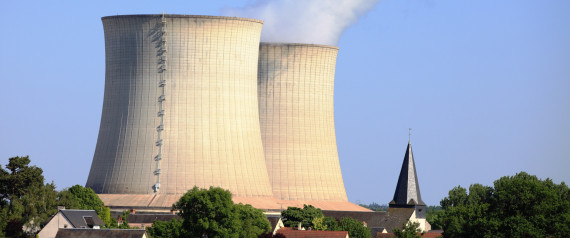
As the race to replace fossil fuels heats up, a few Canadian startups are betting on the nuclear option.
“We need a game-changing energy innovation,” Simon Irish, chief executive of Oakville, Ont.,-based Terrestrial Energy, said in a recent interview.
Renewable power like wind and solar aren’t able to meet the world’s growing energy demands, Irish says, so people have to rethink nuclear energy.
“This is clean energy on a massive scale,” he said.
Irish’s company plans to develop a nuclear reactor in Canada in the next decade using molten salt rather than the solid nuclear fuel and highly pressurized water of conventional designs like the Candu reactor.
The new technology results in a reactor six times more efficient, producing a third the nuclear waste while improving the safety of the system, he says.
The idea of the liquefied salt reactors have been around since the early days of nuclear power, but they’ve never been developed commercially.
Terrestrial, which raised $10 million last month in its first major financing, says it’s aiming to change that, with a design it says will be cost-competitive with fossil fuels.
“We’re not looking to build a reactor in a laboratory,” said Irish. “We’re just taking a reactor design off the shelf, taking it out of national lab, and we’re seeking to commercialize it.”
Burnaby, B.C.,-based General Fusion also says it’s also trying to develop nuclear energy, but it’s not exactly using off-the-shelf technology.
The company, as the name suggests, is trying to build the world’s first commercial fusion reactor, which releases energy by crushing atoms together. Today’s reactors are based on fission, where atoms are instead split apart.
General Fusion has already raised $100 million from investors like Amazon.com founder Jeff Bezos and oilsands producer Cenovus Energy. But that’s a pittance compared with the many billions of dollars governments are spending to try to build a successful fusion plant in France called Iter.
Michael Delage, General Fusion’s vice president of technology and corporate strategy, predicts his company’s practical approach will allow it to succeed with far less money.
The company’s design involves 200 synchronized pistons hitting a plasma-filled metal sphere at once, sending a shock wave of force that concentrates enough energy in the centre of the ball to force the atoms together.
Delage says if anyone is successful with fusion research, it will fundamentally change the world by creating a vast new source of energy.
“It’s a big, big impact, not just in terms of the economic win or the scale of the business, but impacting the energy industry and the world.”
After some ambitious timelines came and went, General Fusion is no longer giving specific targets, saying only that success is years down the road.
Toronto-based Thorium Power Canada Inc. is also cautious about specific timing, but like Terrestrial, it’s at least banking on proven, decades-old technology.
The company wants to develop nuclear reactors powered by solid pellets of thorium rather than uranium in a design Paul Hardy, Thorium’s senior vice-president of business development, says would allow for smaller modular plants that would be cheaper than large-scale nuclear.
“Our cost base is now a third the cost of conventional uranium reactors, which puts us in the same sort of wheelhouse as natural gas, somewhat clean coal, or oil,” said Hardy.
The company has been in talks to build small-scale reactors in Chile and Indonesia, countries without natural uranium supplies, while Hardy says governments like China, Japan and the U.S. are also investing in the technology.
Queen’s University professor Richard Holt, who holds an industrial research chair in nuclear materials, cautions that implementing any of these nuclear options won’t be easy.
As for salt reactors, Holt says: “Molten salts are nasty things to deal with in some ways, they’re often very corrosive and so on.”
Thorium, meantime, requires prodding to keep the reaction going, which, while making a nuclear meltdown less likely, also adds its own complications, Holt said.
And regarding fusion, the long-promised solution to the world’s energy demands, Holt says it’s been promised for decades but there’s no sign of a breakthrough yet.
“It’s a huge amount of technology involved and it’s a long way in the future,” said Holt.
14 Comments on "Canadian Startups Look To Nuclear To Replace Fossil Fuels"
JuanP on Tue, 23rd Feb 2016 11:05 am
The Evil Empire has the world in a death grip, http://www.counterpunch.org/2016/02/23/the-evil-empire-has-the-world-in-a-death-grip/
steveo on Tue, 23rd Feb 2016 12:42 pm
Interestingly, Dr Holt is funded by the CANDU Owners Group and is an expert on zirconium alloys in nuclear applications. A working MSR could put him out of business since the zirconium clad solid fuel rod would go the way of the Dodo.
yellowcanoe on Tue, 23rd Feb 2016 1:00 pm
We seem to have a love/hate relationship with nuclear power in Canada. As the last power reactors in Canada to be constructed were coming online at Darlington, Ontario in the early 90’s we elected a socialist government that was against nuclear power. They appointed Maurice Strong to run Ontario Hydro and he terminated thousands of Ontario Hydro employees including many nuclear specialists. Seven reactors were eventually taken out of service and coal fired plants brought back into service. Our current Liberal government has phased out coal completely. They claim it is because of their green initiative to install wind and solar power but the reality is that most of the power required to replace coal generation came from putting most of the decommissioned nuclear plants back into operation. Around 60% of our power now comes from the nuclear plants. However, the future of nuclear power is very much a question mark in Ontario. What was left of the power reactor division of AECL was sold to a private company that really has no interest in designing and building new reactors. There are no plans to replace any of our reactors as they reach the end of their useful life. The likelihood is that we will simply add more gas generation capacity as the nuclear heads into the sunset.
sunweb on Tue, 23rd Feb 2016 1:03 pm
as a species we are not mature enough (or sane enough) to have access to nuclear power. Look at history, look at the conflicted world today; it goes on and on. But these people could never see this because:
“It is difficult to get a man to understand something, when his salary depends on his not understanding it.” ― Upton Sinclair
Kenz300 on Tue, 23rd Feb 2016 1:18 pm
Nuclear energy is too costly and too dangerous…….
Fukishima and Chernobyl should be lessons for everyone……
Wind and solar are safer, cleaner and cheaper………
yellowcanoe on Tue, 23rd Feb 2016 1:39 pm
Power from new wind projects in Ontario is over twice as expensive as nuclear generated power and power from new solar projects is almost four times as expensive.
Bob Owens on Tue, 23rd Feb 2016 1:51 pm
Yellowcanoe, Either show some real fact and figures and reports to back up your claims or don’t post them.
ghung on Tue, 23rd Feb 2016 2:23 pm
Gosh, Bob, you’re free to refute anything yellowcanoe, or anyone else here, posts using your own “real fact and figures and reports to back up your claims”.
yellowcanoe on Tue, 23rd Feb 2016 2:49 pm
This page https://cna.ca/why-nuclear-energy/affordable/power-rates/ shows that the two organizations operating nuclear plants in Ontario are receiving less than 6 cents per kilowatt hour. The current feed in tariff rates are listed here http://fit.powerauthority.on.ca/sites/default/files/FIT%20Price%20Schedule%202016-01-01.pdf
Part of the problem is that Ontario is providing feed in tariffs that are substantially higher than they are elsewhere.
PracticalMaina on Tue, 23rd Feb 2016 2:53 pm
Ghung, pretty hard to pin down how much nuclear costs is it not? Why would the company that took over the former Canadian plants not want to build more reactors if it is so competitive?
shortonoil on Tue, 23rd Feb 2016 3:03 pm
“Yellowcanoe, Either show some real fact and figures and reports to back up your claims or don’t post them.”
I think the problem here is probably that Yellow is using industry estimates. Industry estimates do not include realistic appraisals of decommissioning costs. They are usually just some back of the envelope NPV calculations. In reality no one knows what it will cost to decommission these plants; no one has ever done it. Fukishima daiichI is a very good example; it could run into the $trillions by the time it is completed. Accepting any industries’ estimates on cost of reclamation is naive at best, and down right gullible at worst. If lying is going to make them money they are going to lie through their teeth if necessary. They have entire staffs, called PR departments, to make it as convincing as possible.
ghung on Tue, 23rd Feb 2016 3:22 pm
PracticalMaina said; “Ghung, pretty hard to pin down how much nuclear costs is it not?”
Yes it is, as are the full cycle costs of most of your energy sources, including long-term environmental costs. That’s why I haven’t been a gridweenie for almost 20 years. Not that I won’t end up paying some of those costs, but some of us do what we can when we’re committed. I know plenty of people who can show you the problems, but not so many who’ll put their incomes and lifestyles on the table to do anything about it. They just keep insisting that “we” do something and post a bunch of shit about how “we” aren’t doing enough.
Got to get the firewood in…..
Bob Owens on Wed, 24th Feb 2016 6:29 pm
Sorry if I upset anyone. It was good to get other points of view on this. After a lifetime of watching Nuclear get Govt handouts, favorable laws, insurance coverage, pliable overview agencies, cheap fuel from Russia, it is impossible for me to picture nuclear as cheaper than wind. You can go to:https://en.wikipedia.org/wiki/Chernobyl_disaster for an overview of the costs involved with the Chernobyl disaster. I live in the state of Florida. If we had a nuke meltdown w/ radiation release we would lose the state of Florida for 1000 years. What would that cost? Trillions. Wind power can never cost that much.
ghung on Wed, 24th Feb 2016 7:05 pm
Bob said; Sorry if I upset anyone. It was good to get other points of view on this.”
It’s hard to not get angry about some of this stuff, Bob. As for Florida, it always miffed me as to why Florida, the “Sunshine State”, lags other states in installed solar so much, so I went looking yesterday. Jeez….
The Koch Brothers’ Dirty War on Solar Power
“All over the country, the Kochs and utilities have been blocking solar initiatives — but nowhere more so than in Florida…..”
Quite the expose` of how major utilities and their backers control government and your lives at a fundamental level. Most folks don’t look at it that way. Solar and natural gas could put Florida’s nukes (and coal) out of business, but you little people have to pay off the IOUs (“Investor-Owned-Utilities) for their nuclear bets.
Matters little since half you guys will be under water in 50 years or so. What’s it going to cost to decommission Turkey Point at the same time they’re abandoning Miami?