
Peak Oil is You

Donate Bitcoins ;-) or Paypal :-)


Page added on July 20, 2014

Biofuel Energy Content Boosted to Crude Oil Level
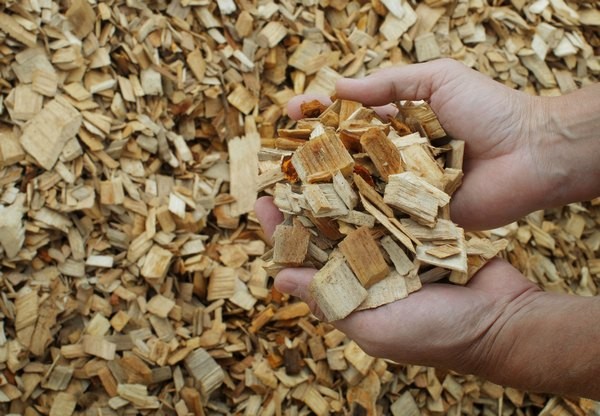
Among the many challenges that biofuels face has been that quality and energy content are low. Now, scientists have developed a catalyst that takes care of this aspect and delivers the fuel energy content better than crude oil’s and approximates that of diesel.
The oil in current-generation biofuel comes largely from plant residues, pruned waste and wood chips. Converting bulky plant residues into oil simplifies transport considerably and the product can go directly to a refinery. But, the quality of this oil does not yet equal that of crude oil. It has lower energy content per litre, is acidic and contains too much water.
A new, simple catalyst, developed at the University of Twente, in the Netherlands, improves the quality of this oil before it is even transported to the refinery.
The catalyst – sodium carbonate on a layer of alumina — developed by Prof Leon Lefferts and Prof Kulathuiyer Seshan’s group Catalytic Processes and Materials (MESA+ Institute for Nanotechnology/Green Energy Initiative) when added to the heated oil, boosts the energy content of the oil from 20 to 33-37 megajoule per kilogram.
This technology has been selected from dozens of projects for the follow-up of CatchBio, the national research programme that is helping to realise the European 2020 objective: 20% of fuel must come from renewable sources by 2020.
The technology is already being tested by KIOR in Texas, USA, on a small industrial scale, with a production of 4,500 barrels of oil per day.
The quality of the oil can be improved even more by adding the material caesium, as well as sodium carbonate.
Biofuel challenges
Land use conversion, economics of transporting raw biomass and their evolving biochemistry render biofuels a tough fuel proposition. But research efforts are on to circumvent these. Whether it is in the form of bacteria that break down lignin, or in ways to achieve better photosynthesis efficiencies, scientists are not giving up.
Meanwhile, a lack of political will and regulatory direction are seen to be stifling growth in the biofuel sector in Europe. In the US, the Energy Independence and Security Act of 2007 saw government support for the sector. EU is still far behind the US with respect to established legislation.
In a chicken or egg game, policy and capital have played spoilsport. While there cannot be stable policy without capital formation that delivers on policy goals, how does an investment take off in new technology sectors without policy stability?
International Business Times UK
6 Comments on "Biofuel Energy Content Boosted to Crude Oil Level"
Arthur on Sun, 20th Jul 2014 8:49 am
Good. Biofuel in no way can replace oil as a fuel as it is used today. But it can be used in those cases where oil is absolutely necessary, like heavy duty transport of cranes to install/maintain huge windturbines or large agricultural machines.
energyskeptic on Sun, 20th Jul 2014 1:38 pm
Another researcher at CatchBio, Seshan, writes: “…I hope that in forty years we will be able to get about 20% of our energy from waste conversion.”
We don’t have 40 years. this reminds me of all the “breakthrough” stories about cellulosic ethanol over the years. We’re supposed to be producing 15 Billion gallons of cellulosic ethanol and there isn’t even a commercial-scale plant operating yet. There are too many issues, the main one being that there are so many steps that the EROEI is negative. Making BTL (biofuels-to-liquids) has at least as may steps as making ethanol from corn grain:
To make ethanol from corn grain is an attempt to speed up petroleum’s million year process. To do this, fossil fuels are used every step of the way: diesel in transportation, and fossil fueled electricity (coal 37%, natural gas 30%) at the biorefinery and grain elevator (conveyor belt, aeration, dust control). All of the tractors, trucks, and biorefinery had enormous fossil fuel inputs to mine their materials and constructed. In the end it is likely that more fossil fuel energy is consumed than ethanol energy produced:
1) hybrid corn seeds are planted, harvested, and delivered with diesel powered vehicles 2) planted next season with diesel tractors 3) harvested with diesel harvesters, 4) delivered by diesel trucks 5) stored (grain elevator) 6) preprocessed to remove dirt 7) milled 8) liquefied 9) heated 10) saccharified 11) fermented 12) evaporated 13) centrifuged 14) distilled 15) scrubbed 16) dried 17) stored, and finally 18) transported to customers by diesel trains, barges, and trucks (McAloon).
SCALE
The potential biomass energy is miniscule compared to the fossil fuel energy we consume every year, about 105 exa joules (EJ) in the USA. If you burned every living plant and its roots across the entire continent — a lot more energy than converting plants to biofuel –you’d have 94 exa joules (EJ) of energy, 11 less than the 105 EJ of fossil fuels and nuclear power we consume every year (Patzek 2005). And then we could all pretend we lived on Mars. For several years, because photosynthesis is terribly inefficient. Biomass grows slowly. According to Timothy Searchinger at Princeton University, you’re “really lucky if you get half a percent of solar energy transformed into plant biomass”.
Most of the 94 EJ of biomass is already being used for food and feed crops, and wood for paper and homes. The 30 EJ you could get digging up all the roots and sparse vegetation is economically unavailable – leaving only a small amount of biomass unspoken for (Patzek June 2006).
On a global scale, getting 20% of the world’s energy from biofuels would require all of the plants harvested today around the world for any purpose—all crops, all grasses eaten by livestock, all wood, and all crop residues.
Alice Friedemann http://www.energyskeptic.com
Northwest Resident on Sun, 20th Jul 2014 2:05 pm
energyskeptic — I love to see a really bad idea get the treatment it deserves, and you gave it. BTW, that is a very interesting article on the presentation given by William Fred Lamar, Jr. back in 1977. Anybody who tries to make the argument that governments have been ignorant of peak oil issues and dangers all these many years just needs to read this article, and maybe the warning that President Carter gave in his “energy is a national security issue” speech. They have known all along, they have planned and strategized, they have been making decisions at the highest levels for many years. How it all plays out as everything starts to unravel will be very interesting to witness — and maybe a little scary too.
louis wu on Sun, 20th Jul 2014 2:53 pm
More happy talk. I would like to see someone ask these folks to demonstrate how the entire process would work with no fossil fuel inputs, just using what they make.
Makati1 on Sun, 20th Jul 2014 9:16 pm
louis, it wouldn’t work without some oil input in the infrastructure. Beginning with the harvesting of the resource materials and the transport and processing equipment itself. This is another net loser of energy presented as a plus. Keeps the uneducated sheeple believing in miracles.
J-Gav on Mon, 21st Jul 2014 4:46 pm
Re: the article’s final question: It doesn’t. And that will be increasingly the case as time wears on.