
Peak Oil is You

Donate Bitcoins ;-) or Paypal :-)


Page added on January 4, 2014

10 Big Energy Stories of 2013

As 2013 comes to a close, it’s time to look back at the big energy stories of the year. Here’s my top 10 stories from 2013…
1. Japan taps methane hydrates with explosive implications for the future of global energy supplies.
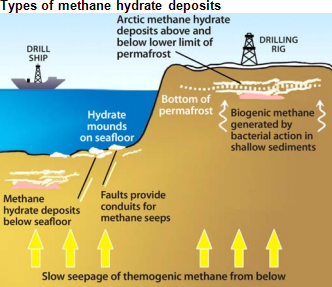 The Japanese Ministry of Economy Trade and Industry announced in March that a team aboard a drilling ship pearched above the Eastern Nankai Trough had extracted methane gas from hydrates trapped 1,000 feet below the sea floor surface. Methane hydrates, also known as clathrates or “fire ice,” are deposits of natural gas trapped within the crystaline structure of frozen water. The extraction of usable gas from undersea methane hydrates in 2013 was a world first, a breakthrough step towards tapping a potentially massive new alternative source of natural gas. Estimates of the scale of hydrate resources range from 10,000 trillion cubic feet (TCF) to more than 100,000 TCF—the equivalent of anywhere from 50% more to 15 times more natural gas than all global shale gas deposits combined. While commercial extraction of methane hydrates is still many years away, the potentially enomormous implications for global energy supplies—and efforts to confront global climate change—are worth pondering today. Read more.
2. The historic shift from gas to coal in the U.S. power sector stalls as coal consumption rebounds in 2013. Coal consumption in the United States rebounded in 2013, eroding some of the historic declines in U.S. coal use experiencec during 2011 and 2012. Coal consumption climbed 36.2 million short tons for the first half of 2013, according to EIA data, an 8.8% year-on-year increase. The rebound was driven almost entirely by the electric power sector, where coal regained some of the market share lost over the two preceding years in the face of this year’s higher natural gas prices. In total, the EIA projects that the rebound in coal consumption in 2013 combined with a very modest increase projected for 2014 will take back about 39 percent of the cumulative declines experienced since 2010. Read more.

___________________________________________
 The boom in natural gas (and oil) production from the hydraulic fracturing of shale continued to reshape North American energy markets in 2013 and spark vociferous debate over the net environmental impacts of this new energy resource. Cheap natural gas has helped force the closure of dozens of America’s dirtiest coal plants and driven U.S. carbon dioxide emissions to new lows, giving some environmentalists cause for celebration. At the same time, controversial “fracking” methods used to unlock shale gas resources consume large amounts of water and raise new fears over the potential for water contamination.
 The fastest growing portion of home energy consumption in the U.S. consumes direct current (DC) power, prompting engineerings and policy makers to reconsider the role of DC networks. Look around your house and you’ll no doubt find any number of electronics that plug in to the wall through one of those alternating current (AC) rectifiers or adapters, (known as “power bricks,” “wall warts,” etc.) including your smart phone, computer, gaming consoles, many flatscreen TVs, and a growing range of other electronic devices. Add to that LED lights, electric vehicles, and solar photovoltaic panels, which all consumer (or produce) DC power, and within 20 years, half of all power consumed in an average home come from DC loads. That’s a recipe for inefficiency—and a big opportunity for innovation—as converting the AC coming out of your wall socket to DC wastes between 20 and 35 percent of the energy. That conversion process that in total now consumes on the order of 5 percent of all electricity used in the typical U.S. home, and that proportion is rising fast. Will the home or business of the future run on DC instead of AC?
 A prolonged heat wave settled across the northeastern and midwestern United States in July, straining electricity systems across some of the nation’s most densely populated areas and setting several record days for peak electricity consumption in the New England region. Power demand surged as the heat wave began on Wednesday, July 17th, which briefly held the record for the 10th highest peak demand day in New England history, according to the New England System Operator. That record would soon be crushed as the heat index continued at or above 100 degrees across the region for three days. By the time temperatures fell over the weekend, Thursday, July 18th and Friday, July 19th became the 4th highest and 8th highest peak demand days in New England history with 26,884 and 27,379 megawatts, respectively, or the equivalent output of more than 26 large nuclear reactors. Real-time five-minute electricity prices spiked to nearly $700 per megawatt-hour and average hourly prices exceeded $466 per megawatt-hour as the system operator ordered emergency demand response programs and fired up standby oil-fired power plants. Read more.
___________________________________________
8. Challenged by distributed generation and falling demand, electricity utilities must evolve or die.
This year was abuzz with talk of the “utility of future,” “utility 2.0” and “new business models” for the electric power sector, as industry analysts and observers became acutely aware of a confluence of new trends eroding traditional utility market shares and sending profits into free fall. With rising use of renewable energy, falling wholesale market prices, and the growth of distributed generation and energy efficiency, the electric power sector is being reshaped. Together, the changes coming over the next two decades are likely to be at least as profound as the wave of industry restructuring and deregulation experienced over the previous two decades. With market shares and profitability of conventional centralized generation assets declining, electricity demand growth stagnating, and emerging technologies enabling new ways to meet consumer demands, electric utilities may be facing a stark new reality: they must evolve or die. Will they be up to the task? Read more.
 Source: Eurelectric
___________________________________________
9. Solar capacity growth rivals wind for first time as PV manufacturers return to profitability.
New solar photovoltaic (PV) capacity additions may rival or exceed the growth in wind energy for the first time in 2013, as growing demand and continuing industry consolidation begins return solar manufacturers to profitability. A projected 30-37 gigawatts (GW) of solar PV capacity will be connected to power grids worldwide, according to industry forecasts. The higher end of that forecast would outstrip projections for 33.8 GW of wind capacity additions this year, marking the first time that solar has gone toe to toe with wind in terms of capacity growth. (The higher capacity factor of wind farms means wind will best solar in additions to global energy supplies for the time being). Analysts project a 20 percent increase in the annual rate of solar PV installations, while wind power growth will slow by 25 percent as markets in the United States and China cooled this year. The growth in solar demand was enough to push many solar manufacturers back into the black after several years or brutal competition and bankruptcies. I talked in October with Shyam Mehta, Senior Solar Analyst at GTM Research, about the big trends in solar markets for 2013. Read more.

Source: Wiser & Bolinger (2013). 2012 Wind Technologies Market Report. US Department of Energy.
___________________________________________
Author’s note: Have a happy new years and stay tuned at TheEnergyCollective.com for daily coverage of the biggest energy stories of 2014!
3 Comments on "10 Big Energy Stories of 2013"
Makati1 on Sun, 5th Jan 2014 12:58 am
Biggest and ongoing energy story is that the total energy per capita is declining and has been for 40 years and will until we are back in the pre hydrocarbon era.
rockman on Sun, 5th Jan 2014 6:52 am
Interesting list. A bit of foolish hype about the methane hydrates IMHO since the Japanese themselves say they have no idea when or if they’ll develop a commercial method of recovery. Maybe it’s just me but I might wait until the first cubic foot of methane is produced at a profit before rating this as notable story let alone a major one.
And then there’s the total misrepresentation of the Keystone XL Pipeline situation: “While a decision on the proposed pipeline was expected this year, the Obama Administration has delayed their verdict into 2014, promising a continued fight over this controversial pipeline.”
There has been no delay on a decision for the “proposed pipeline”. In about 3 weeks the Keystone Pipeline system will begin transporting the oil sands production. What has been delayed is the permit for just those few miles of pipeline that will cross the border.
The southern leg of the Keystone XL Pipeline (600,000 bopd capacity) will this month begin delivering oil from the existing border crossing Keystone Pipeline directly to Texas refineries. Of course, to be fair, this isn’t an additional 600,000 bbls of oil sands production that will been entering the US. It was already a portion of the 2.44 million bopd that is currently being funneled across America’s midsection even though the permit for the very short border crossing section of KXL hasn’t been granted. The Keystone pipeline, from Hardisty, Alberta to Illinois became operational in June 2010. It’s 600,000 bopd capacity is one reason more oil sands production has been exported to the US in 2013 then ever before in history. The big change due to the completion of this southern leg of KXL is that now the bottle neck at Cushing has been eliminated the assumption is that oil sands producers will be able to get a higher price for their production and that increased profitability will spur addition development of the oil sands.
IMHO the increase profit potential from this latest development could be one of the big energy stories of 2014 since it may lead to greater profits from the oil sands which might result in even faster expansion.
Arthur on Sun, 5th Jan 2014 5:05 pm
From the list the most interesting item is the one reporting about utilities and that some of them understand that in the future their business-model will shift from being a transporter of energy from a single source, towards a mediation company between a great number of distributed producers of energy. In the future of energy distribution, smart algorithms will play an increasingly important role. Were heading towards an ‘internet of electricity’.
Biggest and ongoing energy story is that the total energy per capita is declining and has been for 40 years and will until we are back in the pre hydrocarbon era.
We will never return to the pre-hydrocarbon era, but instead arrive at the renewable energy era.