
Peak Oil is You

Donate Bitcoins ;-) or Paypal :-)


News from November 2004
Oil Market Glutted With Crude, Presenting Challenge for OPEC
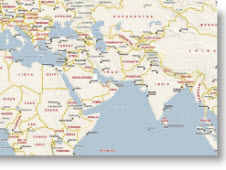
Oil traders uniformly say physical markets are glutted with crude, which could portend lower prices ahead if producers don’t take steps to rein in supply.
Viewpoints: Powering the planet
In terms of renewable energy, technically, there is potential for renewables to meet global consumption many, many times over – the trick is to do it economically.
Energy Markets (i.e. Oil) Remain Compelling
“Short term, many economists think crude oil prices will decline from current levels. A consensus forecast of U.S. economists released this week called for crude oil to fall back into the high-$30 a barrel range next year from the $50 a barrel level we now experience. While the consensus of economists might be right, we think the energy markets will stay stronger than many analysts expect.”
Safe Haven
Interesting is the graph on distilates.
Our Uncharted Energy Sea!
Matthew Simmons presentation:
China faces cold winter as fuel grows scarce.
Some 200 million people could be left out in the cold in China this winter, the state-run media warned yesterday, as energy shortages threatened the traditional switching on of the nation’s centrally planned central heating system.http://www.guardian.co.uk/china/story/0,7369,1352019,00.html
Viewpoints: Powering the planet
According to the International Energy Agency the world will need almost 60% more energy in 2030 than in 2002. But is it possible to meet this growing demand without causing catastrophic damage to the environment? BBC News asked a range of experts how our ballooning thirst for energy can be catered for. http://news.bbc.co.uk/1/hi/sci/tech/4000225.stm
Windmills may cause meteorological changes
New York, Nov 16 (IANS) An India-born, US-based scientist has proved that large-scale installation of windmills to replace conventional sources of energy may cause drastic local weather changes. According to a newly published study by The Journal of Geophysical Research quoted by the New York Times, a wind farm with thousands of wind turbines also […]
New Oil Projects Cannot Meet World Needs This Decade
World oil supplies are all but certain to remain tight through the rest of this decade, unless there is a precipitous drop in demand, according to the results of a study by the London-based Oil Depletion Analysis Centre (ODAC). NEWS RELEASE For Immediate Release: Tuesday, 16 November 2004 The study found that all of the […]
Russian wildcat numbers down
It seams like the Yukos saga is hiting their exploration efforts. They can’t pay their contractors so they aren’t able to perform the drilling to support their reserves or production. The tax uncertainty has spilled over to the other Russian majors as well since they also have curtailed exploratory drilling. Evidently the Russian government has […]
Energy: A Global Overview
Matthew Simmons presentation:
Slide 19: non-OPEC, non-FSU supply peaked
Oil: What’s Russia Really Sitting On?
In its annual statistical survey of world energy, BP PLC (BP ) has recently revised its estimates of Russia’s total proven oil reserves to 69.1 billion barrels, 6% of the world’s total, up from 45 billion bbl. in 2001.
…
This increasing recoverability, and not dramatic new discoveries of oil, explains why Russia’s proven reserves keep shooting up.
Skating over the oil issue
More than 60 years ago, in the midst of World War II, those showgirls on roller skates traveling down New York’s Fifth Avenue came to symbolize the optimism of sacrifice during war. Holding a placard stating, “DO YOUR BIT! SKATE TO WORK. SAVE GAS,” the gals in short skirts were more than an advertising gimmick in June 1942. They became a cause for presidential action.
After that 1942 election, President Roosevelt imposed rationing of gasoline as a way to save rubber and oil for the troops. Not that America today needs to go to such extremes as outright rationing.
Methanol Output to Drop in 2005 (NZ)
Methanex Corporation, which runs two methanol plants in Taranaki (NZ) says these may produce only 375,000 tonnes of methanol in 2005. Vancouver’s Methanex announced last year that its plants – with a production capacity of 2.4 million tonnes – would produce only 1m tonnes, or 40% of capacity in 2003, because it had effectively used […]
Shell Say Only Half of North Sea Oil and Gas Exploited
 |
|
|
“The idea that everybody wants to leave the North Sea and turn off the lights is wrong. There’s at least as much crude left in the UK (Continental Shelf) as has already been produced. It comes in smaller packages and at a higher cost to develop, but these are challenges that Shell is trying to take on.” |
Molecular Manufacturing vs. Peak Oil
Chris Phoenix from CRN (Centre for Responsible Nanotechnology) writes his views on why molecular manufacturing must be developed for a sucessful transition from an oil based economy.
Molecular Manufacturing vs. Peak Oil
China Barrels Ahead in Oil Market
SHANGHAI — About a three-hour drive south of Shanghai, along the East China Sea, workers are building 52 gigantic tanks, each capable of holding more than 25 million gallons of oil — enough to supply every driver in China with gasoline for a month. tdrive comment: This translates to 31 Mbbl of oil. http://news.yahoo.com/news?tmpl=story&u=/latimests/20041114/ts_latimes/chinabarrelsaheadinoilmarket
World’s tanker fleet is ‘close to 100 percent utilization’
A lack of spare oil tankers and an increase in OPEC production are driving shipping rates to records, said Morten Arntzen, CEO of Overseas Shipholding Group, the largest U.S.-based oil tanker owner. “This is the first time in 31 years that we’ve had close to 100 percent utilization of the world’s tanker fleet,” Arntzen said […]
Barrons: ”Dean of Energy Analysts” on Peak Oil
An admission of Peak Oil with gravitas. Maxwell speaks of three stages of economic response, the first of which is already passing (!) Subscription required. An alternative is available here.
Ga. Tech has minds with energy to burn
The search for alternatives to foreign petroleum may be fueled by Atlanta brain power
AJC Online (Registration Required)
Readers Respond: How Do We Prepare for a World Without Cheap Oil?
While we must look for and create alternatives, we do not need to lose competitive advantage in doing so. In fact, the first countries to successfully develop new layers of infrastructure to support and actively use a new fuel will benefit tremendously.
Sandia, Stirling To Build Solar Dish Engine Power Plant
ALBUQUERQUE, N.M. — The National Nuclear Security Administration’s Sandia National Laboratories is joining forces with Stirling Energy Systems, Inc. (SES) of Phoenix to build and test six new solar dish-engine systems for electricity generation that will provide enough grid-ready solar electricity to power more than 40 homes. ScienceDaily
Don’t count on a boost from cheaper oil
Not long ago the world economy was apparently threatened by the adverse effects of higher oil prices. Some commentators talked of the danger of recession, or even stagflation. More recently, however, oil prices have come down a bit. Is there now the prospect of a boost to the world economy from much lower oil prices? […]
U.S. OKs Commercial Drilling in Alaska Oil Reserve [NPR-A]
WASHINGTON (Reuters) – The U.S. Interior Department on Friday gave final approval to a plan by ConocoPhillips and partner Anadarko Petroleum Corp. to develop five tracts around the oil-rich Alpine field on Alaska’s North Slope. The petroleum reserve, the size of Indiana, was set aside in 1923 for its energy potential, but until recently it […]
Interview with Al jazeera’s Adam Porter on Peak Oil
There is (quite a funny) interview with Adam Porter of al-jazeera on the new GNN site. He explains a few ideas and talks about peak oil.
Another oil-reserves scandal?
THERE is something strange going on in this industry, says Jeroen van der Veer, the boss of Royal Dutch/Shell. He suspects that his firm, far from being the nasty exception it has been portrayed as being, is merely the first to face a problem that is industry-wide.
(Subscription required)
Witty Mike Davis article
Instead of working, which I should be doing, I have been skiving:
Check out this blackly humourous take on things:
Liverpool Blackout –
I had read a previous article refering to Electricity output not being able to keep up with demand. That most blackouts occured during peak hour when business and home users were both using electricity. http://tinyurl.com/6yd6x
Kellia Ramares reports on Peak Oil on Pacifica Station KPFA
In Brief: Kellia Ramares speaks with Colin campbell, Richard Heinberg, Dale Alan Pfeiffer, Julian Darley, Matt Simmons, and Ali Samsam Bakhtiari
In a groundbreaking radio broadcast, Kellia Ramares of Radio Internet Story Exchange speaks with an all star cast of peak oil realists on Pacific Station KPFA’s Noon show, The Living Room including Colin campbell, Richard Heinberg, Dale Alan Pfeiffer, Julian Darley, Matt Simmons, and Ali Samsam Bakhtiari.
Audio [48:58] | mp3
GPM
Pakistan to develop renewables
ISLAMABAD: Shahid Naeem, chief executive officer of US-based Access Group International (AGI), has informed Omar Ayub, minister of state for finance, on Monday that the group is planning to invest $1.2 billion in Pakistan in the energy sector over the next five years. In a meeting with the state minister, Mr Nadeem said that the […]
Opec unlikely to change output
Opec is unlikely to change its production quotas when it meets on December 10, according to Algerian Energy Minister Chakib Khelil. He told Reuters that the meeting will spend time looking forward on what may happen, and said he did not expect oil to fall below USD30 a barrel in 2005.
http://www.ameinfo.com/news/Detailed/48692.html
Oil News Categories
Recent Board Topics
Archive
LATEST NEWS HEADLINES
- Why the IEA is Wrong About Peak Oil Demand
- Did we inadvertently speed global warming?

- Venezuela’s Oil Monopoly Eases
- Why Germany is Choosing Natural Gas Over Nuclear Power
- U.S. coal-fired electricity generation decreased in 2022 and 2023
- America Cracks Down on Methane Emissions from Oil and Gas Facilities
- Meet America’s Newest Oil Trader Extraordinaire: Joe Biden
- Is It Time To Refill America’s Strategic Petroleum Reserve?
- Oil prices set to end year 10% lower as demand concerns snap winning streak
- What’s Driving America’s New Oil and Gas Boom?
- China’s peak oil demand bombshell eviscerates Danielle Smith’s energy strategy
Member Comments
- on James Schlesinger on peak oil
- on U.S. coal-fired electricity generation decreased in 2022 and 2023
- on Kunstler: Oh Say Can You See?
- on US Warship, Commercial Ships Under Attack In Red Sea
- on Saudi Arabia’s Oil Strategy Is About More Than Destroying The US Shale Business
- on Things That Make You Go Hmm… Like The Death Of The Petrodollar, And What Comes After
- on New England’s last coal plants to voluntarily shut down
- on Germany’s Merkel Pledges Millions To Save Forests
- on UK: Return to slop bucket as homes face ban on sending food waste to landfill
- on China to Double Oil, Gas Production by 2030
- on New England’s last coal plants to voluntarily shut down
- on New England’s last coal plants to voluntarily shut down
- on New England’s last coal plants to voluntarily shut down
- on New England’s last coal plants to voluntarily shut down
- on New England’s last coal plants to voluntarily shut down
- on New England’s last coal plants to voluntarily shut down
- on New England’s last coal plants to voluntarily shut down
- on New England’s last coal plants to voluntarily shut down
- on New England’s last coal plants to voluntarily shut down
- on Kunstler: Oh Say Can You See?
PO Real Time
No tweets available