
Peak Oil is You

Donate Bitcoins ;-) or Paypal :-)


News from June 2004
At least 22 foreigners were killed in the latest attacks on oil industry
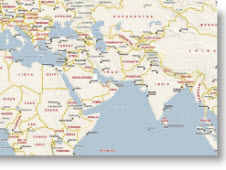

At least 22 foreigners were killed in the latest attacks on oil industry workers and facilities in the kingdom, the world’s largest oil exporter. About 50 people were taken hostage and held for 24 hours before Saudi commandos assaulted the terrorist’s stronghold, killing at least two of the attackers. That renewed concerns about supply in a skittish market, with the Saudis scheduled to boost production today from 8.3 million barrels to 9.1 million barrels a day.
Oil Hits $42 Record After Saudi Attack

LONDON (Reuters) – U.S. oil prices leapt to a record $42 a barrel on Tuesday after an attack in Saudi Arabia by Islamic militants killed 22 people, heightening fears about political instability in the world’s biggest oil exporter.
Marketplace Report: Oil Supplies
NPR’s Madeleine Brand talks to Marketplace’s David Brown about how the latest terrorist attacks in Saudi Arabia could affect oil supplies.

Shell Announces Buyback of Own Shares
The “Shell” Transport and Trading Company, p.l.c. announces that on May 27, 2004 it purchased for cancellation 2,000,000 ordinary shares at a price of 399.80 pence per share.
Kuwait says Gulf Arabs coordinating oil security

“We must remain cautious and trust in our security organisation,” Sheikh Ahmad told reporters.”We are coordinating among Gulf Arab countries to prevent attacks.”
Oil at $80 a barrel is just around the corner.

The terrorist attacks in Saudi Arabia are giving new life to the idea that the world is heading into an era of permanently high oil prices.
Thailand Aims To Double Its Oil Production
There is no shortage of activity. In 2002/2003 268 wells were drilled, with oil in 36, gas in 115 and both oil and gas in 69. The government is also keen to open promising new areas to exploration, hence the award in the 18th licensing round of a number of concessions close, or adjacent to existing oil finds.
Many Oil Exporters to Hike Production
Leading oil exporters outside the Middle East have pledged to boost production to offset soaring world prices
Oil On Fire: The
As long as the government regulates the price of oil products, as long as the government has a political need to satisfy the farming and the agri- cultural community and the large sections of the Indian population who are poor and have to use kerosene for their fuel, the domestic pricing of oil products will remain a major dilemma for the government.
Iraq and the Problem of Peak Oil
Iraq and the Problem of Peak Oil
by F. William Engdahl
Today, much of the world is convinced the Bush Administration did not wage war against Iraq and Saddam Hussein because of threat from weapons of mass destruction, nor from terror dangers. Still a puzzle, however, is why Washington would risk so much in terms of relations with its allies and the entire world, to occupy Iraq. There is compelling evidence that oil and geopolitics lie at the heart of the still-hidden reasons for the military action in Iraq.
http://www.currentconcerns.ch/archive/2004/01/20040118.php
Oil News Categories
Recent Board Topics
Archive
LATEST NEWS HEADLINES
- Why the IEA is Wrong About Peak Oil Demand
- Did we inadvertently speed global warming?

- Venezuela’s Oil Monopoly Eases
- Why Germany is Choosing Natural Gas Over Nuclear Power
- U.S. coal-fired electricity generation decreased in 2022 and 2023
- America Cracks Down on Methane Emissions from Oil and Gas Facilities
- Meet America’s Newest Oil Trader Extraordinaire: Joe Biden
- Is It Time To Refill America’s Strategic Petroleum Reserve?
- Oil prices set to end year 10% lower as demand concerns snap winning streak
- What’s Driving America’s New Oil and Gas Boom?
- China’s peak oil demand bombshell eviscerates Danielle Smith’s energy strategy
Member Comments
- on James Schlesinger on peak oil
- on U.S. coal-fired electricity generation decreased in 2022 and 2023
- on Kunstler: Oh Say Can You See?
- on US Warship, Commercial Ships Under Attack In Red Sea
- on Saudi Arabia’s Oil Strategy Is About More Than Destroying The US Shale Business
- on Things That Make You Go Hmm… Like The Death Of The Petrodollar, And What Comes After
- on New England’s last coal plants to voluntarily shut down
- on Germany’s Merkel Pledges Millions To Save Forests
- on UK: Return to slop bucket as homes face ban on sending food waste to landfill
- on China to Double Oil, Gas Production by 2030
- on New England’s last coal plants to voluntarily shut down
- on New England’s last coal plants to voluntarily shut down
- on New England’s last coal plants to voluntarily shut down
- on New England’s last coal plants to voluntarily shut down
- on New England’s last coal plants to voluntarily shut down
- on New England’s last coal plants to voluntarily shut down
- on New England’s last coal plants to voluntarily shut down
- on New England’s last coal plants to voluntarily shut down
- on New England’s last coal plants to voluntarily shut down
- on Kunstler: Oh Say Can You See?
PO Real Time
No tweets available