
PeakOil is You
On The Thermodynamic Model of Oil Extraction by Hill’s Group
On The Thermodynamic Model of Oil Extraction by Hill’s Group
 by Jibdul » Sat 25 Feb 2017, 02:38:58
-

Jibdul - Wood

- Posts: 28
- Joined: Sun 27 Dec 2015, 20:17:35
Re: On The Thermodynamic Model of Oil Extraction by Hill’s G
by MD » Sat 25 Feb 2017, 05:09:36
Great stuff! And also excellent commentary. I understand it but it's way beyond my interest or ability to add to the discussion. Way too complex for my widdle brain 
Stop filling dumpsters, as much as you possibly can, and everything will get better.
Just think it through.
It's not hard to do.
Just think it through.
It's not hard to do.
-

MD - COB

- Posts: 4953
- Joined: Mon 02 May 2005, 03:00:00
- Location: On the ball
Re: On The Thermodynamic Model of Oil Extraction by Hill’s G
by Plantagenet » Sat 25 Feb 2017, 13:09:13
From the link:
From what has been discussed above, the thermodynamic analysis is incorrect and therefore any calculations and graphs based on this analysis must also be unreliable.
i.e. the Hills Group did their math wrong.
From what has been discussed above, the thermodynamic analysis is incorrect and therefore any calculations and graphs based on this analysis must also be unreliable.
i.e. the Hills Group did their math wrong.
-

Plantagenet - Expert

- Posts: 26765
- Joined: Mon 09 Apr 2007, 03:00:00
- Location: Alaska (its much bigger than Texas).
Re: On The Thermodynamic Model of Oil Extraction by Hill’s G
by rockdoc123 » Sat 25 Feb 2017, 13:34:48
I suspect there are several serial thread abusers of the ETP variety that are currently having kittens over this!
-

rockdoc123 - Expert
- Posts: 7685
- Joined: Mon 16 May 2005, 03:00:00
Re: On The Thermodynamic Model of Oil Extraction by Hill’s G
by AdamB » Sat 25 Feb 2017, 14:11:24
$this->bbcode_second_pass_quote('Jibdul', '[')url=http://peakoilbarrel.com/on-the-thermodynamic-model-of-oil-extraction-by-the-hills-group/]Peak Oil Barrel Article[/url]
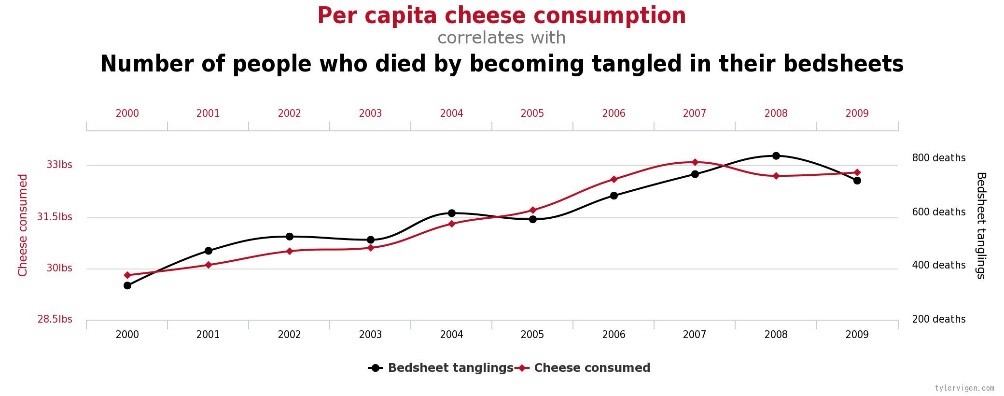
It doesn't make any more sense when they discuss it, as compared to how it doesn't make any sense when discussed here. Do you have a comment on how the same gibberish discussed there is any different than when the gibberish is discussed here?
The reason why it makes no sense, for those who prefer pictures. Enjoy!
Plant Thu 27 Jul 2023 "Personally I think the IEA is exactly right when they predict peak oil in the 2020s, especially because it matches my own predictions."
Plant Wed 11 Apr 2007 "I think Deffeyes might have nailed it, and we are just past the overall peak in oil production. (Thanksgiving 2005)"
Plant Wed 11 Apr 2007 "I think Deffeyes might have nailed it, and we are just past the overall peak in oil production. (Thanksgiving 2005)"
-

AdamB - Volunteer

- Posts: 11018
- Joined: Mon 28 Dec 2015, 17:10:26
Re: On The Thermodynamic Model of Oil Extraction by Hill’s G
by AdamB » Sat 25 Feb 2017, 14:14:16
$this->bbcode_second_pass_quote('Plantagenet', 'F')rom the link:
From what has been discussed above, the thermodynamic analysis is incorrect and therefore any calculations and graphs based on this analysis must also be unreliable.
i.e. the Hills Group did their math wrong.
From what has been discussed above, the thermodynamic analysis is incorrect and therefore any calculations and graphs based on this analysis must also be unreliable.
i.e. the Hills Group did their math wrong.
And their statistics.
And their resource estimates.
And their assumptions of lifting costs and dynamics.
And their understanding of price and its derivative components.
And their understanding of basic oil field practice.
And their understanding of basic modeling/engineering techniques of backcasting for validation.
The question is, did they get anything RIGHT, not what that got wrong.
Plant Thu 27 Jul 2023 "Personally I think the IEA is exactly right when they predict peak oil in the 2020s, especially because it matches my own predictions."
Plant Wed 11 Apr 2007 "I think Deffeyes might have nailed it, and we are just past the overall peak in oil production. (Thanksgiving 2005)"
Plant Wed 11 Apr 2007 "I think Deffeyes might have nailed it, and we are just past the overall peak in oil production. (Thanksgiving 2005)"
-
AdamB - Volunteer
- Posts: 11018
- Joined: Mon 28 Dec 2015, 17:10:26
Re: On The Thermodynamic Model of Oil Extraction by Hill’s G
by Cog » Sun 26 Feb 2017, 06:34:40
Do I care how much energy that is lost in the electrical grid during transmission?
Nope and neither should you care how much heat is lost during combustion. Its a point of irrelevancy as long as the end product produces something useful to the consumer.
Nope and neither should you care how much heat is lost during combustion. Its a point of irrelevancy as long as the end product produces something useful to the consumer.
-

Cog - Fusion

- Posts: 13416
- Joined: Sat 17 May 2008, 03:00:00
- Location: Northern Kekistan
 Re: On The Thermodynamic Model of Oil Extraction by Hill’s G
by Tanada » Sun 26 Feb 2017, 08:16:17
The ETP model is nothing but an attempt at curve fitting the EROEI model of oil use using different terminology to sweep in a different newer set of gullible people into agreeing with the author's personal doom vision.
Throw in some equations with a slew of very loosely calculated variables and you can make any equation agree with any prediction simply by tweaking the variables to get the desired outcome. The more variables you put in the equation the easier it is to tweak the outcome by adjusting them until you have a result you want.
Meanwhile in the real world not only do you not know the actual value of those variables, many of them are unknowable with current technology and to make things even worse there are several to many variables not even accounted for in the calculation because of the unknown unknowns. Things like enhanced oil recovery efficiency which is based upon multiple variables starting with porosity and viscosity and rapidly growing from there based on technique employed.
Throw in some equations with a slew of very loosely calculated variables and you can make any equation agree with any prediction simply by tweaking the variables to get the desired outcome. The more variables you put in the equation the easier it is to tweak the outcome by adjusting them until you have a result you want.
Meanwhile in the real world not only do you not know the actual value of those variables, many of them are unknowable with current technology and to make things even worse there are several to many variables not even accounted for in the calculation because of the unknown unknowns. Things like enhanced oil recovery efficiency which is based upon multiple variables starting with porosity and viscosity and rapidly growing from there based on technique employed.
$this->bbcode_second_pass_quote('Alfred Tennyson', 'W')e are not now that strength which in old days
Moved earth and heaven, that which we are, we are;
One equal temper of heroic hearts,
Made weak by time and fate, but strong in will
To strive, to seek, to find, and not to yield.
Moved earth and heaven, that which we are, we are;
One equal temper of heroic hearts,
Made weak by time and fate, but strong in will
To strive, to seek, to find, and not to yield.
- Tanada
- Site Admin
- Posts: 17094
- Joined: Thu 28 Apr 2005, 03:00:00
- Location: South West shore Lake Erie, OH, USA
Re: On The Thermodynamic Model of Oil Extraction by Hill’s G
by vtsnowedin » Sun 26 Feb 2017, 12:33:05
Your diagram is wrong on it's face. The unavoidable waste heat is not by itself but split between the other two categories. The waste heat in the oil delivered to the economy is not wasted until after delivery. Then of course the fact that the numbers for 2016 are off by a factor of ten just makes it silly.
-
vtsnowedin - Fusion
- Posts: 14897
- Joined: Fri 11 Jul 2008, 03:00:00
Re: On The Thermodynamic Model of Oil Extraction by Hill’s G
by KaiserJeep » Sun 26 Feb 2017, 14:30:15
$this->bbcode_second_pass_quote('Tanada', 'T')he ETP model is nothing but an attempt at curve fitting the EROEI model of oil use using different terminology to sweep in a different newer set of gullible people into agreeing with the author's personal doom vision.
Throw in some equations with a slew of very loosely calculated variables and you can make any equation agree with any prediction simply by tweaking the variables to get the desired outcome. The more variables you put in the equation the easier it is to tweak the outcome by adjusting them until you have a result you want.
Meanwhile in the real world not only do you not know the actual value of those variables, many of them are unknowable with current technology and to make things even worse there are several to many variables not even accounted for in the calculation because of the unknown unknowns. Things like enhanced oil recovery efficiency which is based upon multiple variables starting with porosity and viscosity and rapidly growing from there based on technique employed.
Throw in some equations with a slew of very loosely calculated variables and you can make any equation agree with any prediction simply by tweaking the variables to get the desired outcome. The more variables you put in the equation the easier it is to tweak the outcome by adjusting them until you have a result you want.
Meanwhile in the real world not only do you not know the actual value of those variables, many of them are unknowable with current technology and to make things even worse there are several to many variables not even accounted for in the calculation because of the unknown unknowns. Things like enhanced oil recovery efficiency which is based upon multiple variables starting with porosity and viscosity and rapidly growing from there based on technique employed.
Well said. But the reason that one can NEVER successfully model large complex systems where human behavior is one of those variables is that there is no calculus of human behavior. The Heisenberg Uncertainty Principle applies, or more precisely in the macro world inhabited by human beings, the observer effect.
This is why economic models of all types fail to display even two significant digits - because people know about and react to their published results. There may possibly exist somebody somewhere who has a Peak Oil model that works and is accurate. But it won't be ETP, the Thermodynamic Model discussed in this thread, or even some variant of M. King Hubbert's seminal works. Because all those got published and were thus rendered inaccurate and incapable of being confirmed.
It's a Catch-22 sort of problem - when you achieve accuracy in a model, and you publish results, many people revere your work and it modifies their behavior, invalidating your model in a short period. If you create such a model, you cannot ever share it with anybody at all or it will be broken by the psychological impact upon humans.
You can bask in self-admiration from such work, tempered by the fact that everybody around you considers you more than a trifle eccentric. Or you can publish your working model and cause it to stop working, resulting in public discredit. Physics is frequently a bitch, even when it's principles are used to understand human behavior.
KaiserJeep 2.0, Neural Subnode 0010 0000 0001 0110 - 1001 0011 0011, Tertiary Adjunct to Unimatrix 0000 0000 0001
Resistance is Futile, YOU will be Assimilated.
Warning: Messages timestamped before April 1, 2016, 06:00 PST were posted by the unmodified human KaiserJeep 1.0
Resistance is Futile, YOU will be Assimilated.
Warning: Messages timestamped before April 1, 2016, 06:00 PST were posted by the unmodified human KaiserJeep 1.0
- KaiserJeep
- Light Sweet Crude

- Posts: 6094
- Joined: Tue 06 Aug 2013, 17:16:32
- Location: Wisconsin's Dreamland