baha,
Thanks for sharing. I always enjoy hearing other success stories like yours. Do you mind if I ask how old you are?
My youngest sons family is doing similar things, on his recently (two years ago) purchase of his 2 1/2 acre place. As a cement mason plus his experience with earthmoving equipment and house framing, he has the skills and contacts to pull it off. Also his work ethic is amazing. I feel pretty confident in his abilities during the coming chaos.
Also, since they live about twenty miles away from our homestead, we now have redundant homesteads. We enjoy working together on various projects. I am seriously considering homeschooling my granddaughter, especially since a Permaculture based curriculum is being developed.
As I get older, I am coming to see the value in three generation family units. Grandparents can watch and teach the grandchildren, tend gardens, and provide experiential knowledge and wisdom. Parents are primary producers (although the grandparents should contribute), have the strength and stamina to complete labor intensive projects, and raise their children to be productive useful adults. The Children's primary job is to learn how life works, contribute to the family with appropriate chores, learn to think critically, and become responsible adults.
Anyway, enough from an old white guy. Thanks again for your posts, hope to hear more.



PeakOil is You
How to build a cheap Passive House
Re: How to build a cheap Passive House
 by careinke » Sun 29 Jan 2017, 18:08:46
Cliff (Start a rEVOLution, grow a garden)
-

careinke - Volunteer

- Posts: 5047
- Joined: Mon 01 Jan 2007, 04:00:00
- Location: Pacific Northwest
Re: How to build a cheap Passive House
by KaiserJeep » Sun 29 Jan 2017, 19:44:47
Congrats, baha. The true goal of PassivHaus is to utilize 10% of the energy for the average residence in North America. It is a lot easier to do today in the Carolinas than in the Northern states, we have lots more intense Winters. We already discussed my own Passive House plans in page #14 of this thread:
http://peakoil.com/forums/viewtopic.php?p=1344519
Technically, your type of residence is what architects refer to as a "Pretty Good House". To call it a PassivHaus, or even to claim the slightly less rigorous standards of the US Passive House, you have to have it tested for compliance, using both a blower door test of air tightness and a monitoring of actual energy consumption. The tests alone might add $3000 and might also point out weaknesses in the home needing even more money to correct.
I have a secondary goal of having an all-electric home, one that does not require one to burn gas or oil or wood for space heating or water heating, or cooking. I am currently losing that fight with the wife who likes the instant heat of a gas burner and who is not familiar with induction burners, which heat cookware directly, using less than half the energy of either gas or electric cooktops.
The whole idea being, eliminate the need to burn anything, and keep the wood for ornamental fires, outdoor cooking, and emergency backup heat.
http://peakoil.com/forums/viewtopic.php?p=1344519
Technically, your type of residence is what architects refer to as a "Pretty Good House". To call it a PassivHaus, or even to claim the slightly less rigorous standards of the US Passive House, you have to have it tested for compliance, using both a blower door test of air tightness and a monitoring of actual energy consumption. The tests alone might add $3000 and might also point out weaknesses in the home needing even more money to correct.
I have a secondary goal of having an all-electric home, one that does not require one to burn gas or oil or wood for space heating or water heating, or cooking. I am currently losing that fight with the wife who likes the instant heat of a gas burner and who is not familiar with induction burners, which heat cookware directly, using less than half the energy of either gas or electric cooktops.
The whole idea being, eliminate the need to burn anything, and keep the wood for ornamental fires, outdoor cooking, and emergency backup heat.
KaiserJeep 2.0, Neural Subnode 0010 0000 0001 0110 - 1001 0011 0011, Tertiary Adjunct to Unimatrix 0000 0000 0001
Resistance is Futile, YOU will be Assimilated.
Warning: Messages timestamped before April 1, 2016, 06:00 PST were posted by the unmodified human KaiserJeep 1.0
Resistance is Futile, YOU will be Assimilated.
Warning: Messages timestamped before April 1, 2016, 06:00 PST were posted by the unmodified human KaiserJeep 1.0
- KaiserJeep
- Light Sweet Crude

- Posts: 6094
- Joined: Tue 06 Aug 2013, 17:16:32
- Location: Wisconsin's Dreamland
Re: How to build a cheap Passive House
by careinke » Sun 29 Jan 2017, 20:33:00
$this->bbcode_second_pass_quote('baha', 'T')he passive house standard is based on btu/sqft and air infiltration. https://en.wikipedia.org/wiki/Passive_house
I have not yet done the blower door test offered free by Duke power. I'm waiting until I'm done. I still have the floor to do. But I can tell by the way the doors close, the house is tight. I will use it at the end to find the last few leaks. I am not concerned with certifications, I just want to stay warm...cheap. My wife and I agree with your wife. I will cook with gas as long as I can and then I will switch to wood.
I am also an old white guy. I am 56. I started climbing on roofs carrying a solar panel when I was 49. I'm trying real hard to get this done before I can't anymore.
I have not yet done the blower door test offered free by Duke power. I'm waiting until I'm done. I still have the floor to do. But I can tell by the way the doors close, the house is tight. I will use it at the end to find the last few leaks. I am not concerned with certifications, I just want to stay warm...cheap. My wife and I agree with your wife. I will cook with gas as long as I can
and then I will switch to wood.I am also an old white guy. I am 56. I started climbing on roofs carrying a solar panel when I was 49. I'm trying real hard to get this done before I can't anymore.
Plant perennial food.
Cliff (Start a rEVOLution, grow a garden)
-
careinke - Volunteer
- Posts: 5047
- Joined: Mon 01 Jan 2007, 04:00:00
- Location: Pacific Northwest
Re: How to build a cheap Passive House
by KaiserJeep » Sun 29 Jan 2017, 21:02:14
baha, might I ask if you are planning on going "off-grid"? I figure, once you pay for the Powerwall, assuming you sized it correctly, you might as well, since that battery is a major added expense that has to be replaced every 10-15 years. You can offset the battery replacement with 10-15 years of not paying the minimum grid-connect fees and taxes. But also one should not go off-grid without a backup source of heat and electrical power.
Although I want to build the home already discussed, they simply are not making the most beautiful of lakeshore lots around Lake Michigan any more. If it comes to a choice between a great beach and a good beach, the wife and I will probably choose the great beach, even if it means an existing home that must be upgraded. But I will have to pay contractors for the upgrades, since I will turn 66 this year. I still do most household maintenance tasks, but I don't go on roofs anymore. The Wisconsin lakehouse would have to be super-insulated and weathertight and have HVAC systems completed before the first snow.
Although I want to build the home already discussed, they simply are not making the most beautiful of lakeshore lots around Lake Michigan any more. If it comes to a choice between a great beach and a good beach, the wife and I will probably choose the great beach, even if it means an existing home that must be upgraded. But I will have to pay contractors for the upgrades, since I will turn 66 this year. I still do most household maintenance tasks, but I don't go on roofs anymore. The Wisconsin lakehouse would have to be super-insulated and weathertight and have HVAC systems completed before the first snow.
KaiserJeep 2.0, Neural Subnode 0010 0000 0001 0110 - 1001 0011 0011, Tertiary Adjunct to Unimatrix 0000 0000 0001
Resistance is Futile, YOU will be Assimilated.
Warning: Messages timestamped before April 1, 2016, 06:00 PST were posted by the unmodified human KaiserJeep 1.0
Resistance is Futile, YOU will be Assimilated.
Warning: Messages timestamped before April 1, 2016, 06:00 PST were posted by the unmodified human KaiserJeep 1.0
- KaiserJeep
- Light Sweet Crude
- Posts: 6094
- Joined: Tue 06 Aug 2013, 17:16:32
- Location: Wisconsin's Dreamland
Re: How to build a cheap Passive House
by Newfie » Mon 30 Jan 2017, 10:16:16
Very good. From reading your other thread I didn't get the idea you were into savings and reduction. Yes, that is the first line of defense/improvement...use less.
That's a lot of grunt work. Part of the reason we went with the boat, at my age I don't have the gumption. Although the boat has tested me on that pretty regularly.
Your point about not being on a freezing lake is important, also not in a dry desert. Living as we do, over so broad a climate zone, means that many of us are high energy users by location. Of course moving to a suitable zone is not an option for most people.
Again, well done.
That's a lot of grunt work. Part of the reason we went with the boat, at my age I don't have the gumption. Although the boat has tested me on that pretty regularly.
Your point about not being on a freezing lake is important, also not in a dry desert. Living as we do, over so broad a climate zone, means that many of us are high energy users by location. Of course moving to a suitable zone is not an option for most people.
Again, well done.
-

Newfie - Forum Moderator
- Posts: 18651
- Joined: Thu 15 Nov 2007, 04:00:00
- Location: Between Canada and Carribean
Re: How to build a cheap Passive House
by Paulo1 » Mon 30 Jan 2017, 11:28:32
Thanks for the information and plans, Baha. Nicely done.
I just want to make two points...or so.
The tar paper you referred to after stripping out the studs is not a vapour barrier. Rather, it works as a rainshield and allows water vapour to freely pass through your walls in both directions, while still stopping water incursion from the outside; rain, wind pushing rain, etc. The application of a non-incursion membrane such as 6 ml polly on the inside, plus building papers such as Tyvek etc is still controversial. Totally sealed houses require humidistats and forced air ventilation. While a total seal is required for most modern building codes, and certain designations, it is not always the best way to go. It is all very climate dependent how you approach this problem.
I am a carpenter. I have seen houses wrapped in building paper as per code trap moisture within walls, thus promoting dry rot. I have also found that totally vapour sealed homes from the inside, (which would pass the designations) also trap moisture within the walls. The more rigid membranes provide a surface for the water vapour to condense upon with temprature drops. As you know, warm air holds more moisture. There is always that need for equalization, thus the migration of water vapour into balance.
If you go the totally sealed route please check your window caulkings and corner treatments on your outside siding, yearly.
Our renovated house faces a river for view, etc. Wonderful. However, the picture windows face west. One thing I did is kick out the south wall and build a new living room....about 350 sq feet. It steps down and has a vaulted ceiling above 10' walls. The main point are the windows. I installed 8, 3'X6' windows to catch the sun in the winter. In the summer the sun is well overhead so heat isn't an issue. It not only added to all views, it gave us a great source of passive solar.
Oh yeah, where I live on the BC wet coast our rural District has no building codes. I was able to use two layers of 60' tar paper instead of tyvek on the outside plywood sheathing. The siding is red cedar shingles. This approach treats the house a living thing allowing the moisture to move both ways, etc. I have renovated 100 year old homes without one stich of rot that were built this way, and have seen new construction as per code develop condo disease and are well rotted within 10 years. If you go the sealed route you have to really be vigilent. We get 7' of rain here yearly, so the oldtimers were on to something.
Building standards are great, but local considerations need to be allowed for. It's a big continent.
Anyway, your place sounds fantastic. Excellent work and thanks for sharing the info. Plus, 56 ain't too old!! I am 61 and have couple of roofs and renos to do this summer for realtives. (It's going to hurt, isn't it? Damn.). My 89 year old neighbour still climbs up on his roof to clean his chimney. He won't accept any help.
regards
I just want to make two points...or so.
The tar paper you referred to after stripping out the studs is not a vapour barrier. Rather, it works as a rainshield and allows water vapour to freely pass through your walls in both directions, while still stopping water incursion from the outside; rain, wind pushing rain, etc. The application of a non-incursion membrane such as 6 ml polly on the inside, plus building papers such as Tyvek etc is still controversial. Totally sealed houses require humidistats and forced air ventilation. While a total seal is required for most modern building codes, and certain designations, it is not always the best way to go. It is all very climate dependent how you approach this problem.
I am a carpenter. I have seen houses wrapped in building paper as per code trap moisture within walls, thus promoting dry rot. I have also found that totally vapour sealed homes from the inside, (which would pass the designations) also trap moisture within the walls. The more rigid membranes provide a surface for the water vapour to condense upon with temprature drops. As you know, warm air holds more moisture. There is always that need for equalization, thus the migration of water vapour into balance.
If you go the totally sealed route please check your window caulkings and corner treatments on your outside siding, yearly.
Our renovated house faces a river for view, etc. Wonderful. However, the picture windows face west. One thing I did is kick out the south wall and build a new living room....about 350 sq feet. It steps down and has a vaulted ceiling above 10' walls. The main point are the windows. I installed 8, 3'X6' windows to catch the sun in the winter. In the summer the sun is well overhead so heat isn't an issue. It not only added to all views, it gave us a great source of passive solar.
Oh yeah, where I live on the BC wet coast our rural District has no building codes. I was able to use two layers of 60' tar paper instead of tyvek on the outside plywood sheathing. The siding is red cedar shingles. This approach treats the house a living thing allowing the moisture to move both ways, etc. I have renovated 100 year old homes without one stich of rot that were built this way, and have seen new construction as per code develop condo disease and are well rotted within 10 years. If you go the sealed route you have to really be vigilent. We get 7' of rain here yearly, so the oldtimers were on to something.
Building standards are great, but local considerations need to be allowed for. It's a big continent.
Anyway, your place sounds fantastic. Excellent work and thanks for sharing the info. Plus, 56 ain't too old!! I am 61 and have couple of roofs and renos to do this summer for realtives. (It's going to hurt, isn't it? Damn.). My 89 year old neighbour still climbs up on his roof to clean his chimney. He won't accept any help.
regards
- Paulo1
- Coal

- Posts: 425
- Joined: Sun 07 Apr 2013, 15:50:35
- Location: East Coast Vancouver Island
Re: How to build a cheap Passive House
by KaiserJeep » Mon 30 Jan 2017, 13:51:46
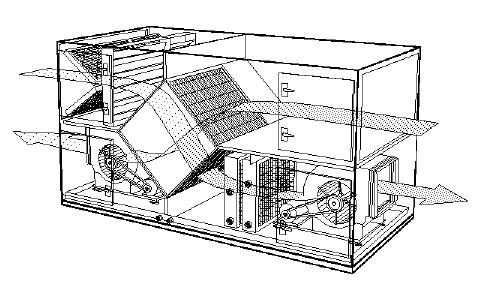
The Passive House standard relies on both temperature and humidity controls, and has a standard for fresh air exchange as well. Achieving all these goals utilizes a rather expensive air-to-air heat exchanger, constructed largely of stainless steel, with condensate drains and HEPA air filtration on both the intake and exhaust air.
This is a high tech solution that will actually work in the heating zone of Wisconsin (Zone 5 on this map). Vancouver Island (inland) is two zones warmer (Zone 7) and North Carolina (inland) is also two zones warmer (Zone 7). (I think - map shown for you to confirm.)

The details of vapor control depend upon construction details, of course. They are very different in timber frames covered by SIPs, versus stud wall construction, which is what I believe both of you are discussing. I can tell you that original timber frame homes from the late 1600's exist on Nantucket Island where my wife is from, with clay/wattle infill behind plaster walls, and white cedar shingles over felt paper on the outside. (The shingles are replaced every 30-40 years.)
.jpg)
I'm going to ask that my contractor meet the PassivHaus standard and I'm willing to pay for the testing required. This Michigan home, described in the Fine Homebuilding magazine's annual "Energy Smart Homes" issue, was my inspiration:
http://www.greenbuildingadvisor.com/blogs/dept/green-building-news/michigan-gets-its-first-passivhaus
The thing you have to ask yourself is will your current home still be habitable and can you afford to inhabit it when gas, electricity, and LPG are all 10X as expensive as today, and wood is 15X as expensive and you cannot get any woodcutting permits? That kind of escalation in heating costs is likely to occur in a relatively short time, perhaps 1-3 years, and could easily deplete any cash cushion one has in the bank, leaving you unable to make additional changes to insulation and HVAC systems.
It seems to me that if it's an off-grid, all-electric PassivHaus, the answer is assuredly yes, you can afford it. Your expenses are some HEPA filters and maintenance services, plus the 10-15 year periodic battery replacement. I don't know enough about either of your homes to answer the question, but you can.
This is a high tech solution that will actually work in the heating zone of Wisconsin (Zone 5 on this map). Vancouver Island (inland) is two zones warmer (Zone 7) and North Carolina (inland) is also two zones warmer (Zone 7). (I think - map shown for you to confirm.)
The details of vapor control depend upon construction details, of course. They are very different in timber frames covered by SIPs, versus stud wall construction, which is what I believe both of you are discussing. I can tell you that original timber frame homes from the late 1600's exist on Nantucket Island where my wife is from, with clay/wattle infill behind plaster walls, and white cedar shingles over felt paper on the outside. (The shingles are replaced every 30-40 years.)
I'm going to ask that my contractor meet the PassivHaus standard and I'm willing to pay for the testing required. This Michigan home, described in the Fine Homebuilding magazine's annual "Energy Smart Homes" issue, was my inspiration:
http://www.greenbuildingadvisor.com/blogs/dept/green-building-news/michigan-gets-its-first-passivhaus
The thing you have to ask yourself is will your current home still be habitable and can you afford to inhabit it when gas, electricity, and LPG are all 10X as expensive as today, and wood is 15X as expensive and you cannot get any woodcutting permits? That kind of escalation in heating costs is likely to occur in a relatively short time, perhaps 1-3 years, and could easily deplete any cash cushion one has in the bank, leaving you unable to make additional changes to insulation and HVAC systems.
It seems to me that if it's an off-grid, all-electric PassivHaus, the answer is assuredly yes, you can afford it. Your expenses are some HEPA filters and maintenance services, plus the 10-15 year periodic battery replacement. I don't know enough about either of your homes to answer the question, but you can.
KaiserJeep 2.0, Neural Subnode 0010 0000 0001 0110 - 1001 0011 0011, Tertiary Adjunct to Unimatrix 0000 0000 0001
Resistance is Futile, YOU will be Assimilated.
Warning: Messages timestamped before April 1, 2016, 06:00 PST were posted by the unmodified human KaiserJeep 1.0
Resistance is Futile, YOU will be Assimilated.
Warning: Messages timestamped before April 1, 2016, 06:00 PST were posted by the unmodified human KaiserJeep 1.0
- KaiserJeep
- Light Sweet Crude
- Posts: 6094
- Joined: Tue 06 Aug 2013, 17:16:32
- Location: Wisconsin's Dreamland
Re: How to build a cheap Passive House
by frankthetank » Tue 31 Jan 2017, 21:10:53
$this->bbcode_second_pass_quote('Paulo1', 'T')hanks for the information and plans, Baha. Nicely done.
I just want to make two points...or so.
The tar paper you referred to after stripping out the studs is not a vapour barrier. Rather, it works as a rainshield and allows water vapour to freely pass through your walls in both directions, while still stopping water incursion from the outside; rain, wind pushing rain, etc. The application of a non-incursion membrane such as 6 ml polly on the inside, plus building papers such as Tyvek etc is still controversial. Totally sealed houses require humidistats and forced air ventilation. While a total seal is required for most modern building codes, and certain designations, it is not always the best way to go. It is all very climate dependent how you approach this problem.
I am a carpenter. I have seen houses wrapped in building paper as per code trap moisture within walls, thus promoting dry rot. I have also found that totally vapour sealed homes from the inside, (which would pass the designations) also trap moisture within the walls. The more rigid membranes provide a surface for the water vapour to condense upon with temprature drops. As you know, warm air holds more moisture. There is always that need for equalization, thus the migration of water vapour into balance.
If you go the totally sealed route please check your window caulkings and corner treatments on your outside siding, yearly.
Our renovated house faces a river for view, etc. Wonderful. However, the picture windows face west. One thing I did is kick out the south wall and build a new living room....about 350 sq feet. It steps down and has a vaulted ceiling above 10' walls. The main point are the windows. I installed 8, 3'X6' windows to catch the sun in the winter. In the summer the sun is well overhead so heat isn't an issue. It not only added to all views, it gave us a great source of passive solar.
Oh yeah, where I live on the BC wet coast our rural District has no building codes. I was able to use two layers of 60' tar paper instead of tyvek on the outside plywood sheathing. The siding is red cedar shingles. This approach treats the house a living thing allowing the moisture to move both ways, etc. I have renovated 100 year old homes without one stich of rot that were built this way, and have seen new construction as per code develop condo disease and are well rotted within 10 years. If you go the sealed route you have to really be vigilent. We get 7' of rain here yearly, so the oldtimers were on to something.
Building standards are great, but local considerations need to be allowed for. It's a big continent.
Anyway, your place sounds fantastic. Excellent work and thanks for sharing the info. Plus, 56 ain't too old!! I am 61 and have couple of roofs and renos to do this summer for realtives. (It's going to hurt, isn't it? Damn.). My 89 year old neighbour still climbs up on his roof to clean his chimney. He won't accept any help.
regards
I just want to make two points...or so.
The tar paper you referred to after stripping out the studs is not a vapour barrier. Rather, it works as a rainshield and allows water vapour to freely pass through your walls in both directions, while still stopping water incursion from the outside; rain, wind pushing rain, etc. The application of a non-incursion membrane such as 6 ml polly on the inside, plus building papers such as Tyvek etc is still controversial. Totally sealed houses require humidistats and forced air ventilation. While a total seal is required for most modern building codes, and certain designations, it is not always the best way to go. It is all very climate dependent how you approach this problem.
I am a carpenter. I have seen houses wrapped in building paper as per code trap moisture within walls, thus promoting dry rot. I have also found that totally vapour sealed homes from the inside, (which would pass the designations) also trap moisture within the walls. The more rigid membranes provide a surface for the water vapour to condense upon with temprature drops. As you know, warm air holds more moisture. There is always that need for equalization, thus the migration of water vapour into balance.
If you go the totally sealed route please check your window caulkings and corner treatments on your outside siding, yearly.
Our renovated house faces a river for view, etc. Wonderful. However, the picture windows face west. One thing I did is kick out the south wall and build a new living room....about 350 sq feet. It steps down and has a vaulted ceiling above 10' walls. The main point are the windows. I installed 8, 3'X6' windows to catch the sun in the winter. In the summer the sun is well overhead so heat isn't an issue. It not only added to all views, it gave us a great source of passive solar.
Oh yeah, where I live on the BC wet coast our rural District has no building codes. I was able to use two layers of 60' tar paper instead of tyvek on the outside plywood sheathing. The siding is red cedar shingles. This approach treats the house a living thing allowing the moisture to move both ways, etc. I have renovated 100 year old homes without one stich of rot that were built this way, and have seen new construction as per code develop condo disease and are well rotted within 10 years. If you go the sealed route you have to really be vigilent. We get 7' of rain here yearly, so the oldtimers were on to something.
Building standards are great, but local considerations need to be allowed for. It's a big continent.
Anyway, your place sounds fantastic. Excellent work and thanks for sharing the info. Plus, 56 ain't too old!! I am 61 and have couple of roofs and renos to do this summer for realtives. (It's going to hurt, isn't it? Damn.). My 89 year old neighbour still climbs up on his roof to clean his chimney. He won't accept any help.
regards
I ripped out some drywall/old insulation in my LR a few winters back and reinsulated with mineral wool batts. I took my time (it being winter) and the one day i went to pull a batt out to do some electrical (i was running a new outlet) and the stud bay was very moist on the exterior sheathing --this house has 1x6 boards sheathing it with tar paper and then siding (from inside out). I hurried my butt up and got the drywall on//tapped//mud and paint. I never thought about all the moisture that was moving from the warm interior through those mineral wool batts... With the drywall/trim/paint there shouldn't be much air movement in those cavities...plus the way its set up..it should dry to the exterior. When i originally opened the walls they looked fine... Someday i'd like to wrap the exterior with several inches of polyiso..
This is a 1950s ranch and i was working on a north facing wall. We get everything here...-25F to 100F+...desert dryness and tropical humidness..
lawns should be outlawed.
-

frankthetank - Light Sweet Crude
- Posts: 6202
- Joined: Thu 16 Sep 2004, 03:00:00
- Location: Southwest WI
Re: How to build a cheap Passive House
by KaiserJeep » Tue 31 Jan 2017, 23:57:23
The Physics of this are easy to understand. Warmer air can contain much more water in liquid form than does cold air. (I'll spare you the discussion of the Magnus formula, it is esoteric and does not clarify the concept for most people.)
The interior of the home is comfortably warm, and contains moisture from cooking, washing, and transpiration from animals, plants, and humans. The exterior of the home is slightly warmer than the cold exterior air temperatures, because of the slow loss of heat through the insulation. There is a continuous temperature gradient between the warm inner surface of the wall and the cold exterior surface. Somewhere along this gradient is a temperature predicted by the above formula called the "dew point", where water vapor condenses as liquid water, moistening the insulation.
To avoid rot, one has to have a permeable outer coating on the house, to allow the moisture to gradually evaporate and pass into the drier exterior air. This is why we have so many exterior building materials such as felt paper, wooden shingles, stained wood surfaces, etc which freely allow vapor to permeate outwards. When we use non-permeable materials such as painted wood siding, plastic siding, or aluminum siding, it is applied loosely in long strips, and the water vapor escapes through the cracks. The downside to getting this wrong is that mold and mildew can form on wall interiors, some of which are toxic, and many of which cause allergic reactions in humans.
The more insulation you use, the more attention must be paid to controlling condensation inside the walls. In a Passive House designed to use 10% of the energy of a conventional residence, vapor control is extremely important. The Jung House in Michigan that I linked to above for example, has R-63 walls and R-92 roof insulation ratings to minimize heat loss in a cold climate. They utilized double stud walls with 20" of loose cellulose insulation (i.e. shredded paper treated with Boric Acid to resist insects) between them. The vapor barrier over the inner studs and under the drywall was plastic film, taped at the joints.
In the timber frame home that I mentioned, the OSB and foam sandwich "SIP" (Structural Insulated Panel) is not permeable to vapor, so there is a continuous membrane applied to the inner OSB surface, which is then covered with 2" strips of wood called "furring strips" to which interior dry wall is applied. The wall cavities thus created can have wiring and even flexible PEX plumbing run through them, without any need to pierce the vapor barrier. The vapor barrier is continuous over walls, floors, and ceilings. Vapor is controlled by the air-to-air heat exchanger, which drains the excess moisture out the condensate drain. The exterior of the SIPs has another membrane such as a Tyvek housewrap followed by an air-permeable layer of plastic matting which allows rain to drain downwards, which then dries. Particular care is used when joining the edges of the SIPs, including injected foam between SIPs and an adhesive membrane over the joints.
In case it is not obvious, the Timber Frame and SIPs Passive House I described is not a cheap home. But when compared to new construction it is only 10% to 15% more expensive than a new conventional home that meets the minimum standards established by the building codes and the Energy Star standards. The extra cost is paid back within the first 10 years by energy savings, and after that you are ahead of the game. More importantly, when escalating energy costs mean that conventional homes can't be affordably heated any longer, you can still afford to live in your Passive House.
Lots of good reading in the proceedings of the Building Science Foundation and the publication Energy Smart Homes, by the Taunton Press, same outfit that publishes Fine Homebuilding magazine.
The interior of the home is comfortably warm, and contains moisture from cooking, washing, and transpiration from animals, plants, and humans. The exterior of the home is slightly warmer than the cold exterior air temperatures, because of the slow loss of heat through the insulation. There is a continuous temperature gradient between the warm inner surface of the wall and the cold exterior surface. Somewhere along this gradient is a temperature predicted by the above formula called the "dew point", where water vapor condenses as liquid water, moistening the insulation.
To avoid rot, one has to have a permeable outer coating on the house, to allow the moisture to gradually evaporate and pass into the drier exterior air. This is why we have so many exterior building materials such as felt paper, wooden shingles, stained wood surfaces, etc which freely allow vapor to permeate outwards. When we use non-permeable materials such as painted wood siding, plastic siding, or aluminum siding, it is applied loosely in long strips, and the water vapor escapes through the cracks. The downside to getting this wrong is that mold and mildew can form on wall interiors, some of which are toxic, and many of which cause allergic reactions in humans.
The more insulation you use, the more attention must be paid to controlling condensation inside the walls. In a Passive House designed to use 10% of the energy of a conventional residence, vapor control is extremely important. The Jung House in Michigan that I linked to above for example, has R-63 walls and R-92 roof insulation ratings to minimize heat loss in a cold climate. They utilized double stud walls with 20" of loose cellulose insulation (i.e. shredded paper treated with Boric Acid to resist insects) between them. The vapor barrier over the inner studs and under the drywall was plastic film, taped at the joints.
In the timber frame home that I mentioned, the OSB and foam sandwich "SIP" (Structural Insulated Panel) is not permeable to vapor, so there is a continuous membrane applied to the inner OSB surface, which is then covered with 2" strips of wood called "furring strips" to which interior dry wall is applied. The wall cavities thus created can have wiring and even flexible PEX plumbing run through them, without any need to pierce the vapor barrier. The vapor barrier is continuous over walls, floors, and ceilings. Vapor is controlled by the air-to-air heat exchanger, which drains the excess moisture out the condensate drain. The exterior of the SIPs has another membrane such as a Tyvek housewrap followed by an air-permeable layer of plastic matting which allows rain to drain downwards, which then dries. Particular care is used when joining the edges of the SIPs, including injected foam between SIPs and an adhesive membrane over the joints.
In case it is not obvious, the Timber Frame and SIPs Passive House I described is not a cheap home. But when compared to new construction it is only 10% to 15% more expensive than a new conventional home that meets the minimum standards established by the building codes and the Energy Star standards. The extra cost is paid back within the first 10 years by energy savings, and after that you are ahead of the game. More importantly, when escalating energy costs mean that conventional homes can't be affordably heated any longer, you can still afford to live in your Passive House.
Lots of good reading in the proceedings of the Building Science Foundation and the publication Energy Smart Homes, by the Taunton Press, same outfit that publishes Fine Homebuilding magazine.
KaiserJeep 2.0, Neural Subnode 0010 0000 0001 0110 - 1001 0011 0011, Tertiary Adjunct to Unimatrix 0000 0000 0001
Resistance is Futile, YOU will be Assimilated.
Warning: Messages timestamped before April 1, 2016, 06:00 PST were posted by the unmodified human KaiserJeep 1.0
Resistance is Futile, YOU will be Assimilated.
Warning: Messages timestamped before April 1, 2016, 06:00 PST were posted by the unmodified human KaiserJeep 1.0
- KaiserJeep
- Light Sweet Crude
- Posts: 6094
- Joined: Tue 06 Aug 2013, 17:16:32
- Location: Wisconsin's Dreamland
Re: How to build a cheap Passive House
by frankthetank » Wed 01 Feb 2017, 12:23:25
I had read a lot about vapor barriers and condensation, etc...but i guess i never thought much until i saw it in action. I use to have condensation issues on my windows..especially as the outdoor air temp neared 0F. I put storm windows on all my double hung windows and that cured that issue..now i never see condensation (the storm windows increased the interior glass temp?). Family of 5 and we do a lot of cooking, so i'm sure there is plenty of moisture in the air.
My brother put in one of those heat exchangers (air to air) in (new home) and he said the air was getting so dry that they were turning into lizards.
My brother put in one of those heat exchangers (air to air) in (new home) and he said the air was getting so dry that they were turning into lizards.
lawns should be outlawed.
-
frankthetank - Light Sweet Crude
- Posts: 6202
- Joined: Thu 16 Sep 2004, 03:00:00
- Location: Southwest WI
Re: How to build a cheap Passive House
by KaiserJeep » Wed 01 Feb 2017, 13:03:59
$this->bbcode_second_pass_quote('frankthetank', 'I') had read a lot about vapor barriers and condensation, etc...but i guess i never thought much until i saw it in action. I use to have condensation issues on my windows..especially as the outdoor air temp neared 0F. I put storm windows on all my double hung windows and that cured that issue..now i never see condensation (the storm windows increased the interior glass temp?). Family of 5 and we do a lot of cooking, so i'm sure there is plenty of moisture in the air.
My brother put in one of those heat exchangers (air to air) in (new home) and he said the air was getting so dry that they were turning into lizards.
My brother put in one of those heat exchangers (air to air) in (new home) and he said the air was getting so dry that they were turning into lizards.
Air-to-air heat exchangers are typically not necessary in modern conventional homes which are quite leaky in terms of the blower test. I can tell that your brother did not install a humidity control system, since he is experiencing the very low humidity of the outdoors in Winter.
A conventional existing home built to the typical local building codes of only ten years back will offer a blower door test figure of 2.5-3.9 ach50 (air changes per hour @ 50 pascals pressure). The typical mix of older homes in our communities display figures of up to 20.0 ach50, with the high end being older homes which have never been retrofitted with energy improvements. The current Energy Star certification requires 1.2 ach50 and the PassivHaus requirement is 0.6 ach50. The last two - the 2015 version of Energy Star and the PassivHaus - are those that actually need HVAC systems which manage humidity and fresh air ventilation.
Reference: https://foursevenfive.com/blowerdoor-protocol-for-verification-of-0-6ach50-for-passive-house-certification/
Super-insulation and air leakage control are two of the techniques used to reduce energy consumption in a Passive House. The others include passive solar design, very efficient HVAC and appliances, and a fully insulated basement or foundation slab. It is not unusual for a PassivHaus basement to have R-60 walls and R-50 under the floor slab.
Once you have achieved the 10% energy consumption goal by using Passive Home techniques, the simple addition of Solar PV or a wind turbine can make your Passive Home totally off-grid. Note that I am not saying that that is what most people should actually do. For one thing, if you live in an urban or suburban area, you will still have expenses which include, water, sewer, and trash service. The big expense is real estate taxes in many areas. In a Wisconsin lake home for example, taxes will be my major expense, to the tune of 10-20 thousand dollars annually.
KaiserJeep 2.0, Neural Subnode 0010 0000 0001 0110 - 1001 0011 0011, Tertiary Adjunct to Unimatrix 0000 0000 0001
Resistance is Futile, YOU will be Assimilated.
Warning: Messages timestamped before April 1, 2016, 06:00 PST were posted by the unmodified human KaiserJeep 1.0
Resistance is Futile, YOU will be Assimilated.
Warning: Messages timestamped before April 1, 2016, 06:00 PST were posted by the unmodified human KaiserJeep 1.0
- KaiserJeep
- Light Sweet Crude
- Posts: 6094
- Joined: Tue 06 Aug 2013, 17:16:32
- Location: Wisconsin's Dreamland
Re: How to build a cheap Passive House
by frankthetank » Wed 01 Feb 2017, 13:22:19
He was having condensation issues on his windows (a very common thing around here it would seem on both new and older homes).
===========================================================================================================
Older homes around here are horribly insulated. I've actually seen water dripping off house eves when the temps are 0F ish... usually after a good snowfall. The attics in these places must be void of insulation and the heat must just be melting the snow.
=============================================================================================================
I used 110 therms the last billing cycle--34 days...avg temp was 19F ..not bad..with electricity that bill was $168 ...family of 5.
I do realize that the day will come when gas is no longer cheap and everyone and their cousin will make the jump to whatever they can to stay warm...pellets, wood, furniture, plastic bags.. I've wanted to put in a small woodstove for those really cold stretches but i realize its not the answer for heating a whole house all the time. 110 therms is like a half of cord of wood (more because the gas furnace is 95% efficient and wood stoves are about 80% ish these days)... so heating full time with wood in this house over a season would require several cords.
The other issue about up here is clouds. We went 8 days with NO sunshine..none. Then the next day we had about 3 hrs..then it was clouds...its been very cloudy up here...so that solar heat gain i usually get (south facing house/...plenty of south facing windows) isn't happening...my furnace seems to run more on a 20F cloudy day then on a 0F sunny day. Although on the flip side of that annoyance..if the clouds stick around at night..the temp doesn't fall off as it would on a clear night...a 0F sunny day usually brings a -15F to -20F night. During our 8 day stretch of clouds the temp never feel below freezing..a rarity here in late January.
===========================================================================================================
Older homes around here are horribly insulated. I've actually seen water dripping off house eves when the temps are 0F ish... usually after a good snowfall. The attics in these places must be void of insulation and the heat must just be melting the snow.
=============================================================================================================
I used 110 therms the last billing cycle--34 days...avg temp was 19F ..not bad..with electricity that bill was $168 ...family of 5.
I do realize that the day will come when gas is no longer cheap and everyone and their cousin will make the jump to whatever they can to stay warm...pellets, wood, furniture, plastic bags.. I've wanted to put in a small woodstove for those really cold stretches but i realize its not the answer for heating a whole house all the time. 110 therms is like a half of cord of wood (more because the gas furnace is 95% efficient and wood stoves are about 80% ish these days)... so heating full time with wood in this house over a season would require several cords.
The other issue about up here is clouds. We went 8 days with NO sunshine..none. Then the next day we had about 3 hrs..then it was clouds...its been very cloudy up here...so that solar heat gain i usually get (south facing house/...plenty of south facing windows) isn't happening...my furnace seems to run more on a 20F cloudy day then on a 0F sunny day. Although on the flip side of that annoyance..if the clouds stick around at night..the temp doesn't fall off as it would on a clear night...a 0F sunny day usually brings a -15F to -20F night. During our 8 day stretch of clouds the temp never feel below freezing..a rarity here in late January.
lawns should be outlawed.
-
frankthetank - Light Sweet Crude
- Posts: 6202
- Joined: Thu 16 Sep 2004, 03:00:00
- Location: Southwest WI
Re: How to build a cheap Passive House
by KaiserJeep » Wed 01 Feb 2017, 13:39:07
People that think wood heat is the answer are deluding themselves. With our present population levels, we could clearcut all our existing forests and would reach "peak wood" in less than 3 years if we tried to use it to replace coal and oil. Look at Greece for example, which went broke about 15 years ago. The national forests were gone in less than 5 years, trees were stolen from residential areas, and some olive growers have now been guarding century-old olive groves with shotguns for over a decade.
Wood is not the answer, even if you have your own woodlot. The wood will all disappear if you cannot guard it 24X7.
When the forests are cut for heating fuel, with them goes the majority of carbon sinks in this nation. In fact, burning wood should be banned.
I think the best answer for an existing home is to insulate as well as you can, including all new windows and doors. Then retrofit solar thermal heat, and put about a 2500 gallon, well-insulated tank of hot water in your basement, with variable speed pumps that heat your home with hot water.
Wood is not the answer, even if you have your own woodlot. The wood will all disappear if you cannot guard it 24X7.
When the forests are cut for heating fuel, with them goes the majority of carbon sinks in this nation. In fact, burning wood should be banned.
I think the best answer for an existing home is to insulate as well as you can, including all new windows and doors. Then retrofit solar thermal heat, and put about a 2500 gallon, well-insulated tank of hot water in your basement, with variable speed pumps that heat your home with hot water.
KaiserJeep 2.0, Neural Subnode 0010 0000 0001 0110 - 1001 0011 0011, Tertiary Adjunct to Unimatrix 0000 0000 0001
Resistance is Futile, YOU will be Assimilated.
Warning: Messages timestamped before April 1, 2016, 06:00 PST were posted by the unmodified human KaiserJeep 1.0
Resistance is Futile, YOU will be Assimilated.
Warning: Messages timestamped before April 1, 2016, 06:00 PST were posted by the unmodified human KaiserJeep 1.0
- KaiserJeep
- Light Sweet Crude
- Posts: 6094
- Joined: Tue 06 Aug 2013, 17:16:32
- Location: Wisconsin's Dreamland
51 posts
• Page 1 of 3 • 1, 2, 3
Return to Conservation & Efficiency
Who is online
Users browsing this forum: No registered users and 1 guest