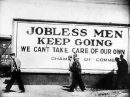
I've just begun reading this book, and its already proving to be one of the best books I've read in a long time. Its called "Slavery by another name" by Doug Blackmon, editor for the Wall Street Journal in Atlanta. Here's a link to it: Slavery by Another Name
Its about a very painful part of American history, the time period from the end of the Civil War until WWII, where even though slavery was abolished via Constitutional Amendment, it persisted through local laws and ordinances against vagrancy. For example, if a black man could not prove he was employed, he could and often was arrested for vagrancy and thrown in the county jail, sometimes years at a time. The county sheriffs would then "lease" these inmates out to various big corporations to pay for their jail fees and expenses. This book concentrates on one such arrest where the man was arrested for vagrancy and then leased to US Steel Corporation to work in their coal mines, very harsh conditions, with high mortality rates.
The author has visited the many grave sites of these men who died working in these company coal mines (Norther companies by the way). Slavery was in essence transferred from being a "southern institution" to a Northern or really an American institution.
Although I haven't finished the book yet, it seems that WWII finally put the brakes on this practice when the West criticized Hitler for his treatment of the Jews and Hitler, rightly, deflected their moral criticism of him by criticizing the US continued disparaging treatment of its black citizens.
So far, the book is well written and a detailed account of a part of American history that most are not aware of and would rather be forgotten by those who are. It certainly sheds light on the subsequent rise of the civil rights movement and attack against the "separate but equal" culture in the U.S. It also shows how there is much less time between slavery and freedom than I was aware of. I hate the fact that I was so ignorant.
It also makes one wonder how a new depression or resource wars would play out again here, or anywhere else, when a country has many unemployed or the need for cheap labor. To this day, Arkansas prisons continue to work farms and basic production for sale in the open market.



PeakOil is You
Book: "Slavery by another name" by Doug Blackmon
Book: "Slavery by another name" by Doug Blackmon
 by seahorse2 » Mon 21 Jul 2008, 17:11:50
-

seahorse2 - Expert

- Posts: 2042
- Joined: Mon 18 Oct 2004, 03:00:00
Re: Slavery by another name
by Jack » Mon 21 Jul 2008, 17:21:09
I suspect that the issue of involuntary servitude could best be represented as a spectrum ranging from chattel slavery at the worst up through certain entry-level jobs in our present day society. For example, if one investigates farmworkers during the 1929 depression, one notes that their meager wages were largely consumed by the cost of companies supplied housing and food. One might also lifted an eyebrow at the status of sharecroppers. In addition, most of us enjoy the benefits of cheap consumer goods produced by workers in foreign factories.
Although most people do not care to admit it, labor cost function according to the same supply and demand parameters as any other commodity. If economic slowdown results in an oversupply of labor, coupled with an under supply of money, then the value of labor will decline. Thus, some sort of quasi-slavery arrangement may well exist at some undefined point in the future.
Although most people do not care to admit it, labor cost function according to the same supply and demand parameters as any other commodity. If economic slowdown results in an oversupply of labor, coupled with an under supply of money, then the value of labor will decline. Thus, some sort of quasi-slavery arrangement may well exist at some undefined point in the future.
![[smilie=new_popcornsmiley.gif]](https://udev.peakoil.com/forums/images/smilies/new_popcornsmiley.gif "new_popcornsmiley")
- Jack
- Light Sweet Crude

- Posts: 4929
- Joined: Wed 11 Aug 2004, 03:00:00
Re: Slavery by another name
by HEADER_RACK » Mon 21 Jul 2008, 17:40:33
Slavery has been an integral part of the human race since the begining of civilization. It's not beyond the sense of reason to postulate it's return.
Man are we going to miss that black stuff coming up out the ground!
Man are we going to miss that black stuff coming up out the ground!
Nothing is more dangerous than a man with nothing left to lose but has everything left to gain.
-

HEADER_RACK - Coal

- Posts: 452
- Joined: Thu 15 Feb 2007, 04:00:00
Re: Slavery by another name
by Cashmere » Mon 21 Jul 2008, 18:38:34
With the exception of the FF age, the story of history has been the same:
a few on top, most on the bottom.
We'll return to that because no other model works.
a few on top, most on the bottom.
We'll return to that because no other model works.
Massive Human Dieoff <b>must</b> occur as a result of Peak Oil. Many more than half will die. It will occur everywhere, including where <b>you</b> live. If you fail to recognize this, then your odds of living move toward the "going to die" group.
-

Cashmere - Heavy Crude

- Posts: 1882
- Joined: Thu 27 Mar 2008, 03:00:00
Re: Slavery by another name
by Ludi » Mon 21 Jul 2008, 18:49:57
$this->bbcode_second_pass_quote('Cashmere', '
')We'll return to that because no other model works.
')We'll return to that because no other model works.
No other model seems to work for civilization, anyway.
- Ludi
Re: Slavery by another name
by Byron100 » Mon 21 Jul 2008, 19:55:21
$this->bbcode_second_pass_quote('Cashmere', 'W')ith the exception of the FF age, the story of history has been the same:
a few on top, most on the bottom.
We'll return to that because no other model works.
a few on top, most on the bottom.
We'll return to that because no other model works.
I firmly disagree. There is communism, where everyone is equal...everyone produces the same, everyone gets the same. No one gets a free ride, no one gets to live off the production of others.
If we can't have that in the post peak era, you can count me in as part of the great die-off....as being a slave to another is a fate worst than death.
And let it be known to all of you that seem to "like" the idea of slavery...I really, really, REALLY hope humans become extinct before we go back to the age of slavery, as there is just no point in being human if most individuals have to live sh*t lives. And I mean this, with all my heart and soul.
Nowhere to run, nowhere to hide...
...and the meek shall inherit the Earth!
...and the meek shall inherit the Earth!
-
Byron100 - Tar Sands

- Posts: 973
- Joined: Thu 08 Sep 2005, 03:00:00
- Location: Atlanta, GA
Re: Slavery by another name
by Jack » Mon 21 Jul 2008, 20:07:01
$this->bbcode_second_pass_quote('Byron100', 'T')here is communism, where everyone is equal...everyone produces the same, everyone gets the same. No one gets a free ride, no one gets to live off the production of others.
Except the General Secretary...and senior Party members...and other Party members...and members of the security forces...

- Jack
- Light Sweet Crude
- Posts: 4929
- Joined: Wed 11 Aug 2004, 03:00:00
Re: Slavery by another name
by Ludi » Mon 21 Jul 2008, 20:09:20
$this->bbcode_second_pass_quote('Byron100', 'I') really, really, REALLY hope humans become extinct before we go back to the age of slavery, as there is just no point in being human if most individuals have to live sh*t lives. And I mean this, with all my heart and soul.
Unfortunately, we're still in the age of slavery.
 There is slavery even in developed countries.
modern slavery
- Ludi