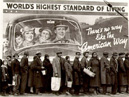

As has been often discussed here on this board, the modern economy is based on perpetual growth, as "wealth" is merely new debt injected into the economy, which requires positive economic growth to pay it back. So, presumably, after some period of contracting GDP, this house of cards will come tumbling down, precipitating an economic meltdown of the ages.
So, going on the assumption that is is what is eventually going to take place, what are the possibilities of establishing a new economy that does not require growth? Personally, I don't have faith in the private sector to generate the jobs needed for it to function, as the money, specifically the "free" wealth that oil has provided for us just isn't going to be there any longer. Even now, companies are raising prices while they refuse to raise salaries...it's not going to be long now before the workers aren't going to be able to afford much of anything. And once the negative spiral starts, it'll just reinforce itself in an ever-tightening fashion...I honestly do not see how the capitalistic economy can ever make any sort of recovery in this kind of environment.
So, that leaves the government to pick up the slack. (yeah, I do hear the howls of protests out there...but this is Peak Oil, so deal with it...
 ) I know Big Brother Government is bad, evil, horrible, blah blah blah, but I simply do not see any other alternative to a state-run economy. How will the food get from the farm to the dinner table with nobody working any jobs to pay for it? How will the lights stay on when the majority of the people are out of work and cannot pay the bills? How will people remain in their homes and apartments in a world of very little money?
I honestly think the only way we can avoid a total Mad Max scenario is to totally collapse the conventional economy at some point in the future, render all debts invalid, and then make some sort of economic "reboot" from the ashes, based on the providing of the bare necessities to keep the population fed, housed and at least somewhat occupied. How this would be accomplished, I have not a clue...I'll let you folks debate on this.