The hand-wringing about global warming strikes me as a little absurd. As I have stated in another post, there are several reasons for this, some of them superficially contradictory.
First, prepare for warming on one scale or another. Carbon dioxide and other trace gasses will accumulate as we burn through the hydrocarbons, which will happen. Carbon sequestration will not occur because it is too expensive. After 200 or so years, CO2 emissions will taper off, but residual effects will remain for several hundred years after that. There's really nothing that can be done about this--no personal carbon-limiting actions will have an appreciable effect.
It is likely that the climate eventually will resemble that of the mid-Cenozoic, although there may be unkown, or poorly understood variables that will result in a climate that is not perfectly analogous to anything that has occurred before. There could be a colder northern Europe alongside a warmer earth elsewhere. There may be more or less precipitation in a given region. A lot of things may happen that we just cannot predict.
The West Antarctic ice sheet will melt, but nobody knows exactly what will occur to the land-based ice sheets. Maybe melting will ultimately be "faster than expected," though nobody knows what to expect because the variables are not well understood. However, they would all melt if there were more hydrocarbons left to burn.
The melting of sea-based ice adds fresh water, but has little to do with sea-level rise.
Climate always changes, and dramatic climatic fluctuations have occurred in shorter time spans than those occurring at the present time. Specialized agragrian societies depend on relatively constant climate conditions, which is what most people experience during a lifetime. But it is not the reality. The problem isn't climate change, or even anthropogenic climate change, it is how many we are and where and how we live. As I have stated before, if a mile high ice-cap reduces half of North America to rock dust, would it be OK because it is "natural?"
Elsewhen during the Quaternary, during the last interglacial--the Eemian--temperatures were probably higher than they are today and sea levels may have been 200 ft. higher as well. This may also have been the case during the early Holocene, where temperatures may have 1 or 2 degrees C higher than the present.
The earth is not going to fry--or flood--though it will in some places. Yeah, my home in New Orleans is doomed. Still, it is not the end of the world, but it's going to happen.
As Stanley would say, learn to stop worrying and love the bomb.
Now, peak oil really bums me out.


PeakOil is You
THE Greenland Thread (merged)
Re: Greenland's ice loss accelerating rapidly
 by Primate » Sun 13 Aug 2006, 22:23:57
-

Primate - Wood

- Posts: 24
- Joined: Wed 23 Nov 2005, 04:00:00
- Location: New Orleans
Re: Greenland's ice loss accelerating rapidly
by Zardoz » Sun 13 Aug 2006, 22:48:03
$this->bbcode_second_pass_quote('Primate', 'C')limate always changes, and dramatic climatic fluctuations have occurred in shorter time spans than those occurring at the present time. Specialized agragrian societies depend on relatively constant climate conditions, which is what most people experience during a lifetime. But it is not the reality.
Huh?
Please run that one by us again.
"Thank you for attending the oil age. We're going to scrape what we can out of these tar pits in Alberta and then shut down the machines and turn out the lights. Goodnight." - seldom_seen
-

Zardoz - Expert

- Posts: 6323
- Joined: Fri 02 Dec 2005, 04:00:00
- Location: Oil-addicted Southern Californucopia
Re: Greenland's ice loss accelerating rapidly
by Primate » Sun 13 Aug 2006, 23:14:24
Pardon the stream of consciousness. During both glacial and interglacial episodes extreme temperature fluctuations are recorded in ice cores, sometimes several degrees C in the course of a century. Faunal and floral assemblages, as recording in palynological records and paleontological assemblages are slower to respond, causing "local," though seldom absolute extinction. Prehistoric human popluations (for example, hunting and gathering societies of the Upper Paleolithic and Mesolithic) repsonded in kind, mostly by adjusting their ranges and/or food sources. By contrast, agricultural societies are less adaptable to climate fluctuations.
-
Primate - Wood
- Posts: 24
- Joined: Wed 23 Nov 2005, 04:00:00
- Location: New Orleans
Re: Greenland's ice loss accelerating rapidly
by Zardoz » Mon 14 Aug 2006, 01:41:07
$this->bbcode_second_pass_quote('Primate', '.')..agricultural societies are less adaptable to climate fluctuations.
Exactly. That's the point. Rapid climate change that we are beginning to experience is going to be devastating.
Like many have said, it's as if Peak Oil and Global Warming are in a race to determine which one will get us first.
"Thank you for attending the oil age. We're going to scrape what we can out of these tar pits in Alberta and then shut down the machines and turn out the lights. Goodnight." - seldom_seen
-
Zardoz - Expert
- Posts: 6323
- Joined: Fri 02 Dec 2005, 04:00:00
- Location: Oil-addicted Southern Californucopia
Bug out to Greenland?
by emersonbiggins » Wed 11 Oct 2006, 02:15:38
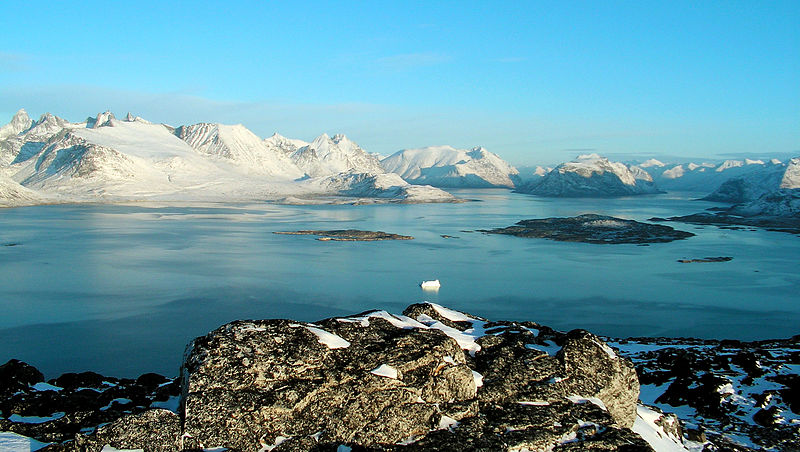
Just think...56,000 people scattered across the 170,000 (and counting  ) square miles of ice-free land. I was just checking their tourism site tonight (remembering fondly a Transatlantic flight I had a couple of months ago) and it seems like a fantastic place when TSHTF. If the climate is farked in the long term, at least Greenland's will only improve with a warming cycle.
How many acres can I buy in Greenland for $10k? I bet I could be a land baron for that small fortune!

) square miles of ice-free land. I was just checking their tourism site tonight (remembering fondly a Transatlantic flight I had a couple of months ago) and it seems like a fantastic place when TSHTF. If the climate is farked in the long term, at least Greenland's will only improve with a warming cycle.
How many acres can I buy in Greenland for $10k? I bet I could be a land baron for that small fortune!
"It's called the American Dream because you'd have to be asleep to believe it."
George Carlin
George Carlin
-

emersonbiggins - Expert
- Posts: 5150
- Joined: Sun 10 Jul 2005, 03:00:00
- Location: Dallas
Re: Bug out to Greenland?
by Ayame » Wed 11 Oct 2006, 03:21:07
Yes, but can you practice agriculture on it? Might be better for hunting and gathering?
- Ayame
- Tar Sands

- Posts: 631
- Joined: Thu 29 Jun 2006, 03:00:00
- Location: UK
Re: Bug out to Greenland?
by emersonbiggins » Wed 11 Oct 2006, 03:35:20
$this->bbcode_second_pass_quote('Ayame', 'M')ight be better for hunting and gathering?
For sure, as is. If the climate becomes more conducive to agriculture (which is a distinct possibility with GW), I could see it becoming more favorable as a settlement, but it's mostly a fishing/whaling economy right now.
"It's called the American Dream because you'd have to be asleep to believe it."
George Carlin
George Carlin
-
emersonbiggins - Expert
- Posts: 5150
- Joined: Sun 10 Jul 2005, 03:00:00
- Location: Dallas
Re: Bug out to Greenland?
by kam30en » Wed 11 Oct 2006, 06:38:18
Yah, this will be prime real estate when global warming turns most of the world into a nightmarish wasteland. I am guessing Greenland will be a VERY different place in 100 years. Hopefully the people that live there will be able to prevent hordes of foreigners from showing up, but I seriously doubt it. Northern Canada will be a good place as well.
http://www.youtube.com/watch?v=Hz-bTNxpApU
I am no longer allowed to have a violent avatar or belittle other races......but here's a good video
http://www.youtube.com/watch?v=cjUNFc6liDU
I am no longer allowed to have a violent avatar or belittle other races......but here's a good video
http://www.youtube.com/watch?v=cjUNFc6liDU
-

kam30en - Lignite
- Posts: 245
- Joined: Sat 17 Dec 2005, 04:00:00
Re: Greenland's ice loss accelerating rapidly
by Zardoz » Thu 19 Oct 2006, 22:17:24
A favorite mantra of the deniers is that Greenland is actually gaining ice because it's supposedly gaining so much around its center. Not so:
NASA: Greenland ice loss far greater than gain
Like I've been saying, we don't need to argue with them. Reality will do our debating for us.
NASA: Greenland ice loss far greater than gain
Like I've been saying, we don't need to argue with them. Reality will do our debating for us.
"Thank you for attending the oil age. We're going to scrape what we can out of these tar pits in Alberta and then shut down the machines and turn out the lights. Goodnight." - seldom_seen
-
Zardoz - Expert
- Posts: 6323
- Joined: Fri 02 Dec 2005, 04:00:00
- Location: Oil-addicted Southern Californucopia
Re: Greenland's ice loss accelerating rapidly
by TheDude » Fri 20 Oct 2006, 01:11:27
$this->bbcode_second_pass_quote('Zardoz', '')$this->bbcode_second_pass_quote('Primate', 'L')ike many have said, it's as if Peak Oil and Global Warming are in a race to determine which one will get us first.
Or warheads. Speaking of learning to love the bomb.
You da bomb!
-

TheDude - Expert
- Posts: 4896
- Joined: Thu 06 Apr 2006, 03:00:00
- Location: 3 miles NW of Champoeg, Republic of Cascadia