And you know what -- you same folks are the ones that said tar sands would never work out. You said EV's would never work out.
And you said shale would never work out.
A lot of you said the "EROEI" was all upside down. That turned out to not be the case.
And I'm as doomer as the next guy, but one thing that always did stick in the back of my mind is history -- every time people said there was a limit, right after that there was some revolutionary new thing and then more exponential growth.
I've got an antique newspaper from the 1920s I got a yard sale. It actually has an article about "the oil running out." This was before anyone imagined shipping overseas. And certainly offshore rigs, or even just drilling deeper than what they could in the '20s.
Historically, NOTHING stops tech progress except for collapse of civilization. Historically, that tends to be: war, plague, and aging empires that get bloated and it's a sociological / system collapse.



PeakOil is You
Do you think we will ever inhabit other planets?
Re: Do you think we will ever inhabit other planets?
 by Sixstrings » Fri 24 Oct 2014, 00:07:58
-

Sixstrings - Fusion

- Posts: 15160
- Joined: Tue 08 Jul 2008, 03:00:00
Re: Do you think we will ever inhabit other planets?
by Sixstrings » Fri 24 Oct 2014, 00:11:45
$this->bbcode_second_pass_quote('Keith_McClary', 'w')hitehouse.gov has a plan:
Bootstrapping a Solar System Civilization
October 14, 2014
Bootstrapping a Solar System Civilization
October 14, 2014
Nice link. Hm, well, he's one of those "scientists" right, why listen to him? That's just "9 years old dreamer" stuff.
$this->bbcode_second_pass_quote('', 'â')€œRight now, the mass we use in space all comes from the Earth. We need to break that paradigm so that the mass we use in space comes from space.”
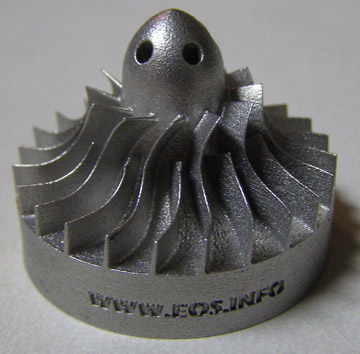
NASA is already working on printable spacecraft, automated robotic construction using regolith, and self-replicating large structures. As a stepping stone to in-space manufacturing, NASA has sent the first-ever 3D printer to the International Space Station.
Jesus, am I psychic?

It's freaky I'll get my mind on something and THEN I see it somewhere.
I guess I'm not so ahead of my time, NASA is already working on "3d printing" and "printable spacecraft" etc.
I'm very impressed they're so forward thinking. You know, I've ragged on about Obama a lot and the NASA cuts and space shuttle gone but you know what -- they've been doing some great things, actually, using their money to push science forward and greater good.
They've supported spacex a lot. And that was brilliant. To get real progress, space has to go *commercial* and be profitable and a lot cheaper. What NASA is doing is basically *seeding* this, and in the long run it's going to bring a lot more return than what NASA itself, alone, could do with the huge government budgets.
If you make something *profitable* then genie is out of the bottle and it's gonig to go exponential.
Back to the article:
$this->bbcode_second_pass_quote('', ' ')One day, astronauts may be able to print replacement parts on long-distance missions. And building upon the success of the Mars Curiosity rover, the next rover to Mars — currently dubbed Mars 2020 — will demonstrate In-Situ Resource Utilization on the Red Planet. It will convert the carbon dioxide available in Mars’ atmosphere to oxygen that could be used for fuel and air — all things that future humans on Mars could put to use.
There’s interest outside government as well, with various private companies that see a potential business in mining of asteroids and celestial objects for use in space.
Well that's everything I just said, so wow I'm impressed they're planning on doing it -- "printing parts as needed," etc.
And same thing as I just said, about supply chains:
$this->bbcode_second_pass_quote('', 'U')ltimately what we need to do is to evolve a complete supply chain in space, utilizing the energy and resources of space along the way. We are calling this approach “bootstrapping” because of the old saying that you have to pull yourself up by your own bootstraps. Industry in space can start small then pull itself up to more advanced levels through its own productivity, minimizing the cost of launching things from Earth in the meantime.
Okay guys, so you won't believe me and say I'm an idiot, well is a NASA scientist good enough for you?

-
Sixstrings - Fusion
- Posts: 15160
- Joined: Tue 08 Jul 2008, 03:00:00